
Introduction
When sourcing fabric for business suits, corporate uniforms, and premium formalwear, one important decision is whether to choose 100% worsted wool or a wool blend.
Pure worsted wool is valued for its natural resilience, refined appearance, and comfortable wearing properties. However, blending wool with silk, mohair, or polyester can change the fabric’s surface appearance, structure, durability, maintenance requirements, and overall cost.
For apparel brands, suit manufacturers, and textile purchasing teams, the best option depends on the intended garment, target market, selling price, and required fabric performance.
In this guide, we compare four common suiting fabric options to help B2B buyers understand their differences and select the right material for their collections.
Quick Answer: Is 100% Worsted Wool Better Than Wool Blends?
Neither option is universally better. Each fabric composition offers different advantages.
- 100% Worsted Wool: Suitable for premium business suits requiring natural resilience, refined drape, and a sophisticated appearance.
- Wool-Silk Blends: Ideal for luxury suiting and formalwear where a richer luster and smoother surface are desired.
- Wool-Mohair Blends: Suitable for structured suiting that requires a crisp handle, distinctive sheen, and good crease recovery.
- Wool-Polyester Blends: A practical option for commercial uniforms and volume production where cost control and wear performance are important.
The right choice depends on the actual fiber percentages, yarn construction, fabric weight, weave, finishing, and garment requirements.
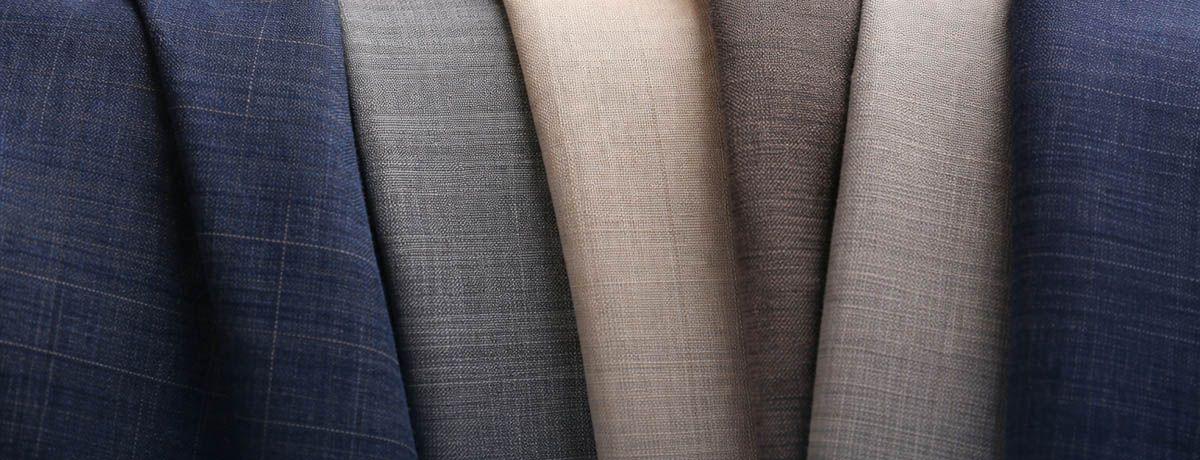
1. 100% Worsted Wool: The Classic Choice for Premium Business Suits
100% worsted wool is widely used in premium business suiting because of its combination of natural resilience, smooth surface appearance, and refined drape.
Worsted wool is produced using combed wool fibers that are aligned and spun into relatively smooth, uniform yarns.
This yarn construction helps create fabrics with a clean surface and a structured yet flexible handle.
Key Advantages
Natural Breathability and Moisture Management
Wool fibers can absorb and release moisture vapor, contributing to comfortable wearing conditions across different environments.
Natural Elasticity and Resilience
The natural crimp and protein structure of wool fibers contribute to their ability to recover after bending and compression.
Elegant Drape
Suitable worsted wool constructions can provide clean garment lines and a refined silhouette for tailored jackets and trousers.
Sophisticated Surface Appearance
Fine worsted yarns create a relatively smooth surface with subtle luster, making them suitable for formal and executive apparel.
Potential Limitations
- Generally higher raw material costs than many conventional polyester blends.
- Requires appropriate garment care and maintenance.
- Performance varies considerably with wool fineness, fabric construction, and finishing.
- Fine wool fabrics may require particular attention to abrasion and pilling performance.
Recommended Applications
- Executive business suits.
- Premium men’s suiting collections.
- Bespoke tailoring.
- Luxury formalwear.
- High-end corporate apparel.
Buyer Insight: When sourcing 100% worsted wool suiting fabric, buyers should evaluate fiber fineness, fabric weight, weave construction, pilling resistance, and dimensional stability rather than relying on the Super number alone.
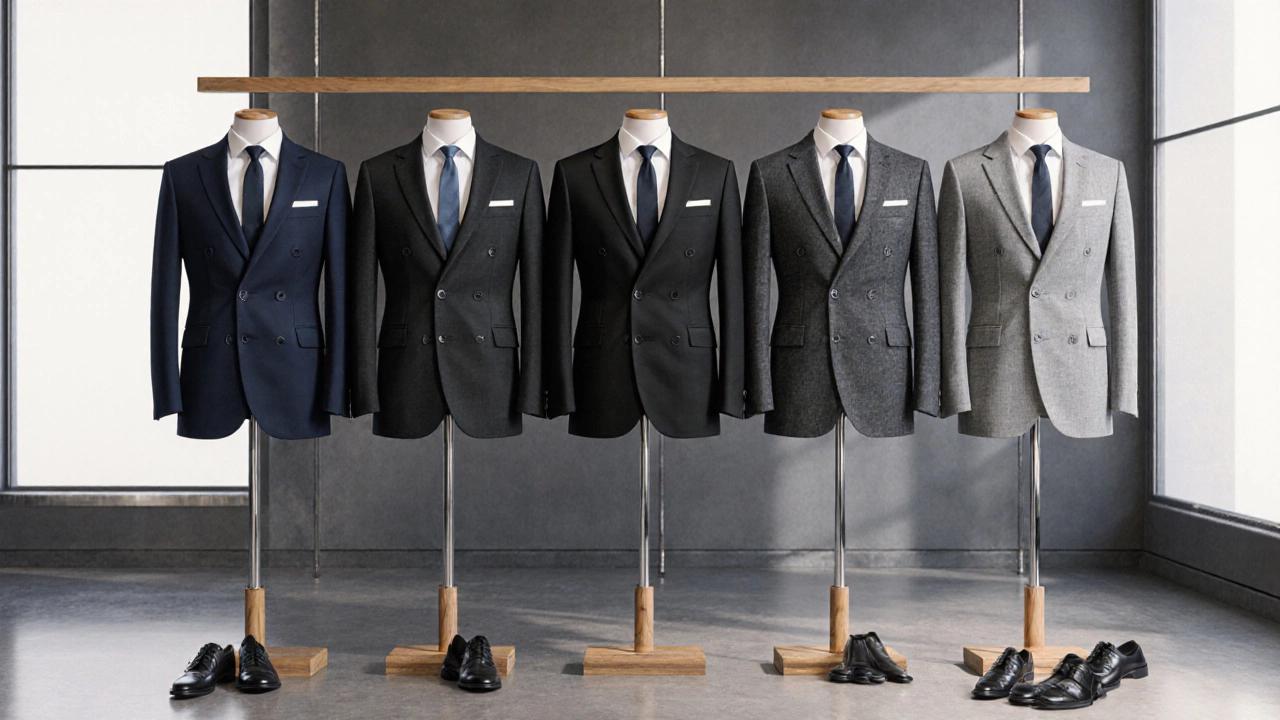
2. Wool-Silk Blends: Enhanced Luster for Luxury Formalwear
Silk is a natural protein fiber known for its smooth surface and distinctive luster.
When combined with worsted wool, silk can enhance the visual richness of a fabric while creating a refined handle suitable for luxury suiting and formalwear.
Common commercial compositions may include 80% wool / 20% silk, although the actual blend ratio varies according to the desired appearance and performance.
Key Advantages
Richer Surface Luster
Silk can introduce a brighter, more noticeable sheen than many traditional pure wool suiting fabrics.
Smooth Handle
The smooth silk fibers can contribute to a soft and refined surface feel.
Distinctive Fabric Appearance
Wool-silk blends can offer an elegant appearance for garments that require more visual sophistication.
Versatile Design Possibilities
Different yarn constructions, weave patterns, and finishing treatments can create a range of surface effects.
Potential Limitations
- Usually more expensive than many conventional wool-polyester blends.
- Silk-containing fabrics may require careful handling and appropriate garment care.
- Performance depends on the silk percentage and overall fabric construction.
- Not necessarily the most economical option for high-volume daily uniforms.
Recommended Applications
- Luxury business suits.
- Tuxedos and eveningwear.
- Premium formal jackets.
- High-end women’s suiting.
- Special-occasion garments.
Buyer Insight: When selecting wool-silk fabric, compare luster, surface consistency, color appearance, and care requirements. A higher silk percentage does not automatically guarantee better overall fabric quality.
3. Wool-Mohair Blends: Crisp Structure and Refined Shine
Mohair is a natural fiber obtained from the Angora goat. It is known for its characteristic luster, smooth surface, and resilience.
When blended with worsted wool, mohair can produce fabrics with a crisp handle, a distinctive sheen, and good structural recovery.
A common example is 70% wool / 30% mohair, although different ratios are available depending on the intended application.
Key Advantages
Distinctive Natural Luster
Mohair contributes a clear, elegant sheen that is particularly attractive in formal suiting.
Crisp Fabric Handle
The fiber characteristics of mohair can help create a firmer and more structured fabric compared with some softer wool constructions.
Good Crease Recovery
Mohair fibers have favorable resilience, which can contribute to the crease-recovery performance of wool-mohair fabrics.
Suitable for Structured Garments
The combination of wool and mohair can produce fabrics with a clean silhouette and a distinctive surface appearance.
Potential Limitations
- May feel firmer or less soft than some fine pure wool fabrics.
- Higher-quality mohair can increase raw material costs.
- Fabric performance depends on fiber fineness, blend ratio, and weave construction.
- Not every wool-mohair fabric is suitable for warm-weather applications.
Recommended Applications
- Summer business suits.
- Formal trousers.
- Structured jackets.
- Premium menswear collections.
- Formalwear for warmer climates.
Buyer Insight: When evaluating wool-mohair fabrics, pay attention to fabric weight, handle, surface luster, crease recovery, and wearing comfort. Open weave constructions may improve airflow, but breathability should be evaluated on the finished fabric rather than assumed from fiber composition.
4. Wool-Polyester Blends: Durability and Cost Control for Commercial Apparel
For corporate uniform programs, hospitality apparel, and large-volume commercial suiting, 100% wool may not always meet the required cost or maintenance targets.
Wool-polyester blends offer an alternative by combining the natural characteristics of wool with the strength, dimensional stability, and easy-care potential of polyester.
A composition such as 55% wool / 45% polyester is one possible commercial example, but the actual ratio should be selected according to the target performance and price requirements.
Key Advantages
Improved Abrasion Performance Potential
Polyester can contribute to improved abrasion resistance in appropriately constructed and finished blended fabrics.
Dimensional Stability
Polyester can help improve resistance to certain forms of dimensional change and shape distortion.
Cost Flexibility
Replacing part of the wool content with polyester may reduce raw material costs, depending on fiber grades, blend ratios, and manufacturing costs.
Easy-Care Potential
Some wool-polyester blends can be developed for easier maintenance, although machine washability must be verified through suitable garment and fabric testing.
Potential Limitations
- Generally less natural in handle and moisture management than comparable pure wool fabrics.
- Surface pilling and static may occur depending on fiber quality and construction.
- The appearance may differ from premium pure wool suiting.
- Poorly designed blends may compromise comfort and surface quality.
Recommended Applications
- Corporate uniforms.
- Airline and hospitality apparel.
- Commercial business suits.
- School formalwear.
- Large-volume uniform programs.
- Budget-conscious suiting collections.
Buyer Insight: For large-volume orders, compare not only the initial fabric price but also durability, garment maintenance, expected service life, and replacement costs.
5. Pure Worsted Wool vs. Wool Blends: A Technical Comparison
The following comparison summarizes the general characteristics of the four fabric categories.
| Evaluation Factor | 100% Wool | Wool-Silk | Wool-Mohair | Wool-Polyester |
|---|---|---|---|---|
| Surface Appearance | Refined, subtle luster | Rich, luminous | Crisp, bright luster | Depends on construction |
| Fabric Handle | Natural, balanced | Smooth, refined | Crisp, structured | Varies by blend |
| Natural Resilience | Excellent | Generally good | Very good | Depends on composition |
| Wrinkle Recovery | Generally good | Construction-dependent | Generally good | Can be very good |
| Abrasion Performance | Construction-dependent | Construction-dependent | Construction-dependent | Can be enhanced |
| Breathability | Generally good | Generally good | Construction-dependent | Depends on blend |
| Cost Position | High | High to very high | High | Often more economical |
| Main Application | Premium business suits | Luxury formalwear | Structured formalwear | Commercial uniforms |
Note: These are general tendencies, not guaranteed performance ratings. Actual results depend on fiber quality, yarn construction, weave, fabric weight, finishing, and testing conditions.
6. How Should B2B Buyers Choose the Right Wool Blend?
Before placing a bulk order, buyers should evaluate the fabric based on the intended market and garment requirements.
Step 1: Define the Target Market
Different customer groups have different expectations.
- Luxury menswear brands may prioritize natural fiber content, surface appearance, and drape.
- Corporate uniform buyers may prioritize durability, maintenance, and consistent supply.
- Premium formalwear brands may prefer the distinctive appearance of wool-silk or wool-mohair fabrics.
Step 2: Confirm the Required Fabric Specifications
Request a technical specification sheet covering:
| Specification | What to Confirm |
|---|---|
| Fiber Composition | Exact wool, silk, mohair, and polyester percentages |
| Fabric Weight | GSM or weight per linear meter |
| Weave Structure | Plain, twill, and other constructions |
| Fabric Width | Usable width for garment manufacturing |
| Yarn Quality | Yarn count and construction |
| Finishing | Relevant finishing and pressing treatments |
| Colorfastness | Applicable test results |
| Pilling Resistance | Resistance to surface pilling |
| Dimensional Stability | Shrinkage and dimensional changes |
| Care Requirements | Recommended garment maintenance |
Step 3: Request Physical Samples
Do not finalize a fabric based on composition and price alone.
Evaluate:
- Surface appearance and color consistency.
- Fabric drape and flexibility.
- Handle and wearing comfort.
- Wrinkle recovery.
- Weave uniformity.
- Performance after relevant care treatments.
Step 4: Compare Total Sourcing Costs
A lower fabric price does not always mean lower overall garment costs.
Buyers should consider fabric consumption, cutting efficiency, garment construction, maintenance requirements, quality consistency, and expected product lifespan.
For corporate uniform programs and volume production, these factors can significantly influence the final purchasing decision.
Frequently Asked Questions
Q1. Is 100% worsted wool better than wool-polyester blends?
Not in every situation. Pure worsted wool is often preferred for premium suiting because of its natural characteristics and refined appearance. Wool-polyester blends can be more practical for commercial uniforms where cost control and easy-care requirements are important.
Q2. What is the best wool blend for luxury suits?
Wool-silk and wool-mohair blends are popular choices for luxury suiting. Wool-silk offers a richer luster, while wool-mohair can provide a crisp handle and distinctive sheen. The ideal choice depends on the desired garment appearance and performance.
Q3. Does adding polyester make wool fabric more durable?
Polyester can improve certain durability properties, including abrasion resistance, depending on the blend ratio and fabric construction. However, actual durability should be verified through relevant performance testing.
Q4. Is wool-mohair fabric suitable for summer suits?
It can be suitable for summer suiting, particularly when developed with appropriate fabric weights and open weave constructions. Buyers should also evaluate garment breathability and wearing comfort.
Q5. Which wool blend is most cost-effective for corporate uniforms?
Wool-polyester blends are often worth considering because they can offer a practical balance of fabric appearance, durability, maintenance, and raw material cost. The final choice should be based on the uniform’s expected service life and target budget.
Q6. What should buyers request before ordering custom wool-blend fabric?
Buyers should confirm the exact fiber composition, fabric weight, width, weave, color, finishing, minimum order quantity, sampling requirements, and applicable quality testing standards.
Final Thoughts: Choose the Right Fabric for Your Market and Application
Choosing between 100% worsted wool and wool blends is ultimately a decision about balancing appearance, performance, maintenance, and commercial requirements.
Pure worsted wool remains an established choice for premium business suiting. Wool-silk and wool-mohair blends provide distinctive aesthetic and structural characteristics, while wool-polyester blends can offer practical advantages for commercial and volume applications.
For professional fabric sourcing, the best approach is to evaluate the actual fabric specifications, request physical samples, and verify performance before confirming bulk production.
At Yun Ai Textile, our product focus includes polyester woven fabrics, polyester-spandex stretch woven fabrics, and functional laminated fabrics for apparel applications.
For buyers exploring woven fabric sourcing and customized fabric solutions, our team can discuss product specifications, development requirements, and suitable manufacturing options.

Yunai Textile
Post time: Nov-21-2026