
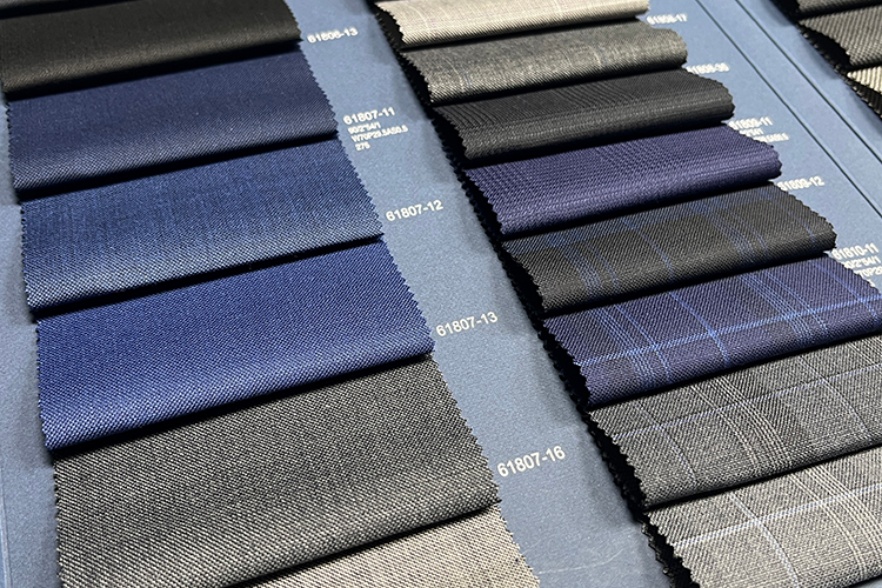
Understanding 70% Worsted Wool Plaid and Stripe Fabrics
The foundation of tailored garments frequently relies on precisely engineered textiles, with 70% worsted wool fabric serving as a common option for professional suiting. It is important to distinguish that “worsted” refers to the spinning and combing process that creates smooth, strong yarns, while “70%” denotes the blend ratio. While 100% wool or 80/20 blends are also prevalent industry choices, combining 70% long-staple worsted wool with 30% synthetic fibers like polyester optimizes the natural thermal regulation and drape of wool while significantly enhancing tensile strength and crease recovery. However, this blend is generally positioned in the mid-market tier; the polyester content limits its use in true luxury bespoke tailoring, though it provides excellent durability for daily wear. This synthetic integration introduces specific trade-offs, such as slightly reduced breathability, a potential for surface sheen over time, and increased pilling tendencies compared to pure wool. For textile mills and apparel designers, understanding this underlying architecture is critical before initiating complex stripe or plaid developments. The interplay between raw fiber quality and mechanical processing dictates the final garment’s performance and aesthetic longevity.
Key Fabric Definitions and Yarn Counts
Achieving high-definition patterns requires stringent control over yarn specifications. Worsted spinning aligns the longer wool fibers, combing out short staples to produce a smooth, fine yarn that resists pilling and abrasion. In professional suiting applications, yarn counts typically range from 60s/2 to 90s/2 (metric count, Nm). A finer count, such as 80s/2, allows for sharper, crisp color definition within intricate plaids, whereas a robust 60s/2 provides the necessary bulk for heavier winter weights. The resulting fabric weight generally falls between 240 and 280 grams per square meter (gsm), making it ideal for standard year-round tailoring. Maintaining consistent yarn twist during spinning is essential, as any variation will cause irregular dye uptake and skew the final pattern.
Common Weave Structures and Pattern Effects
The chosen weave structure dictates how ambient light reflects off the fabric and how colored yarns intersect to form patterns. A classic 2/2 twill weave remains the most prevalent construction for wool blend suiting fabric, offering a distinct diagonal rib that adds depth to chalk stripes and classic Prince of Wales checks. Alternatively, plain weaves provide a flatter, crisper canvas that maximizes the high-contrast sharpness of pinstripes. As outlined in the design parameters below, stripes primarily rely on warp yarns to carry the pattern, whereas plaids require precise dual-axis synchronization of both warp and weft dyed yarns. This alignment increases the complexity of loom setups, demanding strict tension tolerances—often maintained within a ±2% margin across the loom as a typical premium mill target—to prevent pattern distortion during high-speed weaving.
Comparing Plaid and Stripe Design Options
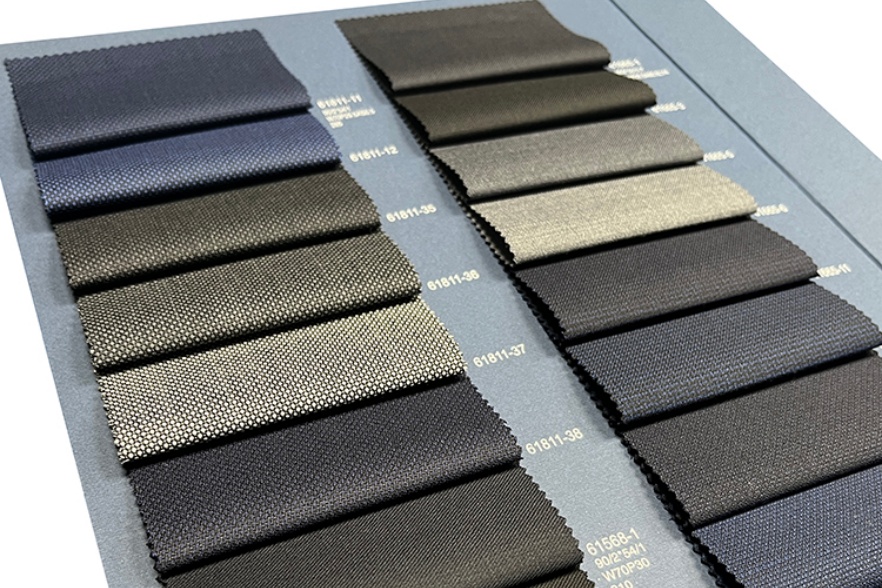
Executing a flawless patterned design in 70% wool fabric requires balancing aesthetic vision with the mechanical capabilities of modern weaving equipment. Whether engineering a subtle shadow stripe for corporate wear or a bold windowpane check for bespoke jackets, designers must account for scale, repeat dimensions, and the optical blending of yarn colors before the loom is ever threaded.
Layout, Scale, and Color Matching
Pattern layout is dictated by the mathematical repeat of the warp and weft threads. For traditional professional suiting, standard pinstripes often feature a repeat interval of 1.0 to 1.5 centimeters, utilizing single contrasting ends to create a sharp, unbroken vertical line. Conversely, a prominent Glen plaid or windowpane design may necessitate a much larger repeat of 5.0 to 8.0 centimeters, demanding more complex dobby or jacquard mechanisms. At the garment level, these larger repeats significantly affect fabric consumption and cutting layouts. Tailors must ensure precise pattern matching at the seams, carefully balancing the dominant check line at garment edges, lapels, and pockets to maintain visual symmetry.
Color matching in these blends requires specific dual-dye formulations. The wool component is typically dyed using acid or reactive dyes, while the polyester component requires disperse dyes applied at temperatures often reaching 130°C. Achieving a uniform shade across both fiber types—a process known as solid dyeing—or intentionally leaving one fiber undyed for a melange effect, fundamentally alters the visual impact of the pattern. Furthermore, 70/30 blends carry specific pattern risks: differential dye uptake and shrinkage between the wool and polyester can cause barré (unintentional horizontal bands) or blurred checks. Mitigating these risks requires compatible dye selection and strict tension control during finishing.
Practical Design Steps for Mills and Buyers
The transition from digital concept to physical production involves several critical, time-sensitive phases. Buyers typically submit CAD files detailing the specific color codes and thread counts, which the mill translates into a technical weaving draft. Before bulk production commences, mills generate handloom samples, commonly known as strike-offs. This sampling phase usually requires 7 to 14 days and allows buyers to verify the scale, hand-feel, and color interaction under standard D65 lighting. A comprehensive design process must also account for post-weave finishing—such as decatizing, pressing, and relaxation drying. These steps are vital to lock in pattern dimensions and prevent stripe skewing or plaid distortion after the cloth leaves the loom.
| Design Parameter | Typical Stripe Specifications | Typical Plaid Specifications |
|---|---|---|
| Warp Complexity | High (Carries the pattern) | High (Requires precise color sequencing) |
| Weft Complexity | Low (Often a solid base color) | High (Must match warp exactly for checks) |
| Standard Repeat Size | 0.5 cm – 2.0 cm | 3.0 cm – 8.0 cm |
| Loom Setup Time | Moderate | Extensive (Requires complex harness lifting) |
| Waste Factor | 3% – 5% | 5% – 8% (Due to pattern matching at seams) |
Choosing Between Custom Production and Ready Cargo
Procurement strategies directly impact design flexibility. Sourcing standard worsted blends generally falls into two categories: commissioning bespoke custom production runs or sourcing what is sometimes termed “ready cargo”—more standardly referred to in the international trade as ready stock, off-the-shelf fabric, or existing inventory.
Key Takeaways
- Choose 70% worsted wool blends for mid-market suiting when durability, crease recovery, and daily wear performance matter more than luxury purity.
- Specify yarn counts between 60s/2 and 90s/2, using finer counts such as 80s/2 for sharper plaid and stripe definition.
- Select a 240–280 gsm fabric weight for versatile year-round tailoring in professional suit applications.
- Use 2/2 twill for depth in checks and chalk stripes, but consider plain weave when crisp pinstripe contrast is the priority.
- Maintain tight loom tension control, ideally near a ±2% tolerance, to prevent distortion in plaid patterns that require warp and weft alignment.
Frequently Asked Questions
What does 70% worsted wool fabric mean?
It means the fabric uses 70% worsted-spun wool blended with about 30% synthetic fiber, often polyester. Worsted refers to the combing and spinning process that creates smoother, stronger yarns for tailored garments.
Is 70% worsted wool suitable for business suits?
Yes. A 70% worsted wool blend is well suited to daily business suits because it offers wool’s drape and comfort while improving crease recovery, strength, and durability compared with some higher-wool fabrics.
Which yarn counts work best for plaid and stripe designs?
Common suiting yarn counts range from 60s/2 to 90s/2. Finer counts such as 80s/2 support sharper plaid and stripe definition, while 60s/2 gives more body for heavier seasonal fabrics.
Are plaids harder to weave than stripes?
Yes. Stripes mainly rely on warp yarn arrangement, while plaids require accurate alignment of both warp and weft colors. This makes loom tension and pattern registration more demanding.
What fabric weight is typical for 70% worsted wool suiting?
Many 70% worsted wool suiting fabrics fall around 240 to 280 gsm, making them practical for year-round professional wear depending on climate, lining, and garment construction.
Yunai Textile
Post time: Nov-09-2026