
Sewing polyester spandex fabric presents unique challenges due to its stretchiness and slippery texture. However, using the right tools can simplify the process. For instance, stretch needles reduce skipped stitches, and polyester thread enhances durability. This fabric’s versatility makes it ideal for creating fitted garments, from activewear to SCUBA SUEDE designs. Its adaptability rivals even Poly or Suede materials, offering endless possibilities for creative projects.
Key Takeaways
- Use stretch or ballpoint needles to avoid missed stitches on polyester spandex fabric.
- Pick strong polyester thread so seams stay secure and flexible.
- Change sewing machine settings, like zigzag stitch, to match the fabric’s stretch and stop puckering.
Understanding Polyester Spandex Fabric
Characteristics of Polyester Spandex
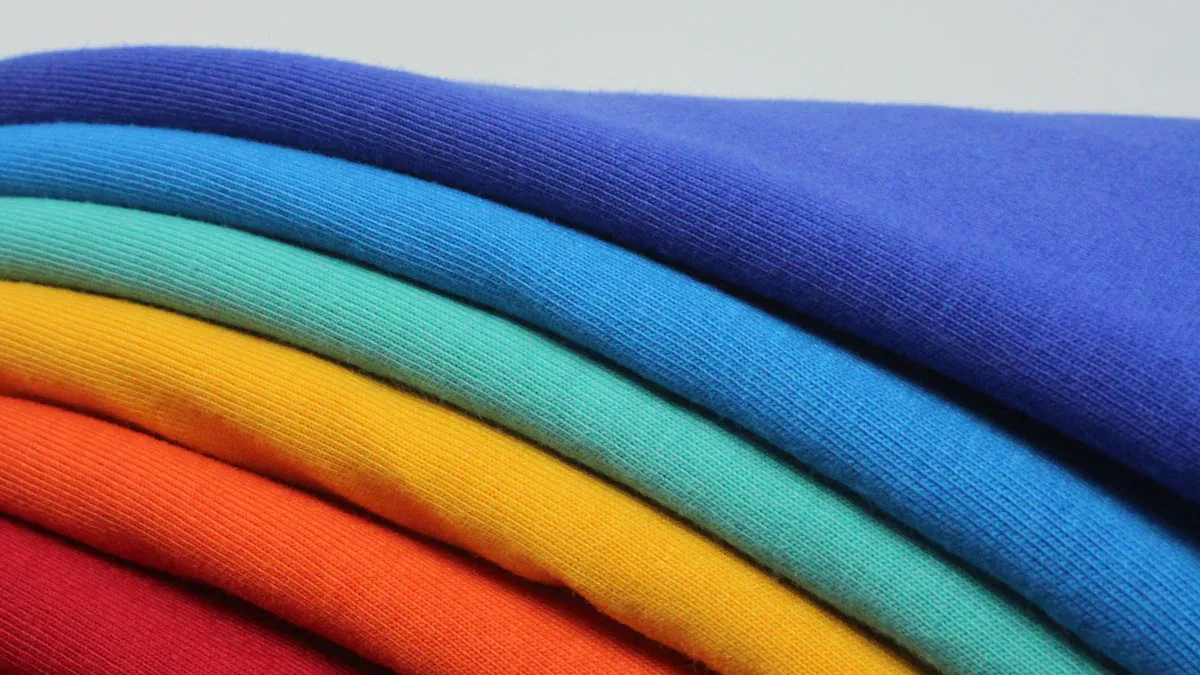
Polyester spandex fabric is a blend of polyester fibers and spandex, offering a unique combination of durability and elasticity. Polyester contributes to the fabric’s strength, resistance to wrinkles, and ability to retain color vibrancy over time. Spandex, on the other hand, provides exceptional stretch and recovery, allowing garments to maintain their shape even after repeated use. This fabric is lightweight, breathable, and smooth to the touch, making it ideal for activewear, swimwear, and fitted clothing.
One of its standout features is its four-way stretch, which enables the material to expand and contract in all directions. This characteristic ensures a snug yet comfortable fit, accommodating a wide range of body movements. Additionally, polyester spandex fabric resists shrinking and fading, making it a practical choice for garments that require frequent washing.
Why It Requires Special Techniques
Sewing polyester spandex fabric demands specific techniques due to its unique properties. Its stretchiness can cause the material to shift or distort during cutting and sewing, leading to uneven seams or puckering. The fabric’s slippery texture further complicates handling, as it tends to slide under the presser foot or shift out of alignment.
To address these challenges, sewists must use tools and methods designed for stretch fabrics. Stretch or ballpoint needles prevent skipped stitches by gliding between the fibers rather than piercing them. Adjusting sewing machine settings, such as using a zigzag stitch or reducing tension, ensures the seams can stretch without breaking. Stabilizers or interfacing can also help manage the fabric’s elasticity, particularly in areas prone to stretching, like necklines or armholes.
By understanding these characteristics and challenges, sewists can approach polyester spandex fabric with confidence and achieve professional results.
Essential Tools and Materials
Choosing the Right Needle
Selecting the correct needle is crucial when sewing polyester spandex fabric. Stretch and ballpoint needles are the most effective options. A ballpoint needle glides between the fabric’s fibers instead of piercing them, reducing the risk of skipped stitches. Schmetz recommends stretch needles for this fabric due to their deeper scarf and shorter eye, which improve stitch consistency. If skipped stitches persist, switching to a thinner polyester thread or a larger needle size can resolve the issue.
Selecting the Best Thread
The thread choice significantly impacts the durability and appearance of the final garment. All-purpose polyester thread works best for polyester spandex fabric. Its strength and slight elasticity complement the fabric’s stretch, ensuring seams remain intact during wear. Avoid cotton thread, as it lacks the necessary flexibility and may break under tension.
Recommended Sewing Machine Settings
Proper machine settings ensure smooth sewing and professional results. A zigzag stitch is ideal for stretch fabrics, as it allows seams to expand and contract without breaking. Adjusting the tension to a slightly lower setting prevents puckering. Testing these settings on a fabric scrap before starting the project can save time and frustration.
Additional Tools for Success
Several tools can simplify the process of working with polyester spandex fabric:
- Fabric clips: Secure layers without damaging the material.
- Rotary cutter: Achieve clean, precise cuts, especially on slippery fabric.
- Stretch ruler: Measure and mark accurately while accounting for the fabric’s elasticity.
Tip: Investing in high-quality tools not only improves results but also enhances the sewing experience.
Preparation Tips
Cutting Polyester Spandex Fabric
Achieving clean cuts on polyester spandex fabric requires precision and the right tools. A rotary cutter is highly effective for this task, as it ensures straight, smooth edges without causing fraying. This tool is particularly beneficial for fabrics like foil spandex, where precise edges are essential to avoid visible flaws. When working with printed spandex, placing extra weights on the fabric helps maintain pattern alignment during cutting. Using a rotary cutter not only improves accuracy but also minimizes the risk of distortion caused by the fabric’s stretchiness.
Marking Without Damaging the Fabric
Marking polyester spandex fabric can be challenging due to its delicate surface and elasticity. Tailor’s chalk is a reliable option for marking curved patterns on knit fabrics, though it requires careful handling to prevent stretching. Soap slivers offer a smoother alternative, leaving visible lines that wash out easily without harming the fabric. For more prominent markings, china markers provide excellent visibility and wash out effortlessly, though they should be used sparingly. Selecting the right marking tool ensures accuracy while preserving the fabric’s integrity.
Stabilizing Stretchy Areas
Stretchy areas, such as necklines and armholes, often require stabilization to prevent distortion during sewing. Stabilizers and interfacings play a crucial role in managing these areas. Tear-away stabilizers work well for lightweight knits, while fusible interfacing is better suited for heavier fabrics. Fusible knit interfacing or spray starch can also provide temporary stability, making the sewing process smoother. These tools offer support without compromising the fabric’s natural drape and flexibility, ensuring professional results.
Sewing Techniques
Best Stitch Types for Stretch Fabrics
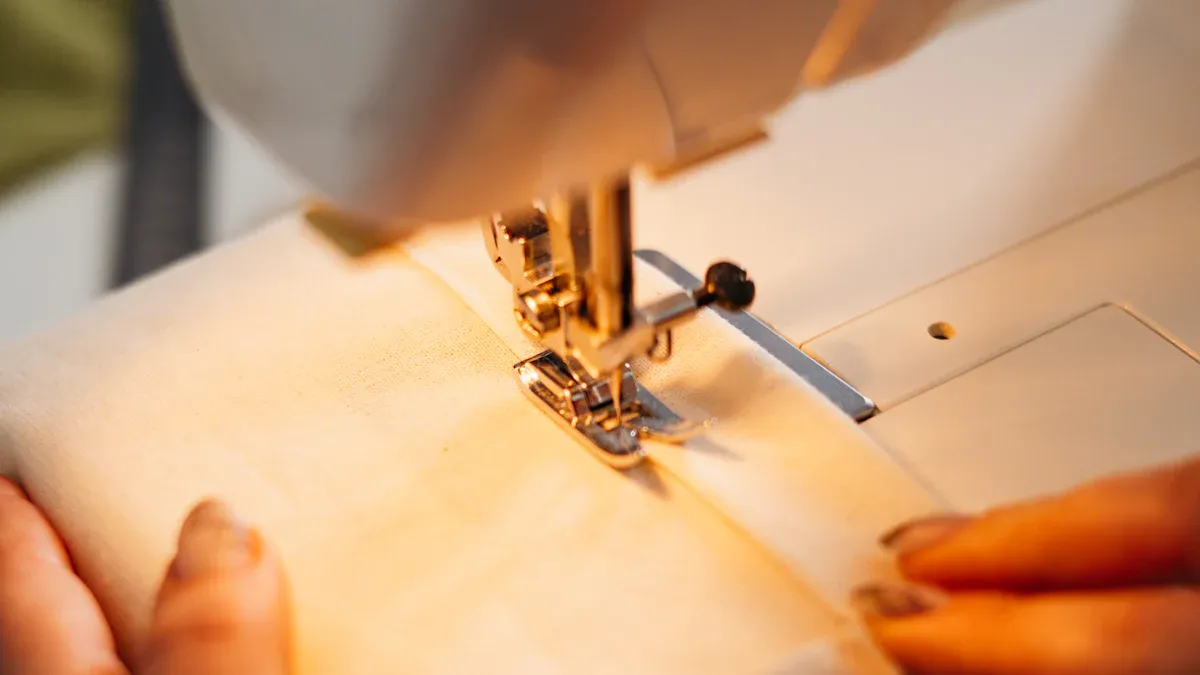
Choosing the right stitch type is essential when sewing polyester spandex fabric. Zigzag stitches and stretch stitches are the most effective options for maintaining seam durability and flexibility. Zigzag stitches, particularly those with a width of 3.3 mm, have been shown to perform well on stretchy materials. For instance, a study by Vogl demonstrated that zigzag stitches on a 70% polyester and 30% elastodiene blend provided excellent stretch response, even under non-linear conditions. Similarly, Greenspan’s research highlighted the superior repeatability of zigzag stitches after cyclic testing on polyester spandex blends, ensuring long-lasting seams.
The table below summarizes key findings from studies on zigzag stitches:
| Study | Stitch Type | Fabric Composition | Key Findings |
|---|---|---|---|
| Vogl | Zigzag (3.3 mm width) | 70% polyester / 30% elastodiene | Created stretch band sensors; response during stretching was non-linear. |
| Greenspan | Zigzag (304) | Polyester/10% spandex | Showed better repeatability after cyclic testing; gauge factor near 1.0. |
| Tangsirinaruenart | Zigzag (304) | Single jersey nylon with 25% spandex | Best results with gauge factor 1.61, good linearity, low hysteresis, and good repeatability. |
Stretch stitches, often pre-programmed on modern sewing machines, are another excellent choice. These stitches allow seams to stretch without breaking, making them ideal for activewear and fitted garments.
Adjusting Tension and Presser Foot Pressure
Properly adjusting tension and presser foot pressure ensures smooth stitching on stretchy fabrics. Incorrect tension can lead to uneven stitches or puckering. Adjusting the tension two notches clockwise often produces even stitches, especially when sewing at 21 stitches per inch (SPI) with a 50% stretch. For lighter fabrics, reducing tension by one notch counterclockwise can create neat, balanced stitches.
The table below outlines how tension adjustments impact stitch quality:
| Setting Adjustment | Stitch Quality | Stretch Percentage |
|---|---|---|
| Neutral Setting | Uneven Stitch | N/A |
| 2 Notches Clockwise | Even Stitch | 50% at 21 SPI, 90% at 36 SPI |
| 2 Notches Anti-Clockwise | High Tension, Nice Stitch | 20% at 21 SPI |
| 1 Notch Anti-Clockwise | Neat Stitch | 30% at 21 SPI, 75% at 36 SPI |
Presser foot pressure also plays a critical role. Reducing the pressure slightly prevents the fabric from stretching excessively under the foot, ensuring consistent stitch quality. Testing these settings on scrap fabric before starting the project can save time and improve results.
Tips for Sewing Seams and Edges
Sewing seams and edges on polyester spandex fabric requires careful handling to prevent distortion. Holding the fabric taut but not stretched during sewing helps maintain its natural elasticity. Using a walking foot attachment can further improve fabric feeding, reducing the risk of puckering or uneven seams.
For edges, finishing techniques like serging or using a narrow zigzag stitch provide clean, professional results. When sewing hems, a twin needle can create a polished, stretchy finish. Applying a strip of fusible interfacing along the hemline before sewing can stabilize the fabric, ensuring a smooth and even hem.
Tip: Always sew with the grain of the fabric to avoid unnecessary stretching or distortion.
Common Mistakes and How to Avoid Them
Preventing Fabric Slippage
Fabric slippage is a common issue when sewing polyester spandex due to its smooth and slippery texture. Traditional pins can exacerbate this problem by failing to hold the fabric securely. Additionally, pins may leave holes or runs in delicate knit fabrics, compromising the garment’s appearance and durability.
To address this, sewing clips offer a superior alternative. These clips firmly grip the fabric layers without causing damage, ensuring the material stays aligned during sewing. Clips also eliminate the risk of snagging, making them ideal for stretch fabrics like polyester spandex.
Tip: Place clips at regular intervals along the seam to maintain even tension and prevent shifting.
Avoiding Puckering or Uneven Stitches
Puckering and uneven stitches often occur when the fabric stretches excessively during sewing. Testing stitches on a scrap piece of polyester spandex can help identify the optimal machine settings. Adjusting the tension and stitch length ensures smooth, even seams.
Using a walking foot attachment can further reduce puckering by evenly feeding the fabric layers through the machine. This tool minimizes stretching and maintains consistent stitch quality.
Note: Always sew with a zigzag or stretch stitch to accommodate the fabric’s elasticity and prevent seam breakage.
Managing Stretch Recovery Issues
Stretch recovery issues arise when seams fail to return to their original shape after stretching. Elastic thread in the bobbin provides an effective solution. This thread enhances seam flexibility and durability, making it ideal for garments requiring frequent movement. Wooly nylon thread, known for its softness and stretchiness, is particularly suitable for activewear and fitted clothing.
Tip: Wind elastic thread onto the bobbin by hand to avoid overstretching, and pair it with a polyester top thread for optimal results.
By addressing these common mistakes, sewists can achieve professional-quality results when working with polyester spandex fabric.
Finishing Touches and Care
Hemming Polyester Spandex Garments
Achieving a professional hem on polyester spandex garments requires the right tools and techniques. A twin needle is an excellent choice for creating clean, stretchy hems that mimic a coverstitch finish. This tool allows sewists to produce parallel rows of stitching on the garment’s right side while forming a zigzag on the underside, ensuring flexibility and durability.
A Twin Needle is great for hems (and necklines if making a comfy T-shirt). If using a serger without a coverstitch option, use a Twin Needle on your sewing machine for a professional finish.
When hemming, stabilize the fabric with fusible interfacing or wash-away tape to prevent distortion. Testing the twin needle on a fabric scrap ensures optimal tension and stitch length before sewing the final hem.
Pressing Without Damaging the Fabric
Pressing polyester spandex fabric requires careful handling to avoid heat damage. Using a low-heat iron with a pressing cloth is essential for protecting the fabric’s integrity. A pressing cloth acts as a barrier, diffusing heat and preventing direct contact with the fabric. This method preserves the material’s original appearance and structure while safeguarding delicate embellishments.
- Prevents heat damage by acting as a barrier against direct heat from the iron.
- Maintains fabric integrity by diffusing heat, which helps preserve the original appearance and structure of the fabric.
- Protects delicate embellishments from potential damage caused by high temperatures.
Always test the iron on a small, inconspicuous area of the fabric to ensure the settings are appropriate.
Caring for Finished Garments
Proper care extends the lifespan of polyester spandex garments. Washing in cool or warm water with gentle detergents prevents damage to the fabric’s elasticity and color. Turning garments inside out minimizes friction during washing, preserving their appearance.
For washing polyester, turn clothes inside out to protect the fabric, use a gentle detergent, avoid bleach, and air dry whenever possible to prevent damage from high heat.
To maintain the integrity of polyester spandex garments, it is recommended to wash in cool or warm water, use gentle detergents, and avoid high heat during drying. Specific care steps include pretreating stains, washing with like colors, and air drying or tumble drying on a cool to medium setting.
Avoid high heat when drying, as polyester is sensitive to temperature. Air drying or tumble drying on a low setting ensures the fabric retains its shape and elasticity. Storing garments in breathable materials prevents yellowing and mildew, keeping them fresh and ready to wear.
Mastering polyester spandex fabric begins with preparation, the right tools, and proper techniques. Its stretch, durability, and moisture-wicking properties make it perfect for activewear and casual garments. Mistakes are part of learning, but practice builds confidence. With persistence, sewists can create versatile, professional-quality pieces that meet modern demands.
Tip: Start small and experiment with scraps to refine your skills!
FAQ
How can sewists prevent skipped stitches on polyester spandex fabric?
Using a stretch or ballpoint needle reduces skipped stitches. These needles glide between fibers instead of piercing them, ensuring consistent stitch quality.
What is the best way to stabilize hems on polyester spandex garments?
Fusible interfacing or wash-away tape provides temporary stability for hems. These tools prevent distortion and ensure clean, professional finishes during sewing.
Can polyester spandex fabric be sewn without a serger?
Yes, a regular sewing machine works well. Use a zigzag or stretch stitch for durable seams. A twin needle creates professional hems without requiring a serger.
Post time: Apr-21-2025