

Key Requirements for Medical Uniform Fabrics
Selecting the best fabric for medical uniforms requires a rigorous understanding of the clinical environment. Healthcare professionals operate in high-stress settings where apparel must serve as both a protective barrier and a provision for freedom of movement. The textile industry has evolved from traditional plain-weave cotton, developing engineered materials that address the complex intersection of ergonomics, infection control, and industrial laundering requirements. Today, institutional procurement requires textiles to meet stringent performance benchmarks that directly impact clinical efficiency.
Comfort, Breathability, and Mobility
Medical shifts frequently extend between 8 to 12 hours, necessitating garments that mitigate thermal strain and physical restriction. Breathability, measured by air permeability rates, is critical to prevent sweat accumulation against the skin, particularly in high-intensity departments. To achieve necessary mobility, modern medical fabrics incorporate elastomeric fibers alongside traditional yarns. A moderate inclusion of spandex (elastane) is typically required to provide sufficient mechanical stretch. This specific blend allows the uniform to accommodate dynamic, multi-directional movements—like bending and lifting—without compromising structural integrity. Furthermore, four-way stretch configurations offer superior shape retention, ensuring the uniform does not sag after prolonged physical exertion.
Durability, Hygiene, and Compliance
Beyond comfort, medical uniforms must withstand rigorous sanitization protocols. Clinical environments require fabrics capable of enduring high-temperature industrial laundering, often between 60°C and 75°C, to ensure the eradication of pathogens. Durability metrics dictate that high-quality medical textiles should survive extensive industrial wash cycles—often benchmarked by AATCC or institutional procurement standards—while maintaining minimal dimensional shrinkage. Tensile and tear strength are heavily scrutinized to prevent premature degradation from mechanical stress.
Furthermore, hygiene compliance is supported by antimicrobial finishes, such as silver-ion treatments. While these specialized coatings actively inhibit bacterial growth on the fabric surface and neutralize odor-causing microbes, institutions should note that silver-ion treatments can occasionally trigger skin sensitivity in some wearers. Crucially, institutional buyers must distinguish between everyday medical uniforms and surgical protective apparel. While standard scrubs require high durability and basic hygiene compliance, garments intended for the operating room must meet stringent regulatory and certification requirements, such as AAMI PB70 for liquid barrier performance and EN 13795 for surgical drapes and gowns. Everyday scrubs, conversely, are typically evaluated on standards like OEKO-TEX Standard 100 to ensure materials are free from harmful substances.
Best Fabric Options for Medical Uniforms
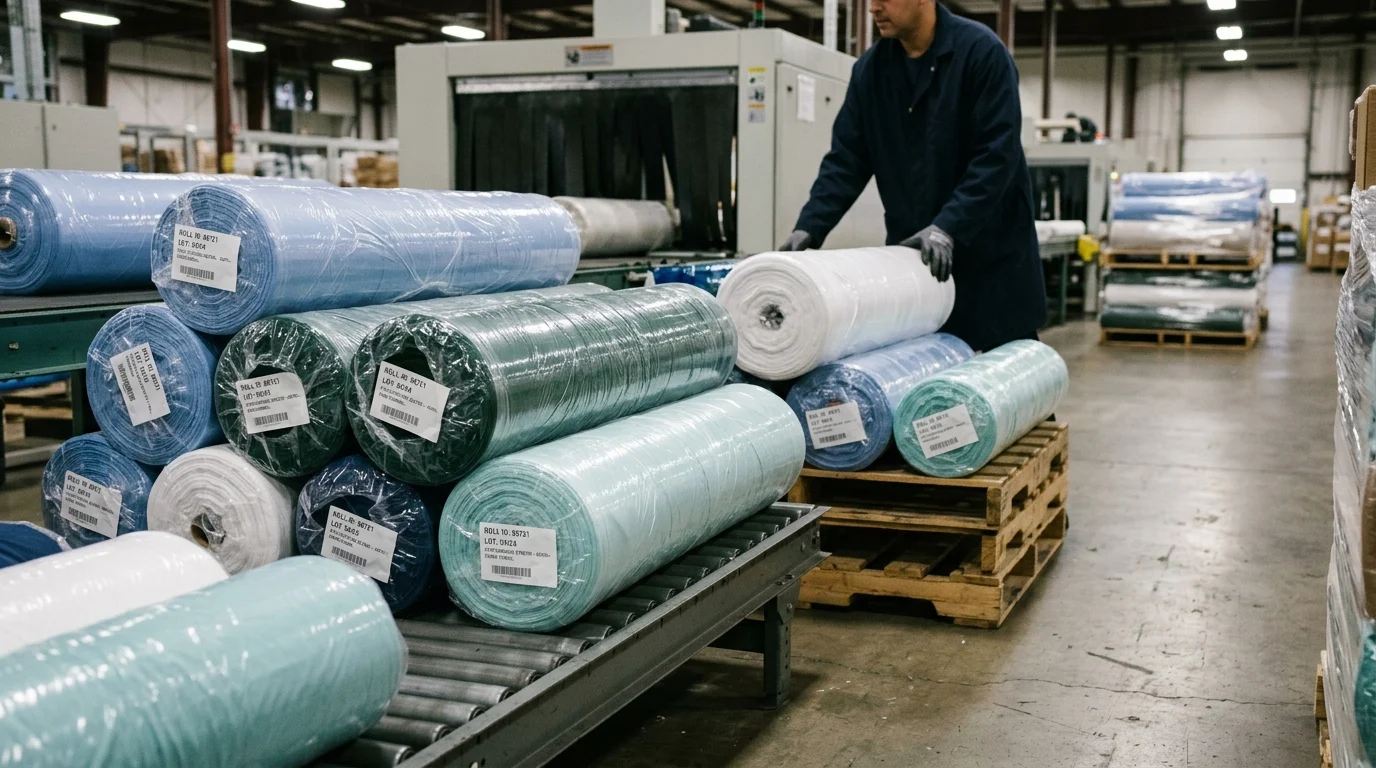
The contemporary medical apparel market relies heavily on synthetic and semi-synthetic blends to achieve the performance metrics required by modern healthcare institutions. While pure natural fibers are still utilized depending on regional climates and department-specific needs, they have largely been supplemented in high-performance scrubs by engineered composites that maximize the strengths of multiple fiber types.
Cotton, Polyester, and Spandex Blends
Cotton-rich blends remain a staple for general ward use due to their natural breathability, hypoallergenic properties, and ability to withstand high-temperature laundering without melting. However, because 100% cotton wrinkles easily and lacks elasticity, it is frequently blended with synthetic fibers. Polyester serves as the robust structural backbone for most modern medical uniforms, offering exceptional tensile strength and color retention. To counteract its lack of natural breathability, it is frequently blended with rayon and spandex.
For instance, as a vendor-specific example of current market offerings, Iyuna Textile produces a 72% polyester, 21% rayon, 7% spandex twill, which provides a sophisticated balance of long-term durability, fluid drape, and high elasticity. For facilities prioritizing maximum mobility alongside strict infection control, advanced textiles like four-way stretch woven polyester-elastane with antibacterial properties are frequently sourced from specialized suppliers. These technical fabrics are often engineered around a weight of 160 GSM (grams per square meter), representing a highly functional intersection of lightweight comfort and necessary opacity.
However, buyers must note critical technical caveats for high-synthetic blends: they are highly prone to static electricity buildup. In operating rooms or environments with sensitive electronic equipment, electrostatic discharge (ESD) risks make anti-static treatments or cotton-dominant fabrics a critical safety requirement.
Tencel and Other Performance Fabrics
For premium uniform lines and eco-conscious institutions, manufacturers are increasingly integrating advanced cellulosic fibers. Tencel and bamboo derivatives offer superior moisture management and a softer hand-feel compared to standard synthetics. A woven bamboo polyester blend is often marketed for medical applications due to bamboo’s inherent micro-gaps, which significantly enhance ventilation and moisture absorption.
| Fabric Blend | Typical Weight | Stretch Capacity | Primary Advantage |
|---|---|---|---|
| Poly-Cotton (65/35) | 140-150 GSM | 0-2% | High durability, highly cost-effective |
| Poly-Rayon-Spandex (72/21/7) | 160-170 GSM | 5-7% | Superior drape, exceptional mobility |
| Bamboo-Polyester Blend | 150-160 GSM | 3-5% | Enhanced breathability, eco-friendly profile |
These performance fabrics typically exhibit a faster moisture-wicking rate than traditional cotton. This rapid evaporation keeps practitioners dry during intensive procedures while maintaining a professional, unwrinkled appearance. However, buyers must exercise caution regarding marketing claims: most “bamboo” medical textiles are heavily chemically processed into viscose or rayon. This intensive manufacturing reality negates many marketed eco-benefits and strips the inherent antimicrobial properties of the original plant, meaning the fabric only offers bacteriostatic benefits if additional, verified chemical finishes are applied.
How to Choose the Right Fabric
Procuring the optimal fabric for medical uniforms is a strategic decision that impacts operational budgets, staff satisfaction, and institutional compliance. Buyers must navigate a complex matrix of technical specifications and commercial variables to identify the most appropriate textile solution for their clinical setting.
Evaluation Criteria for Buyers
Evaluating fabric quality requires strict attention to standardized textile testing metrics rather than purely aesthetic assessments. Procurement officers should mandate high pilling resistance (typically measured on a standard 5-point scale) to ensure the fabric surface remains smooth after repeated friction. Colorfastness to washing and perspiration must also achieve high ratings to prevent uniforms from fading during aggressive laundering cycles. Commercially, buyers must also account for manufacturing logistics; custom-dyed medical fabrics engineered to match specific hospital branding typically require significant Minimum Order Quantities (MOQs) and extended production lead times.
Key Takeaways
- Choose medical uniform fabrics that support 8- to 12-hour shifts with breathable construction, moisture control, and enough stretch for unrestricted movement.
- Prioritize polyester-cotton-spandex blends when you need a practical balance of comfort, durability, wrinkle resistance, and shape retention.
- Verify that institutional uniform fabrics can withstand industrial laundering at 60°C to 75°C with minimal shrinkage, tearing, or color loss.
- Use antimicrobial finishes as a hygiene-support feature, but confirm wearer skin compatibility and do not treat them as a substitute for proper washing.
- Separate standard scrub fabric requirements from surgical apparel requirements, since operating-room garments may need AAMI PB70 or EN 13795 certification.
- Request test data such as tensile strength, tear resistance, colorfastness, and OEKO-TEX Standard 100 compliance before bulk procurement.
Frequently Asked Questions
What is the best fabric blend for everyday medical scrubs?
A polyester-cotton-spandex blend is often ideal because it balances durability, breathability, wrinkle resistance, and stretch. Polyester improves strength and laundering performance, cotton adds comfort, and spandex supports mobility during long clinical shifts.
Why is spandex important in medical uniform fabric?
Spandex, also called elastane, gives scrubs mechanical stretch for bending, lifting, and fast movement. Four-way stretch fabrics, such as those offered by IYUNAI Textile, also help uniforms retain shape after long 8- to 12-hour shifts.
Can medical uniforms be washed at high temperatures?
High-quality medical uniform fabrics should tolerate industrial laundering at about 60°C to 75°C. Buyers should check shrinkage, tear strength, and colorfastness data before ordering fabrics for hospitals or large healthcare facilities.
Are antimicrobial fabrics necessary for medical uniforms?
Antimicrobial finishes can help inhibit bacterial growth and reduce odor on fabric surfaces. However, they do not replace proper laundering or infection-control protocols, and some treatments, such as silver-ion finishes, may cause sensitivity for certain wearers.
What is the difference between scrubs and surgical protective apparel?
Everyday scrubs focus on comfort, durability, and hygiene, while surgical gowns and operating-room apparel need certified liquid-barrier performance. Relevant standards may include AAMI PB70 and EN 13795 for surgical applications.
Post time: Sep-03-2026