

I understand color fastness as a fabric’s resistance to color loss. This quality is crucial for uniform fabric. Poor TR Uniform fabric color fastness degrades a professional image. For example, polyester rayon blended fabric for workwear and viscose polyester blended fabric for uniform must maintain their dye. If your Dye TR fabric for uniform fabric fades, it reflects poorly. A four way stretch polyester rayon for uniform needs enduring color.
Key Takeaways
- Color fastness means fabric keeps its color. This is important for uniforms. It makes uniforms look professional.
- Uniforms need good color fastness. This prevents fading from washing, sunlight, and rubbing. It stops color from staining other clothes.
- Check care labels for uniforms. Wash them in cold water. This helps uniforms keep their color longer.
Understanding Color Fastness for Uniform Fabric
What is Color Fastness?
I understand color fastness as a fabric’s ability to hold its color. It describes how well a textile material resists fading or running. This resistance is crucial for maintaining the fabric’s original look. I see it as a measure of how strongly the dye binds to the fiber. Processing techniques, chemicals, and auxiliary agents also influence this bond.
Academically, color fastness defines a dyed or printed textile material’s resistance. It resists changes in its color and prevents staining other materials. This happens when the fabric faces various environmental, chemical, and physical challenges. We quantify this resistance through standard tests. These tests show how stable the dye-fiber complex remains under specific conditions.
Color fastness, or color fastness, refers to how well dyed or printed textiles resist color changes or fading. This occurs when they encounter external factors. These factors include washing, light, sweat, or rubbing. It measures how well dyes stick to fibers. This prevents bleeding, staining, or discoloration. I believe it is vital for high-quality fabrics. It ensures they keep their vibrant appearance over time.
Color fastness also means a material resists changes in its color characteristics. It also resists transferring its colorants to nearby materials. Fading shows a color change and lightening. Bleeding means color moves to an accompanying fiber material. This often results in soiling or staining. I define colorfastness as the ability of textile products to keep their color. This happens when they face conditions like acids, alkalis, heat, light, and moisture. Analyzing it involves checking color change, color transfer, or both. We do this in response to these environmental factors.
Why Color Fastness Matters for Uniform Fabric
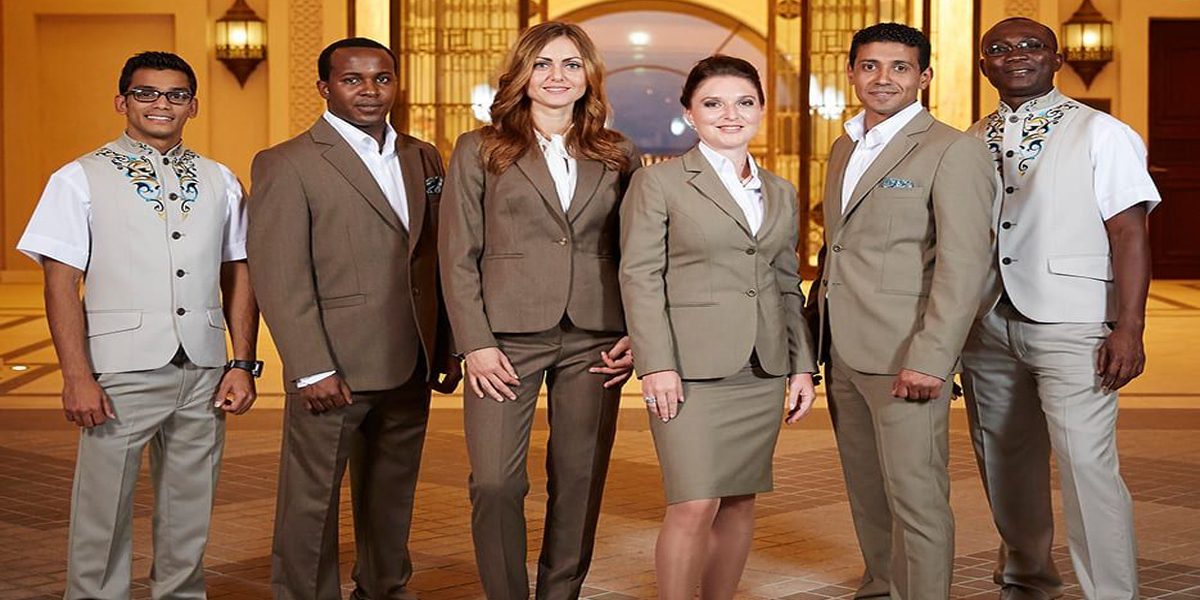
I believe color fastness is extremely important for uniform fabric. Poor color fastness leads to significant problems. I often see fading, discoloration, or staining. These issues directly impact a uniform’s professional appearance.
Consider uniforms exposed to sunlight. Coats and other uniform fabric items can develop lighter or discolored areas. The back and shoulders often show this. Unexposed parts keep their original color. This creates different shades on the same item. I also notice differential fading from rubbing. Various parts of a textile product experience different friction during use. This causes uneven discoloration. Elbows, sleeves, collars, armpits, buttocks, and knees are especially prone to fading.
Poor color fastness also causes staining of other garments. Products with inadequate color fastness can bleed color during wear. This affects other clothing worn at the same time. They can also contaminate other items when washed together. This impacts their appearance and usability.
I understand color degradation happens through several mechanisms. Sunlight exposure is a major one. UV radiation from the sun breaks down chemical bonds in dyes. This leads to color loss. Washing and cleaning also play a role. Mechanical action, detergents, and water temperature cause dyes to leach out. Harsh chemicals and repeated cycles speed up this effect. Environmental factors like air pollutants, humidity, and temperature fluctuations also contribute. Acid rain, for example, reacts with dyes. Damp or hot environments also speed up degradation. Chemical treatments, if done improperly, weaken dye molecules. This includes bleaching agents or stain-resistant treatments. I see these factors as direct threats to the longevity and appearance of any uniform fabric.
Key Color Fastness Tests for Uniform Fabric
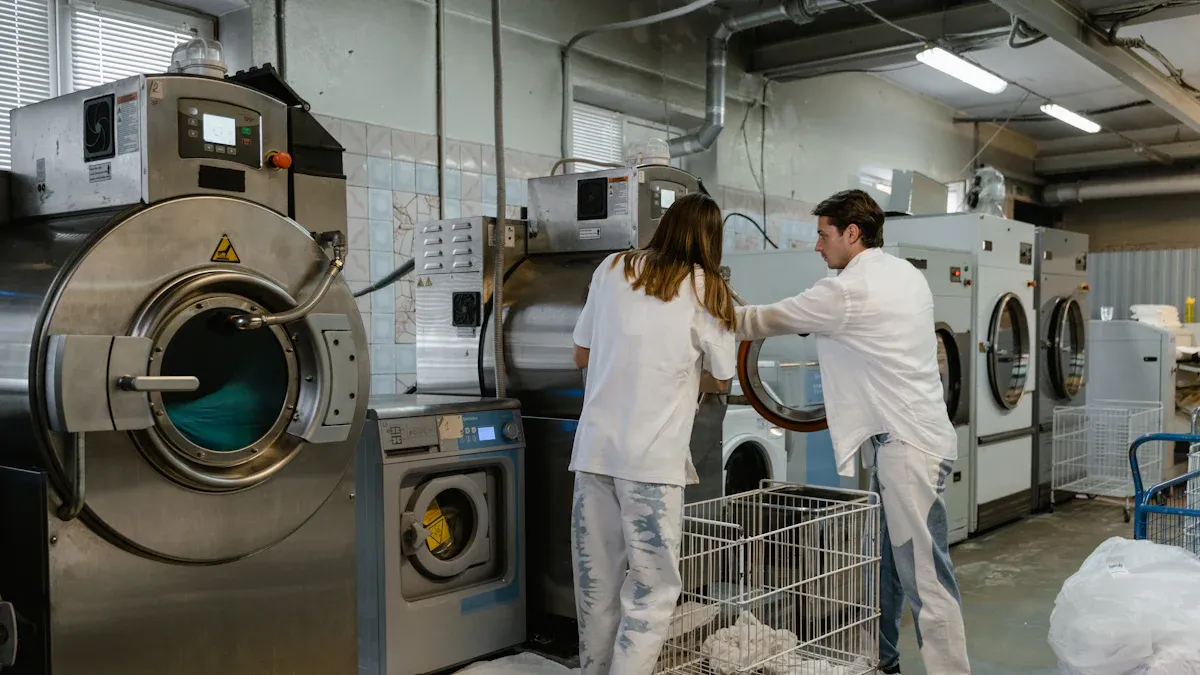
I know that understanding specific color fastness tests is vital. These tests help us predict how a uniform will perform. They ensure the fabric maintains its professional look over time. I rely on these standardized tests to guarantee quality.
Color Fastness to Washing
I consider color fastness to washing one of the most important tests for uniforms. Uniforms undergo frequent washing. This test measures how well the fabric resists color loss and staining during laundering. Poor washing fastness means colors fade quickly or bleed onto other garments.
I follow specific international standards for this test. The primary standard is ISO 105-C06:2010. This standard uses a reference detergent. It simulates normal household washing conditions. We conduct two main types of tests:
- Single (S) Test: This test represents one commercial or domestic wash cycle. It assesses color loss and staining. This happens due to desorption and abrasive action.
- Multiple (M) Test: This test simulates up to five commercial or domestic wash cycles. It uses increased mechanical action. This represents more severe laundering conditions.
I also pay close attention to the washing cycle parameters. These parameters ensure consistent and accurate testing:
- Temperature: We typically use 40°C or 60°C. This simulates real-world conditions.
- Time: The duration of the washing cycle depends on the textile characteristics and usage.
- Detergent Concentration: We measure this precisely according to industry standards.
- Water Volume: We maintain this consistently with testing standards.
- Rinsing Procedures: We use standardized procedures. These include specified water temperatures and durations. They remove residual detergents.
- Drying Methods: We use standardized procedures. These include air-drying or machine-drying. We document their temperature and duration.
We also use specific detergents for these tests. For example, ECE B phosphate-containing detergent (without fluorescent brightener) is common. AATCC 1993 Standard Reference Detergent WOB is another. It has specified main ingredients. Some tests use detergents without fluorescent brighteners or phosphates. Other tests use detergents with fluorescent brighteners and phosphates. I know that AATCC TM61-2013e(2020) is an accelerated method. It simulates five typical hand or home laundering loads in a single 45-minute test.
Color Fastness to Light
I understand that uniforms often face exposure to sunlight. This makes color fastness to light a critical factor. This test measures how well a fabric resists fading when exposed to light. UV radiation can break down dyes. This leads to color loss.
I use international standards to evaluate light fastness. ISO 105-B02 is an international standard. It evaluates fabric colorfastness to light. AATCC 16 is another standard. The American Association of Textile Chemists and Colorists established it for lightfastness testing. AATCC 188 is a standard for lightfastness testing under xenon arc exposure. UNI EN ISO 105-B02 is also identified as a lightfastness xenon arc test for fabrics.
We use different light sources for these tests:
- Daylight method
- Xenon arc lamp tester
- Carbon arc lamp tester
These sources simulate various light conditions. They help me predict how a uniform will hold its color outdoors or under strong indoor lighting.
Color Fastness to Rubbing
I know that uniforms experience constant friction. This happens during wear and movement. Color fastness to rubbing, also called crocking, measures how much color transfers from the fabric surface to another material through rubbing. This is important because I do not want uniform fabric to stain other clothing or skin.
I rely on several common methods for assessing this. ISO 105-X12 is an international standard. It determines how well fabrics resist color transfer when rubbed under dry and wet conditions. It applies to all textile types. AATCC Test Method 8, “Colorfastness to Crocking,” determines the amount of color transferred from colored textiles to other surfaces by rubbing. It applies to all dyed, printed, or colored textiles. Other relevant standards include ASTM D2054 for zipper tapes and JIS L 0849.
Many factors influence rubbing fastness results. I consider these when evaluating a fabric:
| Physical Factor | Influence on Rubbing Fastness |
|---|---|
| Fiber Type | Different fibers have varying surface characteristics and dye affinities. Smooth, synthetic fibers like polyester may exhibit better rubbing fastness than natural fibers like cotton or wool, which have more irregular surfaces and can shed dye particles more easily. |
| Yarn Structure | Tightly twisted yarns tend to hold dye more securely than loosely twisted or textured yarns, reducing the likelihood of dye transfer during rubbing. |
| Fabric Construction | Densely woven or knitted fabrics generally have better rubbing fastness than loosely constructed fabrics. The tighter structure helps to trap dye particles within the fabric, preventing them from being easily dislodged. |
| Surface Smoothness | Fabrics with a smoother surface tend to have better rubbing fastness as there are fewer protruding fibers or irregularities that can be abraded and release dye. |
| Presence of Finishes | Certain fabric finishes, such as softeners or resins, can sometimes negatively impact rubbing fastness by creating a film on the fiber surface that can be easily removed, taking dye with it. Conversely, some specialized finishes can improve rubbing fastness by binding dye more securely or creating a protective layer. |
| Moisture Content | Wet rubbing fastness is often lower than dry rubbing fastness because water can act as a lubricant, facilitating the transfer of dye particles, and can also swell fibers, making dye more accessible to transfer. |
| Pressure and Duration of Rubbing | Higher pressure and longer rubbing durations naturally lead to increased friction and a greater chance of dye transfer. |
| Direction of Rubbing | Rubbing fastness can sometimes vary depending on the direction of rubbing relative to the fabric’s weave or knit direction, due to differences in fiber orientation and surface texture. |
| Temperature | Elevated temperatures can increase the mobility of dye molecules and the flexibility of fibers, potentially leading to poorer rubbing fastness. |
| Abrasive Surface | The type of material used for rubbing (e.g., cotton cloth, felt) and its abrasive properties will influence the degree of dye transfer. A rougher abrasive surface will generally cause more dye transfer. |
| Dye Penetration and Fixation | Dyes that are well-penetrated into the fiber structure and strongly fixed (chemically bonded) to the fiber will exhibit better rubbing fastness. Poor penetration or fixation means dye is more likely to remain on the surface and be easily rubbed off. |
| Dye Particle Size and Aggregation | Larger dye particles or dye aggregates that sit on the fiber surface rather than penetrating it are more prone to being rubbed off. |
| Dye Class and Chemical Structure | Different dye classes (e.g., reactive, direct, vat, disperse) have varying affinities for specific fibers and different mechanisms of fixation. Dyes with strong covalent bonds to the fiber (like reactive dyes on cotton) generally have excellent rubbing fastness, while dyes that rely on weaker intermolecular forces may have poorer fastness. |
| Dye Concentration | Higher dye concentrations can sometimes lead to poorer rubbing fastness, especially if there is excess unfixed dye on the fiber surface. |
| Presence of Unfixed Dye | Any unfixed or hydrolyzed dye remaining on the fabric surface after dyeing and washing will significantly reduce rubbing fastness. Thorough washing-off procedures are crucial to remove these loose dye particles. |
| Auxiliary Chemicals | The use of certain dyeing auxiliaries (e.g., leveling agents, dispersing agents) can influence dye uptake and fixation, indirectly affecting rubbing fastness. Post-treatment chemicals, such as fixing agents, can directly improve rubbing fastness by enhancing dye-fiber interactions. |
| Dyeing Method | The specific dyeing method (e.g., exhaust dyeing, continuous dyeing, printing) can impact dye penetration, fixation, and the amount of unfixed dye, thereby influencing rubbing fastness. |
| Curing Conditions (for prints) | For printed fabrics, proper curing conditions (temperature, time) are essential for the binder to adequately fix the pigment to the fabric, which directly affects rubbing fastness. |
| Washing-off Efficiency | Inadequate washing-off after dyeing or printing leaves unfixed dye on the fabric, which is easily removed by rubbing. Effective washing-off is critical for good rubbing fastness. |
| After-treatments | Specific after-treatments, such as the application of fixing agents or cross-linking agents, can improve the rubbing fastness of certain dye-fiber combinations by enhancing dye-fiber bonds or creating a protective layer. |
Color Fastness to Perspiration
I know that human perspiration can significantly impact uniform colors. Perspiration contains various chemicals. These include salts, acids, and enzymes. They can cause fading or changes in fabric color over time. This makes color fastness to perspiration a crucial test. It ensures uniforms maintain their appearance even with prolonged wear.
I follow standard procedures for testing color fastness to perspiration:
- I prepare a perspiration solution. This solution can be acidic or alkaline. It mimics human sweat.
- I immerse the fabric sample in the prepared solution for a specified duration. This ensures saturation.
- I place the saturated fabric sample between two pieces of multifiber fabric. These include cotton, wool, nylon, polyester, acrylic, and acetate. This assesses staining on various fiber types.
- I subject the fabric assembly to controlled mechanical action. I use a perspiration tester. It applies consistent pressure at a specific temperature and humidity. This simulates wear conditions. The test duration typically lasts several hours.
- After the test period, I remove the samples. I allow them to dry under standardized conditions.
- I evaluate color change and staining visually. I use a grayscale for color change and a grayscale for staining. I compare the tested sample to a reference standard. I then rate the results.
- Optionally, I use instrumental methods like spectrophotometry. This quantifies color change more precisely. It measures light reflectance or transmittance before and after the test.
Ensuring Optimal Color Retention in Uniform Fabric
How Color Fastness is Measured and Rated
I know how we measure and rate color fastness. We use a grading system from 1 to 5. A rating of 5 means the highest quality. A rating of 1 means the lowest. This system applies to all textile products. I use specific international standards for testing. For example, ISO 105 C06 tests color fastness to washing. ISO 105 B02 checks color fastness to light. ISO 105 X12 measures color fastness to rubbing.
I interpret these ratings carefully. A rating of 1 means significant color change after washing. This fabric is not good for frequent washing. A rating of 3 shows slight color change. This is usually acceptable. A rating of 5 means no color change. This is ideal for textiles washed often. I also use specific test conditions and acceptance criteria:
| Test Type | Standard | Conditions Tested | Acceptance Criteria |
|---|---|---|---|
| Washing | AATCC 61 2A | 100°F ± 5°F, 45 mins | Grade 4+ |
| Light Exposure | ISO 105-B02 | Xenon Arc Lamp | Grade 4 |
| Perspiration | ISO 105-E04 | Acidic & Alkaline | Grade 3–4 |
| Rubbing | AATCC | Dry & Wet Contact | Dry: Grade 4, Wet: Grade 3 |
Factors Influencing Color Fastness in Uniform Fabric
Many factors influence color fastness. Fiber type and dye chemistry are very important. Fiber structure, shape, and surface affect how well dye sticks. Rough surfaces, like wool, help dye molecules lock in. Smooth surfaces, like synthetics, might need chemical changes. The internal structure of fibers also matters. Amorphous regions let dye in easily. Crystalline areas resist it.
The dyes I choose are critical. Post-treatment chemicals also play a big role. Reactive dyes work well with cotton. They form strong bonds. Disperse dyes are good for polyester. They benefit from heat-setting. Binders and fixatives help lock dye onto the fiber. This reduces dye movement and improves resistance to rubbing. Manufacturing processes also impact fastness. Soaping after dyeing, finishing methods, and color fixing agents all contribute. I assess color fastness during the lab-dip stage. This ensures the uniform fabric meets standards before full production.
Selecting and Maintaining Colorfast Uniform Fabric
I always recommend checking the manufacturer’s care label first. This gives specific instructions. If no instructions exist, I wash uniforms in cold water. Warmer temperatures can cause dyes to bleed. I also do a colorfastness test before washing new items. This prevents color transfer to other clothes.
I look for certain certifications. OEKO-TEX® and GOTS (Global Organic Textile Standard) indicate quality. I also check if the fabric meets ISO standards like ISO 105-C06 for washing or ISO 105-X12 for rubbing. These certifications and standards help me choose durable, colorfast uniform fabric.
I believe color fastness profoundly impacts uniform quality. It ensures durability and boosts consumer satisfaction. Prioritizing color fastness builds a strong brand image and offers cost-effective value. This also supports sustainability by extending fabric life.
FAQ
What is the best color fastness rating?
I consider a rating of 5 the best. This means the fabric shows no color change. It is ideal for uniforms.
Can I improve color fastness at home?
I recommend following care labels. Washing in cold water helps. Air drying also preserves color.
Why do some uniforms fade unevenly?
I see uneven fading from sunlight exposure or rubbing. Different parts of the fabric experience different wear.
Post time: Dec-30-2025