
Introduction
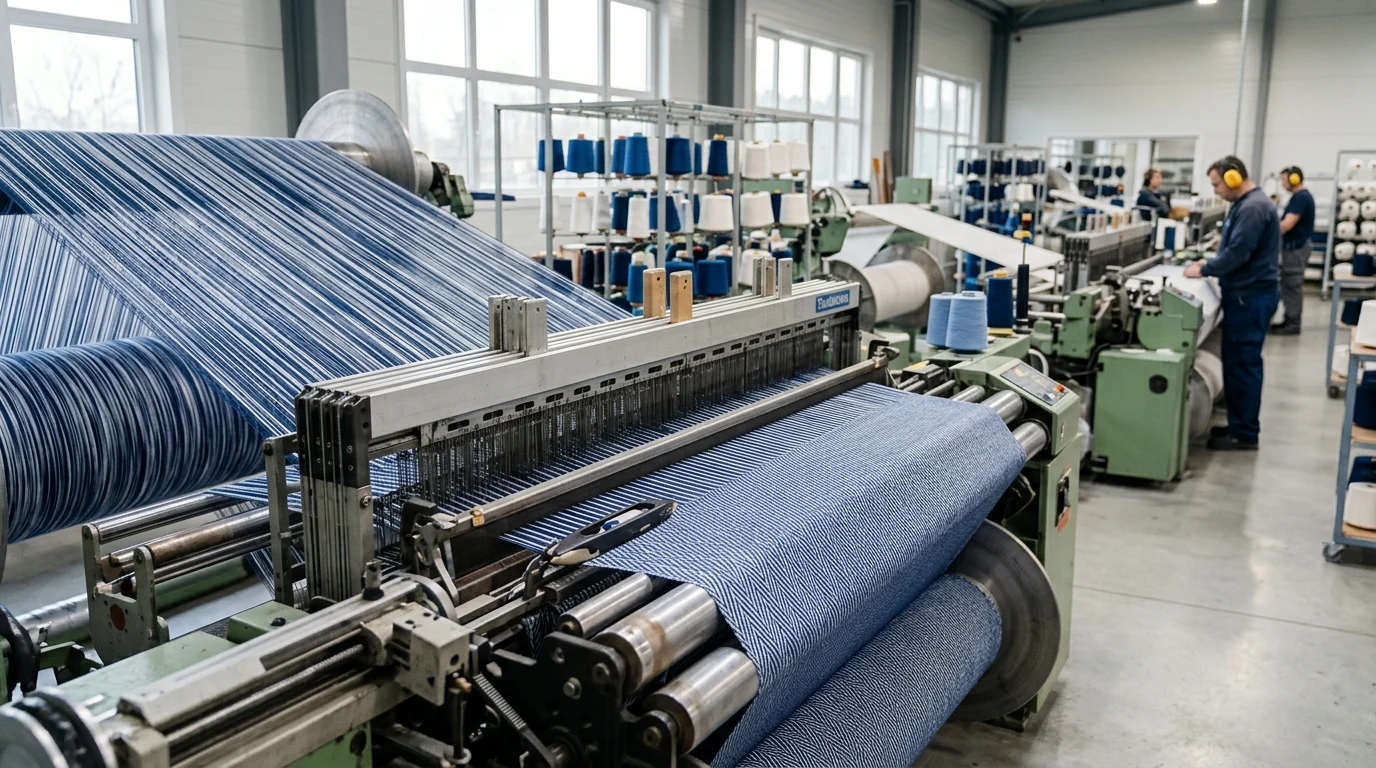
Large uniform fabric orders rarely fail because of one obvious mistake; more often, small inconsistencies in yarn, dyeing, tension, or finishing compound as production scales. For buyers, these defects can mean shade variation, unstable composition, weak durability, and costly delivery delays across thousands of meters. This article explains where bulk uniform fabric production typically goes wrong and how capable mills control those risks through tighter process tolerances, batch monitoring, and inspection at key stages. With that context, the details in the following sections will help you evaluate suppliers more accurately and spot warning signs before a bulk order turns into a quality problem.
Why Uniform Fabric Production Fails at Scale
In textile supply chain management, the transition from a flawless 50-meter sample to a 50,000-meter bulk order is where uniform fabric production most frequently breaks down. Scaling up introduces compounding variables in loom tension, dye affinity, and yarn count consistency that manual oversight cannot manage. Buyers often face catastrophic project delays because a mill’s infrastructure was not properly equipped to maintain strict tolerances across massive, continuous production runs. When a single batch failure can result in thousands of unusable garments, understanding these failure points becomes a critical procurement priority.
Core quality risks
The primary vulnerabilities in mass production revolve around durability metrics and composition stability. For instance, when sourcing TR formal uniform fabric, the standard blend—typically 65% polyester and 35% viscose—must remain consistent throughout the entire run. Poorly calibrated spinning machinery can cause this ratio to drift by 3% to 5%, which drastically alters the fabric’s drape and dye uptake. Furthermore, pilling resistance is a non-negotiable metric for daily-wear uniforms that endure constant friction. While institutional buyers demand a minimum Grade 4 rating on the ISO 12945-2 standard (tested at 2,000 rubs), mills cutting corners often yield fabrics that degrade to an unacceptable Grade 2 or 3 within ten wash cycles.
Tolerance checks and inspection points
To proactively mitigate these risks, standardized grading methodologies like the 4-Point System (ASTM D5430) are essential. In premium uniform manufacturing, the acceptable defect threshold is strictly capped at 20 penalty points per 100 linear yards. Anything exceeding 24 points is classified as a failure. These inspection points must occur not just at the final rolling stage, but at multiple critical junctures: immediately after weaving (greige inspection) and post-dyeing. Catching a warp tension flaw or a broken pick at the greige stage saves thousands of dollars in wasted chemical processing and allows the mill to recalibrate the looms before the defect compounds across thousands of meters.
How Mills Prevent Common Quality Defects
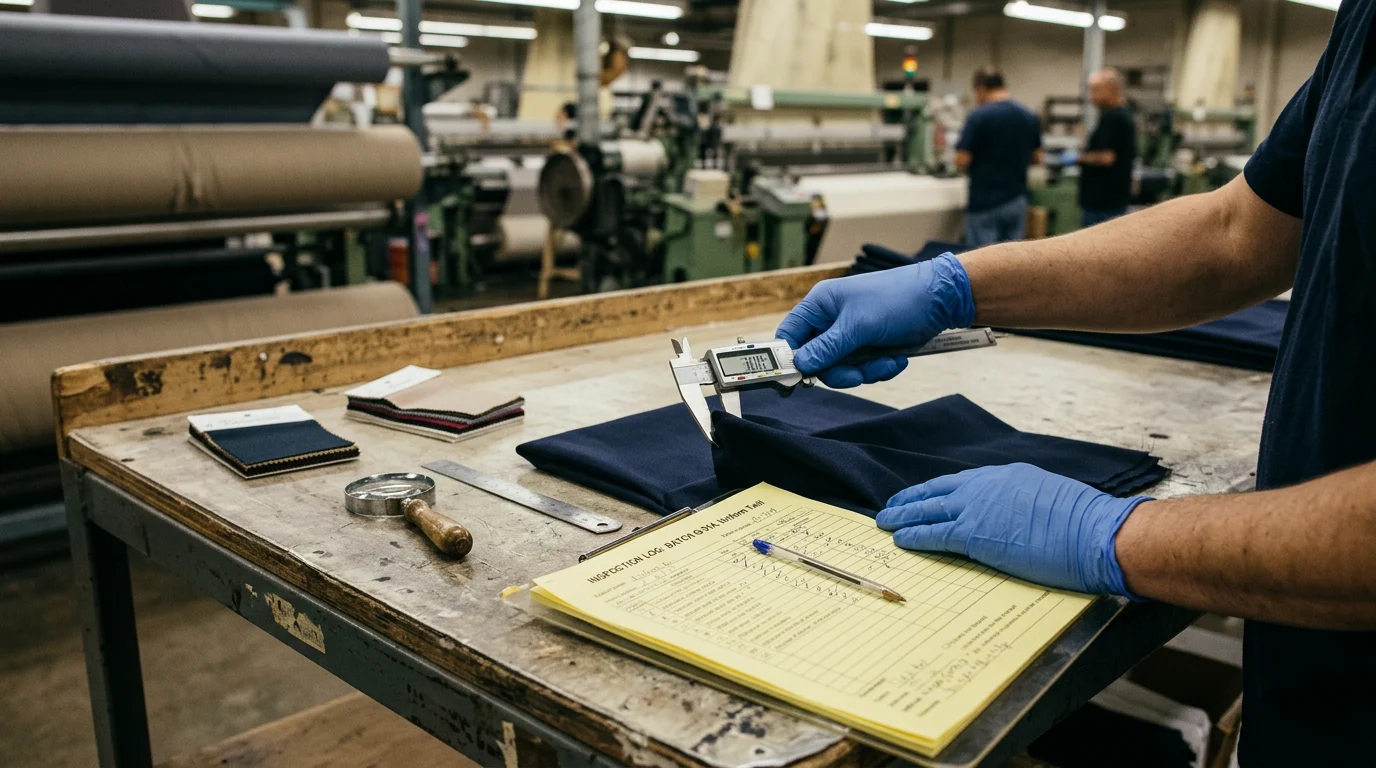
Leading textile mills do not simply discard defective yardage; they engineer defect prevention directly into their machinery and daily workflows. The most reliable manufacturing partners utilize automated, sensor-driven environments to eliminate human error during fabric creation. By controlling the ambient environment and utilizing precision tensioning, they ensure consistency from the first meter to the last.
Controls for color variation and shrinkage
Color matching and dimensional stability are the most heavily scrutinized parameters in the industry. In uniform programs, employees across different departments and production batches must look identical, meaning batch-to-batch color variation must maintain a Delta E (ΔE) under 1.0. To achieve this, advanced mills utilize continuous dyeing ranges equipped with inline spectrophotometers that adjust dye feeds in real-time, preventing the shading issues common in traditional batch dyeing. Similarly, mechanical sanforization is employed to lock in dimensional stability. For lightweight, breathable materials like poly viscose fabric good for summer, shrinkage must remain under 3% in both warp and weft directions after three standard wash cycles.
| Quality Metric | Standard Requirement | Premium Uniform Tolerance |
|---|---|---|
| Color Consistency (Batch to Batch) | ΔE < 1.5 | ΔE < 0.8 – 1.0 |
| Dimensional Stability (Shrinkage) | < 5% | < 3% |
| Pilling Resistance (ISO 12945-2) | Grade 3 | Grade 4 (at 2,000 rubs) |
| Tear Strength (Warp/Weft) | > 10N | > 15N |
Stripe and check alignment control
When dealing with complex patterned textiles or high-stretch variations such as rayon spandex polyester fabric, maintaining precise structural alignment is absolutely paramount. Bow and skew defects—where horizontal yarns curve or slant—can ruin the drape and seam matching of a tailored uniform. A strict skew tolerance of less than 2% across the entire fabric width is standard practice. To guarantee this level of precision, modern facilities deploy optical weft straighteners. These sophisticated digital camera systems scan the fabric web continuously as it passes through the stenter frame. If the system detects a distortion, it applies instant micro-adjustments to the tension rollers, forcing the yarns back into perfect perpendicular alignment immediately before the fabric is permanently heat-set.
How to Evaluate Suppliers and Make Safer Purchasing Decisions
Identifying a mill capable of executing these controls requires a rigorous evaluation process. Procurement teams and uniform brand managers should look beyond the initial cost per meter. A truly secure purchasing decision requires thoroughly auditing a supplier’s infrastructural capacity, testing protocols, and historical performance data to ensure they can deliver bulk consistency over multi-year contracts.
Audit steps, testing, and approval checks
The auditing process must validate the mill’s quality assurance capabilities before financial commitments are made. Prior to greenlighting bulk production, comprehensive lab dips and physical strike-offs, followed by limited pilot runs, are required. For heavy-duty, daily-wear applications like poly viscose fabric for men, third-party testing from certified laboratories like SGS or Intertek is mandated. A standard baseline requires verifying a tear strength of greater than 15 Newtons and a colorfastness to light rating of at least 4 on the blue wool scale. Furthermore, a reliable supplier should be fully willing to accept independent AQL 1.5 level inspections at both the 20% completion mark (inline inspection) and just prior to final container loading.
Mill capabilities for cost, quality, and lead time
Ultimately, a textile supplier’s value is measured by their ability to balance cost, quality, and lead time without compromise. Evaluating these capabilities holistically ensures a resilient supply chain capable of meeting strict uniform program demands year over year.
Key Takeaways
- The most important conclusions and rationale for uniform fabric production
- Specs, compliance, and risk checks worth validating before you commit
- Practical next steps and caveats readers can apply immediately
Frequently Asked Questions
What causes bulk uniform fabric to fail after a good sample?
Scale changes loom tension, yarn consistency, and dye behavior. Ask suppliers for bulk-process controls, not just sample approval, before confirming large orders.
What quality standards should buyers request for uniform fabric?
Request pilling Grade 4 at 2,000 rubs, shrinkage under 3%, tear strength above 15N, and batch color variation below ΔE 1.0.
How do mills prevent color shading between batches?
Reliable mills use inline spectrophotometers in continuous dyeing to adjust dye feeds in real time and keep color variation within tight ΔE limits.
When should fabric inspections happen during production?
At minimum, inspect after weaving, after dyeing, and at final rolling. A 4-Point System limit of 20 points per 100 yards is a practical benchmark.
How can I verify a supplier’s uniform fabric controls with IYUNAI Textile?
Contact the mill through https://www.iyunaitextile.com/contact-us/ and request test reports, inspection standards, lead times, and bulk-order quality control details.
Post time: Jun-11-2026