
Commercial Value of Customized TR Fabric with English Selvage
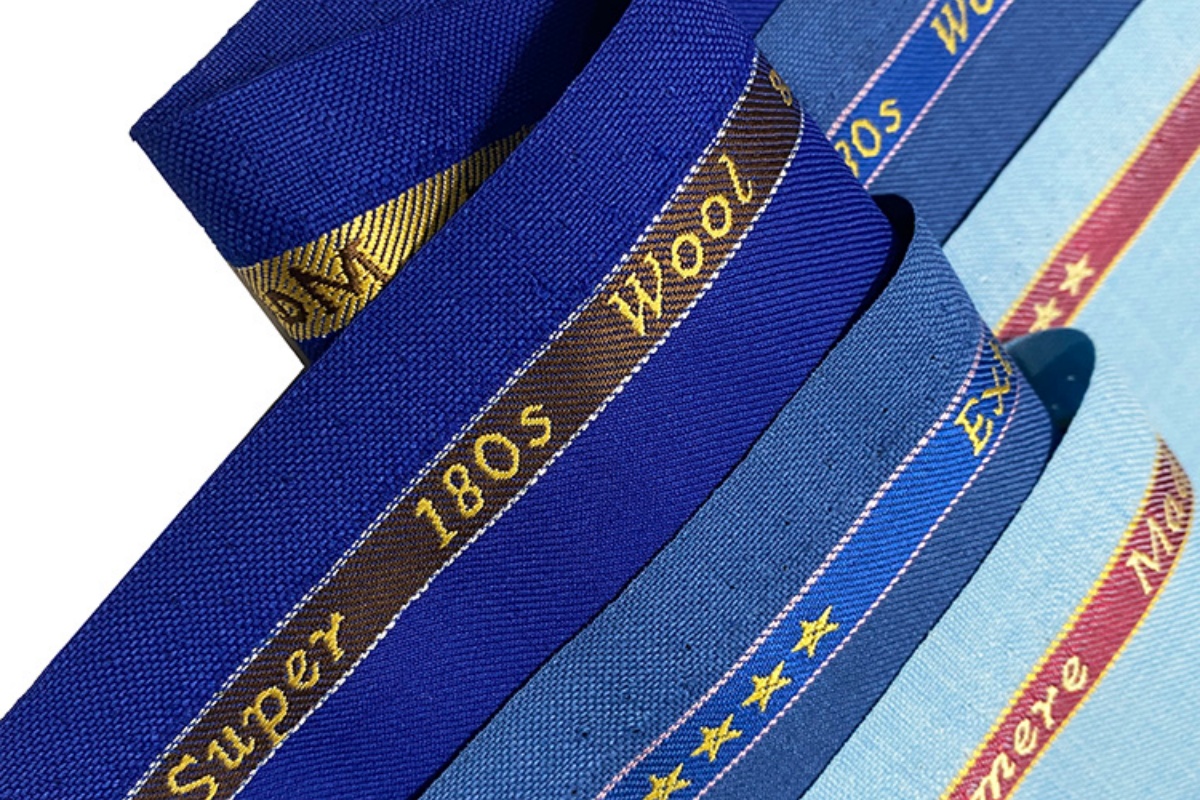
Integrating bespoke branding into the textile structure transforms standard suiting materials into premium offerings. English selvage refers to a specific edge-finishing technique where text, logos, or patterns are woven directly into the fabric’s tightly bound edge using a jacquard loom. Customized TR (polyester and rayon) blends featuring this woven edge provide a distinct competitive advantage for suiting manufacturers. By embedding brand names, yarn composition details, or origin markers directly into the fabric edge, mills elevate the perceived value of the yardage for marketing purposes, while simultaneously providing a built-in security feature to deter counterfeiting. However, buyers should note that TR fabrics lack the traditional prestige of pure wool, making selvage branding most appropriate for mid-tier markets rather than ultra-premium lines or highly price-sensitive unbranded manufacturing.
Brand Differentiation and Buyer Appeal
A woven edge serves as a strong visual indicator of quality control and bespoke manufacturing. While branding elevates marketing appeal, the complexity of the weave also acts as a supply chain security measure to prevent counterfeiting. Using branded selvage allows mid-tier suiting brands to adopt visual cues traditionally reserved for high-end European worsted wools. Some manufacturers report that garment makers can increase their final suit price points by up to 15% to 20% when using selvage-branded fabrics compared to garments constructed from plain-edge equivalents.
Key Terms and Customization Options
Procurement teams must navigate several customization parameters when specifying woven edge details. The primary method uses electronic jacquard weaving, where specific warp and weft yarns interlace to form the designated text and logos. Buyers can specify letter heights, typically ranging from a subtle 8 mm up to a bold 15 mm, alongside specific typography styles. Color contrasting is another vital option; buyers frequently incorporate metallic Lurex yarns or high-contrast dyed threads. The inclusion of custom English selvage generally introduces an estimated production cost premium ranging from $0.25 to $0.80 per linear meter. This premium fluctuates based on the complexity of the jacquard pattern, the density of the pick count, and the number of distinct thread colors used in the edge weave.
Quality Requirements for English Selvage
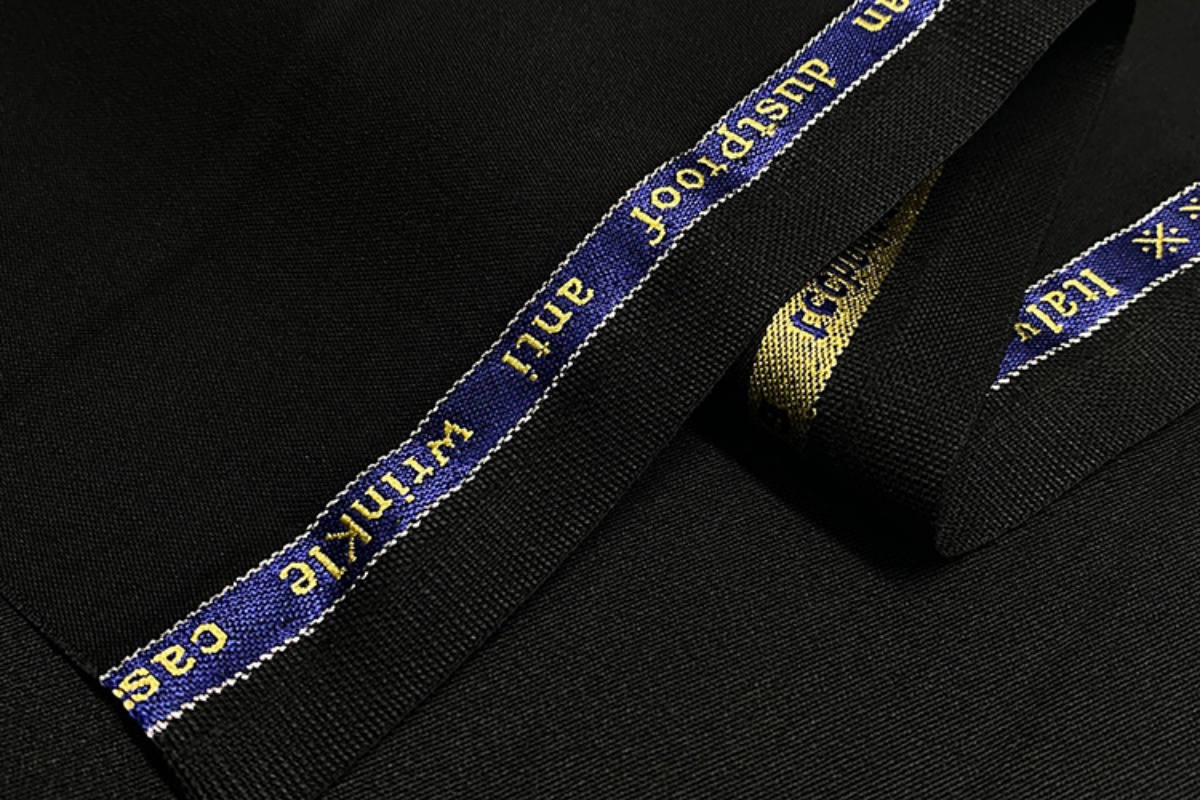
Maintaining structural integrity along the fabric edge is paramount when integrating custom lettering into TR blends. Because TR (polyester-rayon) has lower fiber strength and different finishing behaviors compared to wool, it requires distinct handling. Poorly executed selvages can lead to severe tension imbalances, causing the fabric to pucker, curl, or feed unevenly during automated spreading and cutting processes in the garment factory. Buyers must also communicate TR-specific limitations to downstream customers. Unlike pure wool, TR fabric is highly sensitive to heat, prone to static buildup, and offers inferior breathability. Garments made from these blends typically require strict dry-cleaning protocols to maintain the integrity of both the body fabric and the customized edge.
Selvage Materials and Construction
The construction of these customized blends requires specialized loom attachments, typically high-speed electronic jacquard name selvage units fitted to modern rapier or air-jet looms. The specific yarns selected for the lettering must perfectly match the thermal and mechanical shrinkage profile of the main TR body fabric, accounting for TR’s heat sensitivity and potential dye-migration issues between the body and selvage yarns. Industry guidelines suggest that if the selvage yarn shrinks at a rate exceeding the body fabric by typically more than 1.5% during high-temperature finishing or pressing, the roll may exhibit edge waviness. This defect renders the outer 3 to 5 centimeters of the fabric width unusable. Furthermore, dynamic tension control during weaving is critical; the warp tension of the selvage ends should generally remain within an approximate 2.0% to 3.0% tolerance of the main ground warp to ensure a flat profile.
Technical Specifications to Confirm
Quality checks must verify specific technical parameters before any bulk cutting commences. Buyers sourcing these materials should mandate comprehensive specification sheets detailing edge thickness, dimensional stability, and tensile strength to ensure seamless compatibility with modern CNC spreading machines.
| Specification Parameter | Standard TR Fabric | Custom English Selvage TR | Acceptable Tolerance Limit |
|---|---|---|---|
| Edge Thickness | ~0.45 mm – 0.55 mm | ~0.60 mm – 0.75 mm | Approx. +/- 0.05 mm |
| Dimensional Stability (ISO 5077) | Typically < 2.0% warp/weft | Typically < 2.0% (Body), < 2.5% (Edge) | Max ~0.5% differential |
| Lettering Defect Rate | N/A | < 2.0% per 100 meters | Must pass strict visual inspection |
| Total Selvage Width | ~10 mm – 15 mm | ~15 mm – 25 mm | Approx. +/- 2.0 mm |
Enforcing these metrics ensures the fabric remains flat on the cutting table. It also guarantees that the bespoke branding remains crisp, legible, and structurally sound throughout the entire length of the commercial roll.
Sourcing and Approval Process
Transitioning a custom selvage concept from initial digital design to full-scale bulk production requires a structured sourcing process. Procurement managers must carefully align their purchasing timelines with the extended lead times inherent to custom jacquard programming and specialized loom setup.
Supplier Evaluation and Sampling
Evaluating a textile mill’s technical capability to produce customized yardage begins with a review of their in-house electronic jacquard machinery and historical strike-off accuracy. The initial sampling phase typically commences with a digital CAD (Computer-Aided Design) layout illustrating the selvage text and spacing, which requires 3 to 5 days for buyer approval. Following CAD sign-off, the mill programs the loom to produce a physical strike-off or loom ticket sample. This physical prototype adds an estimated 10 to 14 days to the pre-production timeline. Buyers must rigorously inspect this physical sample for precise letter clarity, the absence of skipped stitches, and exact color matching of the dyed selvage yarns against standardized Pantone textile references.
MOQ, Cost, and Final Approval
The bespoke nature of English selvage impacts Minimum Order Quantities (MOQs) and costs.
Key Takeaways
- Use customized English selvage on TR fabric when targeting mid-tier suiting markets that need stronger branding without the cost of pure wool.
- Budget an added cost of about $0.25 to $0.80 per linear meter for custom selvage, depending on jacquard complexity, colors, and pick density.
- Specify practical lettering dimensions, typically between 8 mm and 15 mm, to balance brand visibility with edge stability.
- Check selvage tension, flatness, and lettering clarity before bulk approval to avoid puckering, curling, or cutting issues in garment production.
- Communicate TR fabric limitations clearly, including heat sensitivity, static buildup, lower breathability, and recommended dry-cleaning care.
Frequently Asked Questions
What is English selvage in TR fabric?
English selvage is a tightly woven fabric edge that includes text, logos, or patterns, usually created with a jacquard loom. In TR fabric, it is often used to display branding, fiber composition, or origin details.
Why do buyers customize TR fabric with English selvage?
Customization helps mid-tier suiting brands improve product presentation, support brand recognition, and add a visible anti-counterfeiting feature. It can also make the fabric appear more premium than plain-edge alternatives.
How much does custom English selvage add to fabric cost?
The article estimates a cost premium of about $0.25 to $0.80 per linear meter, depending on jacquard complexity, pick density, lettering size, and the number of thread colors used.
What letter size is common for woven selvage branding?
Typical letter heights range from around 8 mm for subtle branding to 15 mm for bolder visibility. Buyers should confirm readability, edge stability, and compatibility with garment cutting requirements.
Is customized TR fabric suitable for luxury suiting?
It is better suited to mid-tier markets. TR blends are practical and cost-effective, but they do not carry the same prestige, breathability, or natural performance associated with pure wool fabrics.

Yunai Textile
Post time: Nov-04-2026