
Data-Driven Durability: Inside the Textile Lab for High-Performance School and Medical Uniforms
In the competitive world of international B2B textile procurement, claims of “high quality” and “superior durability” are frequently tossed around. However, for institutional clothing wholesalers and professional uniform brands, purchasing decisions cannot be based on marketing slogans alone. School children put their clothing through rigorous daily activities—running, friction against wooden desks, and frequent machine washes. Similarly, medical professionals face high-intensity shifts where their uniforms must resist tears, fluid exposure, and constant stretching.
At YunAi Textile, we believe that real quality is proven, not just promised. To ensure absolute control over our material performance, we run a state-of-the-art in-house testing facility dedicated to checking the limits of our fabrics. By looking closely at the specific test metrics of pilling resistance, tensile strength, and abrasion resistance, here is how we use laboratory data to engineer fabrics that outlast the competition.
Why Data-Driven Testing Matters for Institutional Textiles
When an overseas buyer sources large volumes of uniform fabric, they are making an investment meant to last an entire school year or institutional cycle. A high failure rate—such as premature tearing at the seams or heavy surface pilling after a few weeks—results in costly product recalls and heavily damages the brand’s reputation with schools and hospitals.
To avoid these issues, our laboratory subjects every batch of raw material to extreme stress testing. We measure exactly how many cycles of friction a piece of 100 polyester school uniform fabric can handle before showing signs of wear. We test the precise force required to tear a premium woven 65 polyester 35 rayon fabric for school uniform styles. By gathering hard data before bulk production, we take the guesswork out of international fabric sourcing.
School Wear Testing: Resisting the Rigors of the Playground
School clothing faces some of the harshest physical environments of any apparel sector. A classic school jumper or blazer is expected to maintain its structural form and clean appearance despite constant friction and rough play.
1. Martindale Abrasion and Pilling Resistance Testing
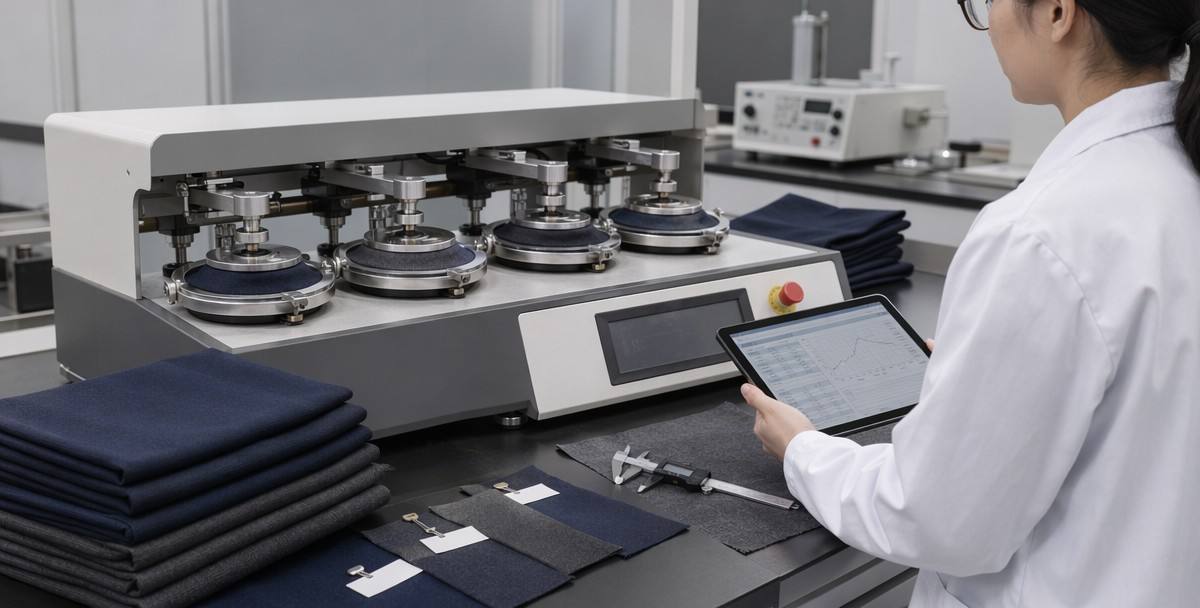
Our laboratory utilizes the industry-standard Martindale Abrasion Tester to simulate years of active wear. For our high-density 100 polyester school uniform fabric, our goal is a minimum performance rating of Grade 4.5 out of 5 after 7,000 continuous rubs. This data proves that the fabric will not thin out or form unsightly fiber balls (pilling) when students lean against hard surfaces or carry heavy backpacks.
2. Tensile and Tear Strength Validation
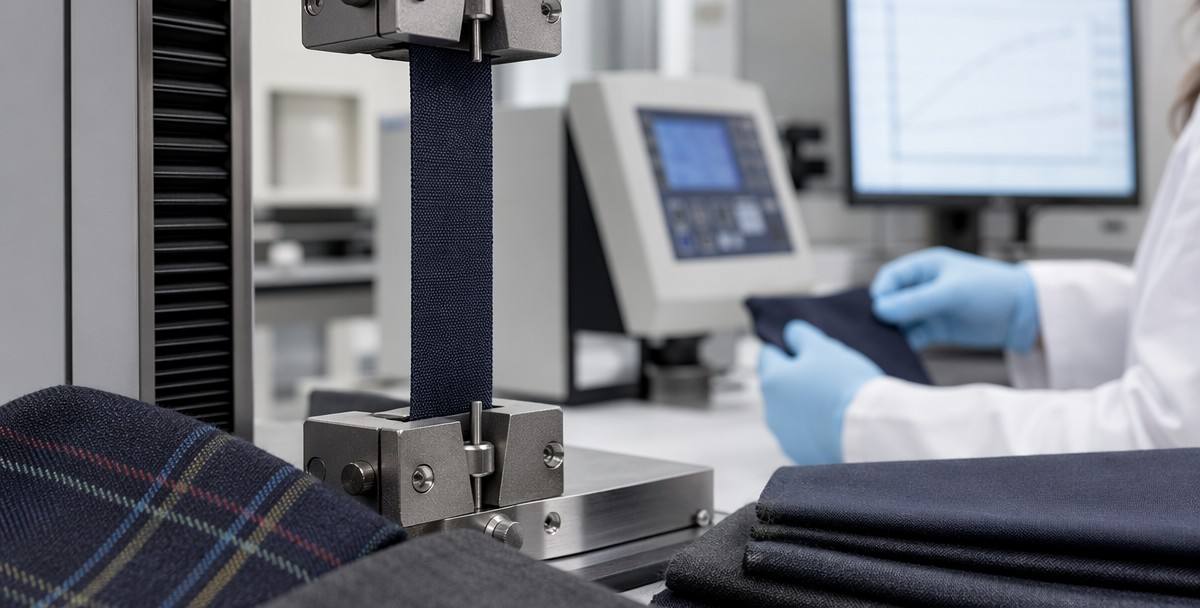
When manufacturing tailored British styles school uniform fabric, achieving the perfect balance between style and strength is vital. Our Elmendorf tear testing machines measure the exact force (in Newtons) required to propagate a tear. Our specialized 65 polyester 35 rayon fabric for school uniform garments consistently achieves a tensile strength rating exceeding international standards. This data translates directly to fewer ripped elbows and blown-out knees, protecting your brand from end-user complaints.
Medical Wear Testing: Engineering Resilience Under Pressure
Healthcare environments require a completely different set of performance criteria. Medical scrubs and gowns undergo industrial laundering processes at high temperatures, which can quickly degrade standard fibers.
Our testing laboratory ensures that our performance blends maintain strict structural integrity under these conditions. We measure the dimensional stability (shrinkage resistance) and colorfastness against chlorine bleaching. When evaluating a high-performance uniform fabric intended for the medical market, our technicians conduct wet-and-dry tensile tests. The data gathered allows us to fine-tune our yarn density and finishing agents, making sure the final medical uniforms remain flexible, comfortable, and completely tear-resistant during extended medical shifts.
The YunAi Textile Lab Testing Protocol
To maintain absolute transparency and control over our shipments, YunAi Textile follows a strict multi-tier laboratory workflow:
-
Yarn Level Testing: Checking the single-yarn breaking strength and twist consistency before the weaving process starts.
-
Greige Fabric Audit: Testing the structural construction, weight per square meter (GSM), and native density directly from the loom.
-
Post-Finishing Stress Evaluation: Putting the finished fabric through Martindale pilling tests, Elmendorf tear tests, and color fastness evaluations.
-
Certified Data Report Generation: Compiling these lab results into an official quality certificate provided directly to our B2B buyers before shipping approval.
Protect Your Brand with Verifiable Fabric Performance
For global B2B buyers, sourcing fabric shouldn’t be a gamble. By choosing a manufacturer that relies on transparent laboratory testing, you protect your supply chain from unexpected product failures and build deep trust with your clients.
Whether you need bulk 100 polyester school uniform fabric for high-volume distributions, elegant British styles school uniform fabric for premium school wear lines, or rugged 65 polyester 35 rayon fabric for school uniform trousers and a durable school jumper, YunAi Textile delivers the data-backed quality you need. Contact our technical team today to request our latest laboratory test reports and sample swatches.
Post time: Jul-15-2026