
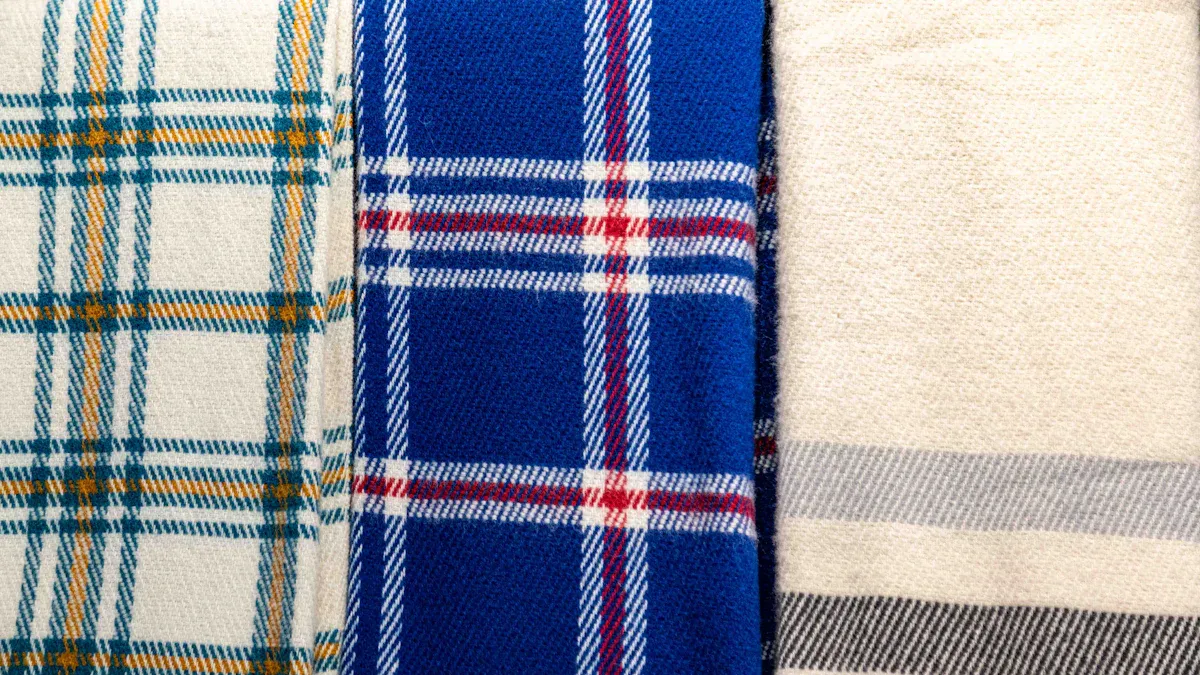
Yarn-dyed woven fabric is created by dyeing individual yarns before they are woven together. This technique stands in contrast to piece-dyeing, where the entire fabric is dyed after weaving. The pre-dyeing process gives the material an inherent, long-lasting quality. Many school uniform fabric suppliers prefer this method to produce durable fabric for school uniforms, including specialized fabric for school uniform pants and high-quality school uniform shirt fabric.
Key Takeaways
- Yarn-dyed fabric is made by coloring threads before weaving them. This makes the colors last longer.
- This fabric has deep colors and patterns. It also feels good to touch.
- Yarn-dyed fabric keeps its color well. It is strong and does not fade easily.
The Unique Qualities of Yarn-Dyed Woven Fabric
Inherent Color and Pattern Integration
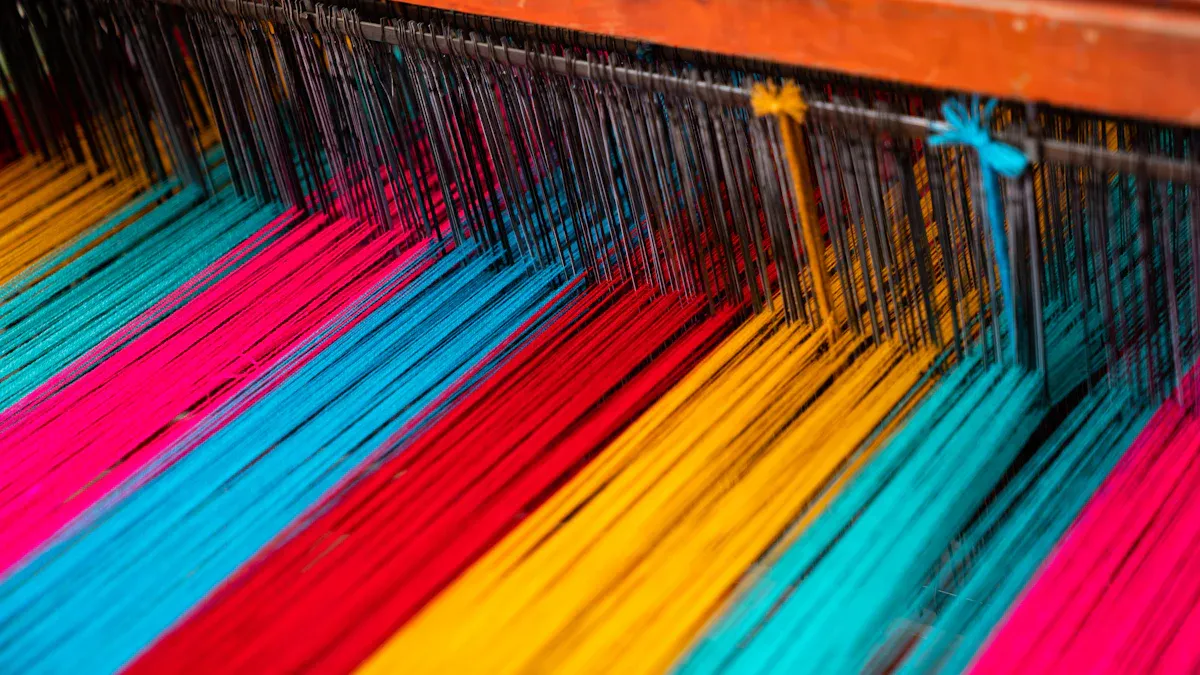
Yarn-dyed woven fabric possesses an intrinsic quality where color and pattern become one with the material. This unique characteristic stems from dyeing individual yarns before weaving them into cloth. The process ensures that each thread carries its intended color, which then forms the pattern as the fabric takes shape on the loom.
- Thread Dyeing: Threads receive their color before weaving, which defines the final textile’s color palette.
- Resist Dyeing: Techniques like Ikat, Tie-Dye, or Batik create patterns by binding or waxing parts of the threads before dyeing. When weavers integrate these dyed strands, they form intricate motifs.
- Integration with Design: Dyeing, whether natural or synthetic, integrates with weaving at the design stage. This ensures each colored thread finds its correct place on the loom to form patterns.
- Warping: The color sequencing of pre-dyed warp threads determines the fabric’s initial appearance. This is critical for patterned weaves such as stripes or checks.
- Weft Preparation: Multiple colors of pre-dyed weft yarns can be prepared to create vibrant borders, motifs, or design accents.
Before dyeing, manufacturers prepare the yarns through specific chemical processes. These steps are crucial for achieving vibrant, lasting colors.
- Cleaning and Scouring: This process removes oils, dirt, and other impurities from fibers. It is crucial for optimal dye absorption and achieving vibrant, lasting colors.
- Mordanting and Pretreatment: Mordants are substances that help dyes adhere to fibers. Pre-treatment steps significantly influence the final shade and the longevity of the color.
Depth and Dimension in Design
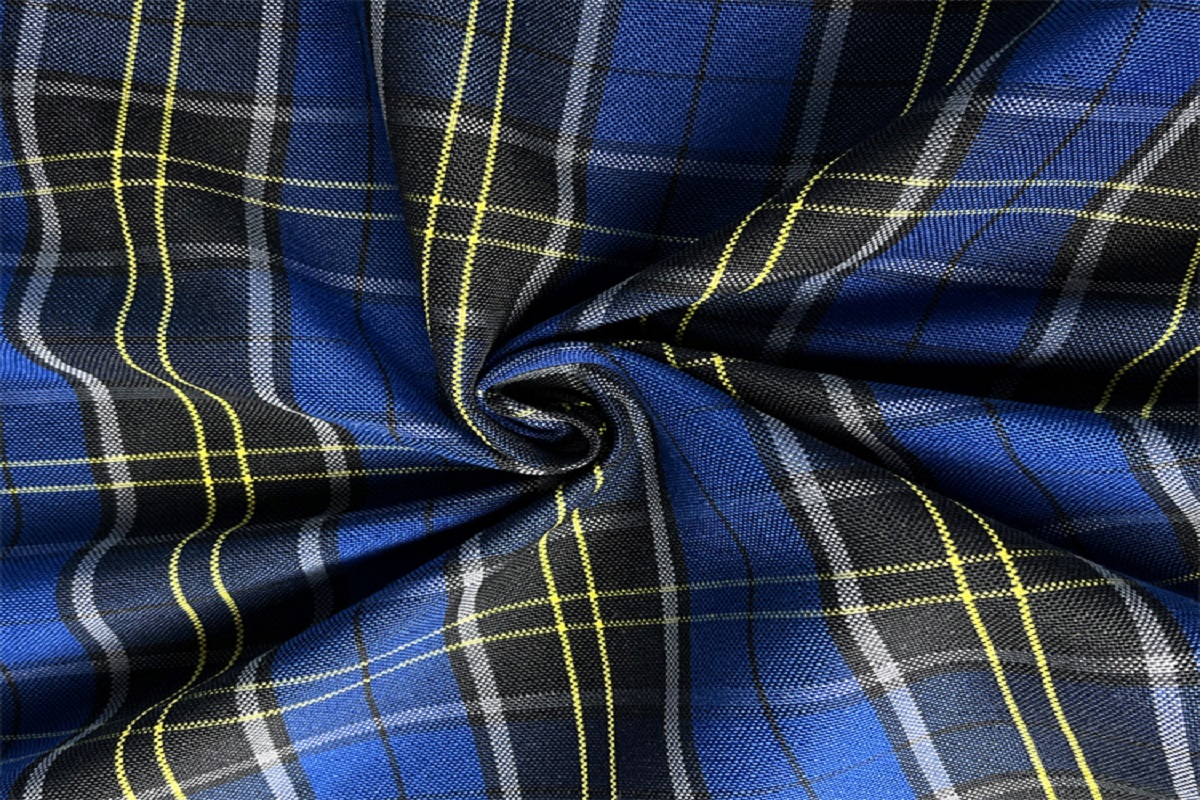
The pre-dyeing method also gives yarn-dyed fabrics a remarkable depth and dimension in their designs. Weavers achieve this by strategically placing different colored yarns during the weaving process. Alternating colored yarns in both the warp and weft is a key weaving technique. This method allows for the creation of intricate designs such as stripes, plaids, houndstooth, and checks, which in turn gives the fabric a multidimensional appearance, thereby achieving depth and dimension.
Designers also enhance the dimensionality of the fabric through careful fiber selection and finishing.
- Selecting fibers that ‘bloom’ (for example, Polwarth or Targhee) enhances the dimensionality of art yarn.
- Fulling the finished woven piece in a warm bath allows the yarn to ‘blossom’. This contributes to a cohesive and dimensional fabric. Gentle fulling is advised to maintain the structure of complex art yarns.
Superior Texture and Hand-Feel
The texture and hand-feel of yarn-dyed woven fabric are often superior due to the careful selection and preparation of yarns. Different yarn types and fiber blends significantly influence these tactile qualities.
- Natural Fibers: These offer breathability, comfort, and biodegradability.
- Cotton: It is soft and breathable, suitable for various fabric weights.
- Linen: It is strong and durable with a crisp texture.
- Wool: It is known for warmth and resilience.
- Synthetic Fibers: These provide strength and moisture-wicking capabilities.
- Polyester: It is versatile, durable, and resistant to stretching, shrinking, and mildew.
- Nylon: It is strong, elastic, and abrasion-resistant.
- Acrylic: It is soft, lightweight, and quick-drying, often used as a wool substitute.
- Blended Fibers: These combine the advantages of natural and synthetic fibers, offering comfort and durability. Common blends include Cotton-Polyester, Wool-Acrylic, Silk-Cotton, and Linen-Rayon.
The construction of the yarn itself also plays a vital role.
- Ply: This refers to the number of individual fibers twisted together. Plied yarns (for example, two- or four-ply) are generally stronger and more durable, impacting the fabric’s overall robustness.
- Twist: The direction and amount of twist applied to yarn fibers affect the yarn’s strength, texture, and appearance. Finer yarns with less twist might be used for lightweight fabrics like shawls, influencing their delicate hand-feel.
Yarn fineness and shape further refine the fabric’s feel.
- Yarn Fineness/Yarn Count: This influences fabric weight and feel.
- Roving (coarse yarn): Used for thick fabrics like coarse cloth or flannel.
- Spun yarn (fine yarn): Used for high-end fabrics like poplin, contributing to a finer hand-feel.
- Yarn Shape (Staple Fiber Yarn vs. Filament Yarn):
- Staple Fiber Yarn (short fibers): It has a loose structure, more air content, and good covering power, resulting in a good hand-feel and comfort.
- Filament Yarn: It features a smooth surface, good luster, and low friction. Fabrics woven with filament yarn feel smooth, cool, bright, and have better strength and wear resistance.
- Fancy Yarn: This is designed with special appearance, feel, structure, and texture. It enriches the fabric’s appearance and improves its wearing properties, directly impacting the unique texture and hand-feel.
Different yarn twist levels also contribute to the final texture:
| Yarn Twist Level | Applications / Fabric Characteristics |
|---|---|
| Low twist yarn (below 300) | Used for fleece, knitted fabrics, contributing to a softer feel. |
| Medium twist yarn (300-1000) | Results in softer fabrics. |
| Strong twist yarn (1000-3000) | Leads to smoother fabrics. |
| Super Twist Yarn (over 3000) | Used for folded fabrics, implying a very smooth texture. |
Lasting Benefits of Yarn-Dyed Woven Fabric
Yarn-dyed woven fabric offers significant advantages that extend beyond its initial aesthetic appeal. These benefits ensure the material maintains its quality and appearance over time, making it a preferred choice for many applications.
Exceptional Colorfastness and Vibrancy
Yarn-dyed fabrics are renowned for their exceptional colorfastness and lasting vibrancy. The dyeing process occurs before weaving, which deeply saturates each individual yarn with color. This method ensures the colors remain bright and true, even after extensive use and washing.
Specific dyeing methods significantly contribute to this vibrancy retention. Reactive dyeing forms a strong chemical bond with fibers. This bond makes the colors highly resistant to washing and fading, producing bright, long-lasting results. Solution dyeing embeds the dye within the fiber itself before spinning. This process makes colors highly resistant to fading from sun exposure or repeated washing. Vat dyeing involves reducing the dye, applying it, and then oxidizing it to develop the final color. This method produces vibrant, colorfast results, especially on cellulose fibers.
| Dyeing Method | Mechanism for Vibrancy Retention |
|---|---|
| Reactive Dyeing | Forms a strong chemical bond with fibers, highly resistant to washing and fading, producing bright, long-lasting colors. |
| Solution Dyeing | Dye is embedded within the fiber itself before spinning, making colors highly resistant to fading from sun exposure or repeated washing. |
| Vat Dyeing | Involves reducing the dye, applying it, and then oxidizing it to develop the final color, known for producing vibrant, colorfast results, especially on cellulose fibers. |
Industry standards measure a fabric’s ability to retain color. These tests ensure the fabric meets specific performance criteria.
- Colorfastness to Washing: Standards like ISO 105-C06:2010 evaluate a fabric’s ability to retain color after laundering. This test uses a reference detergent to simulate household washing conditions. It includes single (S) and multiple (M) tests to assess color loss and staining. Other international standards include ISO 105-C10, AATCC 61 (American), JIS L 0844 (Japanese), and GB/T 3921 (Chinese).
- Colorfastness to Light: Standards such as ISO 105-B01:2014 and ISO 105-B02:2014 determine resistance to natural and artificial light sources. ISO 105 B02 uses a Xenon Arc lamp and includes four exposure cycles. It uses a blue wool reference material for comparison, with a scale from 1 (low colorfastness) to 8 (high colorfastness). AATCC 16.3 is a similar test method. It follows set test times under specific machine settings. Specimens are evaluated using the AATCC Gray Scale.
Enhanced Durability and Strength
Yarn-dyed woven fabric demonstrates superior durability. It maintains its shape and size over time. This quality comes from deep dye penetration. The dye being well-fixed within the fiber makes these fabrics ideal for items requiring frequent washing. This enhances their longevity and preserves their aesthetic appeal.
Fiber selection is a crucial step in achieving durability. Fibers with high tensile strength, elongation, and resistance to abrasion and UV degradation form the basis for long-lasting garments. Matching the fiber’s unique performance traits to its intended end-use is essential for creating a durable product. For example, polyester and nylon fibers offer excellent strength and resistance to wear. Cotton and linen provide natural resilience. Blending these fibers can combine their best attributes, creating a textile that withstands rigorous use.
Resistance to Fading and Wear
Textiles often fade or change color when exposed to heat, sunlight, and humidity. Light destroys dyes on products, leading to fading and often a whiter or darker appearance. Colorfastness to light is a key indicator of textile performance. It measures the degree of fading when exposed to light. Yarn-dyeing significantly mitigates these effects. The pre-dyeing process ensures the color permeates the entire fiber, not just the surface. This deep penetration makes the fabric much more resistant to environmental factors that cause fading.
A survey identified color fading as one of the most common causes of garment failure. Other causes include pilling, fabric breakdown, accidental damage, loss of dimensional stability, logo failure, discoloration, and holes in seams. Yarn-dyeing addresses this common issue directly. Manufacturers improve colorfastness by selecting dyestuffs based on fiber type and textile use. They also choose dyes according to color depth, as deeper colors generally have greater light resistance. Selecting dyes with high light stability and consistency for color blending further enhances resistance to fading.
Aesthetic Appeal and Versatility of Yarn-Dyed Woven Fabric
Rich, Intricate Patterns
Yarn-dyed woven fabric excels at creating rich, intricate patterns. Weavers achieve these designs by carefully arranging pre-dyed threads. This method allows for complex visual textures. For example, in the 18th century, home decor featured yarn-dyed patterns like checkered linen. Dolly, in 1788, created a checkerboard by alternating bleached and blue dyed yarn. This produced a familiar ‘check’ pattern with three distinct hues. Ikat is another historical example. This weaving technique dyes individual threads before weaving. This forms the visual pattern. The mastery in creating double ikat shows the enduring aesthetic value and intricate nature of these textiles.
Timeless and Classic Look
The inherent quality of yarn-dyed woven fabric gives it a timeless and classic look. These fabrics often feature patterns that remain popular across generations. Their designs do not quickly go out of style. This enduring appeal makes them a preferred choice for items meant to last. They offer a sophisticated appearance that transcends fleeting trends.
Structural Stability and Elegance
This fabric also offers excellent structural stability and elegance. The weaving process, using pre-dyed yarns, creates a strong and cohesive material. This stability helps the fabric maintain its shape and drape beautifully. The integrated colors and patterns contribute to a refined and elegant finish. This makes the fabric suitable for high-quality garments like a fabric for school uniform skirt, where both durability and appearance are important.
Yarn-dyed woven fabric offers enduring value. It provides superior colorfastness and durability. People choose this fabric for its exceptional quality and longevity. This material represents a smart investment in textile excellence. Its lasting benefits make it a preferred choice.
FAQ
What distinguishes yarn-dyed fabric from piece-dyed fabric?
Yarn-dyed fabric uses threads dyed before weaving. Piece-dyed fabric dyes the entire cloth after weaving. This pre-dyeing process gives yarn-dyed fabric inherent color and pattern integration.
Why do yarn-dyed fabrics offer superior colorfastness?
Manufacturers dye individual yarns before weaving. This deeply saturates each fiber with color. The deep penetration makes the fabric highly resistant to fading from washing or light exposure.
What aesthetic advantages does yarn-dyed woven fabric provide?
Yarn-dyed fabric creates rich, intricate patterns with depth and dimension. It offers a timeless, classic look. The fabric also maintains structural stability and elegance, enhancing its overall appeal.
Post time: Jan-26-2026