
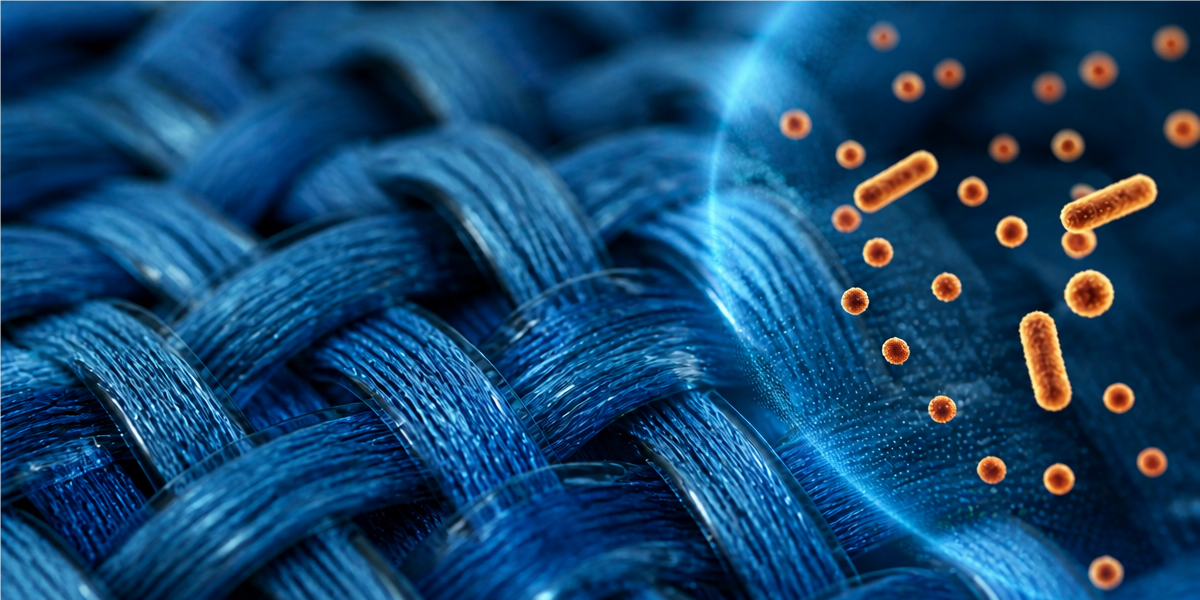
For medical uniform brands, an antibacterial claim can look attractive when selecting a fabric. But one important question often comes later:
Does the antibacterial performance remain after repeated washing?
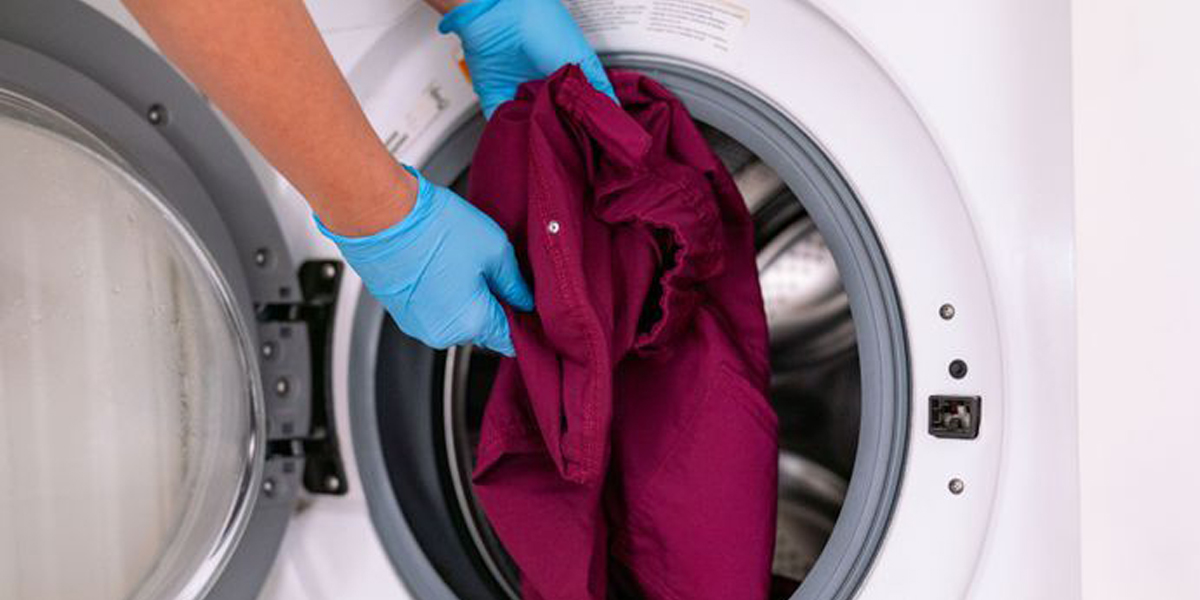
Medical scrubs, nursing uniforms, clinic uniforms, and other healthcare apparel are not one-time-use products. They are washed and worn repeatedly, sometimes under demanding commercial or industrial laundering conditions.
This makes wash durability an important consideration when evaluating antibacterial medical uniform fabric.
However, buyers should be careful with simple claims such as “long-lasting antibacterial” or “antibacterial after 100 washes” unless the statement is supported by clearly defined testing evidence.
The right approach is to look at the complete relationship between antibacterial treatment, washing conditions, testing methods, and post-wash performance.
Why Washing Matters for Antibacterial Medical Fabric
Textile washing can involve water, detergent, mechanical action, temperature, drying, and other conditions.
Depending on the type of antibacterial treatment and fabric construction, these factors may influence the performance of the textile over time.
This is why initial antibacterial performance and post-wash antibacterial performance should be treated as different pieces of information.
A fabric may demonstrate antibacterial performance in an initial laboratory test.
But if the final medical uniform is expected to be washed regularly, buyers may also want evidence showing how the fabric performs after an appropriate washing procedure.
The key question is therefore not simply:
“Is this fabric antibacterial?”
It is:
“What antibacterial performance has been demonstrated after the washing conditions relevant to this product?”
Initial Antibacterial Performance vs. Post-Wash Performance
When reviewing technical information, buyers may encounter two different types of evidence.
Initial antibacterial performance
This refers to testing performed on the fabric before a defined washing procedure.
It provides information about the fabric’s performance under the specified initial test conditions.
Post-wash antibacterial performance
This refers to testing performed after the fabric has undergone a defined washing procedure.
The washing procedure should ideally identify relevant parameters such as:
Washing method
Number of cycles
Detergent conditions
Temperature
Drying method
Other relevant test conditions
The post-wash test can then provide additional information about the fabric’s performance after the specified treatment.
Neither result should be considered in isolation.
Together, they provide a more complete picture.
What Should Buyers Ask About Washing?
When purchasing antibacterial medical uniform fabric, buyers can ask suppliers several straightforward questions.
1. Was the fabric tested after washing?
This is the first question.
An initial test report does not automatically provide information about performance after repeated laundering.
If wash durability is an important requirement, ask whether post-wash testing is available.
2. How was the fabric washed?
“Washed” is not a sufficiently detailed description.
The buyer should understand what type of washing procedure was used.
Depending on the intended application, relevant information may include:
Washing temperature
Washing agent or detergent
Washing procedure
Number of cycles
Drying conditions
3. Was the antibacterial performance tested again?
Washing and testing are two different steps.
A supplier may conduct a washing procedure but that does not by itself demonstrate the antibacterial performance after washing.
The fabric should be evaluated again using an appropriate testing procedure if post-wash performance is being claimed.
4. Can the results be linked to the actual fabric?
A test report should be connected to the relevant fabric specification.
This is particularly important when a supplier has multiple compositions, finishes, weights, or antibacterial treatment options.
Why “100 Washes” Should Not Be Used Without Evidence
A common marketing approach is to describe antibacterial fabric as:
“Antibacterial for 100 washes.”
The problem is that the number alone does not explain how the claim was established.
Buyers should ask:
Which washing method was used?
What detergent was used?
At what temperature?
How were the washing cycles defined?
Which antibacterial test was performed afterward?
Which microorganisms were tested?
What results were obtained after washing?
Was the test performed on fabric or finished garments?
Without this information, the number of washing cycles provides limited technical meaning.
For B2B medical uniform buyers, documented conditions are more useful than an impressive number without context.
Industrial Laundry Can Be Different From Household Washing
Healthcare apparel may be exposed to different laundering environments.
A garment used by an individual consumer may be washed at home.
Uniforms supplied to hospitals, clinics, laboratories, healthcare groups, or rental-laundry systems may instead go through commercial or industrial laundering processes.
These environments can differ in:
Washing temperature
Detergent chemistry
Mechanical action
Drying conditions
Frequency of washing
Finishing processes
Therefore, buyers should consider the intended end-use environment when evaluating wash-durability requirements.
A fabric tested under one washing condition should not automatically be presented as having identical performance under every other laundering system.
The Fabric Treatment Also Matters
Different antibacterial fabric solutions can use different treatment approaches.
The durability of the treatment can depend on the specific chemistry, application process, fabric composition, finishing process, and laundering conditions.
For this reason, buyers should avoid evaluating antibacterial fabrics only by looking at the word “antibacterial.”
A more complete technical conversation should include:
What is the treatment?
How is it applied?
What fabric composition is involved?
What testing supports the performance?
What washing conditions were evaluated?
This helps buyers understand whether the fabric is suitable for their intended product.
Washing Durability Is Also Related to Product Cost
For healthcare apparel brands, fabric durability is not only a technical issue.
It can also affect the long-term value of the garment.
If a uniform is used frequently, its performance needs to remain appropriate throughout its expected service life.
Buyers may therefore consider several factors together:
Fabric price
Garment replacement frequency
Colorfastness
Pilling resistance
Dimensional stability
Hand feel after washing
Antibacterial performance after washing
Industrial laundry compatibility
This is why evaluating medical uniform fabric only by price per meter can provide an incomplete picture.
A fabric with suitable durability and documented performance may offer a different overall value proposition over the product lifecycle.
Antibacterial Performance Is Only One Part of Medical Uniform Fabric
It is also important not to treat antibacterial performance as the only quality requirement for medical apparel.
Healthcare uniforms may need to meet several other fabric requirements depending on their intended use.
These can include:
Comfortable hand feel
Breathability
Stretch
Colorfastness
Pilling resistance
Dimensional stability
Tear strength
Abrasion resistance
Easy-care performance
Appropriate weight
Suitable appearance
For example, a scrub fabric may offer antibacterial functionality but still need to provide adequate comfort for long working hours.
Similarly, a fabric used in a professional healthcare uniform may need both functional performance and an appropriate appearance after repeated laundering.
The final fabric specification should therefore be based on the complete application rather than a single marketing feature.
How Buyers Can Build a Wash-Durability Evidence Chain
A practical approach is to build a simple evidence chain:
Step 1 — Identify the fabric
Confirm composition, construction, weight, finish, and other relevant specifications.
Step 2 — Identify the antibacterial treatment
Understand what antibacterial finishing option is being offered.
Step 3 — Review the initial test
Check the test method, microorganisms, conditions, and results.
Step 4 — Define the washing procedure
Make sure the washing conditions are relevant to the intended product.
Step 5 — Conduct post-wash testing
If post-wash antibacterial performance is a product requirement, obtain appropriate supporting evidence.
Step 6 — Define appropriate claims
Use marketing language that remains within the scope of the available evidence.
This process is more reliable than simply adding “wash-resistant antibacterial” to a product title.
How Should Medical Uniform Brands Communicate Antibacterial Performance?
The safest approach is to describe the tested performance precisely.
For example:
“Antibacterial finishing option with performance tested under specified laboratory conditions.”
If post-wash evidence is available, the description can provide additional information about the relevant washing procedure and testing conditions.
What should be avoided are broad claims that go beyond the evidence.
For example, antibacterial textile testing should not automatically become claims such as:
“Prevents hospital-acquired infections”
“Prevents infection”
“Kills all bacteria and viruses”
“Never loses antibacterial performance”
“FDA-certified fabric”
Such claims may involve additional product-level or regulatory considerations depending on the target market and intended use.
Questions to Ask Your Fabric Supplier
Before approving an antibacterial medical uniform fabric, buyers can use this checklist:
1. What antibacterial treatment is used?
2. Which microorganisms were tested?
3. Which testing method was used?
4. Was the initial fabric tested?
5. Was the fabric tested after washing?
6. What washing conditions were used?
7. How many washing cycles were evaluated?
8. Can the relevant test documentation be provided?
9. Does the testing apply to the fabric or finished garment?
10. Which marketing claims are supported by the evidence?
These questions can help transform a simple product inquiry into a more professional technical evaluation.
Conclusion
For medical uniform fabric, antibacterial performance should not be evaluated only at the moment the fabric leaves the factory.
Washing is part of the real product lifecycle.
For brands and buyers who expect regular laundering, the more useful question is not simply whether a fabric has antibacterial functionality, but whether there is appropriate evidence describing its performance after relevant washing conditions.
A professional supplier should be able to explain:
what was treated, how it was tested, how it was washed, what was tested afterward, and what the results actually demonstrate.
This evidence-based approach helps medical uniform brands make more informed fabric decisions and communicate functional performance more responsibly.
For antibacterial medical fabric, durability should be demonstrated—not simply promised.

Yunai Textile
Post time: Nov-02-2026