

Why Fabric Matters in Clinical Workwear
Selecting the right fabric for doctors directly impacts clinical efficiency, infection control, and daily stamina. Physicians routinely endure extended shifts, requiring garments that withstand physical and environmental stress without compromising comfort. The ideal material supports unrestricted mobility during complex procedures and helps regulate body heat, especially under heavy Personal Protective Equipment (PPE).
Historically, medical apparel prioritized basic hygiene using stiff, heavy materials. Today, modern textile engineering provides flexible layers that offer protective barriers against clinical hazards while maintaining a professional appearance.
Defining Medical Uniform Fabric
Medical uniform fabric is engineered to surpass standard commercial apparel. It is crucial to distinguish between everyday ward scrubs and regulated surgical barrier gowns. Barrier garments must meet specific safety standards (such as EN 13795 or AAMI PB70) and require verified third-party documentation to ensure impermeability. Facilities should also clarify the difference between temporary “fluid-resistant” finishes (which repel light splashes on everyday scrubs) and true impermeable barriers, ensuring they do not over-specify and inadvertently reduce breathability for daily clinical wear.
For general clinical wear, structural integrity depends on weave density and weight. Standard weights for clinical tops and trousers typically range from 140 to 170 GSM (grams per square meter) across major suppliers, varying by regional climate and clinical role. A mid-weight fabric often strikes a practical balance, providing sufficient opacity while remaining light enough for heat dissipation.
Key Performance Priorities
Performance priorities for clinical workwear encompass dimensional stability, fluid resistance, and laundering resilience. Medical garments undergo rigorous industrial washing, often requiring water temperatures between 60°C and 75°C for thermal disinfection, depending on regional health guidelines. Consequently, high-quality medical fabrics must exhibit strong structural memory, with manufacturers typically targeting minimal shrinkage rates (often below 3% per standard supplier specifications). Advanced fabrics frequently incorporate hydrophobic or antimicrobial finishes to minimize cross-contamination. However, buyers must verify if these finishes are independently certified, safe for skin, and durable enough to persist after dozens of industrial laundering cycles, while also considering the environmental impact of chemical treatments.
Best Fabric Options for Doctors
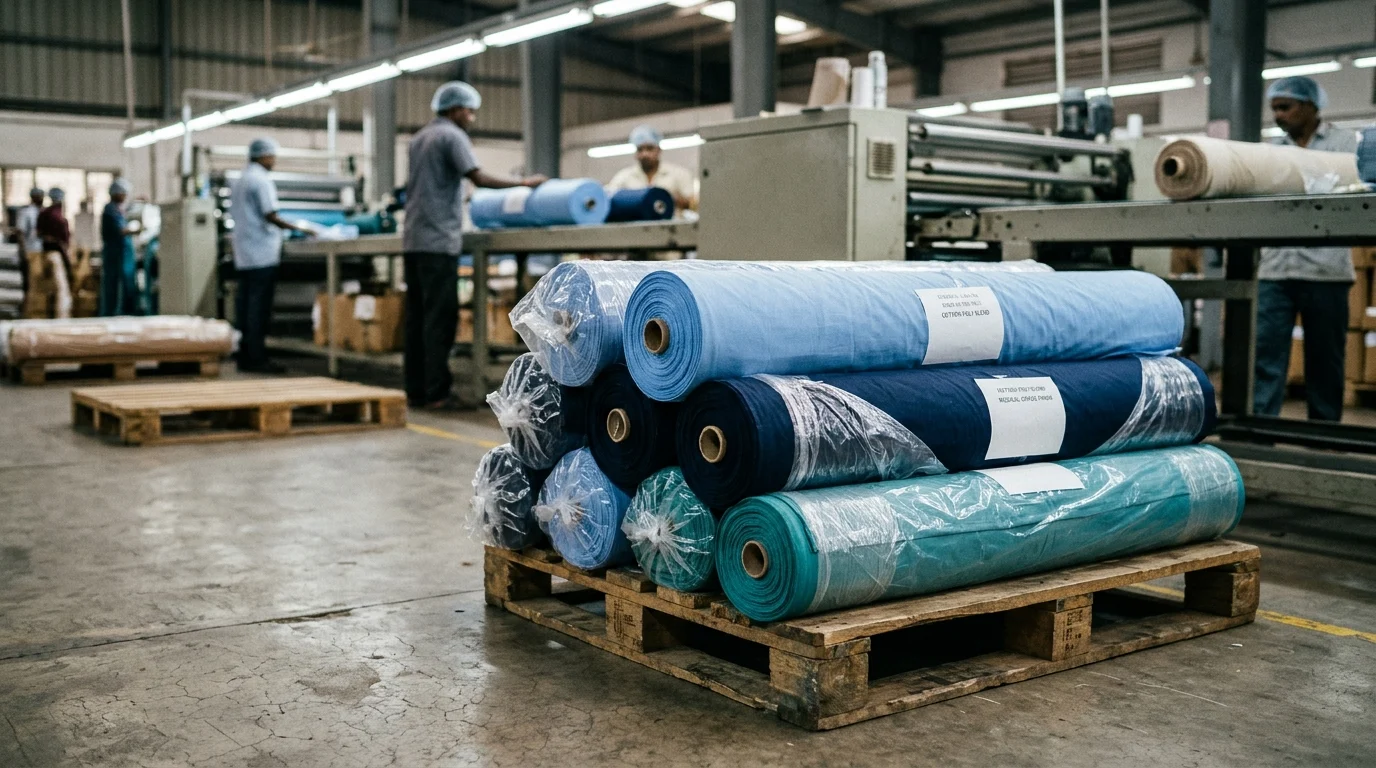
Selecting the optimal clinical fabric often means moving beyond single-fiber constructions to engineered blends. Modern textile manufacturing combines synthetic and natural fibers, resulting in hybrid materials that maximize the best characteristics of each component while addressing sustainability concerns, such as the inclusion of recycled content.
Cotton, Polyester, Rayon, Spandex, and Blends
Cotton offers breathability and softness, while polyester introduces tear resistance, color retention, and wrinkle reduction. Rayon (viscose) provides a soft, fluid drape, and spandex (elastane) adds mechanical stretch and recovery. A popular option in modern clinical settings is a 72% polyester, 21% rayon, 7% spandex twill (shown here as a supplier example), which delivers structural integrity alongside multidirectional flexibility. Alternatively, facilities prioritizing naturally odor-resistant materials often integrate a woven bamboo polyester blend, capitalizing on bamboo’s thermal-regulating properties.
When selecting blends, consider potential skin sensitivities—dermatological literature notes occasional contact dermatitis from synthetic dyes or elastane—and the environmental trade-off of microplastic shedding from polyester during washing.
Comfort, Moisture Control, and Durability Comparison
Synthetic blends generally outperform traditional 100% cotton garments in moisture control and durability. Cotton absorbs moisture but dries slowly, potentially leaving the wearer damp in air-conditioned hospitals. Conversely, engineered polyester blends wick moisture to the fabric’s surface for rapid evaporation.
| Fabric Blend | Primary Benefit | Durability Profile* | Typical Elongation Profile* |
|---|---|---|---|
| 100% Cotton | Maximum breathability | Lower (degrades faster) | Minimal (0 – 2%) |
| Poly/Rayon/Spandex | Premium drape & mobility | High (resists pilling) | Moderate (5 – 8%) |
| Poly/Spandex | High tear strength & stretch | Very High (strong tensile) | High (8 – 12%) |
| Bamboo/Poly | Odor control & softness | Moderate to High | Low to moderate (3 – 5%) |
Note: The durability and elongation profiles above are qualitative industry estimates. Real-world performance depends heavily on specific fabric construction, GSM, weave, finish durability, and facility laundering chemistry.
Introducing spandex and polyester generally increases the garment’s operational lifespan. While 100% cotton may degrade faster under intensive washing, high-grade synthetic blends are often rated by suppliers to withstand more cycles without significant pilling or color degradation.
How Healthcare Buyers Should Choose Fabric
Sourcing the right fabric involves balancing upfront material costs with long-term lifecycle value and daily comfort for physicians. Institutional buyers must navigate global supply chains where Minimum Order Quantities (MOQs) for custom-dyed medical textiles often require rigorous pre-purchase evaluation. To ensure the final garments meet the needs of medical staff, buyers should evaluate fabrics against a practical checklist covering fit, GSM, weave, breathability, care instructions, sustainability certifications (such as OEKO-TEX), and skin sensitivity protocols.
Testing and Sourcing Steps
The sourcing process should mandate independent laboratory testing before bulk production. Key metrics include tensile strength (e.g., ISO 13934), seam slippage, pilling resistance (targeting a minimum grade of 4 on the ISO 12945-2 scale), and colorfastness to commercial laundering (ISO 105-C06). Because lab metrics do not fully capture real-shift comfort, buyers should implement pilot wear-testing with clinical staff. This involves 2- to 4-week trials across various roles with defined success criteria, alongside laundering compatibility checks with their commercial laundry partner.
When procuring elastic materials like a four-way stretch woven polyester-elastane blend (supplier example), buyers must verify the elastane recovery rate. High recovery ensures garments do not bag or sag at the knees and elbows after consecutive hours of wear.
Decision Criteria for Daily Clinical Use
Daily clinical use demands fabrics that do not require intensive maintenance. Decision-makers should look for durable wrinkle-resistant finishes that eliminate the need for pressing, reducing processing times and energy costs in commercial laundry facilities. While premium stretch blends carry a higher initial cost compared to basic fabrics, they frequently offer a superior Total Cost of Ownership (TCO). By extending the garment’s operational lifespan compared to basic poly-cotton poplins, healthcare facilities can reduce annual replacement expenditures while elevating the comfort and professional appearance of their medical staff.
Key Takeaways
- Choose clinical workwear fabric based on role, since everyday scrubs need breathability while surgical barrier garments require certified protection such as EN 13795 or AAMI PB70.
- For general clinical tops and trousers, consider mid-weight fabrics around 140–170 GSM to balance opacity, durability, and heat dissipation.
- Prioritize fabrics that can withstand repeated industrial laundering at 60°C–75°C while maintaining shrinkage control, ideally below 3% where specified.
- Use engineered blends such as polyester-rayon-spandex when doctors need wrinkle resistance, soft drape, durability, and multidirectional stretch.
- Verify any antimicrobial, hydrophobic, or fluid-resistant finish for certification, skin safety, wash durability, and environmental impact before procurement.
Frequently Asked Questions
What is the best fabric for doctors’ scrubs?
A practical choice is a polyester-rayon-spandex blend, such as 72% polyester, 21% rayon, and 7% spandex, because it balances durability, soft drape, stretch, and wrinkle resistance for long clinical shifts.
How heavy should clinical workwear fabric be?
Many clinical tops and trousers use fabrics around 140–170 GSM. This mid-weight range usually provides enough opacity and durability while remaining breathable enough for daily ward use.
Are fluid-resistant scrubs the same as surgical barrier gowns?
No. Fluid-resistant scrubs may repel light splashes, but surgical barrier gowns must meet standards such as EN 13795 or AAMI PB70 and require verified documentation for barrier performance.
Why is polyester often used in medical uniforms?
Polyester improves tear resistance, color retention, wrinkle control, and laundering durability. It is often blended with rayon, cotton, bamboo, or spandex to improve comfort and flexibility.
Can medical fabrics withstand industrial laundering?
High-quality medical fabrics should tolerate repeated washing, often at 60°C–75°C for thermal disinfection, while maintaining shape, color, and shrinkage control, commonly targeting shrinkage below 3%.

Yunai Textile
Post time: Nov-10-2026