
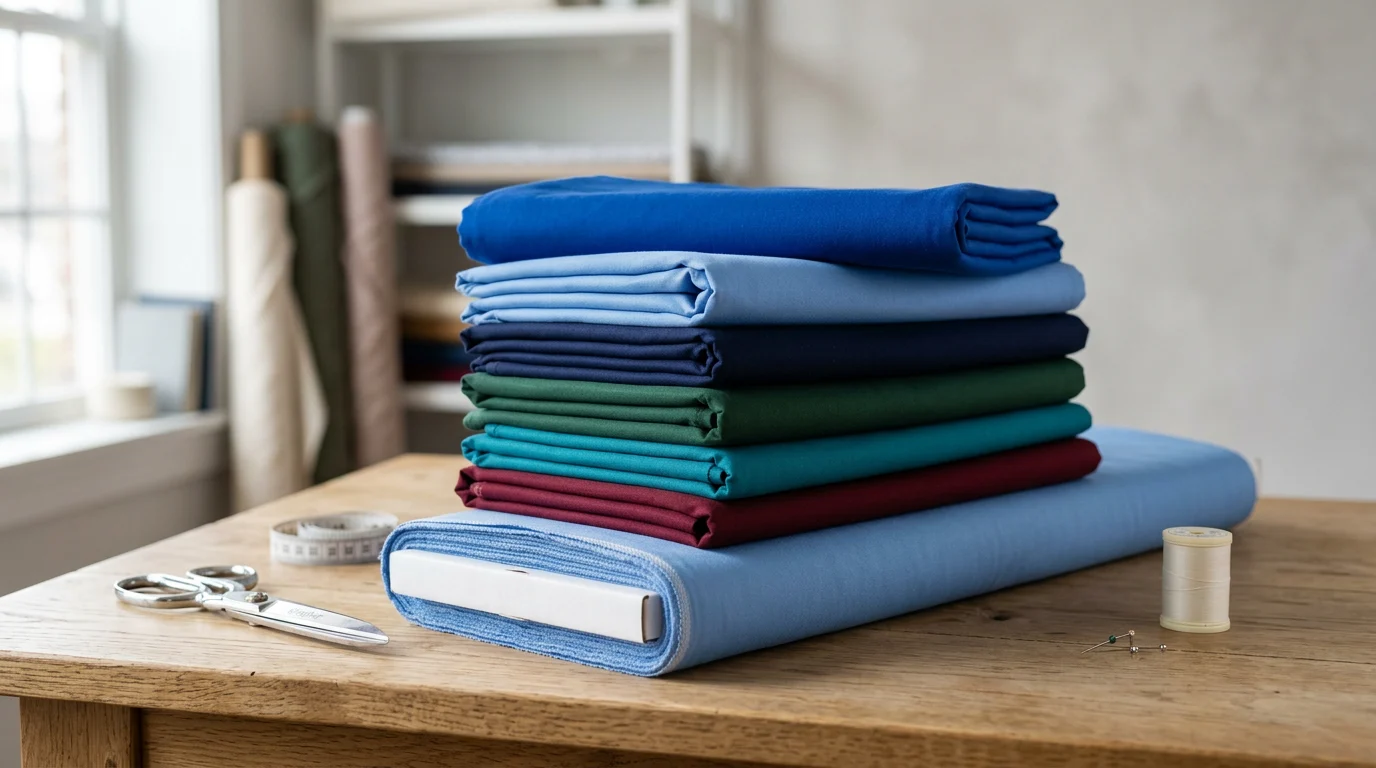
Define scrub fabric requirements by clinical use
Selecting the appropriate fabric for making scrubs requires a precise understanding of the end-user’s clinical environment. Whether the buyer is a large-scale manufacturer, a hospital procurement team, or a small-scale workshop, medical apparel is subjected to rigorous daily use and aggressive laundering protocols. This means that textile specifications must align directly with workplace demands—such as distinguishing between surgical, emergency, and routine outpatient care—rather than just aesthetic preferences.
Key fabric properties for routine care
In routine care settings, such as general practice clinics, veterinary offices, or outpatient wards, healthcare professionals prioritize mobility and thermal regulation. Clinical staff frequently walk several miles per shift, making breathability and lightweight construction paramount. Fabrics deployed in these environments must withstand standard commercial laundering, which often involves wash temperatures reaching 60°C (140°F) to ensure proper sanitation without compromising the textile’s structural integrity.
Industry estimates vary, but manufacturers typically engineer routine care scrubs to survive a lifecycle of 50 to 100 industrial wash cycles before exhibiting significant tensile strength loss or color degradation. Selecting a fabric that balances these longevity benchmarks with a soft hand-feel reduces uniform replacement costs for institutional buyers while maintaining staff satisfaction.
Comfort, durability, fluid resistance, stretch, and opacity
The foundational pillars of premium scrub textiles encompass comfort, durability, fluid resistance, stretch, and opacity. Opacity is a critical specification; lighter-colored scrubs generally demand a minimum fabric weight of 140 to 160 Grams per Square Meter (GSM) to prevent transparency under harsh clinical lighting. Durability is achieved through tight weaves and synthetic fiber integration, which resist abrasion from medical instruments.
Stretch and fluid resistance dictate the functional performance of the garment for specific use cases. The inclusion of 3% to 7% elastane or spandex allows for essential multi-directional movement when bending or lifting patients. For surgical (OR) or emergency (ICU) environments, fabrics are often evaluated against fluid resistance thresholds, such as the AAMI PB70 standard, which classifies barrier protection from Level 1 (minimal fluid risk) to Level 4 (high fluid and pathogen risk). However, buyers should note that AAMI PB70 classifies the barrier performance of finished garments after full construction, not raw fabric alone. Buyers relying on fabric-level claims should request garment-level test reports. Additionally, a practical trade-off exists: higher fluid barrier levels inherently reduce fabric breathability, which can impact comfort in hot climates or during lengthy procedures.
Compare scrub fabric fibers and blends
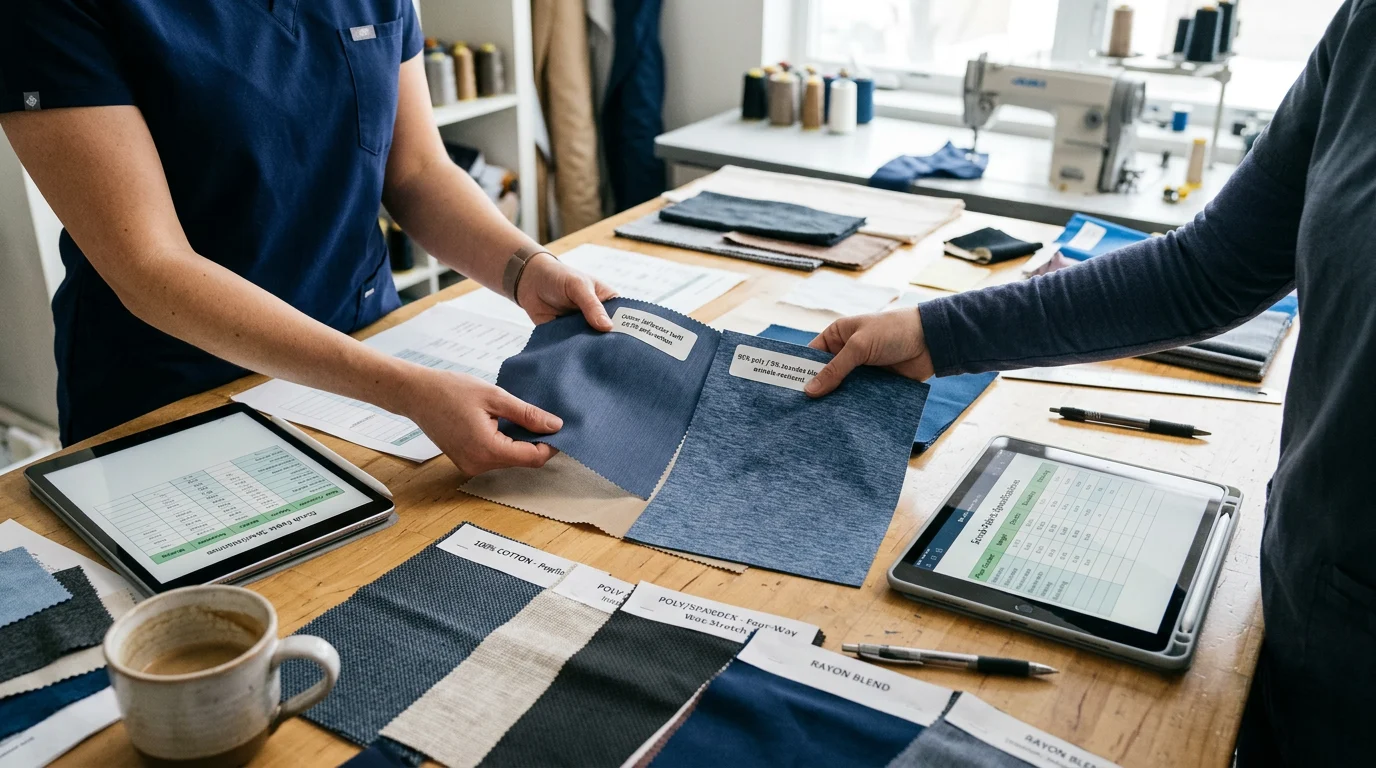
The performance of medical apparel is fundamentally dictated by its fiber composition. By strategically blending natural and synthetic fibers, textile engineers can mitigate the weaknesses of individual materials while amplifying their inherent strengths for specific medical roles.
Cotton, polyester, rayon, spandex, and poly-cotton blends
Historically, 100% cotton was the industry standard due to its exceptional breathability, but its tendency to shrink makes it less viable for modern industrial processing. Polyester has since become the dominant base fiber, offering high wrinkle resistance and colorfastness. Rayon, a semi-synthetic fiber derived from cellulose, is frequently added to replicate the moisture-absorbent properties of cotton. To accommodate dynamic movements, spandex is incorporated for elasticity, though buyers should consider potential skin-sensitivity issues associated with certain synthetic stretch fibers and chemical finishes.
Modern scrubs rely heavily on tri-blend textiles to achieve optimal performance. For example, commercially available options include a 72% polyester, 21% rayon, and 7% spandex twill, which offers a fluid drape and significant flexibility. Sustainable and functional alternatives are also utilized, such as a woven bamboo and polyester blend. While bamboo is often marketed for natural antibacterial and odor-resistant properties, much of it is processed into bamboo-rayon via chemical processing; buyers should ensure these claims are substantiated by testing rather than assuming inherent antimicrobial retention.
Weight, weave, performance, and care comparison
Fabric weight and weave structure directly influence both garment performance and the required care regimens. Poplin weaves provide a smooth, lightweight finish suitable for low-risk wards, while twill weaves offer enhanced durability and a distinct diagonal rib, making them highly resistant to tearing in high-stress environments. For advanced mobility, suppliers offer materials like a woven polyester elastane blend at 160 GSM, yielding a four-way stretch fabric that maintains a crisp appearance even after intensive wear.
| Fabric Composition | Typical Weight (GSM) | Primary Weave | Typical Use Case | Care Temp Tolerance |
|---|---|---|---|---|
| 100% Cotton | 130 – 150 | Poplin | Routine outpatient, non-fluid risk | Warm wash; prone to shrinkage |
| Poly-Cotton (65/35) | 140 – 170 | Poplin / Twill | General hospital wards, veterinary | High heat industrial wash (up to 70°C) |
| Poly-Rayon-Spandex | 160 – 200 | Twill | Premium administrative, pediatrics | Cold/warm wash (up to 40°C); tumble dry low |
| Poly-Spandex (Performance) | 150 – 170 | Dobby / Twill | Emergency/ICU (if treated for fluids) | Warm wash; sensitive to high heat |
Choose, source, and validate scrub fabric
Transitioning from fabric selection to mass production requires rigorous sourcing and validation protocols. Ensuring that a chosen textile performs consistently across thousands of yards is critical to maintaining brand reputation and meeting institutional healthcare standards.
Fabric sampling and lab testing steps
The validation process begins with acquiring physical fabric yardage for comprehensive laboratory testing. Manufacturers must conduct dimensional stability testing (such as ISO 6330) to verify that shrinkage remains below a common industry threshold of 3% after repeated laundering. Colorfastness is equally critical, especially given strict hospital color-coding and departmental branding policies; textiles must be tested against rubbing, perspiration, and industrial washing (ISO 105-C06). Facilities generally aim for a rating of 4 or higher on the grayscale to ensure uniforms do not fade or bleed during processing.
In addition to wash testing, mechanical evaluations are necessary to simulate long-term wear. Pilling resistance tests (using the Martindale method) ensure the fabric surface remains smooth, while tensile and tear strength tests confirm the material can withstand the physical stress of clinical duties.
Key Takeaways
- Match scrub fabric specifications to the clinical setting, because routine care, emergency, and surgical environments have different comfort, durability, and fluid-risk requirements.
- Choose lightweight, breathable fabrics for routine care scrubs that can tolerate commercial laundering at up to 60°C without excessive shrinkage or color loss.
- Use 140 to 160 GSM as a practical minimum for lighter scrub colors when opacity under strong clinical lighting is a concern.
- Specify 3% to 7% elastane or spandex when staff need multi-directional stretch for bending, lifting, and long shifts.
- Request garment-level test reports for AAMI PB70 claims, since the standard evaluates finished garments rather than raw fabric alone.
- Balance fluid resistance with breathability, as higher barrier protection can improve safety in high-risk settings but may reduce comfort during extended wear.
Frequently Asked Questions
What is the best fabric for making everyday medical scrubs?
For routine care, a polyester-rich blend with cotton, rayon, or bamboo plus light stretch is often best. It balances breathability, wrinkle resistance, colorfastness, and durability through repeated 60°C commercial laundering.
How much stretch should scrub fabric have?
Many performance scrub fabrics use 3% to 7% elastane or spandex. This gives enough flexibility for bending, lifting, and long shifts without making the garment lose shape too quickly.
What GSM is suitable for scrub fabric?
For lighter-colored scrubs, 140 to 160 GSM is a practical minimum to reduce transparency under clinical lighting. Heavier fabrics may improve opacity and durability but can reduce breathability.
Are fluid-resistant scrub fabrics always better?
Not always. Higher fluid resistance is important for surgical, ICU, or emergency settings, but it can reduce breathability. Routine care scrubs usually need comfort, mobility, and laundering durability more than high barrier protection.
Does AAMI PB70 apply to raw scrub fabric?
AAMI PB70 classifies barrier performance for finished medical garments, not raw fabric alone. Buyers should request garment-level test reports when fluid resistance claims are critical.

Yunai Textile
Post time: Nov-13-2026