
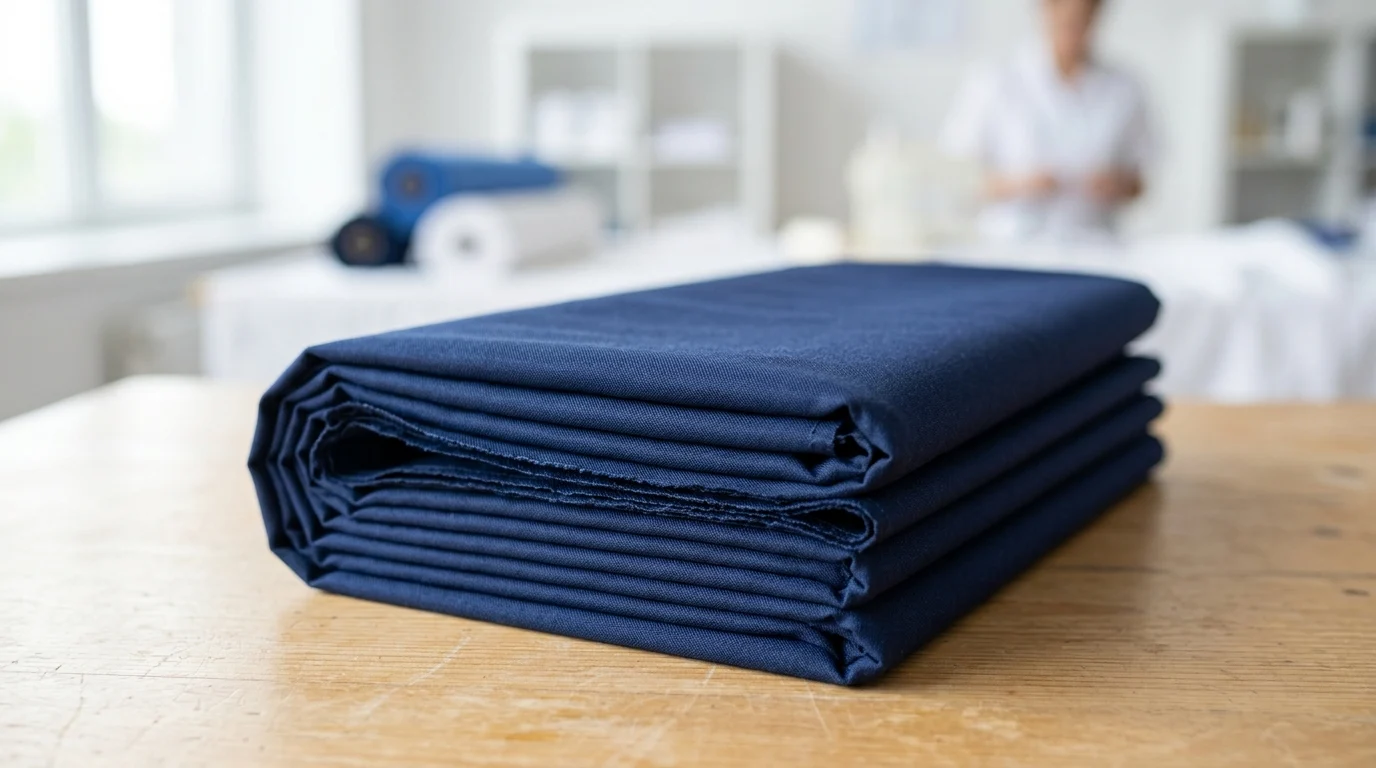
Why Nursing Uniform Fabric Matters
The selection of nursing uniform fabrics impacts clinical efficacy, occupational comfort, and institutional economics. Hospital procurement teams should evaluate textiles as practical tools for infection control and staff satisfaction, rather than merely as apparel.
How Hospitals Should Define Fabric Requirements
Defining exact textile parameters is the first step in hospital uniform procurement. Administrators should establish policy baselines for weight, thermal regulation, and dimensional stability. It is crucial to distinguish between general nursing scrubs, which prioritize comfort and durability, and regulated surgical barrier garments, which must adhere to specific protective standards like EN 13795 or AAMI PB70.
Industrial laundering compatibility is also paramount. Because protocols vary significantly by country, laundry provider, and infection-control policy, hospitals should conduct garment-level wear trials and washer-disinfector compatibility tests. Fabrics must withstand specific high-temperature wash cycles and laundering chemistry without compromising structural integrity or barrier performance.
Clinical, Operational, and Brand Risks
Failing to mandate clear fabric specifications introduces risks across hospital operations. Clinically, textiles lacking proper weave density or appropriate finishes can harbor pathogens. Note that “antibacterial” finishes are subject to regional biocidal regulations (e.g., EPA or EU BPR) and must be verified for compliance rather than treated as an unqualified benefit.
Operationally, inferior fabrics lead to rapid garment degradation. This necessitates premature replacement cycles, inflating annual uniform budgets. As an illustrative assumption, if poor durability forces a facility to replace uniforms months earlier than planned, annual procurement costs can increase by up to 30% while degrading the visual identity of the healthcare facility.
Key Fabric Specifications to Compare
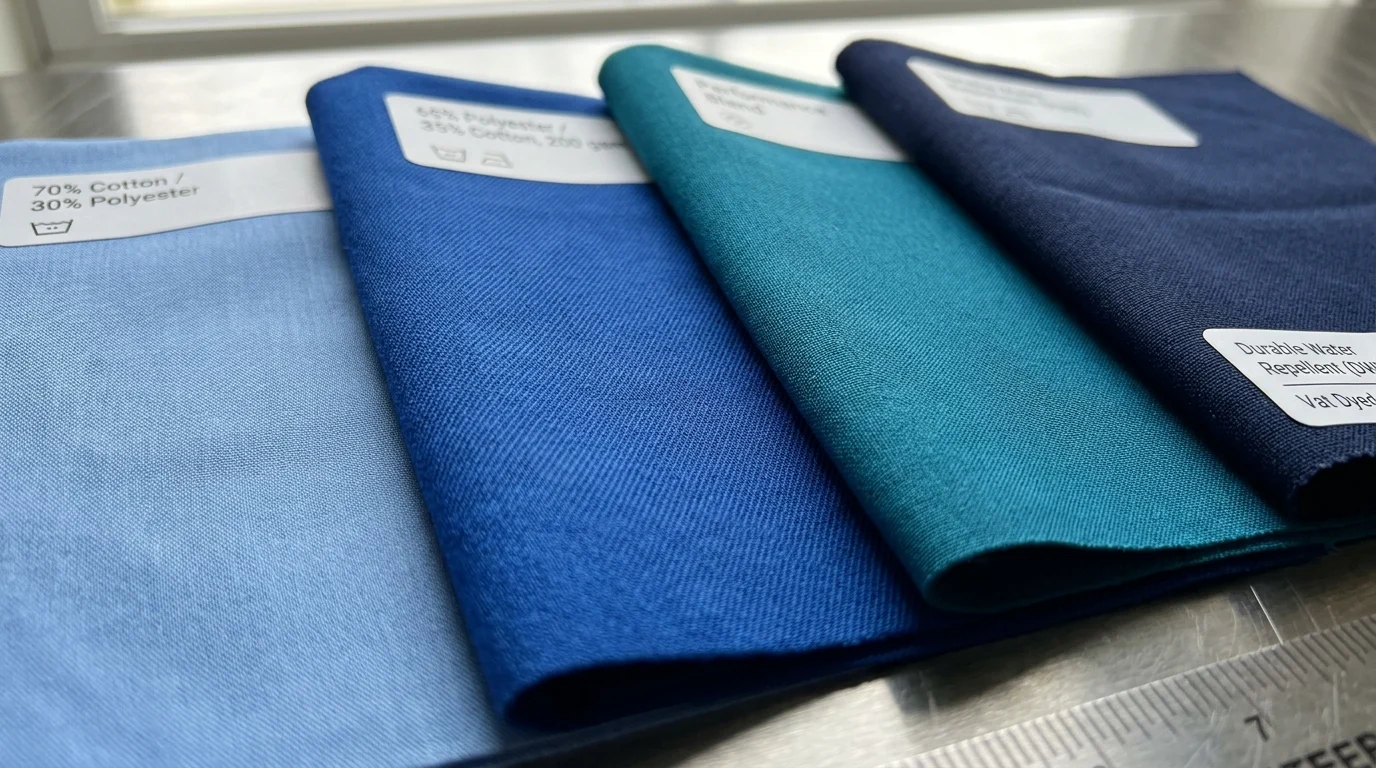
Evaluating nursing uniform fabrics requires analyzing fiber composition, weave structure, and chemical finishing. The optimal textile balances mechanical durability with the physiological demands of long clinical shifts.
Comfort and Performance Specifications
Modern clinical garments rely on stretch and moisture-management metrics, as well as wearer-facing factors like static control and opacity. For mobility, hospitals frequently specify options like four-way stretch polyester/elastane blends. Procurement teams should always request current samples, technical data sheets, and laboratory results to verify performance.
Optimal fabric weight is context-dependent, varying based on regional climate, hospital HVAC systems, and garment styles. As a general industry assumption, elastane content typically ranges from 3% to 7%, delivering mechanical stretch recovery to prevent bagging at the knees and elbows. The table below outlines illustrative procurement benchmarks for these metrics. Note that established ISO test numbers define the testing method, not the clinical requirement; the “acceptable” and “high-performance” thresholds are illustrative procurement preferences that vary by garment construction, finish chemistry, and usage.
| Specification | Acceptable Clinical Standard | High-Performance Standard |
|---|---|---|
| Fabric Weight (GSM) | 140 – 160 (Favors breathability) | 160 – 180 (Favors opacity) |
| Dimensional Stability (ISO 5077) | < 5% shrinkage | < 3% shrinkage |
| Pilling Resistance (ISO 12945-2) | Grade 3 | Grade 4+ |
| Tear Strength (Warp/Weft, ISO 13937-1) | > 15N | > 25N |
Common Fabric Blends for Nursing Uniforms
The industry has largely shifted away from 100% cotton due to its high shrinkage and wrinkling propensity in industrial laundries. Instead, tri-blend synthetics are increasingly popular. A common option is a polyester, rayon, and spandex twill, which offers the high-tensile durability of polyester, the cellulosic softness of rayon, and a high degree of elasticity.
Additionally, healthcare facilities prioritizing enhanced moisture wicking are exploring woven bamboo-derived viscose blends. While often marketed for bacteriostatic properties, procurement teams must exercise caution. Regulatory bodies, such as the US FTC, mandate that when unprocessed bamboo fiber is heavily processed into regenerated bamboo cellulose (viscose or rayon), it retains no natural antimicrobial properties and must be labeled accordingly. Consequently, these materials should be evaluated strictly for their mechanical softness and breathability.
How to Source and Validate Fabric
Transitioning from theoretical specifications to actual procurement involves supplier vetting, minimum order quantity (MOQ) negotiations, and laboratory validation. Sourcing fabrics for institutional healthcare use demands a clear quality assurance process.
Practical Testing Steps for Procurement Teams
Procurement teams should require independent laboratory testing reports before approving bulk fabric orders. Buyers can utilize a quality checklist cross-referenced with the performance table above, keeping in mind that fabric test reports should be supplemented with real-world garment trials:
- Laundering Validation: Require AATCC 61 testing for colorfastness to commercial laundering to ensure dyes do not bleed or fade under harsh chemical treatments and dryer exposure.
- Durability Metrics: Verify pilling resistance and tear strength against procurement benchmarks to maintain structural integrity.
- Dimensional Stability: Confirm shrinkage rates remain within acceptable thresholds post-wash.
- Dye-Lot Consistency: Anticipate standard textile industry MOQs (illustratively ranging from 3,000 to 5,000 meters per colorway) to match specific hospital branding.
- Regulatory Labeling: Ensure all fiber content and antimicrobial claims comply with regional trade and biocidal regulations.
Balancing Cost, Compliance, and Durability
The ultimate goal in sourcing medical textiles is optimizing the total cost of ownership (TCO) rather than simply minimizing the initial per-meter price. A high-performance tri-blend or bamboo-derived viscose blend may carry a premium over basic polyester-cotton poplin.
However, if this premium material extends the garment’s viable lifecycle—for instance, in an illustrative assumption where superior durability doubles a standard lifespan from 9 months to 18 months under typical laundering conditions—the hospital realizes a substantial net reduction in uniform expenditure. Furthermore, verifying compliance with global safety standards, such as OEKO-TEX Standard 100, guarantees the fabric is free from harmful substances, mitigating institutional liability and ensuring occupational safety for nursing staff.
Key Takeaways
- Define nursing uniform fabric requirements by weight, stretch, shrinkage, tear strength, pilling resistance, and industrial laundering compatibility before procurement begins.
- Use 140–160 GSM fabrics when breathability is the priority and 160–180 GSM fabrics when opacity and durability are more important.
- Specify 3%–7% elastane in stretch scrubs to improve mobility and help prevent bagging at knees and elbows.
- Verify antibacterial finishes against applicable biocidal regulations instead of treating antimicrobial claims as automatic clinical benefits.
- Conduct garment-level wear trials and washer-disinfector compatibility tests because laundering chemistry and high-temperature cycles vary by facility and region.
- For stronger long-term performance, target under 3% shrinkage, Grade 4+ pilling resistance, and tear strength above 25N where budget and garment design allow.
Frequently Asked Questions
What fabric weight is best for nursing scrubs?
For many clinical scrubs, 140–160 GSM supports breathability, while 160–180 GSM improves opacity and durability. The best choice depends on climate, HVAC conditions, garment design, and laundering method.
How much elastane should nursing uniform fabric contain?
A common procurement range is 3%–7% elastane. This helps provide stretch recovery so scrubs resist bagging at knees, elbows, and other high-movement areas during long shifts.
Are antibacterial fabrics always suitable for hospitals?
No. Antibacterial claims must be verified against regional biocidal regulations, such as EPA rules or the EU BPR. Hospitals should request compliance documents and lab results before approving these finishes.
What standards apply to surgical barrier garments?
Surgical barrier garments may need to meet standards such as EN 13795 or AAMI PB70. General nursing scrubs usually focus more on comfort, durability, stretch, and laundering performance.
Why should hospitals test fabrics before bulk purchasing?
Garment-level wear trials and laundry compatibility tests help confirm shrinkage, colorfastness, structural stability, and performance after repeated industrial washing. This reduces replacement costs and operational risk.

Yunai Textile
Post time: Nov-16-2026