
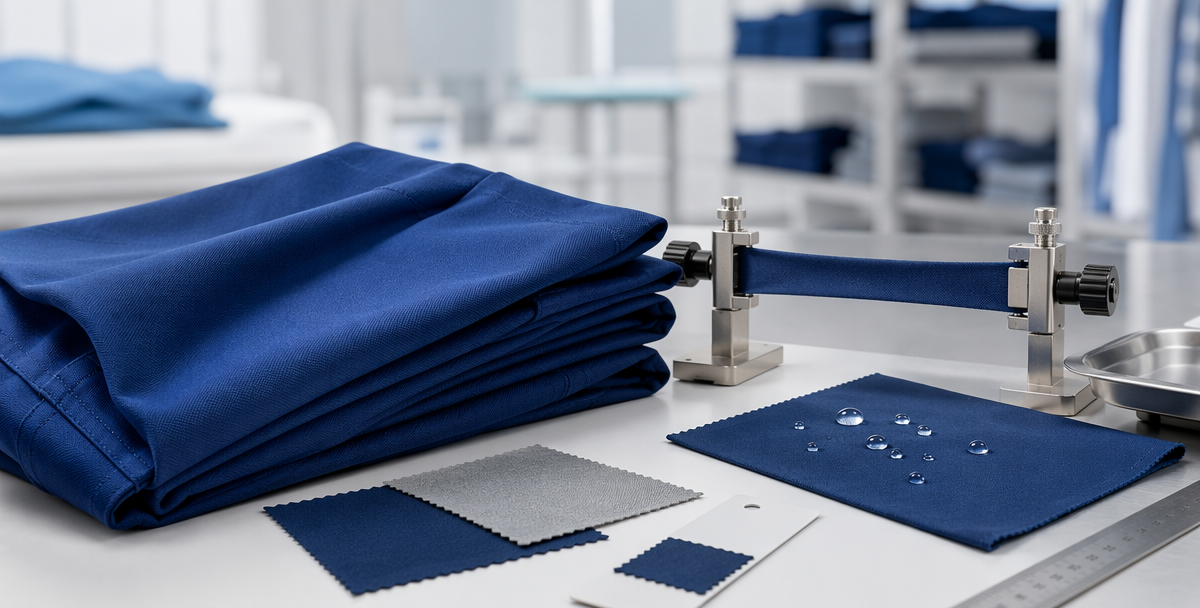
Understanding Figs Scrub Fabric and Twill Fabric
The medical uniform industry has witnessed a massive transformation over the last decade, moving away from rigid, boxy garments toward athletic-inspired, high-performance apparel. When examining premium brands shaping this space, their success relies heavily on specific textile architectures. For example, Figs revolutionized the market with its proprietary FIONx fabric. This material utilizes an advanced twill weave combined with a specialized synthetic blend and antimicrobial treatments to deliver a combination of softness, four-way stretch, and durability that standard plain weaves or basic knits cannot match. This guide explores the technical foundations of these premium twill fabrics and how institutional buyers source them.
Why Scrub Fabric Matters in Healthcare Apparel
Working in healthcare is physically demanding; industry estimates suggest that nurses can walk several miles during a standard shift. Because of this constant motion, the garments they wear must act as a second skin. If a fabric restricts movement or traps heat, it directly impacts the wearer’s comfort and focus.
Manufacturers recognize that a high-quality medical scrub fabric must balance breathability with fluid resistance. For institutional use, fabrics often need to meet specific AAMI PB70 barrier levels (ranging from Level 1 for minimal fluid risk to Level 4 for high risk) and strict ASTM textile standards for laundering durability. Historically, 100% cotton was used, but it absorbs spills and sweat, becoming heavy and uncomfortable. The industry then shifted to a 65/35 poly-cotton blend as the legacy institutional standard. Today, modern synthetic blends wick moisture away from the body and dry significantly faster. However, synthetic twill blends come with trade-offs, such as potential odor retention, static cling, and the shedding of microplastics during laundering, which buyers must evaluate against compliance benchmarks.
How Polyester Rayon Spandex Twill Performs
The premium drape and durability of modern medical apparel rely heavily on the twill weave, a construction method utilized by leading brands for their proprietary blends. Characterized by its diagonal rib pattern, twill naturally resists tearing and hides stains better than a standard plain weave, while offering more structural stability than highly elastic knits and a smoother finish than rugged ripstop alternatives.
A prominent generic industry benchmark for this application is a 72 polyester 21 rayon 7 spandex scrub fabric. In this technical profile, the 72% polyester provides a rugged, wrinkle-resistant backbone that withstands frequent wear. The 21% rayon introduces a silk-like softness and exceptional drape, while the 7% spandex ensures maximum mobility through multi-directional stretch. This specific ratio creates a textile that feels luxurious but performs like specialized athletic wear. However, higher synthetic content can limit breathability in hot climates. Additionally, institutional buyers must note that high-spandex twills are susceptible to degradation under repeated industrial hot-water washes, requiring careful laundering management to pass institutional durability standards.
Key Specifications to Compare
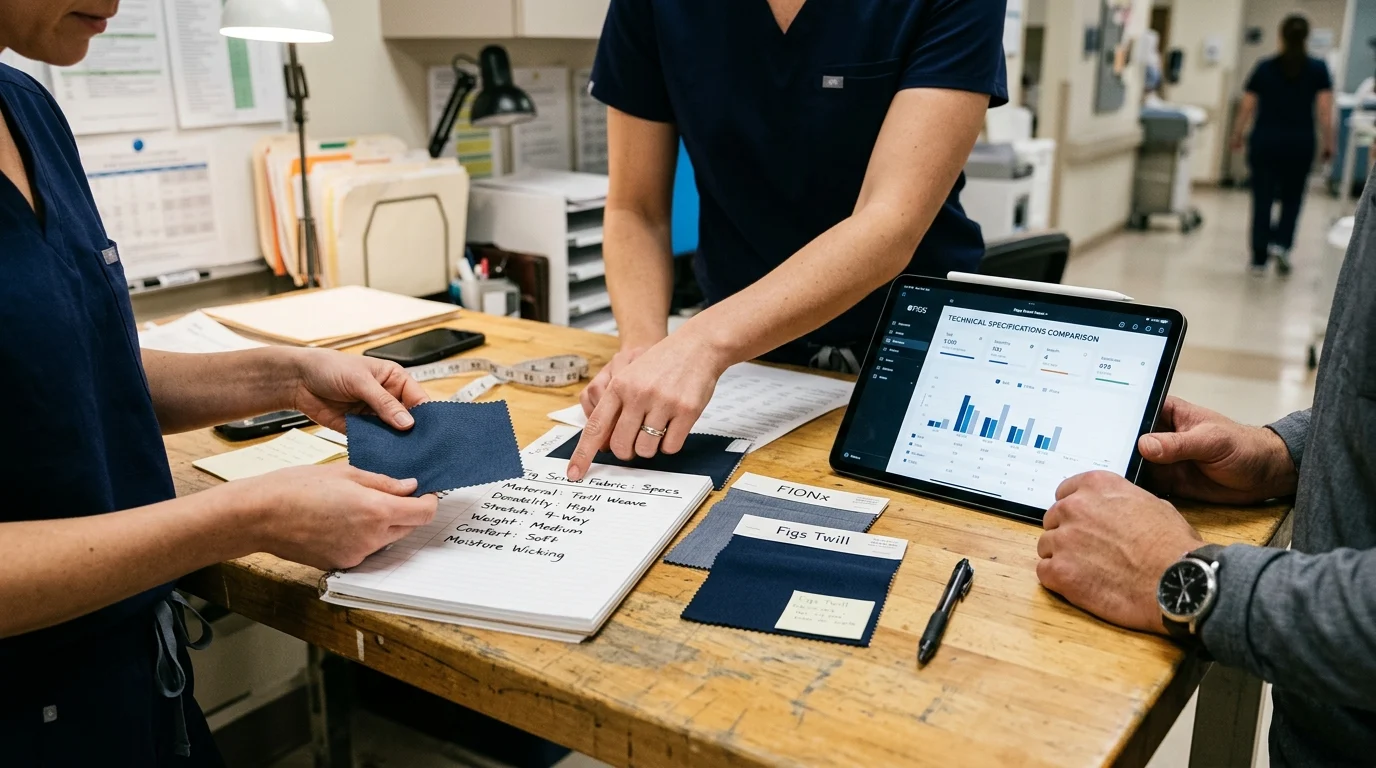
When evaluating materials for new uniform lines, assessing technical specifications is the most reliable way to guarantee that a fabric will survive the rigorous environments of the healthcare industry.
Fiber Content, Weight, Stretch, and Finish
The core specifications analyzed during procurement are weight, width, and stretch capacity. A standard premium scrub top typically requires a lightweight shirting fabric between 160 and 200 GSM (grams per square meter) to remain breathable yet opaque. However, for colder climates or specialized trouser-weight pants, heavier variations are often sourced.
For instance, a robust 300 GSM four way stretch brushed medical scrub fabric offers superior warmth and durability for trousers without sacrificing the necessary elongation required for bending and lifting. While 300 GSM is atypical for standard indoor medical apparel, it provides necessary reinforcement for veterinary, EMS, or cold-weather roles. The trade-off is that heavier GSM fabrics can trap heat, making them less suitable for warm environments or upper-body garments. Finishing treatments applied to these fibers—such as antimicrobial coatings or DWR (Durable Water Repellent) to meet AAMI barrier levels—can further alter the fabric’s final weight and breathability rating.
Twill Scrub Fabric Comparison Criteria
To truly understand the value of these modern synthetic blends, they must be compared directly against legacy materials. Below is a breakdown of how a premium TRSP 72/21/7 fabric for medical scrub (Polyester, Rayon, and Spandex) stacks up against the traditional 65/35 Poly-Cotton institutional standard. Note that the GSM and shrinkage figures provided below are approximate industry benchmarks, not universal standards.
| Specification | Traditional 65/35 Poly-Cotton | Premium T/R/Spandex 72/21/7 Twill |
|---|---|---|
| Stretch (Elongation) | Minimal (Mechanical only) | High (Spandex active) |
| Shrinkage Rate | Moderate after initial washes | Minimal after repeated washes |
| Average Weight | 140 – 160 GSM | 160 – 200 GSM (Tops) / Up to 300 GSM (Bottoms) |
| Wrinkle Resistance | Low to Moderate | Extremely High |
| Softness/Drape | Crisp, rigid structure | Fluid, ultra-soft hand-feel |
This comparison highlights why the industry is shifting. While legacy poly-cotton is economical to produce, it lacks the functional stretch and shape retention that modern healthcare professionals demand from their uniforms.
How Buyers Should Source Scrub Fabric
Up to this point, the focus has been on the end-user experience—how the fabric feels, stretches, and performs during a demanding clinical shift. However, bringing these advanced garments to market requires a deliberate shift in perspective toward institutional B2B procurement.
While consumers prioritize fit and feel, sourcing professionals looking to replicate premium blends must navigate mass production, compliance benchmarking, and supplier vetting. When reviewing commercial suppliers—such as the Iyunaite Textile examples linked throughout this guide—buyers must ensure strict quality controls. Poor sourcing practices can lead to inconsistent dye lots, delayed shipments, and ultimately, a compromised final product that fails to meet healthcare standards.
Color Matching and Sample Validation
In the medical apparel sector, color consistency is non-negotiable. Hospitals often use specific uniform colors to designate different departments, meaning a “ceil blue” must look exactly the same across batches produced months apart.
Key Takeaways
- Choose twill scrub fabric when uniforms need stronger tear resistance, better drape, and improved stain hiding compared with standard plain weaves.
- Use a 72% polyester, 21% rayon, and 7% spandex blend as a practical benchmark for balancing durability, softness, and multi-directional stretch.
- Compare fabrics against AAMI PB70 barrier levels and relevant ASTM laundering standards before approving them for institutional healthcare use.
- Avoid assuming higher synthetic content is always better, because it can reduce breathability and increase risks such as static, odor retention, and microplastic shedding.
- Request industrial wash-test data for high-spandex twill fabrics, especially when uniforms will face repeated hot-water laundering.
Frequently Asked Questions
What makes twill suitable for medical scrubs?
Twill has a diagonal weave that improves tear resistance, drape, and stain hiding compared with many plain weaves, making it a practical choice for uniforms exposed to long shifts and frequent laundering.
Why is polyester rayon spandex common in premium scrub fabric?
Polyester adds durability and wrinkle resistance, rayon improves softness and drape, and spandex provides stretch for mobility. A common benchmark is 72% polyester, 21% rayon, and 7% spandex.
How does modern scrub fabric differ from 100% cotton?
Cotton is breathable but absorbs sweat and spills, becoming heavy. Modern synthetic blends wick moisture, dry faster, resist wrinkles, and can provide stretch, though buyers should assess odor retention, static, and wash durability.
What standards should institutional buyers consider?
Buyers should review AAMI PB70 barrier levels, from Level 1 to Level 4, along with ASTM-related textile performance, laundering durability, colorfastness, and stretch recovery requirements.
Can high-spandex twill withstand industrial laundering?
It can perform well, but repeated hot-water industrial washing may weaken spandex over time. Buyers should request wash-test data before committing to large uniform programs.

Yunai Textile
Post time: Jul-27-2026