
Why Finishing Determines Polyester Stretch Woven Performance
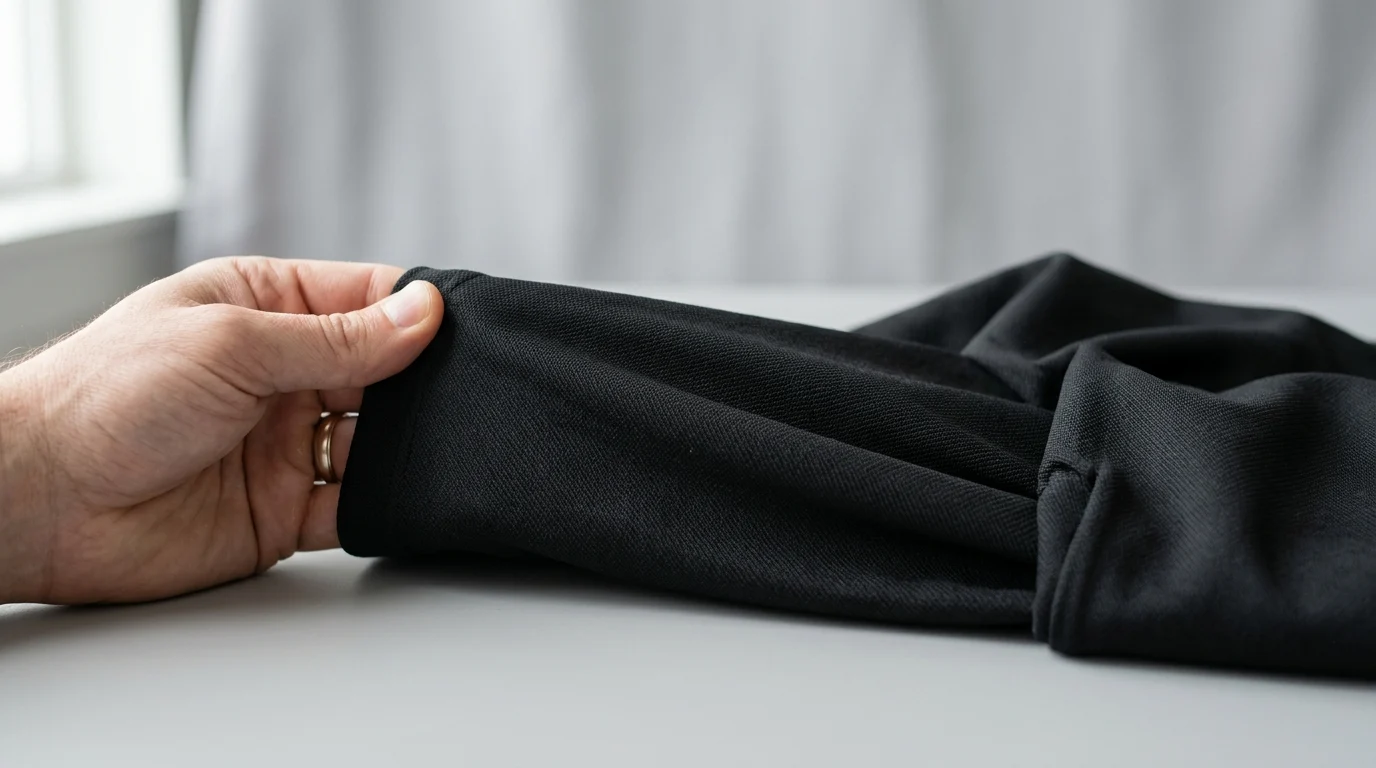
Raw textiles straight off the loom rarely resemble the high-performance garments consumers expect. In its greige state, a typical Polyester Stretch Woven sportswear Fabric is stiff, highly prone to shrinkage, and lacks advanced moisture or thermal management. Finishing is the critical engineering phase that dictates the fabric’s final behavior, hand-feel, and durability.
Base Fabric Variables to Define Before Finishing
Before applying any chemical or mechanical finish, the greige parameters must be baselined. For a standard polyester spandex woven fabric, spandex content typically ranges from 8% to 15%, interwoven with 50D to 75D polyester yarns. The weave structure—whether a plain weave, twill, or dobby—determines the baseline mechanical stretch, which usually sits around 12% to 18% elongation before finishing. If these greige specifications are not accounted for, the subsequent chemical baths and heat treatments will yield unpredictable tension and weight variations.
Heat Setting and Dimensional Stability Targets
The most crucial mechanical finish is heat setting. Because spandex shrinks drastically under high temperatures, the fabric is run through a stenter frame at thermal thresholds carefully calibrated to lock the molecular structure. A typical industry target temperature range of 185°C to 195°C for 30 to 45 seconds is often used, though this is highly supplier-dependent and requires strict dwell-time control to prevent elastane degradation. This process stabilizes the width and weight (typically targeting 120 to 180 GSM for lightweight activewear). When executed correctly, dimensional stability targets are achieved, ensuring the fabric exhibits a maximum residual shrinkage of just 3% to 5% after home laundering. Failing to hold these tight tolerances results in garments that warp or size down after a single wash.
Common Finishing Processes for Polyester Stretch Wovens
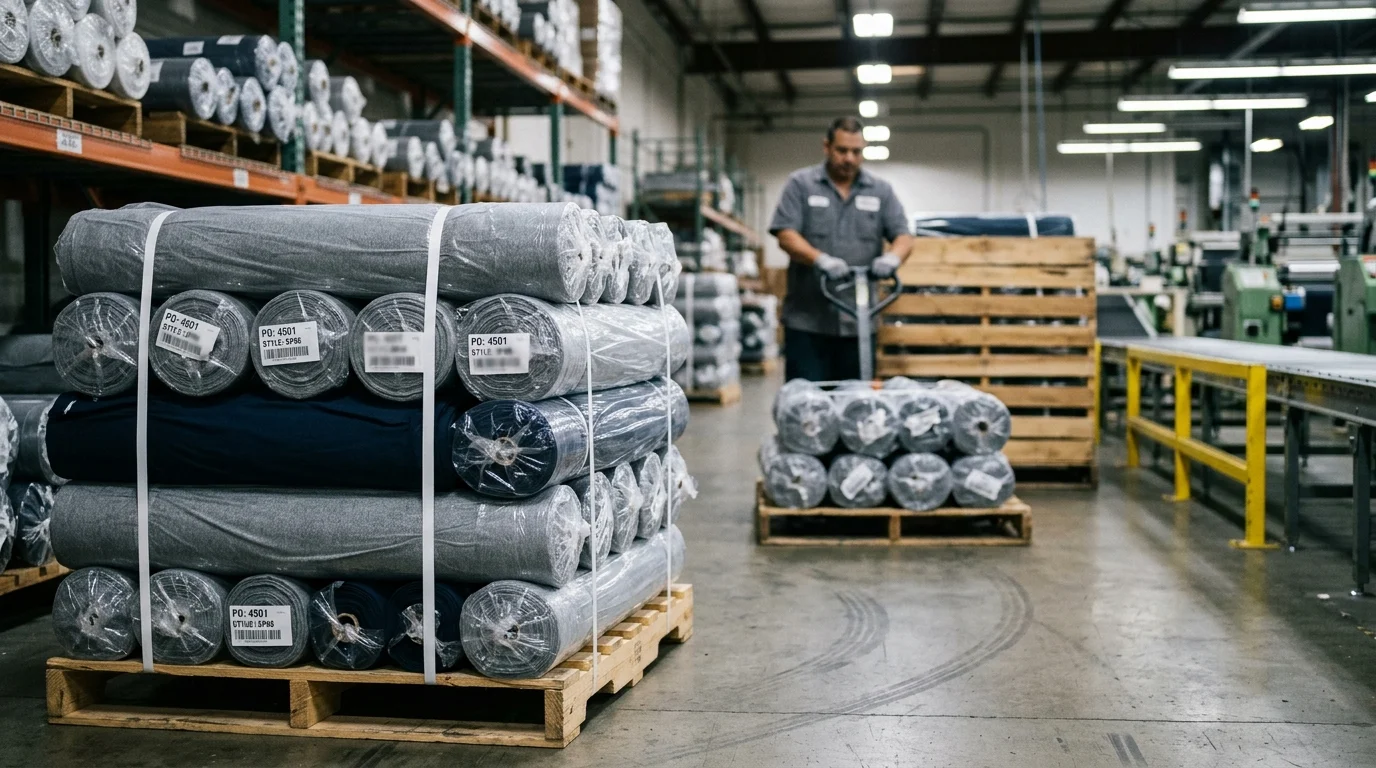
Once dimensional stability is established, the focus shifts to functionalization. The selected finishing processes directly correlate to the garment’s intended climate and activity level. These are generally divided into wet chemical applications and dry mechanical surface treatments.
Softening and Moisture Management Finishes
For intense athletic output, moisture management finishes are essential. Standard polyester is hydrophobic, meaning hydrophilic chemical agents must be applied in the dye bath or padding mangle to facilitate wicking. A successful wicking finish will pass the AATCC 79 absorbency test, dropping water absorption times from over 30 seconds down to under 3 seconds. Conversely, for outerwear applications, manufacturers engineer water repellent polyester fabric using C0 (fluorine-free) Durable Water Repellent (DWR) coatings. While an exceptional, best-case C0 finish can maintain a spray rating of 80 (ISO 4920) after 20 standard wash cycles, this is not a universal benchmark for fluorine-free chemistry and varies by supplier. Furthermore, chemical finishes are subject to evolving regulatory volatility; formulations must increasingly comply with strict PFAS restrictions, such as REACH and ZDHC guidelines. It is also critical to note finish compatibility: hydrophilic wicking treatments and DWR coatings fundamentally oppose each other and cannot be applied to the same fabric face without negating each other’s effects.
Brushing and Surface Effect Treatments
Mechanical finishes alter the tactile and thermal properties of the textile. When a softer hand or increased insulation is required, the textile is run through a series of sanding or sueding rollers. Creating a premium brushed polyester stretch fabric involves micro-abrasion that lifts the surface fibers, trapping air to increase the clo value (thermal resistance) by up to 15%. However, brushing inherently weakens the surface structure. To counter this, mechanical brushing is often paired with chemical binders to create an anti pilling sportswear fabric. Standard quality control distinguishes between pilling and abrasion resistance testing protocols. The finished textile should achieve a minimum Grade 4 on the Martindale pilling test (ISO 12945-2, typically evaluated at 2,000 to 5,000 cycles). Separately, it should withstand an industry target of 18,000 rubs during Martindale abrasion testing (ISO 12947), ensuring the surface remains smooth and intact despite rigorous athletic friction.
How to Choose Finishes for Polyester Stretch Woven Sportswear
Selecting the right finish requires balancing performance demands, cost, and lead times. Developing a new activewear line relies on strict decision matrices to prevent over-engineering the textile, which can unnecessarily drive up the final yardage cost.
Decision Matrix for Running Shorts
While this section highlights running shorts as a specific case study, this evaluative framework can be expanded to cover multiple garment categories. The fabric for elite running shorts must be ultra-lightweight, non-clinging, and resistant to static build-up. This typically requires a combination of an anti-static agent and a hydrophilic wicking finish. Below is a decision matrix that aligns finishes with these specific activewear requirements, illustrating how realistic selection constraints and supplier-dependent costs are managed. Note that anti-static readings are highly dependent on ambient temperature and humidity.
| Finish Type | Primary Function | Estimated Add-on Cost (USD/yd) | Key Performance Metric |
|---|---|---|---|
| Hydrophilic / Wicking | Sweat evaporation | $0.15 – $0.25 | Absorbency < 3 seconds |
| C0 DWR | Rain/stain resistance | $0.35 – $0.50 | 80+ rating after 20 washes (best-case) |
| Anti-Static | Prevents clinging | $0.10 – $0.20 | Surface resistivity < 10^10 Ω/sq |
| Mechanical Peaching | Softness / Thermal | $0.20 – $0.30 | Martindale Pilling ≥ Grade 4 |
Approval Steps: Lab Dips, Testing, and Bulk Review
The journey from concept to bulk production is governed by rigorous approvals. First, lab dips are reviewed to confirm that the high temperatures of the finishing process haven’t caused a color shift (thermo-migration). Once the lab dip is approved, a 100-meter pilot batch is run to verify the physical specifications. For any technical sportswear fabric, the bulk review must validate the consistency of the finish application and physical properties across the yardage. Only when the pilot yardage passes third-party lab testing for stretch recovery (e.g., maintaining 90% recovery after 30 minutes) and chemical compliance (such as Oeko-Tex Standard 100) is the full bulk run authorized.
Key Takeaways
- Confirm greige specifications before finishing, including 8% to 15% spandex content, 50D to 75D polyester yarns, weave type, and baseline stretch.
- Use controlled heat setting, commonly around 185°C to 195°C for 30 to 45 seconds, to lock fabric width, GSM, and dimensional stability.
- Set a clear shrinkage requirement, such as 3% to 5% maximum residual shrinkage after laundering, before approving bulk fabric production.
- Choose wicking finishes for high-sweat sportswear and DWR finishes for outerwear, because the two chemistries work against each other on the same face.
- Verify moisture management with testing such as AATCC 79, where strong wicking can reduce absorption time from over 30 seconds to under 3 seconds.
- Check that water-repellent finishes meet current PFAS-related requirements, including REACH and ZDHC expectations, before placing production orders.
Frequently Asked Questions
What is the most important finishing step for polyester stretch woven fabric?
Heat setting is the key step because it stabilizes width, GSM, stretch recovery, and shrinkage. Poor heat-setting control can cause garments to warp, shrink, or lose fit after washing.
What heat-setting range is commonly used for polyester spandex woven fabric?
A typical industry range is 185°C to 195°C for 30 to 45 seconds, but the exact setting depends on yarn, spandex content, fabric weight, and supplier process control.
Can one fabric have both strong wicking and durable water repellency?
Usually not on the same fabric face. Hydrophilic wicking finishes attract moisture, while DWR coatings repel water, so applying both together can reduce or cancel the intended performance.
What spandex content is common in polyester stretch woven sportswear fabric?
Many polyester stretch woven fabrics use about 8% to 15% spandex with 50D to 75D polyester yarns, depending on the desired stretch, recovery, and garment use.
How is moisture management performance tested?
One common method is AATCC 79 absorbency testing. A good wicking finish can reduce water absorption time from over 30 seconds to under 3 seconds.

Yunai Textile
Post time: Sep-28-2026