
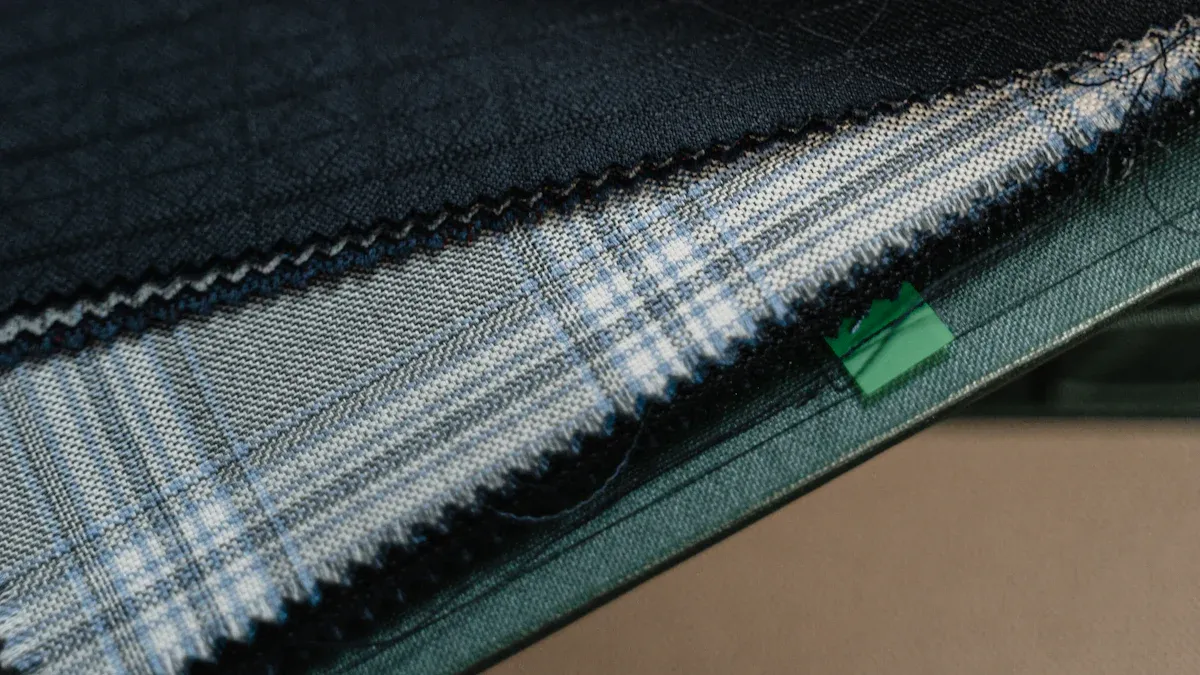
People often choose suit fabric based on comfort and appearance. Wool remains popular, especially worsted wool fabric for its durability. Some prefer polyester viscose blended fabric or tr spandex suiting fabric for easy care. Others enjoy leisure suit fabric, Linen suit fabric, or silk for unique texture and breathability.
Key Takeaways
- Suit fabrics vary widely, including wool, cotton, linen, silk, synthetics, velvet, cashmere, and mohair, each offering unique comfort and style.
- Choose suit fabric based on the season and occasion: wool and cashmere for cold weather, linen and cotton for warm weather, and silk or velvet for formal events.
- Consider personal comfort and style by trying different fabrics and selecting colors and patterns that express your personality.
Main Types of Suit Fabric
Wool
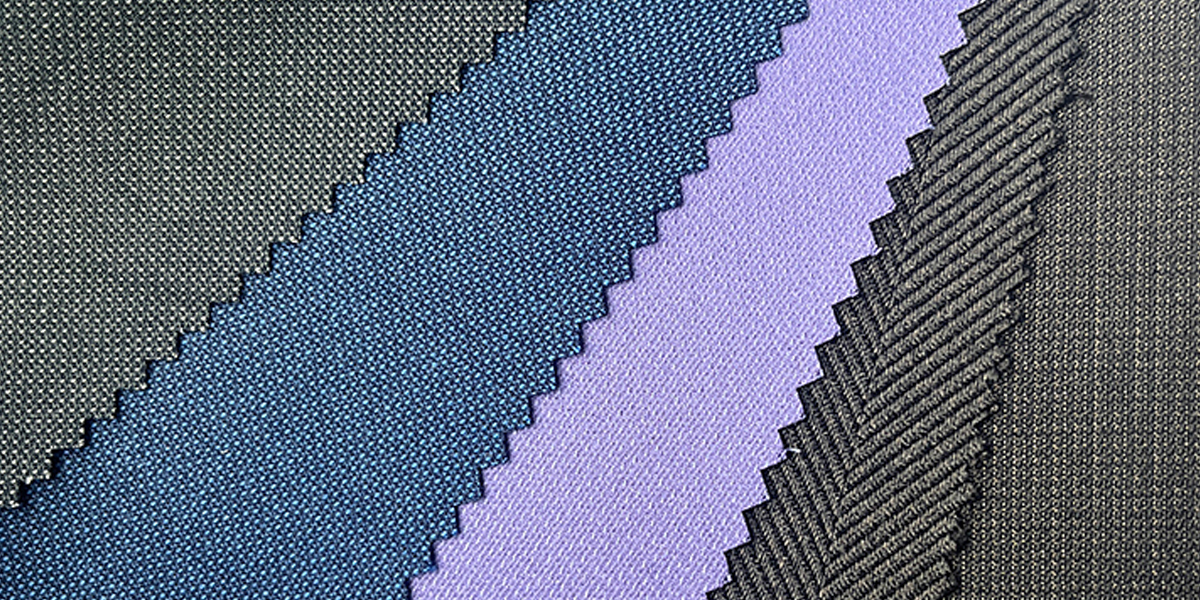
Wool stands as the most popular suit fabric. People choose wool for its warmth, breathability, and durability. Wool suits work well in many climates. They keep the wearer comfortable in both cool and warm weather. Wool also resists wrinkles, so the suit looks sharp all day. Some wool suits use fine fibers for a smooth finish, while others use thicker yarns for a textured look.
Tip: Wool suits often last longer than other types. They make a good investment for anyone who wears suits often.
Cotton
Cotton suits feel soft and light. Many people wear cotton suits in spring and summer. Cotton allows air to flow, which helps keep the body cool. This suit fabric wrinkles more easily than wool, but it offers a relaxed and casual style. Cotton suits come in many colors and patterns.
A simple table shows the main features:
| Feature | Cotton Suit Fabric |
|---|---|
| Comfort | High |
| Breathability | Excellent |
| Wrinkle-Free | No |
Linen
Linen suits feel very light and cool. Linen comes from the flax plant. People often wear linen suits in hot weather. Linen absorbs moisture and dries quickly. This suit fabric wrinkles easily, which gives it a laid-back look. Many choose linen for beach weddings or summer events.
Silk
Silk suits look shiny and feel smooth. Silk comes from silkworms. This fabric feels cool in summer and warm in winter. Silk suits often cost more than other types. They work best for special occasions. Silk drapes well and adds a touch of luxury.
Note: Silk suits need careful cleaning. Dry cleaning keeps them looking their best.
Synthetic Suit Fabric
Synthetic suit fabric includes materials like polyester, rayon, and spandex. These fabrics cost less than natural fibers. They resist wrinkles and stains. Many people choose synthetic suits for easy care and durability. Some blends mix synthetic fibers with wool or cotton for better comfort.
Velvet
Velvet suits feel soft and look rich. Velvet comes from woven fibers that create a plush surface. People often wear velvet suits at formal events or parties. This suit fabric stands out because of its shine and texture. Velvet suits come in deep colors like black, navy, or burgundy.
Cashmere
Cashmere suits use fibers from cashmere goats. This fabric feels very soft and warm. Cashmere suits cost more than wool or cotton. People choose cashmere for its comfort and luxury. Cashmere suits work best in cold weather.
Mohair
Mohair comes from the Angora goat. Mohair suits feel light and shiny. This suit fabric resists wrinkles and holds its shape well. Mohair suits work well for both warm and cool weather. People often pick mohair for its unique look and durability.
Notable Suit Fabric Subtypes and Patterns
Tweed (Wool Subtype)
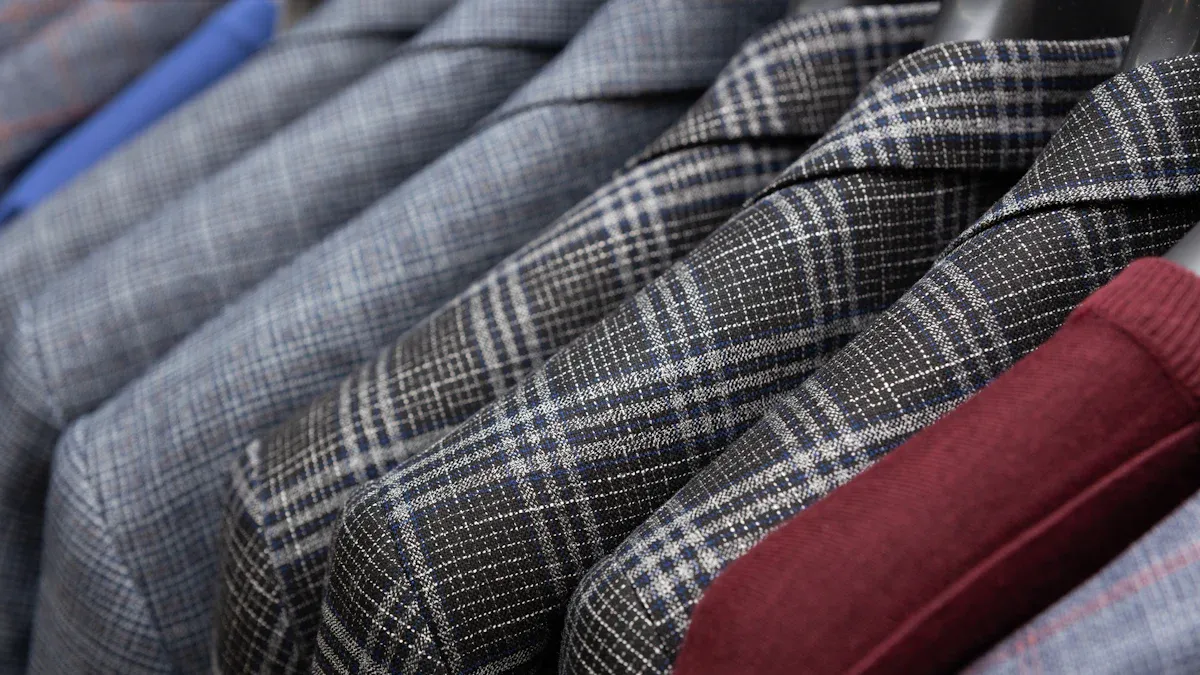
Tweed comes from wool. This fabric feels rough and thick. People often wear tweed suits in cold weather. Tweed patterns include herringbone and check. Tweed suits look classic and work well for outdoor events.
Tweed suits protect against wind and rain. They last for many years.
Worsted (Wool Subtype)
Worsted wool uses long, straight fibers. This suit fabric feels smooth and strong. Worsted suits look sharp and resist wrinkles. Many business suits use worsted wool.
Flannel (Wool Subtype)
Flannel suits feel soft and warm. Flannel comes from brushed wool. People wear flannel suits in fall and winter. Flannel suits look cozy and stylish.
Seersucker (Cotton Subtype)
Seersucker uses cotton. This fabric has a puckered texture. Seersucker suits feel cool and light. People wear seersucker suits in hot weather, often in light colors.
Gabardine (Wool or Cotton)
Gabardine uses tightly woven wool or cotton. This fabric feels smooth and firm. Gabardine suits resist water and wrinkles. Many people choose gabardine for travel.
Hopsack (Wool Subtype)
Hopsack uses a loose weave. This wool fabric feels airy and textured. Hopsack suits breathe well and work for warm weather. The weave gives a unique look.
Sharkskin (Wool or Synthetic Blend)
Sharkskin fabric blends wool with synthetic fibers. This suit fabric shines and changes color in the light. Sharkskin suits look modern and sleek.
Choosing the Right Suit Fabric
Best Suit Fabrics for Different Seasons
People often select suit fabric based on the weather. Wool works well for fall and winter because it keeps the body warm. Linen and cotton help people stay cool in summer. Mohair also feels light, so it fits spring and summer days. Velvet and cashmere provide extra warmth for cold months.
| Season | Best Suit Fabrics |
|---|---|
| Spring | Cotton, Mohair |
| Summer | Linen, Cotton |
| Fall | Wool, Flannel |
| Winter | Wool, Cashmere, Velvet |
Tip: Choose lighter fabrics for hot weather and heavier ones for cold days.
Suit Fabrics for Formal and Casual Occasions
Formal events often require smooth and elegant fabrics. Wool, silk, and velvet look polished and suit weddings or business meetings. Cotton and linen give a relaxed style. People wear these for casual outings or summer parties. Synthetic blends can fit both formal and casual settings, depending on the finish.
- Wool and silk: Best for formal events
- Cotton and linen: Great for casual occasions
Personal Style and Comfort with Suit Fabric
Each person has a unique style. Some prefer classic looks with wool or worsted. Others like the relaxed feel of linen or cotton. Comfort matters, so people should try different fabrics to see what feels best. Breathable fabrics help on warm days, while soft ones add comfort in winter.
People can express their personality by choosing colors and patterns that match their taste.
People can find many options for suits. Wool, cotton, linen, silk, synthetics, velvet, cashmere, and mohair each offer unique qualities. Some fabrics work better in warm weather. Others provide warmth in winter. People should think about the season, event, and comfort before choosing.
FAQ
What is the most popular suit fabric?
Wool remains the most popular suit fabric. It offers comfort, breathability, and durability. Many people choose wool for both business and formal occasions.
Can you wear linen suits in winter?
Linen suits work best in warm weather. They do not provide much warmth. People usually avoid linen suits during cold months.
How do you care for a silk suit?
Dry cleaning keeps a silk suit looking new. Avoid washing silk at home. Store silk suits in a cool, dry place.
Post time: Aug-12-2025