
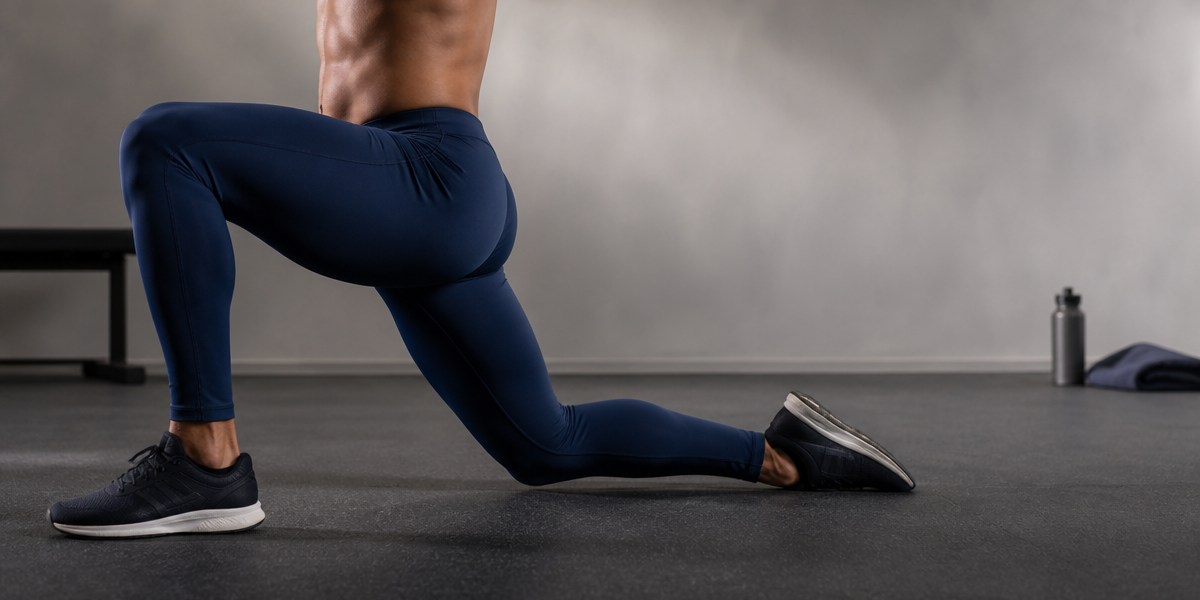
Why Stretch Recovery Matters in Sportswear Fabrics
When evaluating high-performance apparel, a primary focus is often on the elastic recovery properties of the fabric. Stretch is only half the equation; if a material stretches by 50% but fails to snap back to its original dimensions, the garment can quickly lose its structural integrity and aesthetic appeal. For premium athletic wear, typical benchmarks often target an immediate elastic recovery rate of 95% or higher within one minute of tension release. This immediate snap-back serves as a quick baseline metric, though requirements vary heavily by end-use. Compression garments, for example, require much higher recovery thresholds than relaxed yoga or hiking apparel. Falling short of the appropriate standard for a specific garment type can lead to immediate quality complaints, high consumer return rates, and a damaged brand reputation.
What Stretch Recovery Means
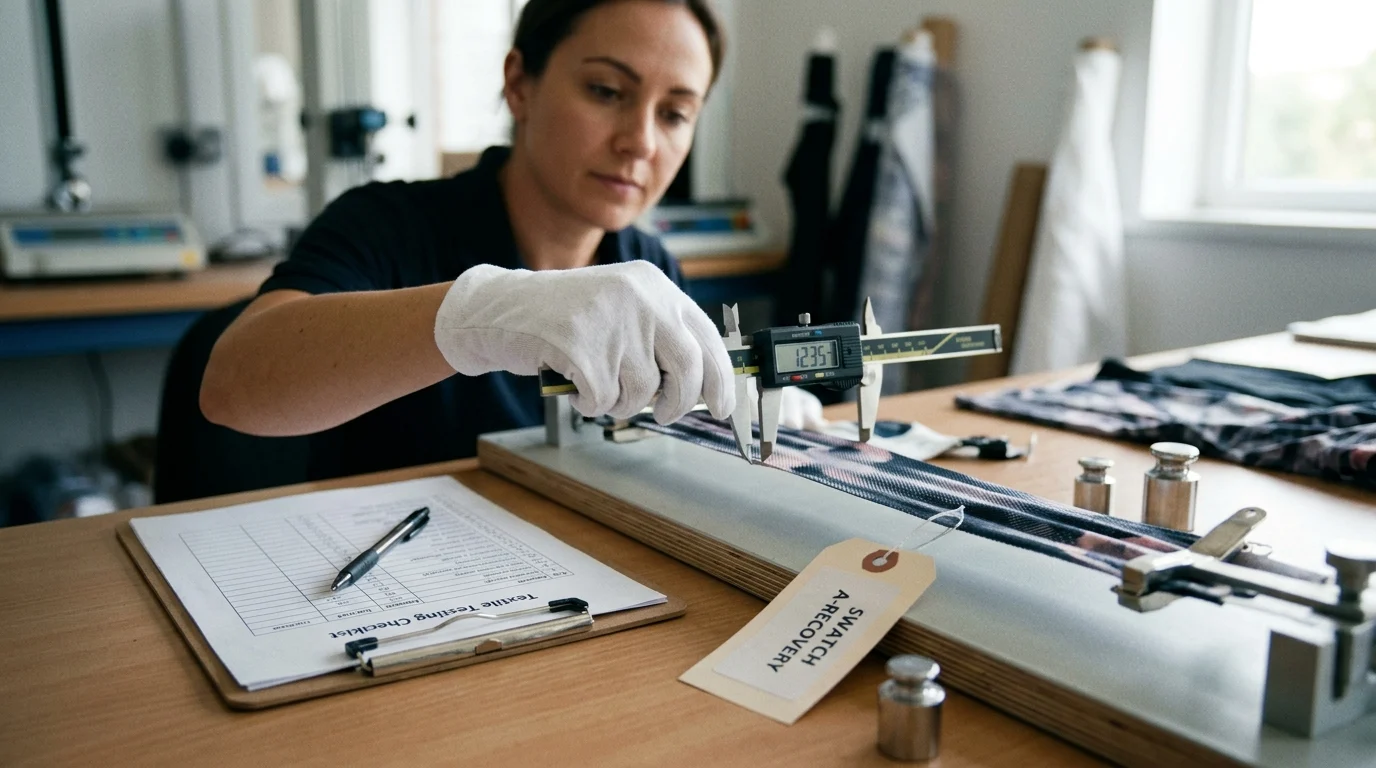
In practical terms, stretch recovery refers to a fabric’s elastic recovery and its resistance to permanent set (often called creep). If a standard 10-inch testing swatch of fabric is stretched to 15 inches (representing a 50% elongation or strain), its recovery is measured by how closely it returns to that original 10-inch baseline after the force is removed. If it settles at 10.2 inches, the 0.2-inch difference represents a 4% residual extension relative to the 5-inch extension distance, which translates directly to a 96% elastic recovery rate. This metric is critical for compression garments, where precise pressure must be maintained against the athlete’s skin to promote blood flow and reduce muscle fatigue.
How Poor Recovery Affects Garment Fit
When recovery metrics fall below the required threshold for a specific garment type, the physical fit degrades rapidly. This often manifests as “bagging” at high-stress articulation points—specifically the knees, elbows, and seat—after just a few wear cycles. Persistent sagging not only looks unprofessional but also causes friction and chafing during intense physical activity, defeating the garment’s purpose. Working with a reliable fabric manufacturing partner is essential to ensure the textiles maintain their compressive properties over a typical lifecycle. While often benchmarked at 30 to 50 domestic washes, this lifecycle varies widely depending on the garment class, fiber type, and brand protocol, provided the fabric does not suffer from premature elastane breakage.
Key Factors That Affect Stretch Recovery
Identifying the root causes of poor shape retention requires looking closely at how the material is engineered at the microscopic level. Two main variables are typically analyzed: the raw fiber mix and the physical geometry of the yarns. Even a minor deviation in elastane content or a slight miscalculation in yarn denier—such as substituting a 20D spandex for a 40D spandex to cut costs—can drastically alter the final performance.
Fiber Composition and Elastane Content
The foundation of any good stretch fabric lies in its fiber composition and the quality of the elastomeric yarns used. Performance blends typically contain 8% to 15% elastane (spandex) combined with a durable synthetic base like polyester or nylon. However, simply increasing the elastane percentage does not guarantee better results. While many high-compression garments successfully utilize 20% to 30% elastane, exceeding 20% without high-quality yarns and proper core-spinning techniques can cause the fabric to become overly heavy, trap heat, and degrade prematurely from body oils, sweat, and UV exposure. Performance ultimately depends on yarn quality, construction, and the garment’s specific end-use. Furthermore, elastane recovery loss is often a fatigue issue over time—accelerated by chlorine, high heat, and repeated laundering—rather than solely a manufacturing defect. Sourcing from a specialized textile supplier ensures the blend is optimized, often wrapping the elastane core in durable polyester to protect its elasticity from environmental stressors.
Knit and Weave Structure
Beyond the raw materials, the structural matrix dictates how the yarns interact under tension. Knitted fabrics rely on loop deformation; as the fabric stretches, the interlocking loops change shape and then rely on the elastane to pull them back into their original geometry. This allows interlock knits to offer superior multi-directional stretch for yoga and running gear. Woven fabrics, conversely, rely on yarn crimp—the natural waviness of the yarns interlaced over and under each other. Advanced wovens provide better abrasion resistance with controlled elasticity for rugged environments, as their stretch is limited by the straightening of this crimp.
| Fabric Structure | Typical Elastane % | Max Stretch Capacity | Target Recovery Rate | Best Application |
|---|---|---|---|---|
| Elasticized Warp Knit (e.g., Power-net/Tricot) | 10% – 15% | 60% – 80% | > 95% | Compression Leggings |
| 4-Way Stretch Woven | 8% – 12% | 30% – 50% | > 92% | Hiking Pants |
| Performance Soft Shell Fabric | 5% – 10% | 20% – 40% | > 90% | Alpine Jackets |
In heavy-duty applications, the weave must balance flexibility with weather resistance. Tighter weaves restrict the elastane’s movement, meaning the yarn must be engineered with sufficient retractive force to overcome the resistance of the woven structure and achieve full recovery.
How Buyers Can Test and Control Fabric Quality
To prevent defective garments from reaching the consumer, strict quality control protocols should be implemented long before the cutting and sewing stages begin. Evaluating stretch recovery in sportswear fabrics requires standardized, repeatable testing environments. Depending on the brand’s quality tier and specific testing protocols, fabric lots that exhibit a defect rate higher than typical internal benchmarks—which some specific brands set around 1.5% to 3% during pre-production sampling, though this is not a universal standard—are often rejected.
Common Stretch Recovery Testing Methods
A common industry standard utilized in testing labs is ASTM D3107, which specifically measures the stretch properties of fabrics woven from stretch yarns. For knitted sportswear, which makes up a significant portion of the market, ASTM D2594 is the appropriate standard. During testing, a specific static load—usually 3 or 4 pounds depending on the fabric weight—is applied to a precisely cut fabric strip for exactly 30 minutes.
Key Takeaways
- Set recovery targets by garment type, with premium athletic fabrics often requiring at least 95% immediate recovery within one minute of tension release.
- Use recovery testing to identify residual extension, such as a 10-inch swatch returning to 10.2 inches after 50% elongation, which equals 96% recovery.
- Prevent bagging at knees, elbows, and seat areas by selecting fabrics that resist permanent set after repeated wear cycles.
- Specify suitable elastane content, commonly 8% to 15% in performance blends, to balance stretch, support, and long-term shape retention.
- Do not reduce yarn quality to cut costs, because changing from 40D to 20D spandex can significantly weaken recovery performance.
- Validate sportswear fabric through wash testing, often across 30 to 50 domestic wash cycles, before committing to bulk production.
Frequently Asked Questions
What does stretch recovery mean in sportswear fabric?
Stretch recovery is the fabric’s ability to return close to its original size after being stretched. High recovery helps sportswear maintain fit, compression, and a clean appearance after movement and repeated wear.
What is a good stretch recovery rate for athletic wear?
Many premium athletic fabrics target an immediate recovery rate of 95% or higher within one minute after tension is released. Compression garments may require even stricter recovery performance.
Why does poor recovery cause bagging in leggings or sportswear?
Poor recovery leaves residual extension in stressed areas such as knees, elbows, and the seat. Over time, this creates sagging, friction, chafing, and a less professional appearance.
How is stretch recovery calculated?
A fabric sample is stretched to a set length, released, and measured again. For example, a 10-inch swatch stretched to 15 inches that settles at 10.2 inches has 96% recovery.
Which fibers improve recovery in performance fabrics?
Performance blends often use 8% to 15% elastane with polyester or nylon. Elastane provides stretch and snap-back, while the synthetic base adds strength, durability, and stability.

Yunai Textile
Post time: Sep-01-2026