
Introduction
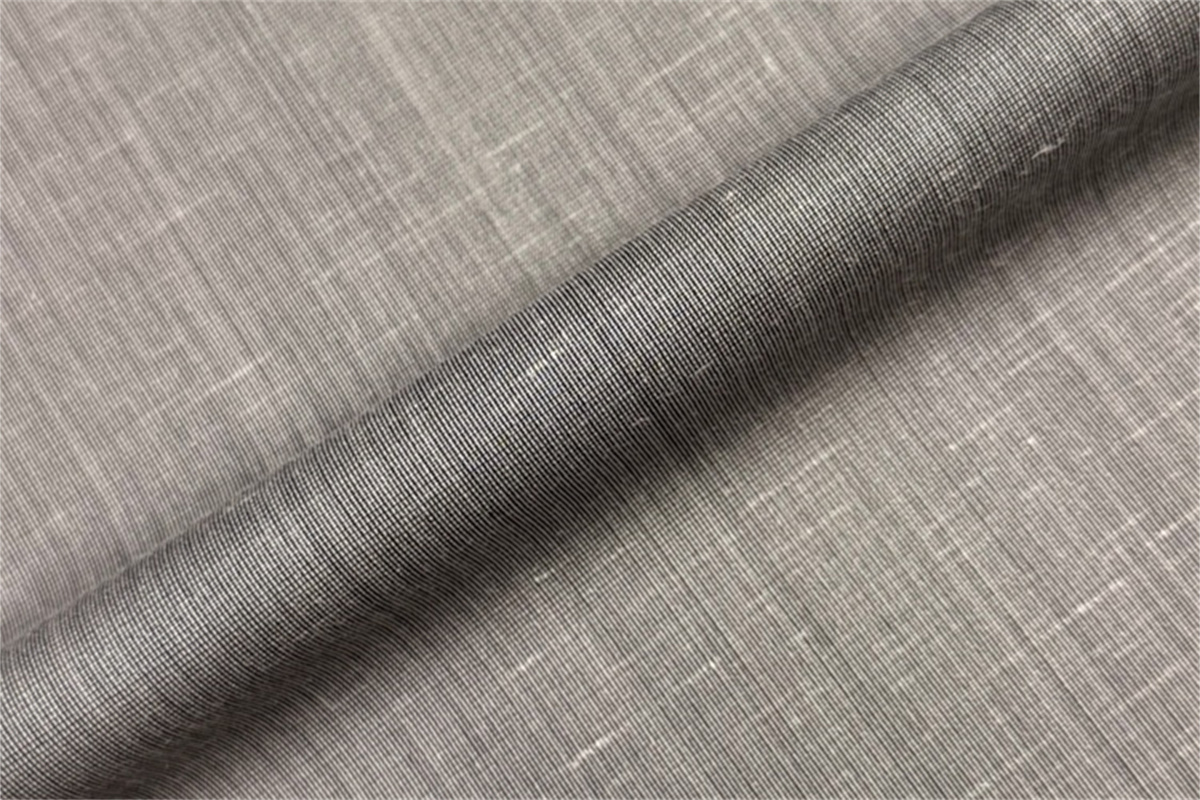
Choosing a high-end linen blend for suiting means balancing summer comfort with the structure, drape, and polish a tailored garment requires. The right fabric should preserve linen’s breathable texture while reducing excessive wrinkling and improving durability, shape retention, and overall hand-feel. This article explains what distinguishes premium linen blends from standard options, which companion fibers most effectively enhance performance, and how weave, finish, and fabric weight influence the final result. With these factors in mind, you will be better prepared to evaluate suiting cloth for professional, formal, or warm-weather tailoring needs.
Why high-end linen blends matter for suits
In our experience within the textile industry, the demand for tailored garments that balance formal elegance with warm-weather comfort has surged. Pure linen has long been the traditional choice for summer tailoring, but its notorious tendency to wrinkle makes it less than ideal for rigorous professional settings. This is where high-end linen blends step in, offering a sophisticated compromise. By strategically mixing linen with other premium or high-performance fibers, we can engineer fabrics that retain the sought-after slub texture and breathability of flax while significantly improving structural integrity and drape.
When sourcing materials for tailored collections, understanding the mechanics behind these blends is critical. A high-end linen blend fabric for suits must meet strict performance metrics while delivering a luxurious hand-feel. In this section, we will explore the defining characteristics of these premium textiles and the tangible benefits they offer to both the tailor and the end consumer.
What defines high-end linen blend suiting
What separates standard linen from a premium blend lies in the quality of the raw materials and the precision of the weave. In high-end applications, we typically look for long-staple flax fibers blended with fine wool, silk, or advanced synthetic filaments. A true high quality suit fabric in this category often features yarn counts ranging from 40s to 60s metric, allowing for a tighter, more refined weave without adding excessive bulk.
Weight is another defining factor. For premium suiting, we generally target a fabric weight between 220 and 280 grams per square meter (gsm). Fabrics at the lower end of this spectrum (around 220 gsm) are lightweight and breathable, making them suited for unlined tropical jackets, while those closer to 280 gsm provide the necessary body and drape for structured, half-canvas suits. The composition ratios are carefully calibrated—often landing around 30% to 50% linen—to ensure the flax characteristics remain prominent without overwhelming the garment’s shape.
Key benefits of linen blends for suits
The primary advantage of transitioning to a linen blend is the dramatic improvement in crease recovery. Pure linen typically exhibits a crease recovery angle of roughly 60 degrees, which explains the sharp, permanent wrinkles that form at the elbows and knees after just a few hours of wear. By incorporating fibers like wool or resilient synthetics, we can push that recovery angle up to 90 or even 110 degrees. This means the suit will still develop the relaxed, elegant rumple characteristic of linen, but it will shed sharp creases overnight when hung properly.
Furthermore, blends enhance the longevity of the suit. Linen fibers are strong but lack elasticity, making them prone to breakage at stress points over time. Blending introduces much-needed flexibility, improving the fabric’s tensile strength and abrasion resistance. This results in a garment that not only looks professional throughout a long business day but also survives multiple seasons of frequent wear and dry cleaning without losing its structural integrity.
How to evaluate high-end linen blend fabric
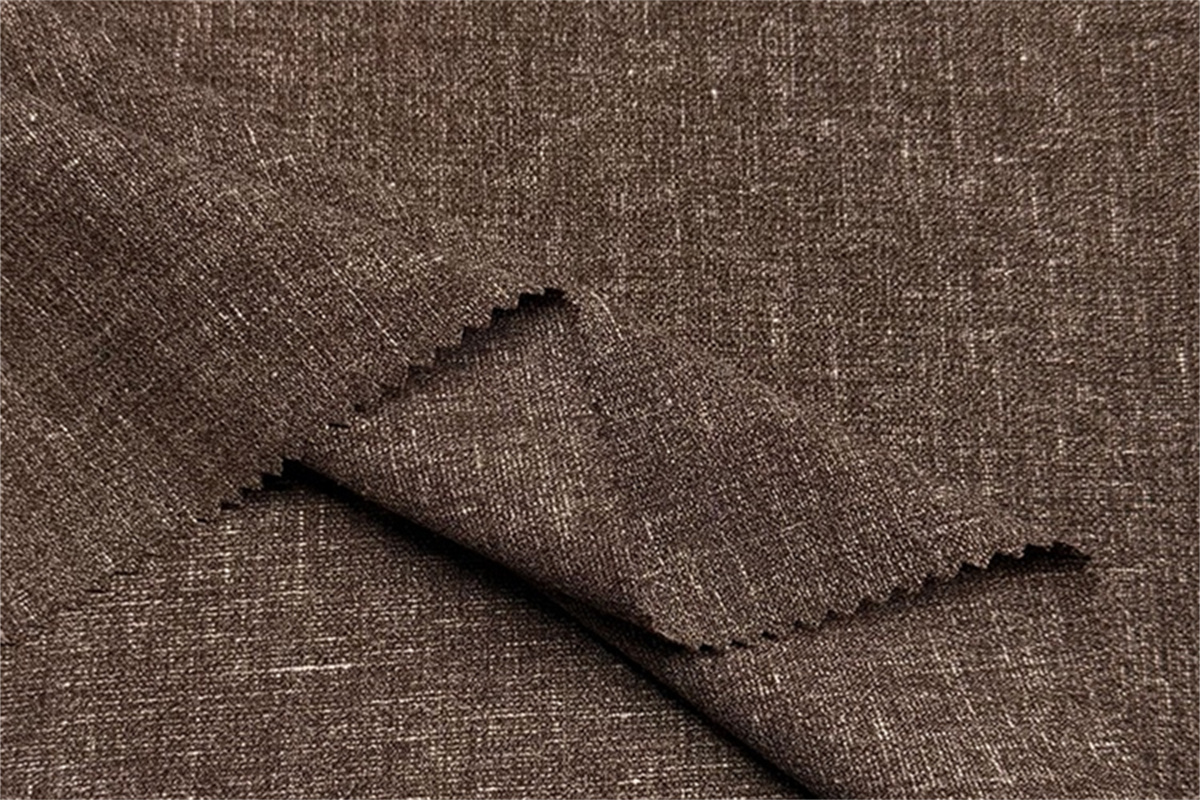
Evaluating high-end linen blends requires a discerning eye and a solid understanding of textile specifications. Because the market is flooded with varying qualities of blended fabrics, we must look beyond the surface texture to assess the underlying construction. A rigorous evaluation process ensures that the chosen fabric will perform reliably during the cutting, sewing, and pressing stages of suit manufacturing, while ultimately delivering value to the wearer.
Why linen is blended with other fibers
We blend linen with other fibers primarily to mitigate its inherent weaknesses. While wool-linen-silk blends are a staple in luxury bespoke tailoring, modern manufacturing often leans toward sophisticated synthetic blends to achieve specific performance targets. For instance, combining polyester and rayon with linen creates a fabric that mimics the luxurious drape of natural fibers while drastically reducing production costs and improving durability. A poly rayon suit fabric enhanced with linen offers excellent moisture management and an incredibly soft hand-feel.
Additionally, the introduction of elastomeric fibers has revolutionized modern suiting. Incorporating just 2% to 3% spandex into the warp or weft creates a poly linen spandex suit fabric that provides essential mechanical stretch. This micro-stretch accommodates the wearer’s movements—crucial for slim-cut contemporary suits—without causing the knees or elbows to bag out over time. The blending process is a deliberate engineering choice designed to maximize comfort, aesthetic appeal, and structural resilience.
What criteria to compare when assessing suiting fabric
When assessing different suiting fabrics, we rely on standard industry metrics to ensure quality control. Key criteria include weight, pilling resistance, shrinkage rates, and cost efficiency. For high-end applications, we strictly require a pilling resistance grade of 4 out of 5 (tested via the Martindale method at 2,000 rubs), ensuring the suit maintains a clean surface after repeated friction.
| Fabric Blend Type | Typical Weight (gsm) | Crease Recovery | Pilling Resistance (1-5) | Best Suited For |
|---|---|---|---|---|
| Pure Linen (Benchmark) | 180 – 240 | Low (~60°) | 3.5 | Ultra-casual summer wear |
| Wool / Linen / Silk | 240 – 280 | High (~110°) | 4.0 | Luxury bespoke tailoring |
| Poly / Rayon / Linen | 220 – 260 | Moderate (~90°) | 4.0 | Premium ready-to-wear |
| Poly / Linen / Spandex | 230 – 270 | High (~100°) | 4.5 | Modern slim-fit stretch suits |
By comparing these metrics, we can accurately predict how a fabric will behave. Shrinkage is another vital criterion; a premium blend must guarantee dimensional stability, with warp and weft shrinkage strictly controlled to under 2% after dry cleaning. Exceeding this threshold can lead to puckered seams and distorted lapels, instantly ruining the drape of a tailored suit.
How to choose the right high-end linen blend for suits
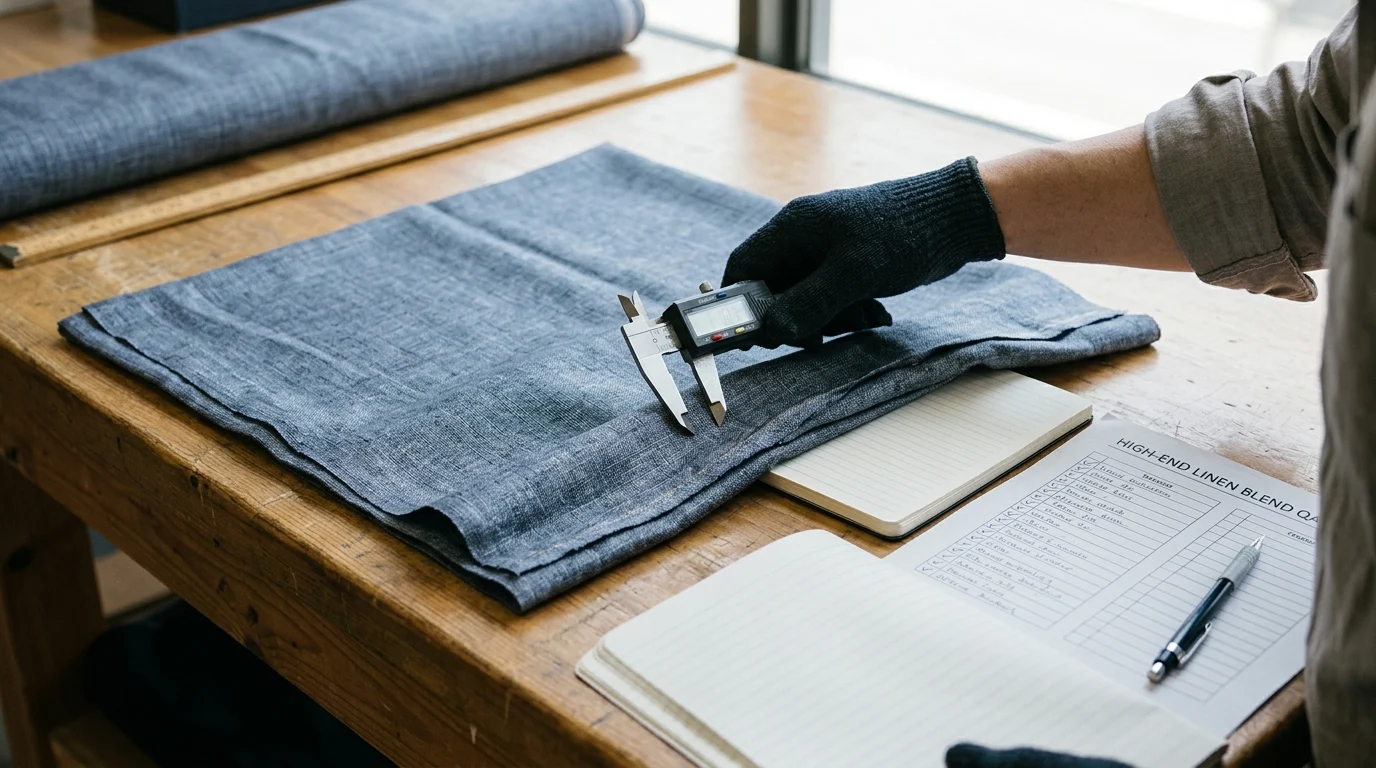
Choosing the right high-end linen blend requires aligning the fabric’s technical specifications with the intended end-use of the garment.
Key Takeaways
- The most important conclusions and rationale for higg-end linen blends fabric for suits
- Specs, compliance, and risk checks worth validating before you commit
- Practical next steps and caveats readers can apply immediately
Frequently Asked Questions
What linen percentage works best for high-end suit fabrics?
For most premium suiting, 30% to 50% linen is ideal. This keeps linen’s breathability and texture while improving drape, crease recovery, and shape retention.
What fabric weight should I choose for a linen blend suit?
Choose about 220–280 gsm. Use 220–240 gsm for lightweight summer jackets, and 250–280 gsm for more structured suits with better body.
Why choose a polyester-rayon-linen blend for suits?
It offers linen’s airy look, rayon’s soft drape, and polyester’s durability. This blend is practical for business suits that need fewer wrinkles and easier care.
How can I tell if a linen blend is suitable for tailoring?
Check the weave, gsm, fiber ratio, and hand-feel. Good tailoring fabric should feel smooth yet crisp, recover well after squeezing, and hold shape during pressing.
Is a linen blend better than pure linen for professional suits?
Yes, usually. Linen blends wrinkle less, wear longer, and keep a cleaner silhouette, making them more suitable for office and travel use than pure linen.
Post time: Jun-05-2026