
Introduction
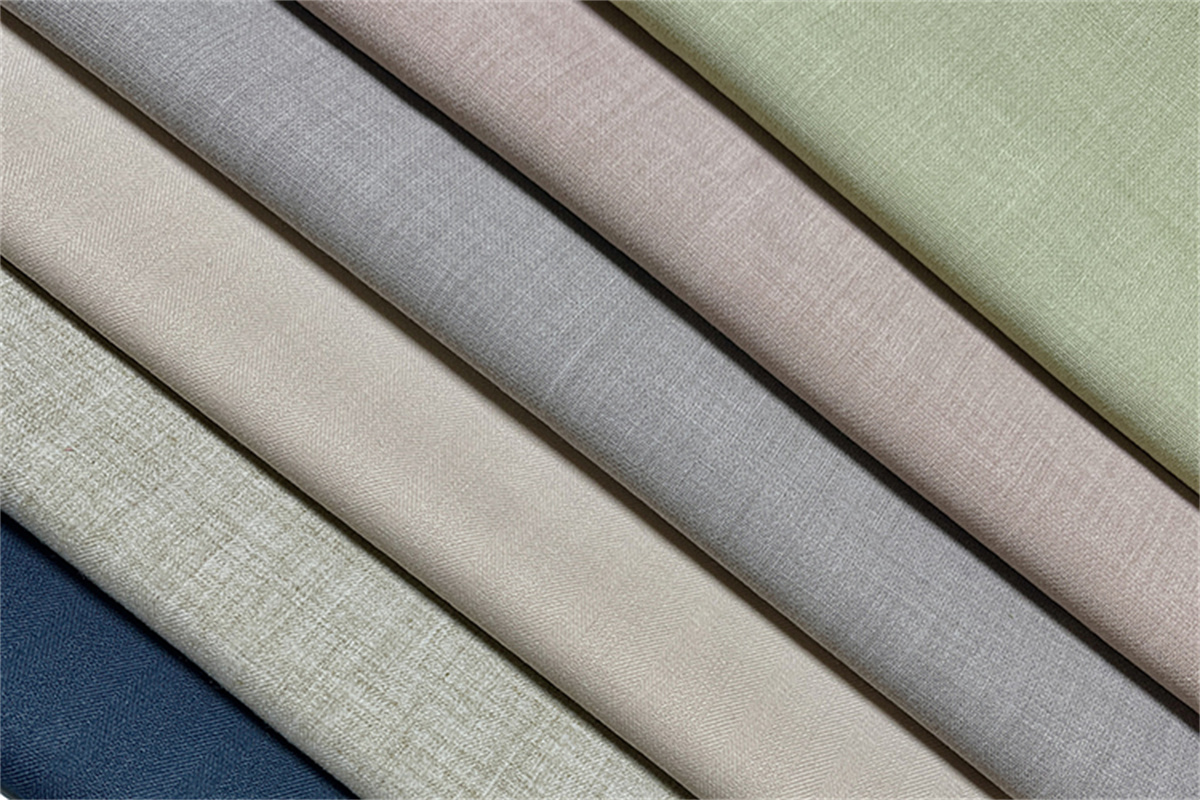
Choosing a suit fabric with a two-tone effect is less about novelty than about controlling how color, texture, and light work together in a finished garment. The right option can add depth and polish without pushing a suit into overly bold territory, making it useful for businesswear, formal styles, and modern tailoring alike. This article explains what creates the two-tone look, how it changes visual impact and drape, and which practical factors—such as fiber blend, weave, end use, and market position—should guide your selection before production or purchase.
Why Two-Tone Effect Fabric for Suits Matters
The integration of two-tone effect fabric into modern tailoring has transformed the commercial suiting landscape, offering an optimal balance between visual sophistication and manufacturing efficiency. Unlike flat, piece-dyed textiles, two-tone materials exhibit a subtle color shift depending on the angle of light and the viewer’s perspective. This dynamic aesthetic bridges the gap between conservative solid colors and aggressive patterns, making it highly desirable for contemporary business wear and formal attire.
For industry professionals and apparel manufacturers, understanding the mechanics and market positioning of these textiles is critical. The optical depth inherent in a two-tone weave not only elevates the perceived value of the final garment but also provides distinct advantages in inventory management and brand differentiation.
Visual Appeal and Design Impact
The primary appeal of two-tone fabrics lies in their optical iridescence, achieved through the strategic interlacing of contrasting warp and weft yarns. When tailored into a structured garment, the fabric highlights the natural drape and contour of the wearer’s body, as light catches the contrasting threads differently at the lapels, shoulders, and breaks of the trousers.
This multi-dimensional appearance allows designers to offer a richer palette without relying on complex, printed, or jacquard motifs. Consequently, the garment retains a formal, professional silhouette while projecting an underlying complexity that appeals to modern consumers seeking elevated wardrobe staples.
Key Commercial Considerations for Buyers
Procurement teams evaluating suit fabric must weigh the aesthetic benefits against production economics. Two-tone textiles generally command a higher retail price point, allowing brands to realize a 15% to 20% increase in gross margins compared to standard piece-dyed equivalents.
However, sourcing these materials requires careful inventory planning. Because the fabric relies on specific yarn-dyed combinations or specialized cross-dyeing processes, Minimum Order Quantities (MOQs) are typically higher, often ranging strictly between 1,500 and 3,000 meters per colorway. Buyers must accurately forecast seasonal color trends to mitigate the risk of holding excess specialized inventory, balancing the higher MOQ against the premium retail positioning.
How Two-Tone Effect Fabric for Suits Is Made in TR
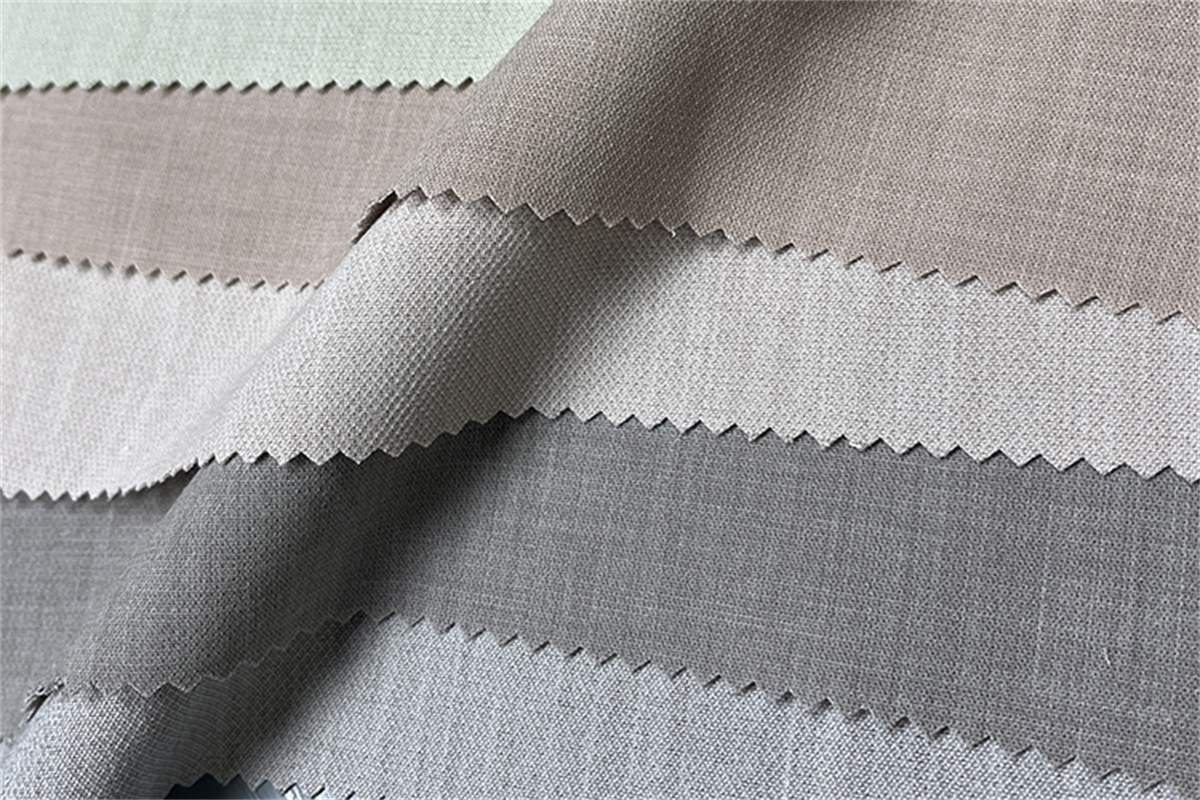
The majority of modern two-tone suiting is engineered using Tetoron and Rayon (TR) blends. TR fabric for suits leverages the durability and wrinkle resistance of polyester alongside the breathability and soft hand-feel of rayon. To achieve the signature dual-color effect in TR fabrics, textile mills utilize specialized dyeing and weaving methodologies.
Yarn Dyeing, Weave, Fiber Blend, and Finishing
The two-tone effect in TR blends is most efficiently produced through a cross-dyeing process. Because polyester and rayon have different chemical affinities—polyester requires disperse dyes at high temperatures, while rayon absorbs reactive dyes—mills can weave the raw fibers first and dye the fabric in a single or dual-stage bath. By programming the dye bath to color the polyester one shade and the rayon another, a striking two-tone effect emerges.
Alternatively, yarn dyeing is employed prior to weaving, where pre-dyed warp and weft yarns of different colors are interlaced. Modern formulations often incorporate elastane, resulting in a TRSP (Tetoron, Rayon, Spandex) blend. A standard high-performance specification might feature 75% Polyester, 23% Rayon, and 2% Spandex, achieving a substantial weight of 280 to 400 GSM, which is ideal for maintaining the crisp drape required in tailored suiting.
Performance Compared with Standard Suit Fabrics
When compared to traditional fabrics, two-tone TR blends offer a compelling matrix of performance and cost. They provide the dimensional stability of synthetic blends while imitating the optical depth of much more expensive natural fibers. A patterned TR fabric utilizing cross-dyeing also exhibits excellent color retention, typically achieving a Grade 4 out of 5 on standard colorfastness to washing tests.
| Performance Metric | Standard Piece-Dyed TR | Two-Tone TR Blend | Pure Wool Worsted |
|---|---|---|---|
| Visual Depth | Flat, uniform | Multi-dimensional | High, natural luster |
| Cost Index | Baseline (1.0x) | Moderate (1.2x – 1.4x) | Premium (3.0x+) |
| Colorfastness | Grade 3-4 | Grade 4 | Grade 3-4 |
| Wrinkle Resistance | High | High | Moderate |
| Care Requirement | Machine Washable | Dry Clean Recommended | Dry Clean Strictly |
How to Choose Two-Tone Effect Fabric for Suits
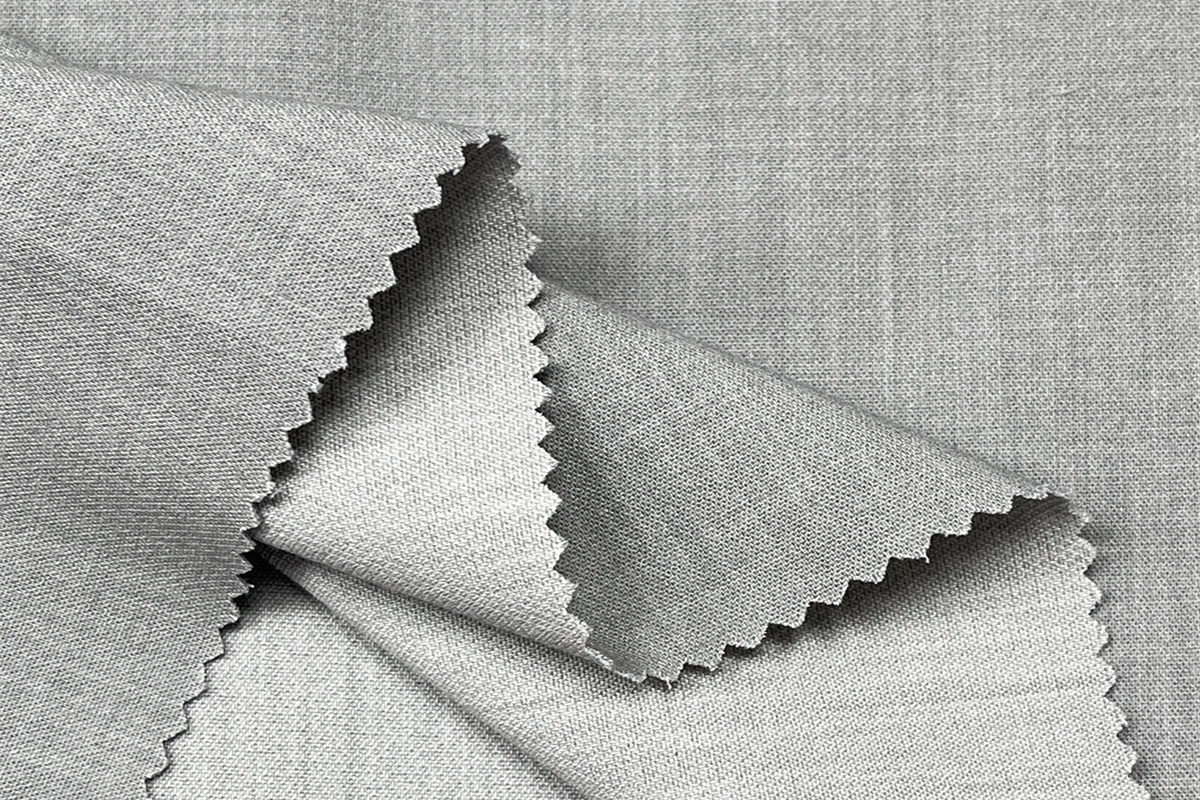
Selecting the optimal suiting fabric requires a rigorous evaluation of both the physical properties of the textile and the operational capabilities of the supplier. For two-tone materials, the margin for error in weaving and finishing is narrower than with solid colors, as structural inconsistencies become highly visible against the contrasting yarns.
Technical and Sourcing Selection Criteria
Quality assurance professionals must establish strict technical parameters during the sourcing phase. Dimensional stability is paramount; shrinkage must be heavily controlled, typically held below a strict 3% tolerance in both warp and weft directions after standard dry cleaning or washing cycles. Furthermore, the tear strength should exceed 25 Newtons to ensure the seams of tailored garments do not fail under stress.
From a sourcing perspective, buyers should demand comprehensive inspection reports adhering to an Acceptable Quality Limit (AQL) of 2.5 or lower. Because the two-tone effect highlights weaving faults like slubs, mispicks, or uneven yarn tension, partnering with mills that utilize advanced automated optical inspection during the finishing process is a mandatory requirement to minimize defect rates.
End Uses in Suiting Applications
The versatility of two-tone TR fabrics allows for broad application across various suiting categories. For lightweight spring and summer blazers, fabrics at the lower end of the weight spectrum (around 250-280 GSM) provide necessary breathability while maintaining the iridescent visual interest. Conversely, heavier weights ranging from 350 to 400 GSM are deployed for structured winter suits, corporate uniforms, and tailored trousers, providing the necessary body to hold sharp creases.
Ultimately, the strategic application of two-tone fabrics empowers apparel brands to construct garments that offer premium aesthetics without the prohibitive costs associated with pure worsted wools. By strictly managing blend ratios, tension controls, and dye affinities, manufacturers can deliver highly durable, visually captivating suiting collections that meet the rigorous demands of the modern consumer market.
Key Takeaways
- The most important conclusions and rationale for Two-tone effect fabric for suits
- Specs, compliance, and risk checks worth validating before you commit
- Practical next steps and caveats readers can apply immediately
Frequently Asked Questions
What blend works best for two-tone suit fabric?
TR or TRSP is a practical choice. A 75% polyester, 23% rayon, 2% spandex blend gives good drape, wrinkle resistance, and a clear two-tone look for business suits.
What fabric weight should I choose for two-tone suits?
For structured suiting, choose about 280–400 GSM. Lighter weights suit warmer climates; heavier options give sharper shape and better durability in jackets and trousers.
How is the two-tone effect created in TR fabric?
It is usually made by cross-dyeing polyester and rayon different shades or by weaving different-colored yarns together. This creates subtle color shift and more visual depth than piece-dyed fabric.
Is two-tone TR fabric suitable for bulk sourcing?
Yes, but plan carefully. Two-tone suit fabrics often have higher MOQs, commonly around 1,500–3,000 meters per color, so forecast color demand before placing orders.
Where can I source two-tone polyester rayon fabric for suits?
You can explore polyester rayon and TRSP suiting options on IYUNAI Textile’s polyester rayon fabric category to compare blends, textures, and suit-ready specifications.

Yunai Textile
Post time: May-06-2026