
Introduction
How can fabric buyers tell whether a high-count worsted wool fabric truly meets the specifications claimed by a supplier?
For suit manufacturers, apparel brands, and wholesale textile buyers, selecting high-quality worsted wool involves more than checking the fabric’s softness, appearance, or price.
A fabric labeled Super 120s or Super 150s may look premium, but its actual quality depends on fiber fineness, yarn construction, weave consistency, finishing, and verified fiber composition.
Incorrect specifications can lead to unexpected fabric performance, tailoring difficulties, quality disputes, and costly bulk-order problems.
This guide explains five practical inspection methods to help B2B buyers evaluate high-count worsted wool suiting fabric before confirming production.
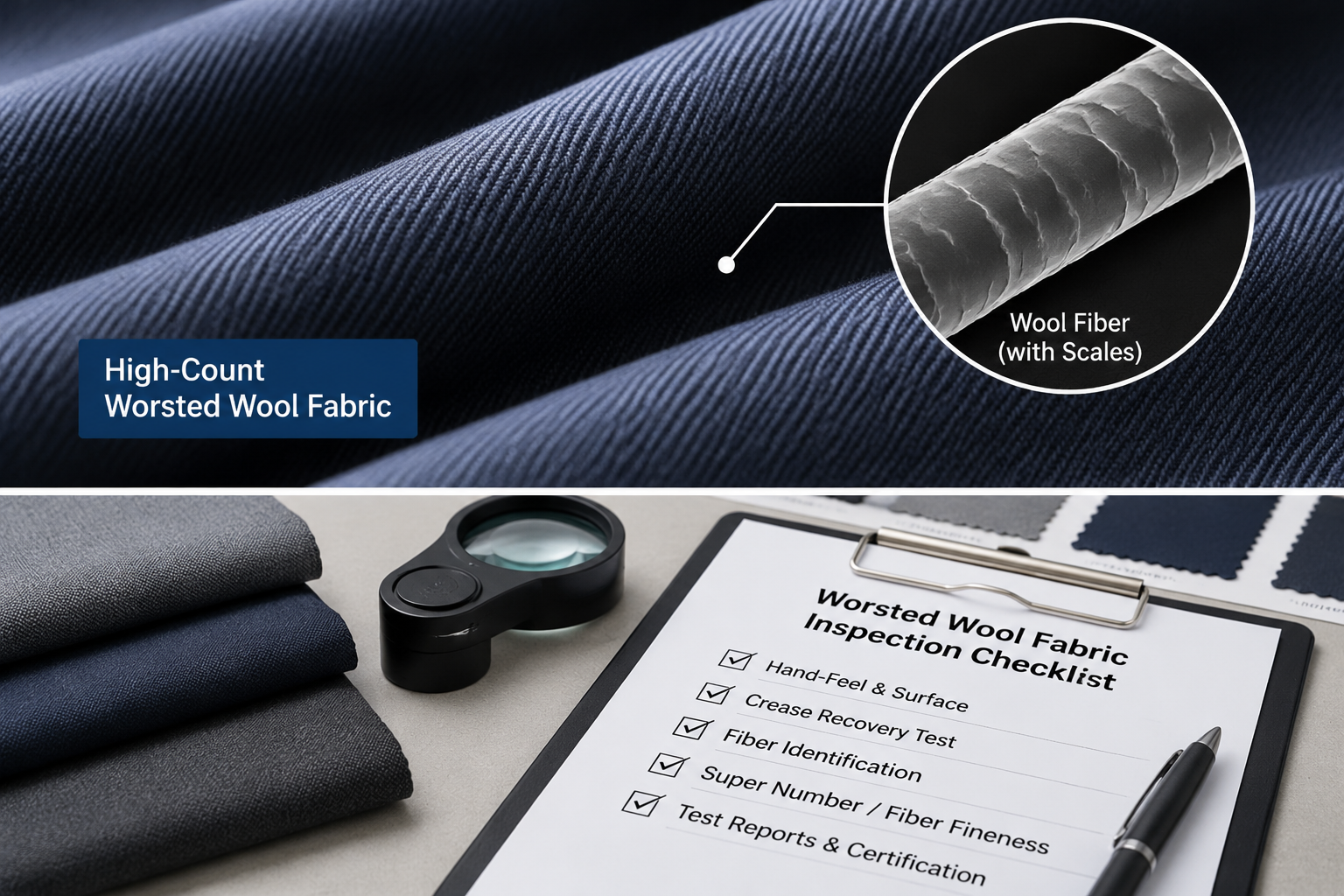
Quick Answer: How Do You Identify Genuine High-Count Worsted Wool Fabric?
To evaluate high-count worsted wool, buyers should combine five inspection methods:
- Hand-Feel and Fabric Construction: Assess surface smoothness, flexibility, weave consistency, and fabric handle.
- Crease Recovery Testing: Observe how the fabric responds to temporary compression and folding.
- Fiber Microscopy and Fineness Testing: Examine fiber characteristics and verify claimed Super numbers.
- Preliminary Fiber Identification: Use appropriate screening methods to identify possible fiber composition differences.
- Laboratory Reports and Certification Review: Confirm specifications using recognized testing methods and traceable documentation.
Important: No single hand-feel, wrinkle, or burn test can reliably prove that a fabric is genuine Super 120s or Super 150s worsted wool. Laboratory verification is essential when fiber composition or fineness is a contractual requirement.
1. Examine Fabric Hand-Feel, Surface Smoothness, and Weave Consistency
The first inspection step is a careful physical examination of the fabric sample.
High-quality worsted wool typically has a relatively smooth, clean surface because its yarns are produced using combed wool fibers.
However, the final handle depends on fiber fineness, yarn twist, weave structure, fabric weight, and finishing treatments.
What Should Buyers Check?
Surface Smoothness
Inspect the fabric under consistent lighting.
Look for relatively uniform yarns, limited unwanted surface fuzz, and a consistent appearance across the sample.
Fabric Flexibility
Gently bend and fold the fabric.
A suitable suiting fabric should offer the flexibility and structural characteristics required by the intended garment.
Weave Consistency
Examine the fabric’s surface for uneven yarn spacing, visible weaving defects, irregular tension, and other inconsistencies.
Fabric Weight and Density
Compare the supplier’s declared fabric weight with the measured sample weight.
A heavier fabric is not automatically better, and a lighter fabric is not necessarily made from finer wool.
Why Is This Important for Bulk Buyers?
Two fabrics with similar fiber compositions can behave differently during cutting, sewing, pressing, and garment wear.
When evaluating high-count worsted wool suiting fabric, buyers should request physical swatches and compare their appearance, handle, and construction under consistent conditions.
Buyer Tip: Always evaluate fabric handle alongside measurable specifications. Chemical finishing and mechanical treatments can significantly change how a fabric feels without changing its underlying fiber composition.
2. Evaluate Crease Recovery and Fabric Resilience
Wool fibers have natural elasticity and resilience associated with their keratin structure and fiber crimp.
These characteristics contribute to the wrinkle recovery and shape retention of many wool fabrics.
However, crease recovery varies with yarn construction, weave, finishing, humidity, and fabric composition.
A Simple Preliminary Inspection
Buyers can perform an informal comparison using the following procedure:
- Prepare fabric samples of similar size.
- Fold or gently compress each sample under comparable conditions.
- Release the samples and place them on a flat surface.
- Observe the remaining creases immediately and after several minutes.
- Compare the results under the same lighting and environmental conditions.
What Should Buyers Observe?
Look for:
- The depth of remaining creases.
- How quickly visible wrinkles become less pronounced.
- Whether the fabric returns to its original shape.
- Differences between samples tested under the same conditions.
This method is useful for preliminary comparison but does not provide a standardized wrinkle-recovery rating.
Does Better Wrinkle Recovery Prove a Fabric Is Pure Wool?
No.
Certain polyester fabrics can also demonstrate excellent wrinkle resistance and shape recovery. Meanwhile, some wool fabrics may retain visible creases depending on their construction and finishing.
Therefore, wrinkle recovery alone cannot confirm fiber composition.
Buyer Tip: For formal quality approval, request crease-recovery testing using an appropriate recognized method, such as ISO 2313 where applicable.
3. Verify Fiber Characteristics and Super Numbers
One of the most important considerations when sourcing premium worsted wool is understanding what a Super number actually represents.
Terms such as Super 100s, Super 120s, and Super 150s are associated with wool fiber fineness in the relevant suiting-fabric classification system.
They should not be confused with yarn count or the number of threads per inch.
Understanding Common Super Classifications
The following values are commonly referenced under the applicable wool-fabric classification system.
| Super Classification | Maximum Mean Wool Fiber Diameter |
|---|---|
| Super 100s | 18.75 microns |
| Super 110s | 18.25 microns |
| Super 120s | 17.75 microns |
| Super 130s | 17.25 microns |
| Super 140s | 16.75 microns |
| Super 150s | 16.25 microns |
Note: These values describe mean fiber diameter thresholds, not fabric weight, yarn count, or guaranteed finished-fabric quality. Classification and labeling should be checked against the applicable standard, including ISO 18103.
How Can Buyers Verify Fiber Fineness?
Optical Microscopy
Microscopy can help identify morphological characteristics of wool fibers, including their surface scales.
However, visual microscopy alone cannot reliably establish a fabric’s exact Super classification.
Fiber Diameter Measurement
Accurate fiber fineness assessment requires an appropriate laboratory method and representative sampling.
Methods such as projection microscopy or other recognized wool fiber diameter measurement procedures may be used depending on the testing requirements.
Fiber Composition Testing
If the supplier claims a particular wool percentage, buyers should request quantitative fiber composition testing.
Why Does Fiber Fineness Matter?
Finer wool fibers can contribute to a softer handle and refined surface appearance.
However, higher Super numbers do not automatically mean better durability, wrinkle resistance, or suitability for every garment.
A fabric designed for frequent corporate uniform use may require a different balance of fineness, strength, and wear resistance than a luxury occasion suit.
Buyer Tip: When reviewing Super 120s and Super 150s worsted wool fabric, confirm the actual fiber fineness, construction, and performance requirements rather than relying only on the Super number printed on a sample label.
4. Use Fiber Identification Tests Carefully
Fiber identification is an important part of quality verification, particularly when buyers need to distinguish wool-rich fabrics from synthetic or cellulosic blends.
A preliminary burn test may provide clues about the presence of certain fiber types, but it has significant limitations.
Typical Fiber Reactions During Controlled Testing
| Fiber Type | General Burning Behavior | Typical Odor or Residue |
|---|---|---|
| Wool | May burn slowly and stop burning after flame removal | Burning-hair odor; brittle residue |
| Polyester | May shrink or melt near heat and form a hard residue | Chemical odor; hard bead may form |
| Viscose | Generally burns readily without melting like polyester | Paper-like odor; soft ash |
| Wool-Polyester Blend | Mixed behavior depending on composition | May show both charred and melted residues |
These are general characteristics, not definitive identification criteria.
Why Is a Burn Test Not Enough?
Several factors can affect the results:
- Blended fiber compositions.
- Fabric finishing treatments.
- Dyes and chemical additives.
- Yarn construction and fabric density.
- The size and preparation of the tested specimen.
A hard melted residue may suggest the presence of thermoplastic fibers, but it does not establish the exact percentage of polyester.
Similarly, a burning-hair odor does not prove that a fabric is 100% wool.
Safety Note: Burning tests should only be conducted by trained personnel in a controlled environment with suitable ventilation and fire precautions. Buyers should not use an informal flame test as the basis for final commercial acceptance.
What Should Buyers Request Instead?
For contractual fiber verification, request testing performed according to appropriate recognized standards, such as applicable ISO 1833 methods for quantitative fiber analysis.
Buyer Tip: If exact fiber composition is critical, prioritize an independent laboratory report over informal field testing.
5. Review Laboratory Reports, Certifications, and Bulk Quality Records
The most reliable way to reduce sourcing risk is to verify fabric specifications through appropriate testing and documentation.
Before approving bulk production, buyers should establish clear acceptance criteria with the supplier.
Essential Quality Documents to Review
| Document or Test | What It Helps Verify |
|---|---|
| Fiber Composition Report | Declared wool and blended fiber percentages |
| Fiber Diameter Report | Wool fineness and relevant Super classification |
| Fabric Weight Report | Actual fabric mass per unit area |
| Pilling Resistance Test | Surface pilling performance |
| Dimensional Stability Test | Fabric dimensional changes under specified care conditions |
| Colorfastness Test | Color performance under specified exposure conditions |
| Fabric Inspection Record | Visible defects, roll identification, and inspection findings |
Important Testing Standards
Depending on the fabric and intended application, buyers may consider:
- ISO 1833 series: Quantitative chemical analysis of textile fiber mixtures.
- ISO 12945-2: Assessment of fabric pilling using the modified Martindale method.
- ISO 105-X12: Colorfastness to rubbing.
- ISO 105-B02: Colorfastness to artificial light using a xenon arc lamp.
- ISO 2313: Determination of crease recovery of a horizontally folded specimen.
- ISO 18103: Classification of superfine wool fabric based on wool fiber fineness.
The applicable test method, edition, performance threshold, and acceptance criteria should be confirmed with the buyer, supplier, and testing laboratory.
What About Woolmark Certification?
Woolmark is a recognized wool textile certification and licensing program.
However, buyers should verify which specific Woolmark program or product specification applies, whether the supplier or product is authorized to use the relevant mark, and what the certification actually covers.
A general Woolmark claim should not replace product-specific test reports or confirmation of the actual fabric composition.
Buyer Tip: Before purchasing premium worsted wool fabric for business suits, request documentation linked to the relevant sample or production lot whenever possible.
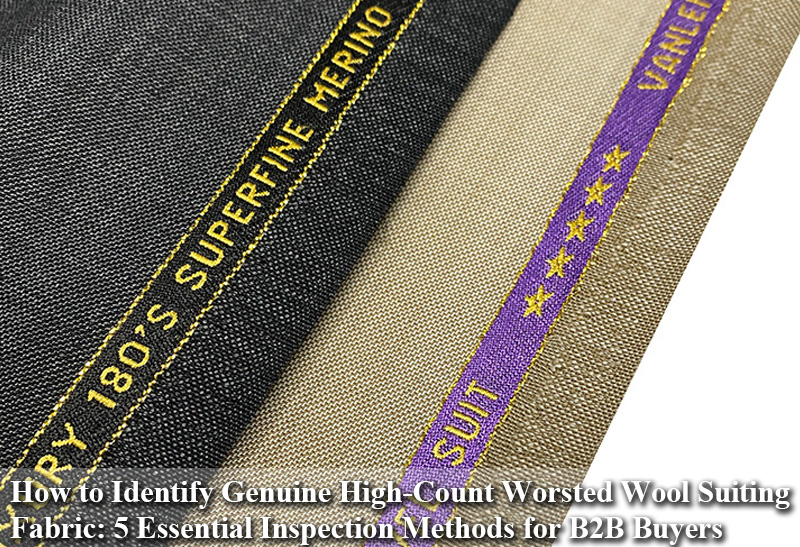
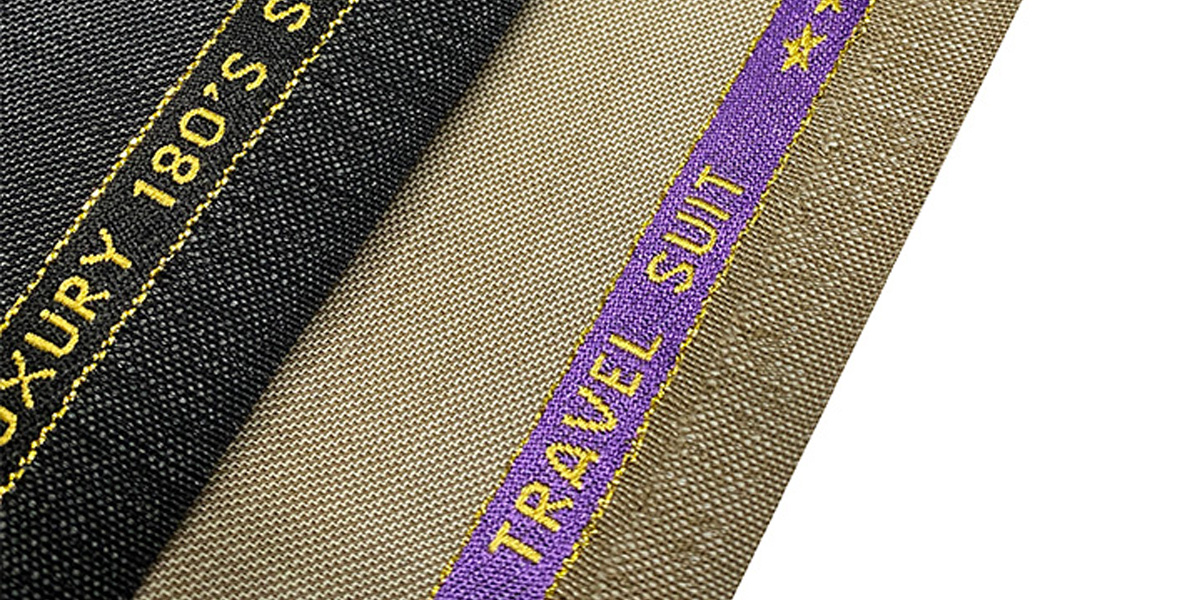
High-Count Worsted Wool Inspection Checklist for B2B Buyers
Use the following checklist before approving a fabric sample or bulk shipment.
| Inspection Item | Recommended Action |
|---|---|
| Fiber Composition | Compare supplier declaration with appropriate laboratory results |
| Super Classification | Verify mean fiber diameter against the applicable classification |
| Fabric Weight | Check the actual weight against the agreed tolerance |
| Weave Consistency | Inspect yarn uniformity and visible weaving defects |
| Fabric Handle | Compare approved reference samples |
| Crease Recovery | Evaluate performance using agreed methods |
| Pilling Resistance | Review relevant test results |
| Colorfastness | Confirm performance for the intended garment care conditions |
| Dimensional Stability | Verify acceptable dimensional changes |
| Bulk Consistency | Compare production rolls with the approved sample |
For large orders, buyers should also establish sampling plans, inspection procedures, shade tolerances, and defect acceptance criteria before shipment.
Frequently Asked Questions
Q1. How can I tell whether worsted wool fabric is genuine?
Start by reviewing the fabric’s declared fiber composition, physical characteristics, and supplier documentation. For reliable confirmation, request appropriate laboratory fiber identification and composition testing.
Q2. Does Super 150s always mean better fabric than Super 120s?
No. Super 150s generally indicates finer wool fibers within the relevant classification system. It does not automatically guarantee better durability, wrinkle recovery, or overall performance.
Q3. Can polyester fabric imitate the appearance of worsted wool?
Yes. Certain polyester and blended fabrics can reproduce aspects of wool’s smooth surface, drape, and appearance. Visual inspection alone is not sufficient to confirm wool content.
Q4. What should buyers inspect before placing a bulk worsted wool order?
Buyers should confirm fiber composition, fabric weight, construction, fiber fineness where relevant, colorfastness, dimensional stability, pilling performance, and bulk consistency.
Q5. Is a laboratory report necessary for every order?
Testing requirements depend on order value, buyer specifications, product risk, and contractual obligations. For high-value or tightly specified fabrics, independent testing can provide additional assurance.
Final Thoughts: Verify Quality Before Confirming Bulk Orders
Identifying genuine high-count worsted wool requires more than a soft hand-feel or an attractive fabric surface.
Professional buyers should evaluate fiber fineness, construction, wrinkle recovery, fiber composition, and supporting laboratory documentation together.
A systematic inspection process helps reduce specification disputes, improves supplier communication, and supports more consistent fabric sourcing decisions.
At Yun Ai Textile, we recognize the importance of clear specifications, sample evaluation, and transparent communication in international fabric sourcing.
Our primary product focus includes polyester woven fabrics, polyester-spandex stretch woven fabrics, and functional laminated fabrics for apparel applications.
For buyers exploring woven fabric options, our team can discuss available product specifications, customization requirements, and suitable fabric solutions.
Contact Yun Ai Textile to discuss your fabric requirements.
Post time: Nov-20-2026