
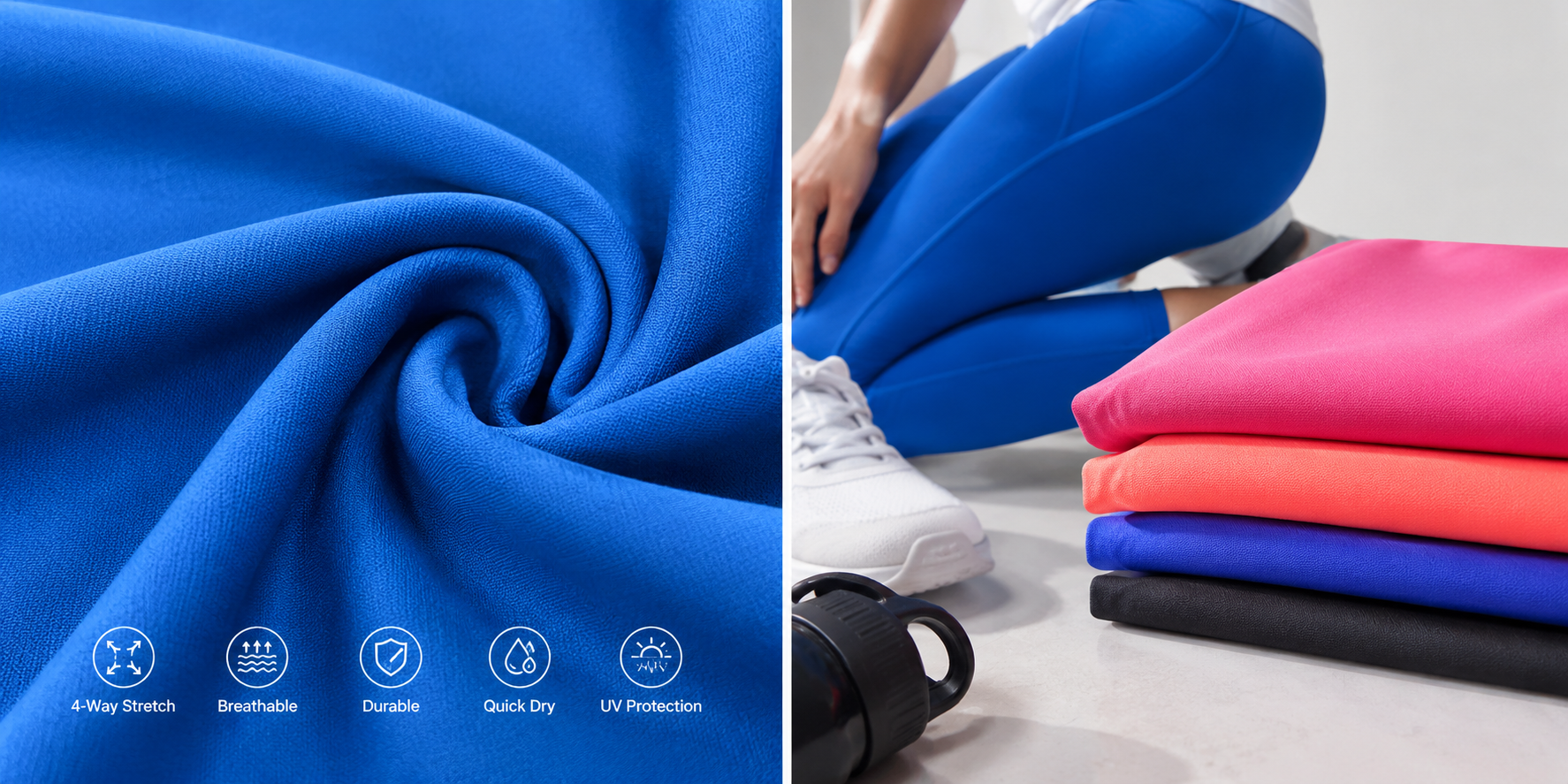
Why Durability Matters in Stretch Sportswear Fabric
When discussing material sourcing, the conversation inevitably turns to longevity. Durability in stretch sportswear isn’t just a premium feature; it is an absolute baseline requirement for any competitive brand. Active consumers push their garments to the limit through rigorous friction, high-stress elongation, and frequent, aggressive laundering. Modern consumers expect their yoga pants and compression shirts to survive hundreds of workouts without losing their shape or vibrant colors. Meeting these expectations requires a deep understanding of textile engineering.
How to Define Durability in Polyester Stretch Sportswear
In the context of athletic apparel, durability extends far beyond simple tensile strength. For polyester-spandex blends, true longevity means maintaining structural integrity and elasticity over time. When evaluating performance textile durability, engineers often look for an elongation recovery rate of 90% to 95% after a specified extension (such as a 50% stretch measured via standard test methods for knitted fabrics like ASTM D2594 or ASTM D4964). However, these figures should be treated as illustrative targets that must be calibrated to the garment’s specific end-use and fit, rather than universal pass/fail thresholds. If the fabric cannot snap back to its intended shape, the garment has failed its primary function.
Furthermore, durability encompasses colorfastness and surface stability. A high-quality polyester stretch fabric must resist color bleeding during intense sweating, endure prolonged UV exposure without degrading, and withstand repeated agitation in washing machines without compromising the core yarn structure.
Common Durability Failures and Business Risks
In polyester-spandex blends, elastane fatigue—rather than polyester yarn breakage—is typically the primary durability limiter. Repeated stress causes the elastane to lose its modulus, leading to structural relaxation and bagging. When this core elasticity is not properly engineered, physical breakdowns become predictable: severe pilling in high-friction areas like the inner thighs, “bagging” at the knees and elbows, and microscopic seam slippage.
A poor-performing batch of these materials can easily push a brand’s defect return rate above 2% to 3%. It is important to note that acceptable return thresholds vary significantly by market segment, distribution channel, and garment price point, rather than serving as a universal industry standard. Beyond the immediate financial hit of issuing refunds, covering reverse logistics, and scrapping unusable inventory, the long-term damage to brand reputation in the highly competitive activewear market can be catastrophic. Additionally, fabric-level durability is easily undermined if garment construction fails under athletic stress. Manufacturers must ensure seam and stitch compatibility by utilizing flexible four-thread overlocks, appropriate ballpoint needles, and high-elasticity threads to prevent seam blowouts.
How Fiber, Yarn, and Fabric Construction Improve Durability
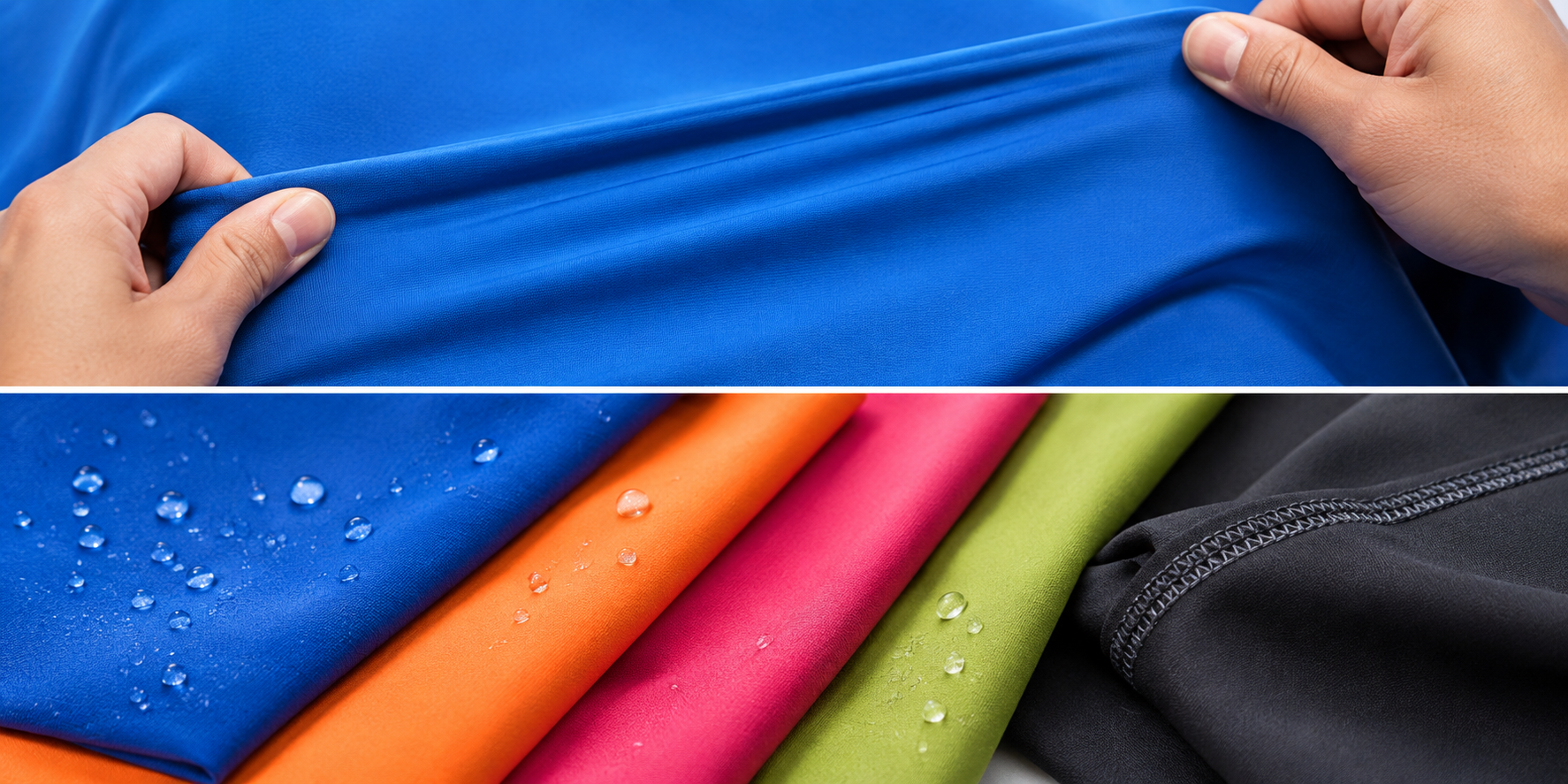
Achieving exceptional durability must start at the foundation: the fibers, the yarn specifications, and the exact knitting architecture. Manufacturers and buyers must actively specify these parameters rather than relying on chemical finishes to mask poor structural construction or inferior raw materials.
Yarn Choices That Strengthen Polyester Stretch Sportswear Fabric
Specific yarn parameters dictate the textile’s baseline strength. For a robust polyester stretch fabric, buyers must evaluate filament counts and tenacity. High-filament microfiber yarns (such as 75D/72F or 150D/144F) primarily optimize a soft hand-feel and reduce pilling propensity. Conversely, high-tenacity yarns feature a high grams-per-denier (g/d) strength rating to resist tearing and abrasion. Importantly, these are not mutually exclusive categories—advanced yarns can be both. Manufacturers must balance hand-feel with structural strength to suit the intended application.
Equally critical is the elastane component. To create reliable athletic textiles, blending 10% to 20% high-grade spandex with the polyester is standard practice. Because elastane fatigue is the main point of failure, utilizing protective yarn constructions—such as core-spun or air-jet textured yarns—can effectively shield the vulnerable elastane filaments from direct friction and chemical exposure. Furthermore, the quality of the elastane matters immensely. Lower-tier spandex loses its modulus quickly, whereas premium grades retain their snap-back properties for years, preventing the elastane filaments from degrading under pressure.
How Knit Structure, Fabric Weight, and Density Affect Performance
How those yarns are knitted together is just as crucial. Specify a higher gauge knitting machine—such as 28G or 32G (needles per inch)—to create a much denser, tighter fabric face. This density is the most effective mechanical defense against snagging and pilling. Fabric weight also plays a vital role; a standard activewear bottom usually requires a weight of 220 GSM to 280 GSM to ensure both opacity and physical resilience.
However, manufacturers must carefully manage the durability-stretch trade-off: raising the machine gauge and fabric weight to increase durability can inadvertently reduce elasticity, compression, and breathability. These settings must be meticulously balanced to maintain comfort and mobility. Additionally, while circular weft-knits are common, warp-knit architectures (such as tricot or power-net) often outperform weft-knit interlock in high-stretch, high-impact applications due to their run-resistant structure. Below is a comparison of common knit structures evaluated when sourcing performance sportswear:
| Knit Structure | Typical GSM Range | Durability Profile | Best Application |
|---|---|---|---|
| Single Jersey | 140 – 180 GSM | Moderate abrasion resistance, high stretch | Lightweight running tees, base layers |
| Interlock | 220 – 300 GSM | High snag resistance, excellent recovery | Compression leggings, moderate-impact wear |
| Warp Knit (Tricot) | 180 – 250 GSM | Exceptional run-resistance, high structural stability | Sports bras, high-impact activewear |
How Finishing and Quality Testing Protect Fabric Performance
Even with the best yarn and knitting structure, the fabric is not ready for the cut-and-sew floor until it has been properly finished and rigorously tested. This final phase is where the fabric’s performance characteristics are locked in to prevent future failures.
Finishing Processes That Improve Stretch Sportswear Durability
Heat setting is the most critical finishing step for any polyester-spandex blend. To stabilize the fabric and prevent future shrinkage, the textile must be exposed to precise heat using tension-controlled stenter frames. While historical guidelines often cite an illustrative recipe of 180°C to 190°C for specific spandex deniers, it is crucial to note that elastane degrades rapidly near the upper end of this range.
Key Takeaways
- Specify elastic recovery targets during sourcing, using 90% to 95% recovery after controlled extension as an illustrative benchmark rather than a universal pass/fail rule.
- Prioritize elastane performance because elastane fatigue is typically the main cause of bagging, relaxation, and long-term fit failure in polyester-spandex sportswear.
- Evaluate abrasion, pilling, colorfastness, UV resistance, and repeated laundering together, since durability in activewear extends beyond tensile strength.
- Select yarn parameters, filament counts, tenacity levels, and knit architecture deliberately instead of relying on finishes to compensate for weak base construction.
- Match durable fabric with flexible four-thread overlock seams, ballpoint needles, and high-elasticity threads to prevent seam failure under athletic stress.
- Monitor fabric quality before bulk production because poor durability can raise defect returns beyond 2% to 3% in some activewear programs.
Frequently Asked Questions
What is the most important durability factor in polyester stretch sportswear?
Elastic recovery is critical. A fabric should return close to its original shape after repeated stretching, with 90% to 95% recovery often used as an illustrative performance target depending on garment use.
Why do polyester-spandex garments lose shape over time?
Shape loss is usually caused by elastane fatigue, not polyester yarn failure. Repeated stretching, friction, heat, and laundering can reduce elastane modulus, leading to bagging at knees, elbows, or other stress points.
How can brands reduce pilling in stretch sportswear fabric?
Brands should specify strong yarns, suitable filament counts, stable knit structures, and test abrasion resistance in high-friction zones such as inner thighs, underarms, and seat areas before bulk production.
Which tests help evaluate stretch fabric durability?
Common evaluations include elongation recovery tests such as ASTM D2594 or ASTM D4964, plus abrasion, pilling, colorfastness, UV exposure, and repeated laundering tests matched to the garment’s end use.
Can good fabric fail because of poor garment construction?
Yes. Durable stretch fabric still needs compatible seams, flexible four-thread overlocks, ballpoint needles, and high-elasticity threads to prevent seam slippage, thread breakage, or blowouts during athletic movement.
Post time: Sep-09-2026