
Introduction
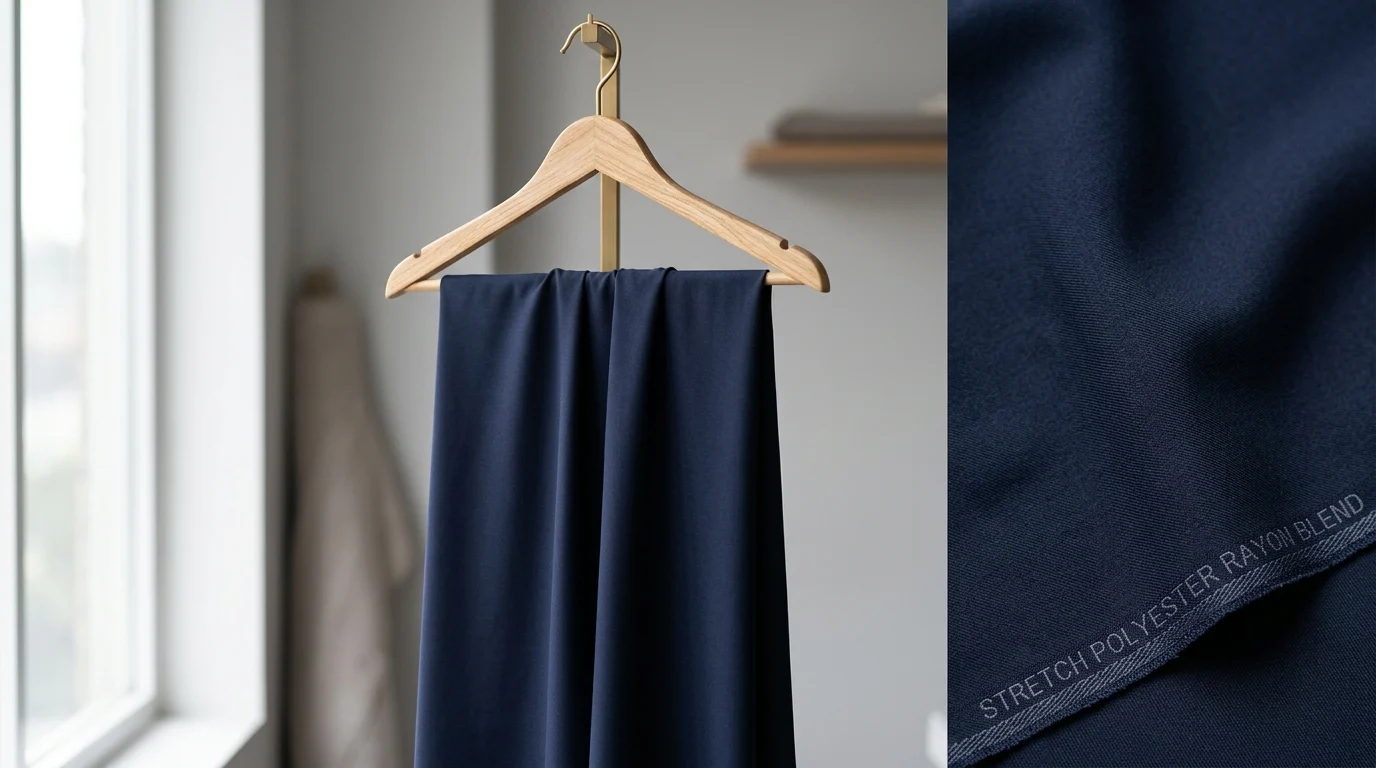
Sourcing stretchable polyester rayon fabric for ladies suits requires more than comparing prices or color cards. The right material must combine shape retention, soft drape, wrinkle resistance, and enough stretch to support tailored movement without compromising structure. This article explains how to evaluate blend ratios, spandex content, weight, handfeel, recovery, and finishing so you can match fabric performance to blazers, trousers, or full suits. It also helps you ask better supplier questions, assess sampling results, and reduce quality risks before bulk ordering, creating a clear path into practical sourcing decisions.
Sourcing goals for stretch polyester rayon fabric
When approaching the procurement of stretchable polyester rayon fabric for ladies suits, the primary objective is to balance structural integrity with modern comfort. This blend, commonly referred to in the trade as TR spandex, combines the durability and wrinkle resistance of polyester with the breathable, luxurious handfeel of rayon. Integrating elastane or spandex into this matrix elevates the garment, accommodating the dynamic movement required in contemporary women’s tailoring.
Establishing clear sourcing parameters early in the development cycle prevents costly misalignments during bulk production. It is advisable for procurement teams to define the exact end-use environment before initiating supplier outreach, as the technical specifications for a structured winter blazer differ significantly from those of a lightweight summer trouser.
End-use requirements for ladies suits
The specific demands of ladies suiting require fabrics that hold a crisp crease while draping elegantly over the silhouette. For structured jackets and tailored trousers, a fabric weight between 250 g/m² and 380 g/m² is typically ideal. Anything lighter risks looking flimsy and failing to support internal fusing, while heavier weights can compromise the garment’s fluidity. When sourcing heavy-duty options, evaluating TR spandex fabric for suits that sits at the upper end of this weight spectrum ensures the final garment maintains its architectural shape without sacrificing the stretch necessary for all-day wear.
Furthermore, the ratio of polyester to rayon dictates the thermal properties and luster of the suit. A standard benchmark is a 65/32/3 (Polyester/Rayon/Spandex) blend. This composition provides enough rayon to mimic the soft, breathable qualities of worsted wool, while the dominant polyester content ensures high tensile strength and reduces the risk of excessive wrinkling during transit or daily office wear.
Performance, cost, and MOQ trade-offs
Navigating the trade-offs between performance capabilities, raw material costs, and Minimum Order Quantities (MOQs) is a daily reality in textile sourcing. Higher rayon content improves the fabric’s handfeel and drape but inherently increases both the yarn cost and the propensity for pilling. Conversely, maximizing polyester reduces the price per meter but can result in a synthetic, rigid touch if not finished properly.
In standard negotiations, bulk pricing for TR spandex blends generally ranges from $1.80 to $3.50 per meter, heavily dependent on finishing techniques and yarn quality. MOQs typically hover between 1,500 and 3,000 meters per colorway for custom dyeing. If a brand requires specialized anti-pilling or water-repellent finishes, it is necessary to customize TR spandex fabric, which often pushes the MOQ toward the 3,000-meter threshold and adds an average premium of $0.20 to $0.40 per meter.
Key fabric specifications to verify
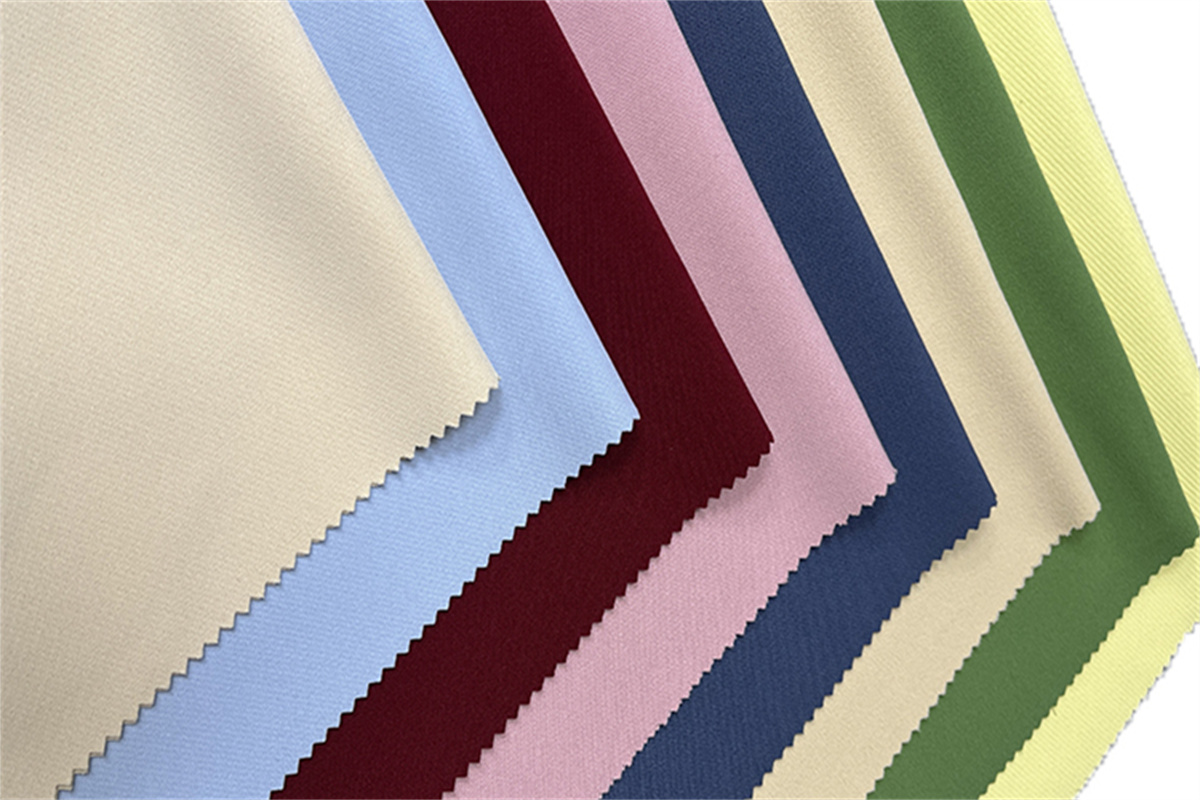
Transitioning from high-level goals to technical specifications requires a rigorous examination of the fabric’s physical properties. Buyers cannot rely solely on a supplier’s subjective description of “good stretch” or “soft handfeel.” Instead, precise laboratory testing standards must be mandated to ensure the stretchable polyester rayon fabric for ladies suits performs reliably across multiple production batches.
Two-way vs four-way stretch
One of the most critical decisions during development is selecting the appropriate stretch mechanism. The choice between two-way and four-way stretch fundamentally alters the garment’s pattern drafting, comfort, and yield.
| Specification | Two-Way Stretch | Four-Way Stretch |
|---|---|---|
| Stretch Direction | Weft (horizontal) only | Warp (vertical) and Weft (horizontal) |
| Spandex Content | Typically 3% – 5% | Typically 4% – 8% |
| Ideal Garment Use | Standard blazers, straight trousers | Fitted suits, active-inspired tailoring |
| Cost Implication | Baseline cost | 15% – 25% premium over two-way |
| Production Difficulty | Standard | High (requires precision tension control) |
For traditional tailoring, two-way spandex fabric for suits is often sufficient, providing horizontal give across the shoulders and hips while maintaining vertical stability to prevent the garment from bagging out over time. However, for highly tailored, modern silhouettes that demand maximum mobility, specifying four-way spandex fabric for ladies suits—which utilizes core-spun spandex yarns in both the warp and weft directions—is highly recommended.
Construction, handfeel, recovery, and colorfastness
Beyond stretch, the weave construction—typically a twill or plain weave—dictates the visual texture and durability. The fabric’s recovery rate must be strictly monitored; a high-quality stretch suiting must demonstrate a minimum stretch recovery of 95% within 30 minutes of tension release. If the fabric fails this metric, the resulting suits will suffer from “kneeing” or “elbowing” after a few hours of wear.
Colorfastness is another non-negotiable metric. Suppliers must guarantee a minimum Grade 4 rating for both wet and dry rubbing (crocking), as well as colorfastness to washing. When evaluating a premium lightweight spandex suit fabric for spring collections, ensuring the dye penetration is deep and stable prevents the rapid fading that often plagues cheaper polyester-rayon blends.
Supplier selection and final buying decision
The final phase of sourcing involves translating approved technical specifications into a reliable supply chain. Selecting the right mill or converter is as critical as the fabric itself. Approaching this phase requires a strict methodology, prioritizing suppliers who demonstrate transparency, robust quality control, and a clear understanding of international compliance standards.
Supplier screening, sampling, testing, and compliance
A rigorous supplier screening process begins with a thorough audit of certifications and production capabilities. For ladies suiting intended for the North American or European markets, mandating OEKO-TEX Standard 100 certification is essential to guarantee the absence of harmful substances, particularly in the dyeing and finishing stages. Additionally, ISO 9001 certification serves as a baseline indicator of a mill’s quality management system.
During the sampling phase, ordering 10 to 20 yards for prototype creation and independent laboratory testing is standard practice to validate all performance claims before committing to bulk production.
Key Takeaways
- The most important conclusions and rationale for stretchable polyester rayon fabric for ladies suits
- Specs, compliance, and risk checks worth validating before you commit
- Practical next steps and caveats readers can apply immediately
Frequently Asked Questions
What blend works best for stretchable polyester rayon fabric for ladies suits?
A practical benchmark is 65/32/3 polyester/rayon/spandex. It balances wrinkle resistance, soft drape, and enough stretch for tailored jackets and trousers.
What fabric weight should I source for ladies suiting?
For most ladies suits, target 250–380 gsm. Use lighter weights for softer trousers and higher weights for structured blazers that need better shape retention.
Should I choose two-way or four-way stretch for ladies suits?
Choose two-way stretch for classic blazers and straight trousers. Use four-way stretch for slim, modern suits needing extra mobility, but expect a higher cost.
What MOQ and price range are typical for TR spandex suiting fabric?
Custom-dyed TR spandex usually runs about 1,500–3,000 meters per color, with prices around $1.80–$3.50 per meter depending on yarn quality and finishing.
Can I source ready goods or custom finished polyester rayon fabric from IYUNAI Textile?
Yes. IYUNAI Textile offers polyester rayon suiting options including ready goods and custom finishes like anti-pilling, wrinkle resistance, and water-repellent treatment.
Post time: Jun-10-2026