
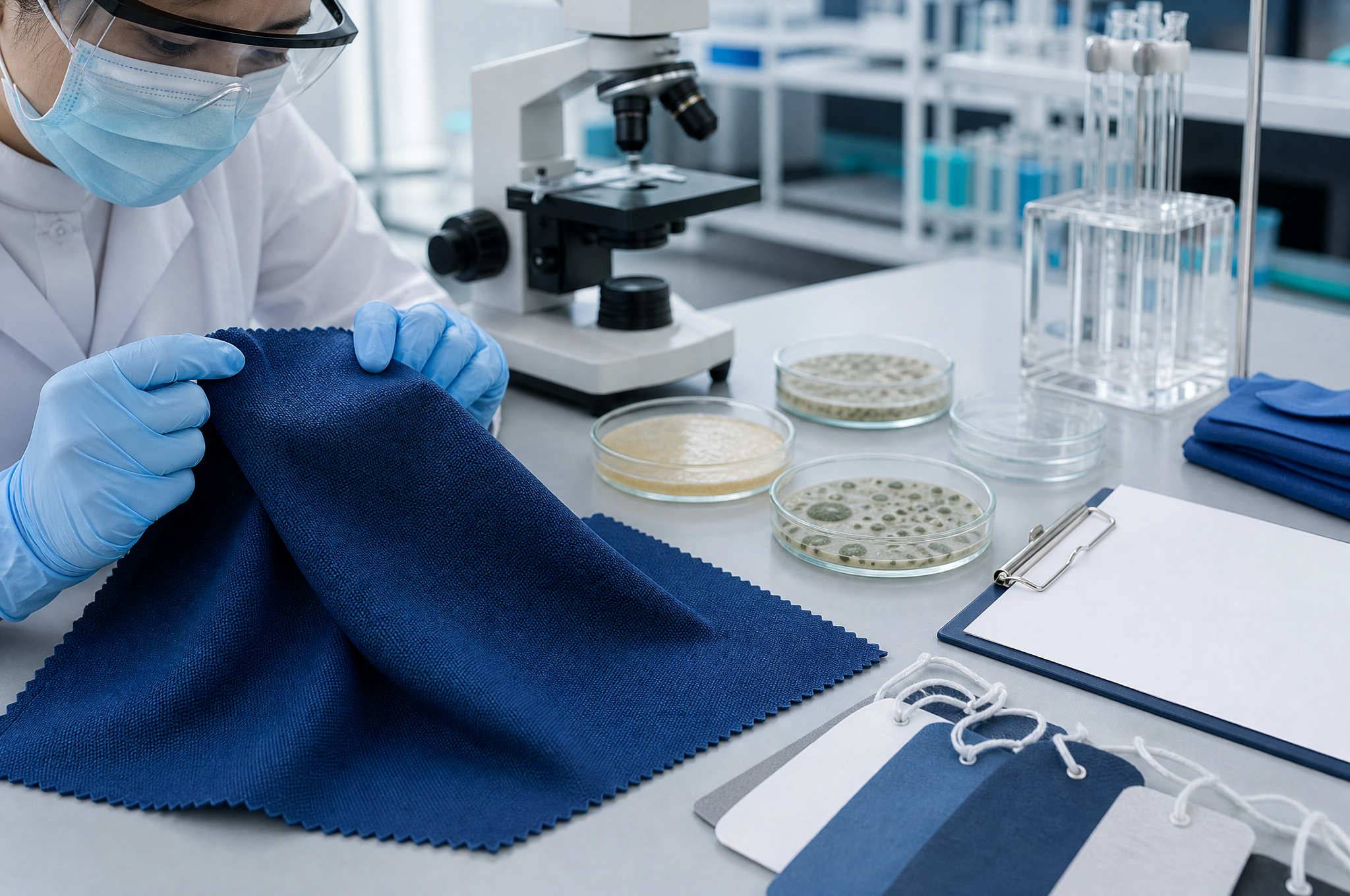
“Antibacterial” has become a common product description in medical uniform and scrub fabrics. However, for professional buyers, seeing the word “antibacterial” on a fabric specification sheet is only the beginning.
When sourcing medical uniform fabric, buyers increasingly need to understand what stands behind an antibacterial claim. Which microorganisms were tested? What testing method was used? Under what conditions? Was the fabric tested before or after washing? And can the test results actually support the marketing claims planned for the finished garment?
For healthcare uniform brands, wholesalers, and professional apparel manufacturers, a reliable antibacterial fabric should be supported by a clear and traceable evidence chain.
What Does “Antibacterial Fabric” Actually Mean?
Antibacterial fabric generally refers to textile material that has been treated or engineered to provide antibacterial performance under specified testing conditions.
However, antibacterial performance should not automatically be interpreted as infection prevention.
The result of a laboratory test describes performance under defined experimental conditions. It does not necessarily demonstrate how a finished medical uniform will perform in every healthcare environment.
This distinction is particularly important for medical apparel brands.
A professional supplier should therefore provide information that connects:
Fabric treatment → Testing method → Test organisms → Test conditions → Test results → Appropriate product claims
This evidence chain gives buyers a much clearer understanding of what the fabric can and cannot support.
1. Ask Which Microorganisms Were Tested
One of the first questions a buyer should ask is:
Which microorganisms were included in the antibacterial test?
“Antibacterial” is not a single universal performance category. Different tests may examine different microorganisms, and the result against one microorganism should not automatically be generalized to all bacteria.
A test report should clearly identify the microorganisms used in the test.
For example, buyers may encounter information related to specific bacterial strains, together with the relevant testing method and experimental conditions.
This information matters because a statement such as “antibacterial fabric” provides much less technical information than:
Antibacterial performance tested against specified microorganisms under a specified test method.
For product development teams, this distinction helps prevent unsupported claims from appearing on websites, packaging, catalogs, or garment labels.
2. Check the Testing Method
The second question is:
How was the antibacterial performance tested?
A professional test report should identify the testing standard or method used.
The testing method determines important factors such as sample preparation, microorganism exposure, contact conditions, incubation, and evaluation of the result.
Therefore, two suppliers may both describe their fabrics as “antibacterial,” while their supporting test information may not be directly comparable.
Instead of simply asking:
“Does this fabric have an antibacterial test?”
buyers should ask:
“Which test method was used, and can you provide the corresponding test report?”
This simple question can reveal a significant difference between a marketing statement and documented technical evidence.
3. Understand the Test Conditions
Test results should always be considered together with their experimental conditions.
A useful antibacterial documentation package should make it possible to understand:
- · The fabric composition
- · The fabric construction, where relevant
- · The microorganisms tested
- · The testing method
- · Sample preparation
- · Contact or incubation conditions
- · Washing conditions, if applicable
- · Test results
- · Laboratory information
Without this context, a single percentage or performance figure can easily be misunderstood.
For example, a laboratory result obtained under a specific contact time and test environment should not automatically be presented as the expected performance of a medical scrub during an entire working shift.
For B2B buyers, understanding the test conditions is therefore just as important as looking at the final number.
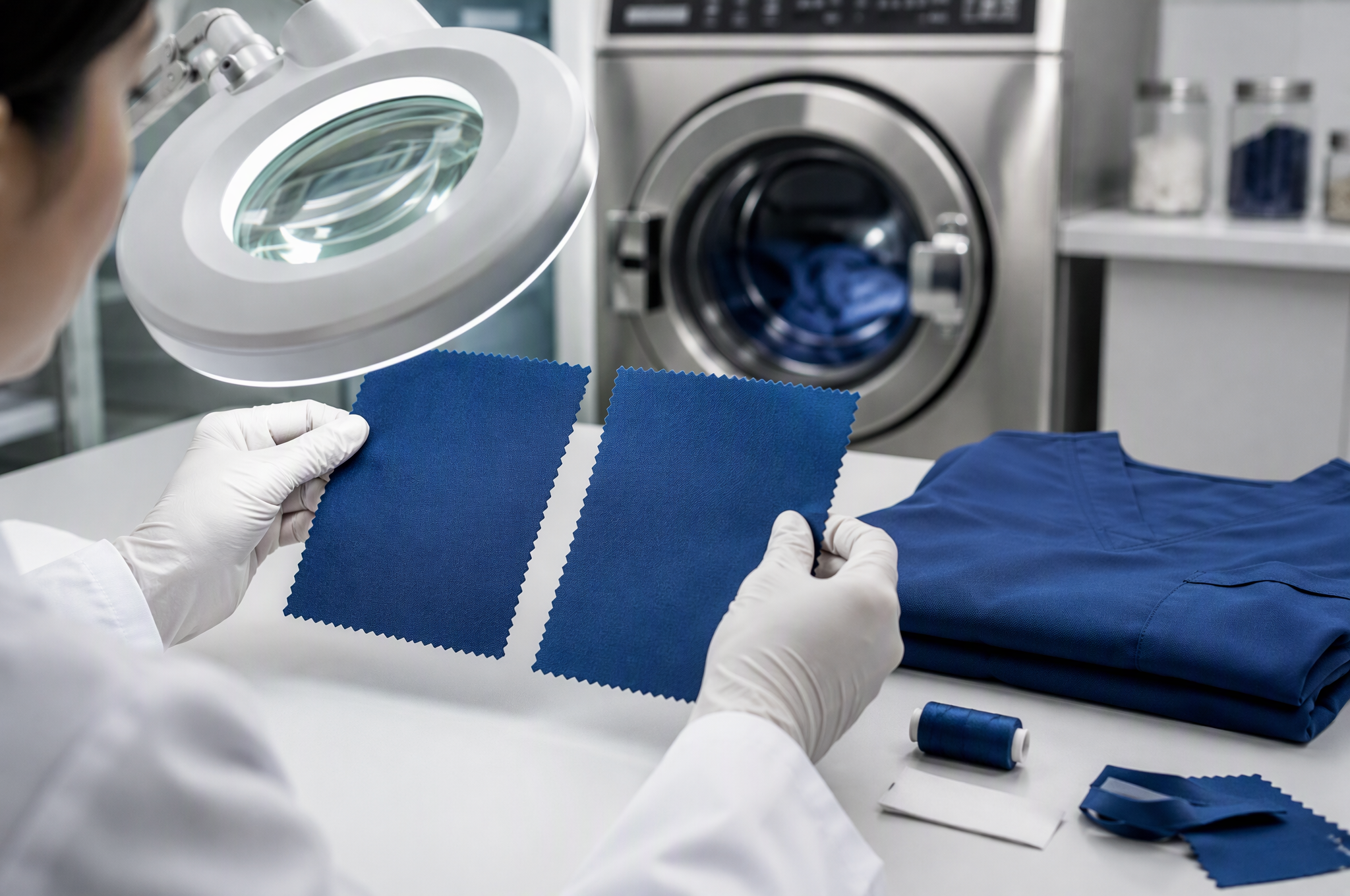
4. Ask Whether the Fabric Was Tested Before or After Washing
For medical uniform fabrics, this is one of the most important questions.
Medical scrubs and healthcare uniforms are washed regularly. Depending on the end market, garments may also be exposed to commercial or industrial laundering conditions.
Therefore, initial antibacterial performance and antibacterial performance after washing are two different pieces of information.
When evaluating a fabric, buyers should ask:
Was the test performed on the original fabric, or on fabric after a defined washing procedure?
If wash durability is an important product requirement, the supplier should provide supporting information based on an appropriate washing and testing procedure.
A useful evidence chain may therefore look like:
Untreated / initial sample → Antibacterial test → Defined washing procedure → Re-test → Comparison of results
This does not mean that every medical fabric must have the same number of wash cycles or identical testing conditions. The appropriate requirements depend on the intended application, market, garment-care process, and product specifications.
The important point is that buyers should know exactly what the available data represents.
5. Understand Whether the Test Applies to Fabric or Finished Garments
Another commonly overlooked issue is the difference between fabric-level testing and finished-product testing.
A fabric supplier may have an antibacterial test report for a specific textile material. However, once that fabric is cut, sewn, dyed, finished, printed, or incorporated into a garment, the final product may involve additional materials and processes.
For example, a finished scrub may include:
- · Main fabric
- · Rib fabric
- · Sewing thread
- · Labels
- · Printing or embroidery
- · Other trims or accessories
Therefore, a fabric test report should not automatically be presented as proof that the entire finished garment has identical antibacterial performance.
Professional buyers should clearly understand what exactly was tested.
6. Ask for the Original Test Documentation
A trustworthy supplier should be able to explain the source and scope of the antibacterial evidence.
Instead of relying only on phrases such as:
- · “Antibacterial”
- · “99.9% antibacterial”
- · “Medical grade”
- · “Hospital antibacterial fabric”
buyers should request the relevant technical documentation where appropriate.
Useful documentation may include:
1. Treatment information
What antibacterial treatment or finishing process is used?
2. Testing standard
Which testing method or standard was followed?
3. Test microorganisms
Which microorganisms were included?
4. Test conditions and results
Under what conditions was the test conducted, and what were the reported results?
5. Washing information
If wash durability is claimed, what washing procedure and test conditions were used?
This five-part documentation structure can help buyers compare different fabric suppliers more systematically.
7. Be Careful With Marketing Claims
The final step is especially important for medical uniform brands.
A laboratory test result and a marketing claim are not necessarily the same thing.
For example, a documented antibacterial test does not automatically justify claims such as:
- · “Prevents hospital-acquired infections”
- · “Kills all bacteria and viruses”
- · “Prevents infection”
- · “FDA-certified fabric”
Such statements may involve additional regulatory, product-level, or market-specific requirements.
Antibacterial textile performance should also not be presented as a replacement for healthcare cleaning, laundering, hygiene, or infection-control procedures.
A safer and more professional approach is to connect the marketing language directly to the available evidence.
For example:
“Antibacterial finishing option tested according to a specified test method.”
This type of wording is more precise because it communicates the existence and scope of the tested textile performance without extending the evidence into an unsupported medical or infection-prevention claim.
Build an Evidence Chain, Not Just an Antibacterial Label
For medical uniform fabric buyers, the most useful question is no longer simply:
“Is this fabric antibacterial?”
A better question is:
“What evidence supports the antibacterial performance of this fabric?”
A professional supplier should be able to help buyers understand the connection between the fabric specification, antibacterial treatment, testing method, test microorganisms, washing conditions, laboratory results, and appropriate product claims.
This approach creates a more transparent procurement process and makes technical communication between fabric suppliers, garment manufacturers, and healthcare apparel brands much easier.
For medical uniform brands developing products for North America, Europe, the Middle East, and other quality-sensitive markets, documented evidence can become an important part of supplier evaluation.
The goal is not to make the antibacterial claim sound bigger.
The goal is to make the evidence behind the claim clearer.
Conclusion
Antibacterial performance can be a valuable functional option for medical uniform fabrics, but professional buyers should look beyond the word “antibacterial.”
Before approving a fabric, ask five basic questions:
1. What was tested?
2. Which microorganisms were tested?
3. Which testing method was used?
4. Was wash durability evaluated?
5. What claims are actually supported by the evidence?
A clear evidence chain helps buyers make better-informed fabric decisions while helping medical uniform brands communicate product performance more responsibly.
For a medical fabric supplier, this is also an opportunity to demonstrate something more valuable than a simple functional label: technical transparency, documentation capability, and responsible product development.

Yunai Textile
Post time: Oct-22-2026