
Keeping Dry, Staying Fast: How Moisture Management Elevates Sportswear Performance
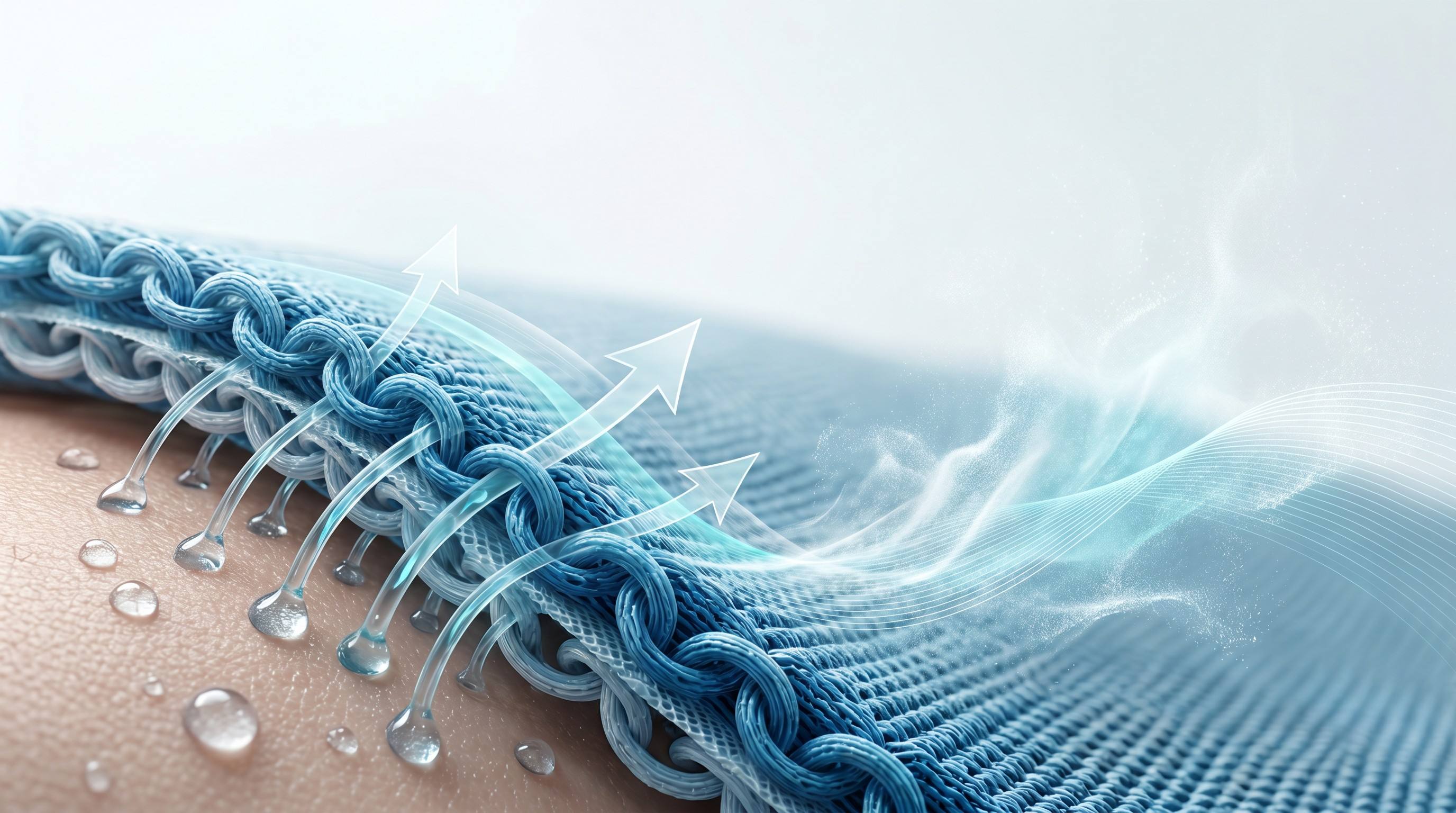
When you are pushing through the final mile of a marathon or grinding through a high-intensity interval training (HIIT) session, your body has one primary mechanism to keep from overheating: sweat. However, sweat can quickly go from a cooling lifesaver to a heavy, chafing nightmare if your workout gear isn’t built to handle it.
In modern athletic apparel, moisture management is no longer just a luxury feature—it is a performance baseline. At the heart of this revolution is moisture wicking sports fabric, a textile engineering marvel engineered to keep athletes dry, light, and focused.
1. The Science of Dryness: How Moisture Wicking Sports Fabric Works
To understand why advanced sportswear feels so comfortable, we have to look at the physics of how fabrics handle water. Standard cotton fibers act like a sponge; they absorb moisture and hold onto it, leaving you with a heavy, soggy shirt that clings to your skin. Performance fabrics, on the other hand, rely on two distinct engineered phases: wicking and evaporation.
Capillary Action: The Driving Force
Moisture-wicking fabrics do not just absorb sweat; they transport it. This process relies on capillary action—the same physical phenomenon that allows trees to draw water up from their roots against gravity.
Microscopic channels are integrated into the synthetic yarns (usually polyester or nylon). Because these channels are incredibly narrow, the surface tension of the sweat naturally draws the liquid away from your skin and forces it through the fabric to the exterior surface.
Fiber Geometry vs. Chemical Treatments
Manufacturers achieve this capillary action through two main methods:
-
Engineered Cross-Sections: Instead of round fibers, high-performance yarns are extruded into irregular shapes (like “X” or “Y” configurations). This massively increases the surface area and creates natural grooved pipelines for sweat to travel along. Because this is structural, the wicking ability never washes out.
-
Hydrophilic Topcoats: Some fabrics are treated with a hydrophilic (water-loving) chemical finish on the outside and a hydrophobic (water-repelling) finish on the inside. This pushes moisture from the skin-facing side and pulls it to the exterior layer.
Once the sweat reaches the outer surface of the fabric, it spreads out thinly across a wide area, allowing the surrounding air to evaporate it rapidly.
2. Real-World Applications: Moisture Management Across Sports Scenes
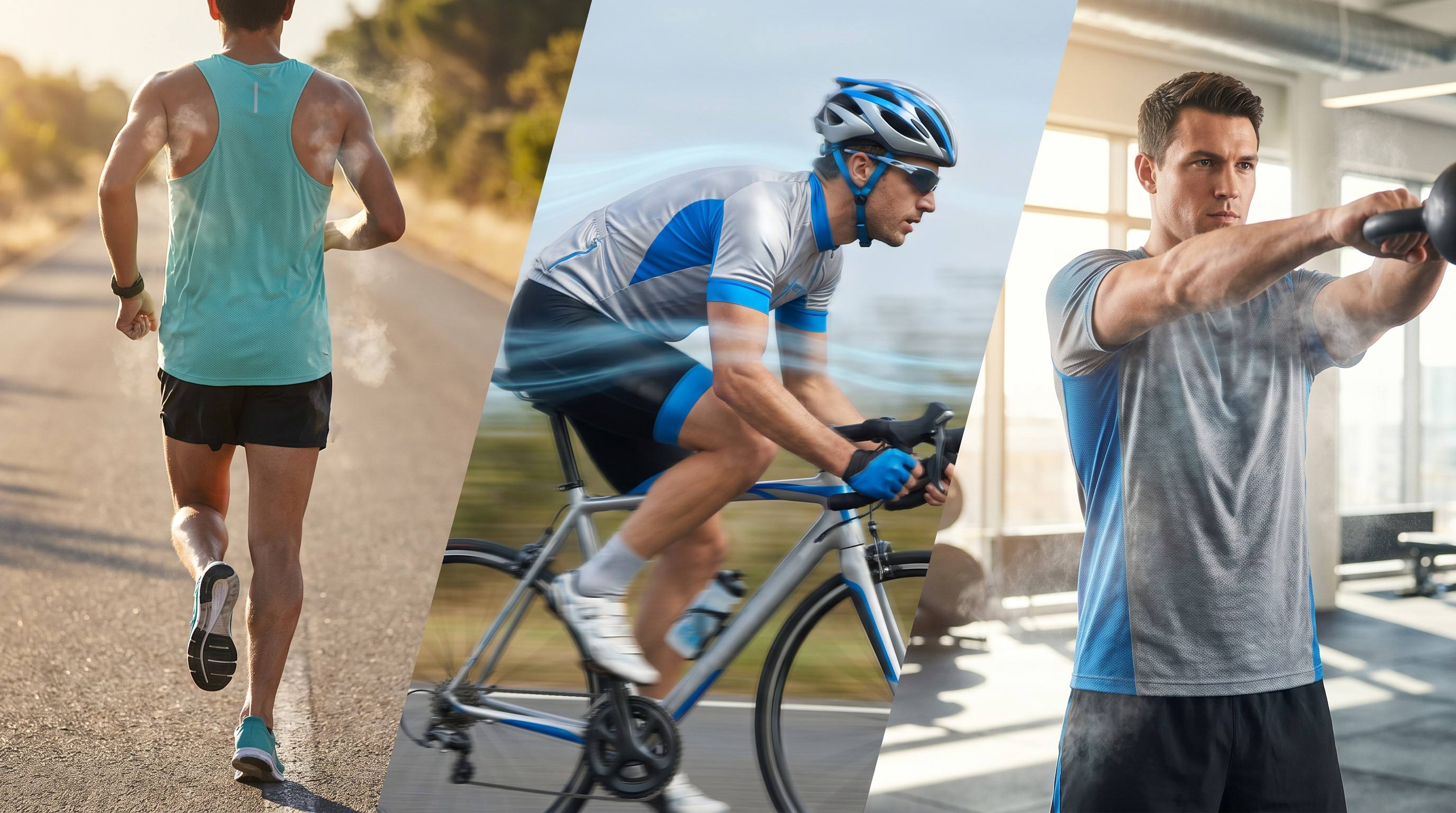
Different physical activities place different demands on the human body, but the need for regulated moisture remains universal. Here is how specialized moisture-wicking sports fabric alters performance across various athletic environments:
High-Endurance Running and Cycling
In long-duration cardio, weight and friction are the ultimate enemies. A wet cotton t-shirt can double in weight over a long run, causing severe chafing and dynamic drag. Wicking fabrics ensure that garments remain ultra-lightweight from mile 1 to mile 26. Furthermore, by keeping the skin dry, these fabrics drastically reduce the risk of friction-induced skin blisters and raw abrasions.
High-Intensity Gym Workouts (HIIT and Crossfit)
Gym environments often lack natural wind to assist with evaporation. During explosive movements, your body generates massive spikes in heat and sweat. Performance sportswear utilizes zone-mapped ventilation—placing highly breathable, open-weave wicking mesh in high-sweat zones like the back and underarms—to dump heat fast and prevent that suffocating, soaked-through feeling.
Outdoor Adventures and Trail Trekking
In unpredictable mountain climates, moisture management is a matter of safety. If you sweat heavily while hiking uphill and then stop to rest in a windy alpine zone, a damp shirt will rapidly cool your core temperature, risking hypothermia. Synthetic moisture-wicking fabrics dry up to four times faster than cotton, maintaining a stable thermal equilibrium whether you are moving or resting.
3. The Summer Market: Driving Consumer Demand and Brand Growth
As global temperatures continue to rise, the summer athletic market has seen an unprecedented surge in demand for activewear that specifically solves the “heat and humidity” problem. For apparel brands and retailers, understanding the summer consumer mindset is key to capturing market share.
The Shift to “Technical Athleisure”
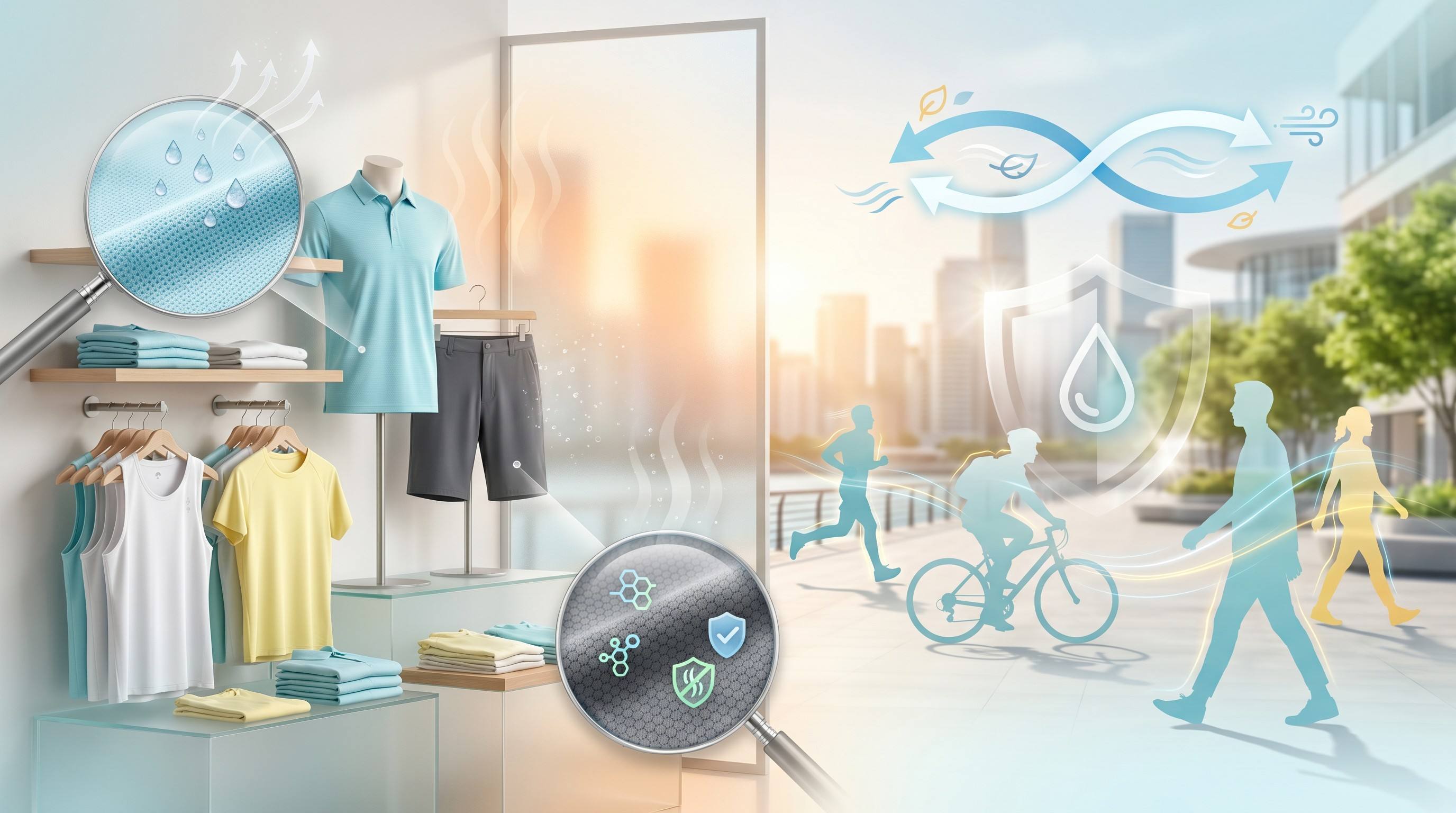
Summer consumers are no longer buying sportswear just for the gym. The boundaries between activewear and daily wear have completely blurred. Consumers expect their hot-weather casual clothing—polo shirts, summer dresses, and commuter shorts—to feature the exact same moisture wicking sports fabric technologies found in elite running gear. Brands that market “cooling tech” and “all-day dryness” for everyday summer life are seeing massive retail velocity.
Addressing the Anti-Odor Factor
Sweat itself does not smell, but when it sits in fabric, it creates a breeding ground for odor-causing bacteria. Summer buyers are highly sensitive to this. Modern summer activewear combines wicking architecture with silver-ion or bio-based anti-microbial treatments. By quickly transporting moisture away and inhibiting bacterial growth, these garments stay fresh longer, making them incredibly attractive to eco-conscious consumers looking to wash clothes less frequently.
Conclusion: The Ultimate Competitive Edge
Moisture management is far more than a marketing buzzword; it is a blend of physics and textile chemistry that directly impacts how long and how comfortably an athlete can perform. By leveraging capillary action to keep the skin dry, stabilizing core temperatures, and preventing chafing, garments made from premium moisture wicking sports fabric provide a tangible competitive edge.
As the summer market continues to lean into highly functional, multi-purpose apparel, brands that master and effectively communicate the science of dry performance will inevitably lead the race.
Post time: Jun-17-2026