
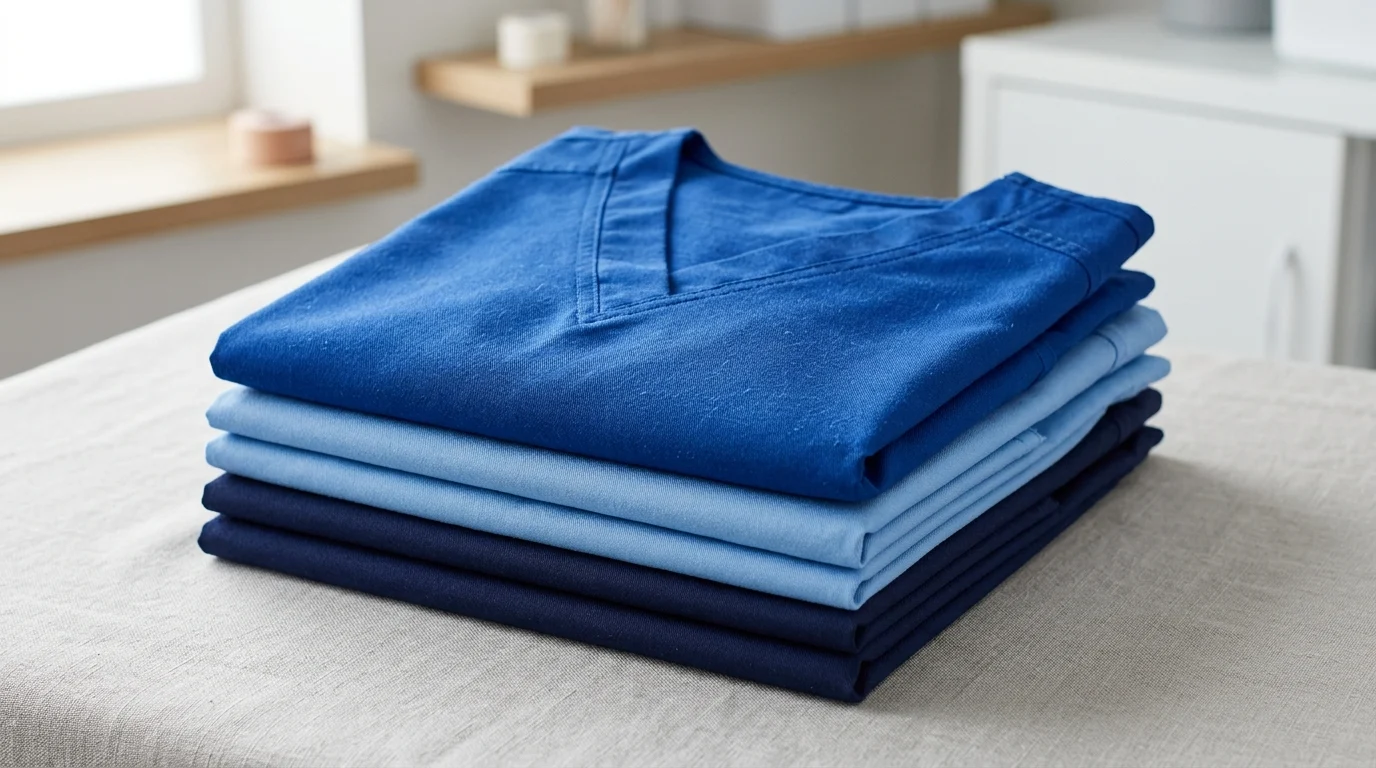
Why Medical Apparel Fabric Color Performance Matters
The visual integrity of medical apparel fabric is frequently underestimated until noticeable dye fading occurs. While color consistency is sometimes viewed as a mere branding concern, it is actually integral to institutional organization; clear departmental cohesion and general visual identification rely on reliable color-coding. Furthermore, while the hospital ward itself is a demanding environment, these garments are subjected to harsh chemical and thermal conditions during industrial laundering and sterilization processes. This means a vibrant surgical green or deep navy can rapidly degrade if the foundational dye chemistry is flawed. Color performance is a functional requirement tied to departmental identification, safety protocols, and the overarching professional image of the healthcare institution.
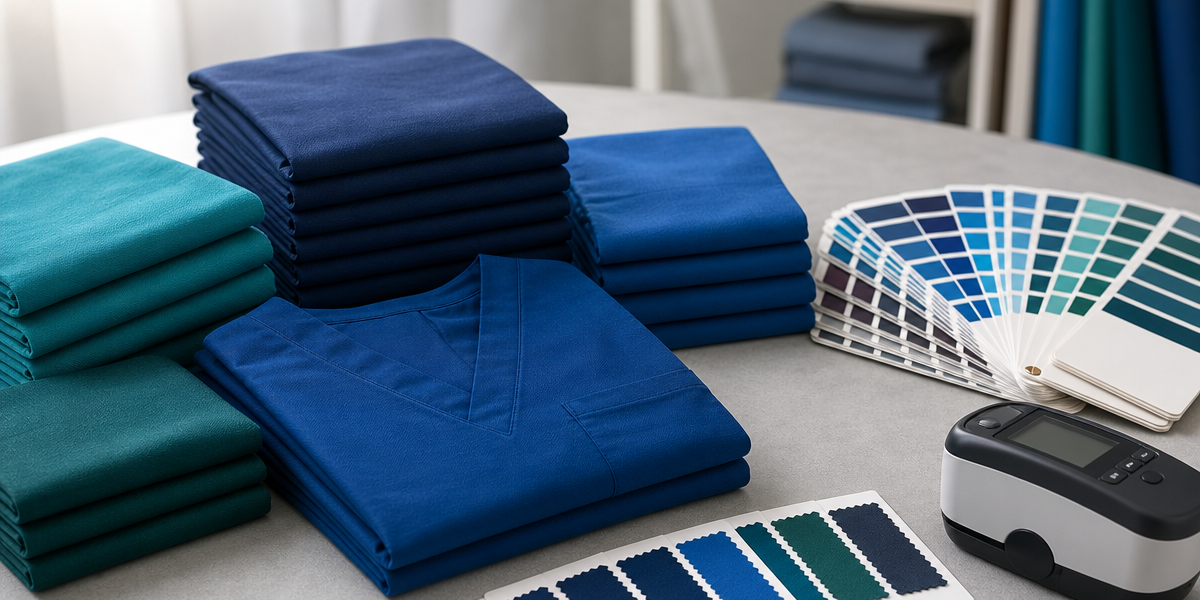
Color Fastness, Shade Tolerance, and Brand Consistency
Evaluating color fastness and shade tolerance involves assessing a fabric’s ability to retain its original hue despite relentless exposure to bodily fluids, friction, and aggressive laundering protocols. Brand consistency across a hospital network relies heavily on strict shade tolerance, measured by the Delta E (ΔE) value.
In commercial apparel, a ΔE of ≤ 1.0 is generally acceptable. For institutional scrub suit fabrics, procurement teams sometimes specify a stricter internal target of ΔE ≤ 0.8 to ensure that uniforms purchased months apart match perfectly on the floor. However, buyers should weigh these strict color specifications against budget constraints; enforcing ΔE tolerances below 1.0 significantly raises unit costs and lead times. Without appropriate tolerances, color-coded staffing models can become visually inconsistent, with a single department displaying multiple shades of teal.
Key Color Standards for Medical Uniform Fabrics
To guarantee consistency, fabrics are typically benchmarked against stringent AATCC (American Association of Textile Chemists and Colorists) or equivalent ISO standards, noting that regional differences in testing requirements exist across global supply chains. For instance, AATCC 61 and its international counterpart, the ISO 105-C series, measure color fastness to laundering, while AATCC 188 evaluates resistance to sodium hypochlorite bleach.
However, many modern healthcare laundries have shifted to peroxide-based or chlorine-free protocols. Consequently, strict bleach-fastness requirements must be carefully balanced against the risk of fiber degradation, particularly in polyester and cellulose blends.
While standard guidelines vary, premium internal targets often require materials to withstand 50 to 100 industrial wash cycles at temperatures ranging from 60°C to 75°C without dropping below a Grade 4 (on the standard 1–5 grayscale, where 5 represents no change) for color change. It is important to note that this represents a premium target under specific, controlled laundering protocols (such as regulated alkali and bleach levels), because actual industrial laundry conditions vary widely by contractor and geography. Achieving these metrics ensures the garment maintains its structural and visual integrity throughout its expected lifecycle, dramatically lowering the total cost of ownership for healthcare facilities by reducing replacement frequency.
How to Compare Fabric Specs, Dyes, and Finishes
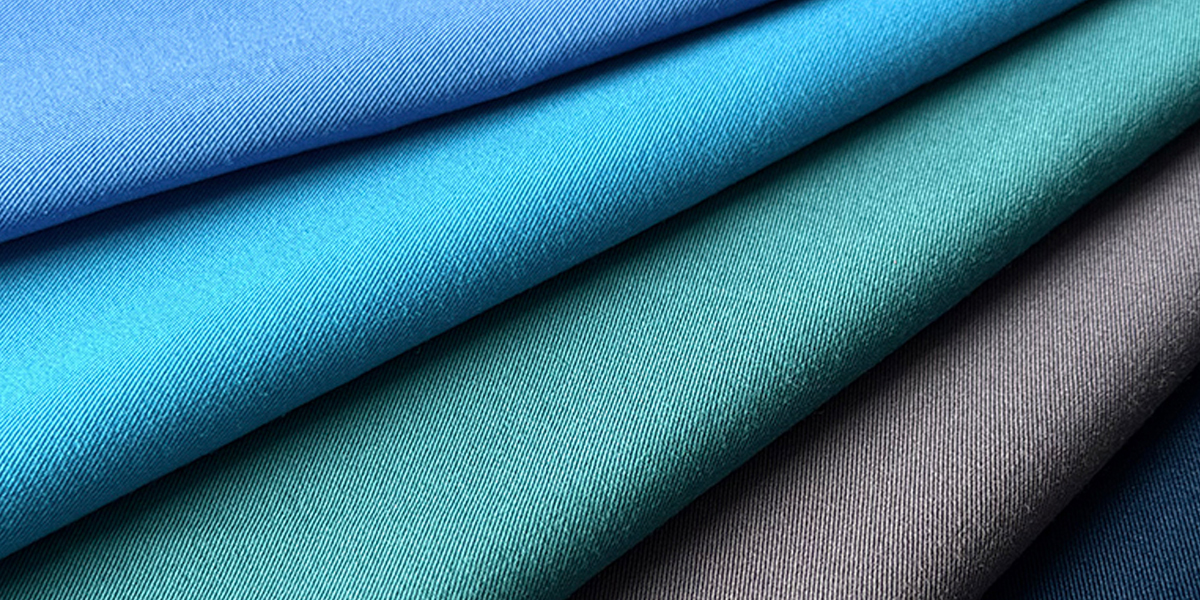
Comparing fabric specifications requires looking beyond the surface color to examine the underlying fiber architecture. The way a fabric is spun, woven, and finished dictates its chemical affinity for specific dyes, directly impacting the final Pantone accuracy and long-term vibrancy.
It is also important to note the physical limits of Pantone textile matching: Pantone TCX (Textile Cotton) and TPG (Textile Paper – Green) standards represent physical cotton fabric and painted paper respectively, which differ fundamentally from standard printing ink standards. Exact spectral matching across complex synthetic blends is physically constrained by fiber chemistry.
Fiber Blends, Finishes, and Dyeing Process Choices
Modern medical uniforms increasingly rely on sophisticated synthetic blends to balance comfort and durability. For example, a poly-rayon-spandex scrub fabric utilizing 72% polyester, 21% rayon, and 7% spandex presents a unique dyeing challenge.
Polyester requires high-temperature disperse dyes, whereas rayon relies on reactive dyes. Manufacturers must employ a two-bath cross-dyeing process to ensure both fiber types achieve the exact same target shade.
If the finish includes antimicrobial or fluid-resistant coatings, the dyeing process must also account for how these chemical layers might cause topcoat spectral interference. This can potentially shift the final hue and require a compensated ΔE tolerance.
| Fiber Type | Dye Category | Dyeing Temperature | Color Fastness (Wash) | Dyeing Process Notes |
|---|---|---|---|---|
| Polyester | Disperse | 130°C | Varies by subclass & finish | Requires high-energy processing |
| Rayon / Viscose | Reactive | 60°C – 80°C | Good (Grade 3-4) | Sensitive to alkali levels |
| Poly-Rayon-Spandex | Disperse + Reactive | Two-Bath Process | Moderate to Good | Cross-dyeing required to match fibers |
Comparison Criteria for Pantone Targets and Bulk Shades
When targeting a specific Pantone, achieving a visual match under a single light source is insufficient. Metamerism—where two colors match under retail fluorescent lighting (CWF) but clash under natural daylight (D65)—is a critical defect in medical stretch fabrics.
This is a highly practical risk in modern hospitals, where staff constantly move between environments that mix narrow-band LEDs, traditional fluorescent tubes, and natural sunlight from windows.
Quality control teams utilize spectrophotometers to quantify the spectral reflectance of the bulk shade against the master Pantone target. A rigorous internal protocol might dictate a maximum ΔE threshold under each illuminant (e.g., ΔE ≤ 1.0 under D65, TL84, and A).
While multi-illuminant spectrophotometry increases production costs, this rigorous comparison ensures that the fabric maintains its intended color profile across varying environments. However, it is crucial to note that spectrophotometric ΔE matching is typically supplemented by visual assessment under standardized light booths. Furthermore, textured twill surfaces can create perceptual color variations due to light scattering, even when instrument readings are strictly within tolerance.
Sourcing and Quality Control for Reliable Color
Establishing robust sourcing protocols and quality control mechanisms is the only way to reliably scale color accuracy from a small laboratory sample to tens of thousands of meters of production yardage. Managing the transition from lab to bulk requires vigilant oversight and clear communication with dyeing facilities.
Lab Dips, Bulk Approvals, and Production Checks
The journey to reliable
Key Takeaways
- Specify ΔE tolerance early, using ≤ 1.0 for standard consistency or ≤ 0.8 when exact repeat-order shade matching is critical.
- Verify color fastness with recognized methods such as AATCC 61, ISO 105-C, or AATCC 188 before approving bulk medical uniform fabric.
- Match bleach-fastness requirements to the facility’s actual laundry process, especially when peroxide-based or chlorine-free systems are used.
- For premium scrub fabrics, request test results showing 50 to 100 industrial wash cycles at 60°C to 75°C with at least Grade 4 color change.
- Evaluate total cost of ownership, because better color retention can reduce premature uniform replacement across healthcare teams.
Frequently Asked Questions
Why does color fastness matter in medical apparel fabric?
Color fastness helps uniforms retain their shade after repeated laundering, sterilization, friction, and chemical exposure. In hospitals, consistent colors support department identification, safety workflows, and a professional appearance.
What ΔE tolerance is suitable for medical uniform color matching?
A ΔE of ≤ 1.0 is often acceptable for commercial apparel, while some healthcare buyers target ΔE ≤ 0.8 for tighter consistency across repeat orders. Stricter tolerances may increase cost and lead time.
Which standards are commonly used to test scrub fabric color performance?
Common references include AATCC 61 or ISO 105-C for laundering fastness and AATCC 188 for resistance to sodium hypochlorite bleach. Requirements may vary by region, laundry method, and fabric composition.
How many industrial wash cycles should premium medical fabrics withstand?
Premium targets often specify 50 to 100 industrial wash cycles at 60°C to 75°C while maintaining at least Grade 4 color change on the 1–5 grayscale, under controlled laundering conditions.
Does bleach resistance always improve medical uniform durability?
Not always. Strong bleach-fastness requirements can protect shade consistency, but excessive chlorine exposure may degrade fibers, especially in polyester-cellulose blends. Buyers should match specifications to the laundry protocol actually used.

Yunai Textile
Post time: Aug-26-2026