
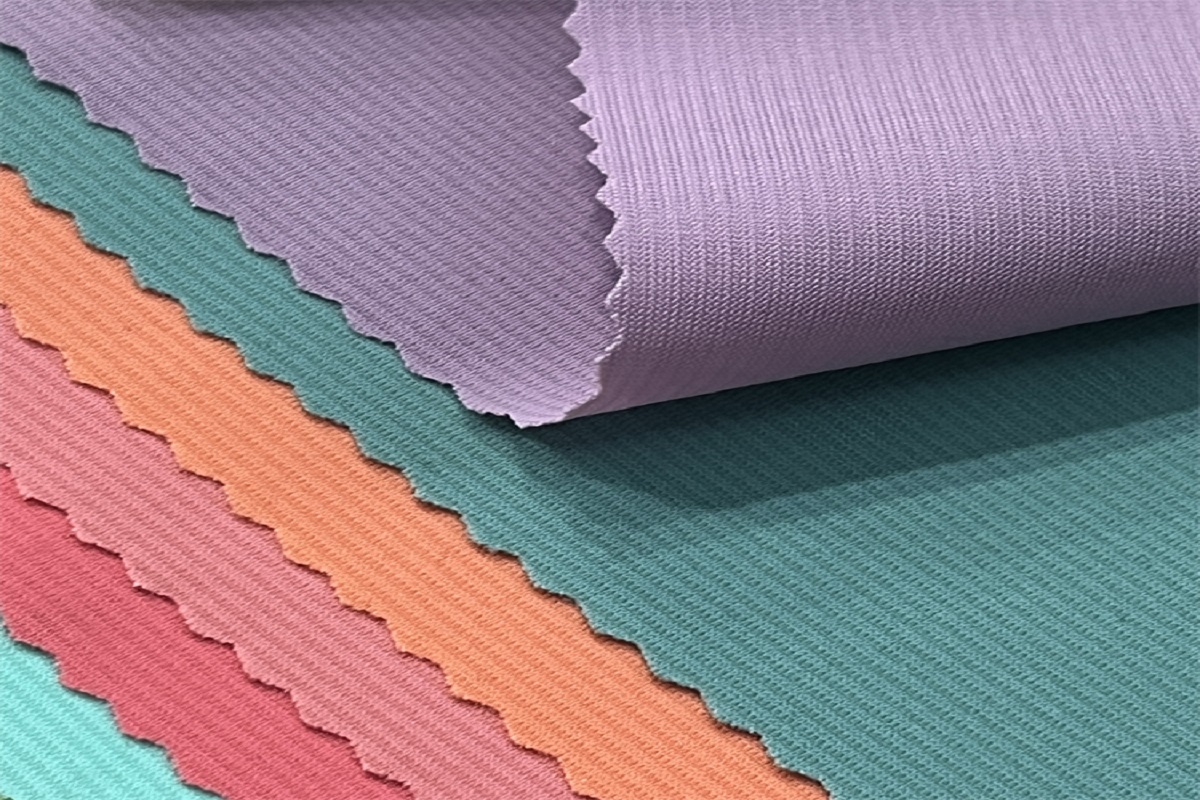
Why Knit Spandex Fabric Needs Strategic Sourcing
Procuring knit spandex fabric demands a highly strategic approach due to the material’s structural complexity and its critical role in garment functionality. Unlike rigid textiles, elastomeric knits must deliver precise stretch, recovery, and durability under constant mechanical stress. Sourcing professionals navigate a complex global supply chain where minor deviations in elastane tension during the knitting process can lead to sizing inconsistencies, needle line defects, or elevated defect rates in a production run.
Furthermore, understanding the difference between bare spandex—which offers high stretch but is vulnerable to abrasion—and covered spandex yarns, which provide enhanced durability, is essential for aligning the textile with the final product’s lifecycle expectations. Strategic sourcing ensures these technical variables are managed to protect both brand reputation and profit margins.
How to Define Fiber Blend and Knit Structure
The foundation of any elastomeric textile lies in its precise fiber composition and construction method. Blends typically incorporate a base synthetic filament, such as polyester or nylon, combined with 3% to 25% elastane, depending on the required elasticity and regional supplier capabilities. Buyers should clearly specify the knit structure. Circular knits are predominantly utilized for weft stretch in seamless garments, whereas warp knits, such as tricot, provide the run-resistant, four-way stretch ideal for activewear.
Yarn denier also requires precise definition. A standard compression fabric might utilize a 40-denier (40D) elastane yarn to ensure sufficient modulus and structural support, while sheer hosiery may rely on a much finer 15D to 20D elastane. Specifying the exact gauge and denier combination prevents fabric sheer-out and ensures the material performs consistently across different dye lots.
How End Use Affects Fabric Requirements
The intended consumer application directly dictates the necessary fabric architecture and chemical treatments. For instance, high-compression athletic leggings require a robust blend containing 15% to 25% spandex to provide muscle support and maximum opacity during extreme movement—often referred to as a squat-proof construction. Conversely, casual everyday apparel, such as stretch cotton t-shirts, typically requires only 3% to 5% spandex to improve shape retention and drape without adding excessive weight.
Swimwear introduces additional environmental variables that further dictate fabric architecture and chemical finishes. These applications demand warp-knit constructions treated for resistance to chlorine degradation, saltwater, and ultraviolet exposure. High-performance aquatics gear often requires a certified UPF 50+ rating and specialized elastane variants that resist degradation from pool chemicals, ensuring the garment maintains its structural and protective integrity over its lifecycle.
Key Knit Spandex Fabric Specifications to Compare
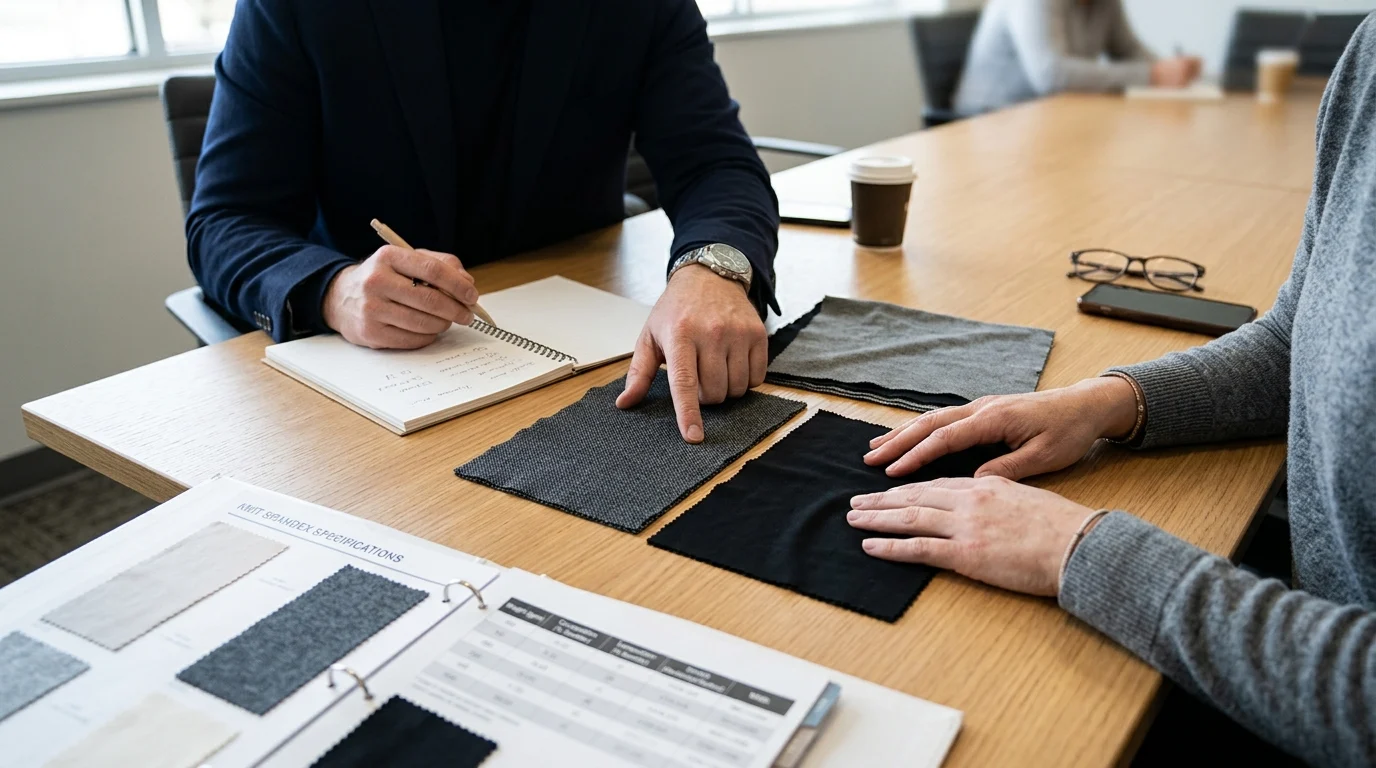
Evaluating knit spandex fabric requires procurement teams to look beyond aesthetic appeal and analyze quantitative performance data. Establishing a rigorous specification sheet allows buyers to compare supplier offerings objectively, ensuring the material will withstand the rigors of manufacturing and long-term consumer use.
Essential Performance and Quality Metrics
Essential quality metrics begin with fabric weight, typically measured in grams per square meter (GSM). This metric ranges widely, from 150 GSM for lightweight, breathable tops to over 300 GSM for heavy-duty compression bottoms. Elongation, recovery, and modulus—the force required to stretch the fabric—are arguably the most critical parameters tested under standards like ASTM D4964. A high-quality activewear knit should demonstrate at least a 95% recovery rate after being stretched to 50% of its original length.
Additionally, buyers must evaluate the risk of elastane grin-through, where white or shiny elastane threads become visible when the fabric is stretched. This defect typically occurs if the knit structure is too loose or the machine’s needle gauge is improperly calibrated for the yarn thickness. Colorfastness is another vital metric, particularly for vibrant athletic apparel subjected to heavy perspiration and frequent laundering. A minimum rating of Grade 4 on the AATCC grayscale is standard for washing, rubbing, and light exposure.
Trade-Offs Between Nylon and Polyester Spandex
When selecting the base synthetic fiber to pair with spandex, buyers must weigh the operational, aesthetic, and financial trade-offs between polyester and nylon.
| Feature | Polyester-Spandex | Nylon-Spandex |
|---|---|---|
| Cost Profile | Baseline cost | Premium (20-30% higher) |
| Hand Feel | Slightly coarser, structured | Exceptionally soft and smooth |
| Abrasion Resistance | Moderate | High |
| Dye Sublimation | Excellent compatibility | Poor compatibility |
| Moisture Regain | 0.4% (Dries faster) | 4.0% (Feels cooler when damp) |
Polyester blends are highly cost-effective and ideal for vibrant, dye-sublimated prints, making them a staple in fast-fashion activewear. Nylon blends, while often commanding a 20% to 30% price premium depending on market conditions, offer superior abrasion resistance, a softer hand feel, and a cooler sensation against the skin when damp. This positions nylon-spandex as the preferred choice for premium intimate apparel and high-end yoga wear, where tactile comfort is paramount.
How to Qualify Knit Spandex Fabric Suppliers
Identifying a textile mill capable of producing knit spandex fabric to exact specifications is only the first phase of strategic sourcing. Procurement teams must systematically vet suppliers to ensure consistent commercial viability, robust quality control, and reliable delivery schedules before committing to bulk orders. During this phase, buyers should watch for common sourcing red flags, such as inconsistent elastane content across dye lots or a history of needle line defects in circular knits.
Sampling, Testing, and Approval Steps
The qualification process relies heavily on a structured sampling and testing protocol. Buyers should request lab dips to verify color accuracy under standard D65 lighting, followed by knit-downs to assess the fabric’s physical hand, drape, and stretch modulus. Before bulk production begins, physical testing is mandatory to evaluate dimensional stability.
High-elastane knits are exceptionally prone to significant shrinkage during high-temperature dyeing and finishing processes. Therefore, acceptable shrinkage tolerances are typically capped between +/- 3% and 5% in both the warp and weft directions. Suppliers should also prove compliance with chemical safety standards, frequently demonstrated by holding an active OEKO-TEX Standard 100 certification to ensure no harmful substances remain in the finished textile.
Balancing Price, MOQ, Lead Time, and Quality
Commercial negotiations require a delicate
Key Takeaways
- Specify the intended end use before sourcing, because casual apparel may need only 3% to 5% spandex while compression garments often require 15% to 25%.
- Compare knit structures carefully, as circular knits support seamless and weft-stretch applications while warp knits provide run resistance and stable four-way stretch.
- Define yarn denier, gauge, and fabric weight in the specification sheet to reduce risks such as sheer-out, sizing variation, and inconsistent performance between dye lots.
- Use GSM as a core comparison metric, with lightweight tops around 150 GSM and heavy compression bottoms often exceeding 300 GSM.
- Choose covered spandex yarns when abrasion resistance and garment durability are priorities, especially for products exposed to frequent movement and washing.
- For swimwear and aquatics apparel, require chlorine, saltwater, UV resistance, and UPF 50+ performance where protective coverage is a selling point.
Frequently Asked Questions
What spandex percentage is best for apparel?
It depends on the end use. Casual stretch tops often need 3% to 5% spandex, while high-compression leggings may require 15% to 25% for support, opacity, and recovery.
What is the difference between circular knit and warp knit spandex fabric?
Circular knits are common for weft stretch and seamless garments. Warp knits, such as tricot, offer better run resistance and stable four-way stretch, making them suitable for activewear and swimwear.
Why does yarn denier matter when sourcing knit spandex?
Denier affects strength, stretch modulus, and appearance. Compression fabrics may use 40D elastane for support, while sheer hosiery often uses finer 15D to 20D yarns to maintain lightness.
What GSM should buyers specify for knit spandex fabric?
GSM should match the garment type. Lightweight tops may use around 150 GSM, while compression bottoms or opaque activewear can exceed 300 GSM for coverage, durability, and support.
Is bare spandex or covered spandex better for apparel?
Bare spandex provides high stretch but is more vulnerable to abrasion. Covered spandex improves durability and is often better for garments expected to withstand frequent wear, washing, or friction.

Yunai Textile
Post time: Oct-29-2026