

For procurement managers in the healthcare industry, sourcing apparel is far more than a simple transaction. It is a complex balancing act. You are tasked with keeping the frontline staff comfortable, ensuring strict compliance with clinical standards, and keeping your budget balanced.
In the high-intensity world of medical apparel, the true cost of a uniform is rarely the price tag on the initial invoice. Low-quality textiles inevitably lead to premature fading, fabric degradation from industrial laundering, and frequent, costly re-orders.
To achieve long-term cost control, you must look closely at the textile engineering level. This guide explores how selecting advanced Figs Medical Wear Fabric alternatives, optimizing fiber blends, and understanding fabric weight can significantly lower your Total Cost of Ownership (TCO).
The True Cost of Medical Textiles: TCO vs. Initial Price
When evaluating a nurse scrub fabric, it is easy to fall into the trap of prioritizing the lowest price per meter. However, experienced procurement professionals know that durability directly dictates the replacement cycle.
A standard, non-performance fabric might survive 30 industrial wash cycles before losing its structural integrity or color vibrancy. In contrast, engineered alternatives—such as high-grade polyester rayon blended spandex fabric for scrub—can withstand upward of 100 high-temperature, medical-grade launderings while retaining their shape and tone.
Replacement Frequency over 24 Months:
Standard Fabric:  [═══ 30 Washes ═══] -> [═══ 30 Washes ═══] -> [═══ 30 Washes ═══] (3 Purchases Needed)
Engineered Blend: [====================== 100+ Washes ======================] (1 Purchase Needed)
By investing in high-durability fabrics, you can cut your replacement frequency by more than half, delivering significant long-term savings to your organization’s bottom line.
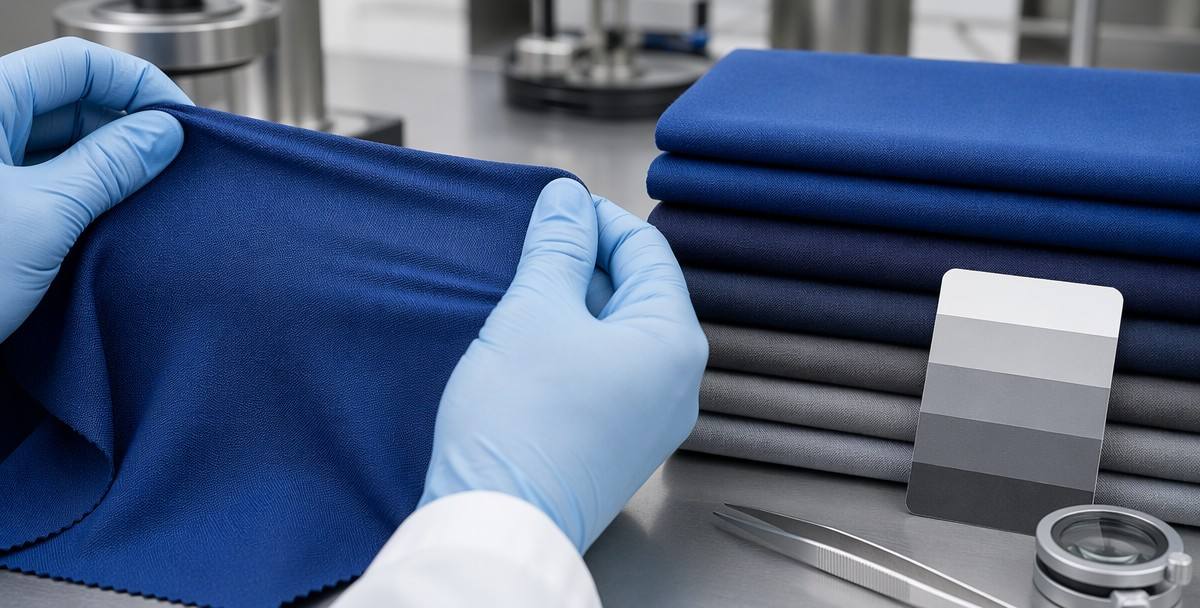
Deconstructing the Fabric Matrix: Where Value Meets Performance
To optimize your budget without compromising on the comfort your medical staff demands, you need to understand the material compositions driving the modern market.
1. The Anatomy of Modern Stretch: TR Blends vs. Four-Way Stretch
Traditional medical uniforms were stiff, boxy, and restricted movement. Today’s healthcare workers require textiles that move with them during 12-hour shifts.
-
TR Stretch Healthcare Fabric: A specialized blend of polyester (Tetoron) and rayon. The polyester provides unmatched tensile strength and resistance to abrasion, while the rayon introduces a soft, breathable, and fluid drape. When infused with spandex, this TR stretch healthcare fabric creates a highly professional appearance that does not sag or bag over time.
-
Four-Way Stretch Scrub Fabric: For high-mobility environments like emergency rooms or intensive care units, a premium four-way stretch scrub fabric is essential. It stretches both crosswise and lengthwise, drastically reducing the stress placed on garment seams during bending, lifting, and reaching. Fewer ruptured seams mean fewer garment repairs and discards.
2. Balancing Comfort and Longevity
For premium clinical tiers, a brushed medical wear fabric delivers a soft hand-feel that rivals high-end retail apparel. Through a mechanical brushing process, the surface fibers are slightly raised, eliminating the cold, synthetic feel often associated with protective workwear. By utilizing a polyester rayon blended spandex fabric for scrub, you achieve a luxury finish alongside the moisture-wicking properties required for clinical endurance.
Weight and Protection: The Technical Specifications
Fabric weight is a critical variable in both cost and clinical suitability. In the medical uniform sector, weight is typically measured in grams per square meter (gsm).
Fabric Weight & Application Matrix:
┌───────────────────────────┬──────────────────────────────────────────┐
│ Fabric Specification      │ Primary Clinical Application             │
├───────────────────────────┼──────────────────────────────────────────┤
│ Light-to-Medium Weight    │ General outpatient wards, dental clinics │
│ (150 - 180 gsm)           │                                          │
├───────────────────────────┼──────────────────────────────────────────┤
│ Heavy-Duty / Premium      │ ER, surgical units, high-turnover acute  │
│ (200 gsm Fabric)          │ care environments                        │
└───────────────────────────┴──────────────────────────────────────────┘
A 200gsm fabric for scrub strikes the optimal balance for heavy-duty institutional use. It is heavy enough to offer opaque coverage and a structured silhouette, yet engineered with breathable synthetic microfibers to ensure the wearer remains cool. Furthermore, a 200gsm density provides the necessary thickness to support specialized fabric finishes, such as a high-performance antibacterial scrub fabric.
Procurement Note: Implementing an antibacterial scrub fabric provides a vital layer of defense against microbial growth and odor buildup. This added protection keeps garments smelling and feeling fresher for longer, extending their usable lifespan and protecting your fabric investment.
Strategic Sourcing Partnerships: The Yunai Textile Advantage
True cost control cannot be achieved in a vacuum; it requires deep collaboration with an agile textile manufacturer. At Yunai Textile, we specialize in bridge engineering—delivering the luxury, retail-grade feel popularized by Figs Medical Wear Fabric at commercial, direct-from-mill pricing structures.
As a dedicated global textile partner, Yunai Textile helps procurement teams streamline their supply chains through:
-
Direct-to-Mill Customization: We precisely adjust the fiber ratios of our polyester rayon blended spandex fabric for scrub to meet your exact budget targets and durability metrics.
-
Strict Quality Control: Every yard of our TR stretch healthcare fabric undergoes rigorous testing for colorfastness, pilling resistance, and dimensional stability under industrial wash conditions.
-
Integrated Performance Finishes: From fluid resistance to advanced anti-microbial treatments, we apply performance technologies directly at the yarn and weaving stage, eliminating costly post-processing fees.
By shifting away from fragmented trading companies and partnering directly with an upstream manufacturer like Yunai Textile, you eliminate unnecessary middleman markups, gain transparent lead times, and secure a highly reliable supply chain.
Checklist for Savvy Textile Procurement Managers
Before signing off on your next high-volume medical fabric order, run through these essential checkpoints to maximize your cost-to-performance ratio:
-
Verify the Blend Ratio: Ensure the synthetic-to-cellulosic ratio matches your laundering environment (e.g., higher polyester content for high-heat institutional washing).
-
Confirm Elasticity Performance: If choosing a four-way stretch scrub fabric, verify the spandex recovery rate to prevent the uniforms from losing their shape after extended wear.
-
Audit the Weight: Match the gsm to the specific department needs—opt for a 200gsm fabric for scrub where maximum durability and fluid barriers are required.
-
Leverage Manufacturer Direct Pricing: Evaluate the financial benefits of moving away from regional distributors to establish a direct sourcing pipeline with a vertically integrated mill like Yunai Textile.
By focusing on these core textile fundamentals, you can easily shift your procurement strategy from a reactive, price-per-yard purchasing model to a proactive, value-driven strategy that protects both your frontline staff and your operational budget.

Yunai Textile
Post time: Jul-23-2026