
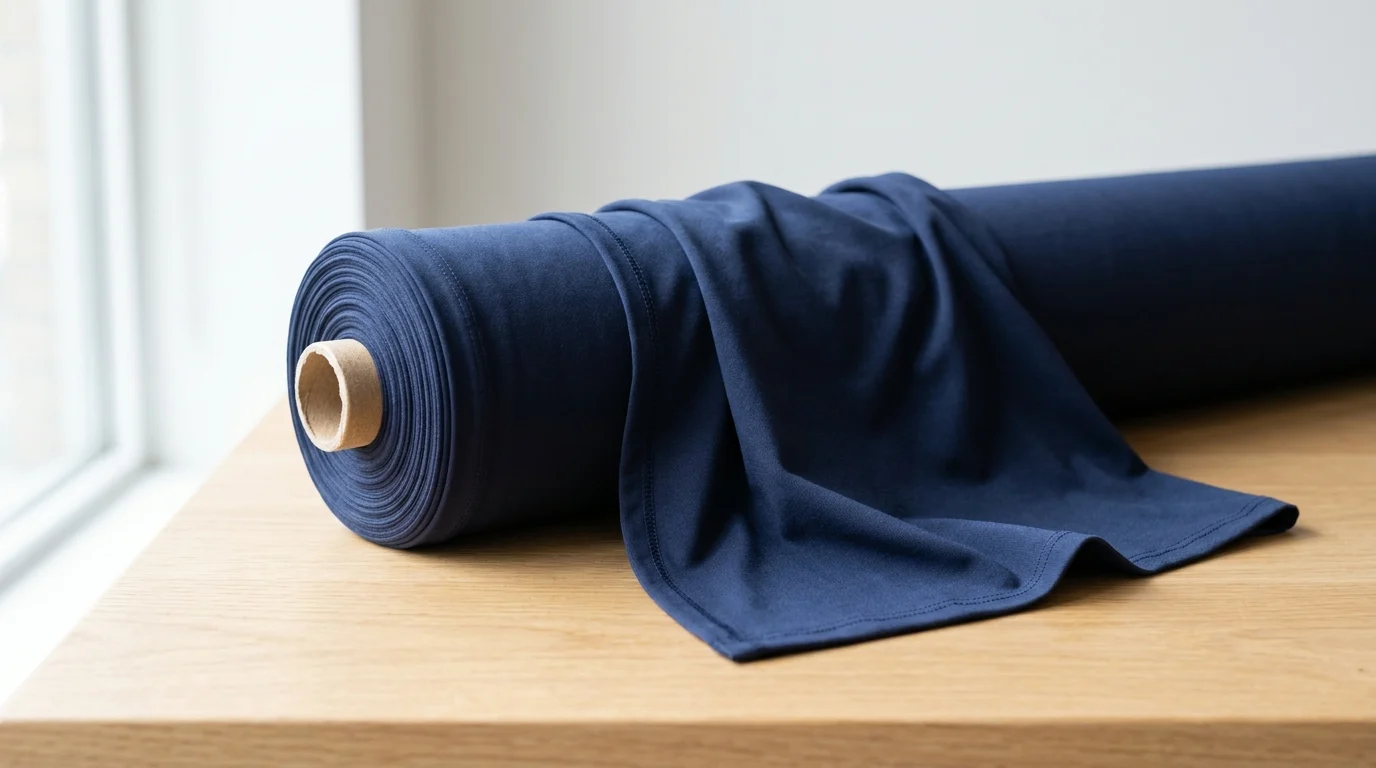
Key Polyester-Spandex Fabric Specifications
Fiber Ratio, GSM, Denier, and Construction
Understanding the technical specifications of polyester and spandex fabric is essential for sourcing the correct material for specific manufacturing needs.
- Fiber Ratio: Commercial blends typically range from 80% to 95% polyester and 5% to 20% spandex. Higher spandex percentages increase elasticity but also raise raw material costs and alter dyeing requirements.
- GSM (Grams per Square Meter): This metric defines fabric weight and density. Sourcing buyers must match GSM to the end product’s structural requirements.
- Denier: Denier indicates yarn thickness. A lower denier yields a finer, sheer textile, whereas a higher denier provides durability, abrasion resistance, and opacity (squat-proof qualities).
- Construction: These fabrics are predominantly knitted rather than woven. Weft-knitted fabrics (like jersey) offer exceptional horizontal stretch, while warp-knitted tricots provide run-resistance and structural stability.
| Specification Category | Standard Range | Primary Application |
|---|---|---|
| Lightweight (100–150 GSM) | 90% Poly / 10% Spandex | T-shirts, breathable base layers |
| Midweight (180–240 GSM) | 85% Poly / 15% Spandex | Yoga pants, standard activewear |
| Heavyweight (250–320 GSM) | 80% Poly / 20% Spandex | Compression garments, winter gear |
Stretch, Recovery, Hand Feel, and Performance Benchmarks
Quality control in textile manufacturing relies heavily on standardized performance benchmarks to ensure longevity and consumer satisfaction.
- Stretch and Recovery: A premium polyester and spandex fabric must exhibit consistent elongation. Activewear generally requires 4-way stretch (elasticity in both crosswise and lengthwise directions). Equally critical is the recovery rate; industry standards demand that the fabric returns to at least 95% of its original shape after stretching to prevent sagging.
- Hand Feel: Mechanical finishing processes dictate the tactile experience. Techniques such as brushing or peaching create a softer, cotton-like surface, mitigating the slick, synthetic feel of raw polyester.
- Performance Benchmarks: High-grade fabrics undergo treatments for moisture-wicking, antimicrobial resistance, and UV protection (UPF 50+). Furthermore, colorfastness to washing, light, and crocking (rubbing) must adhere to standardized testing, typically requiring a grade of 4 or higher on the American Association of Textile Chemists and Colorists (AATCC) scale to ensure the fabric does not bleed or fade prematurely.
Sourcing Polyester-Spandex Fabric for Apparel
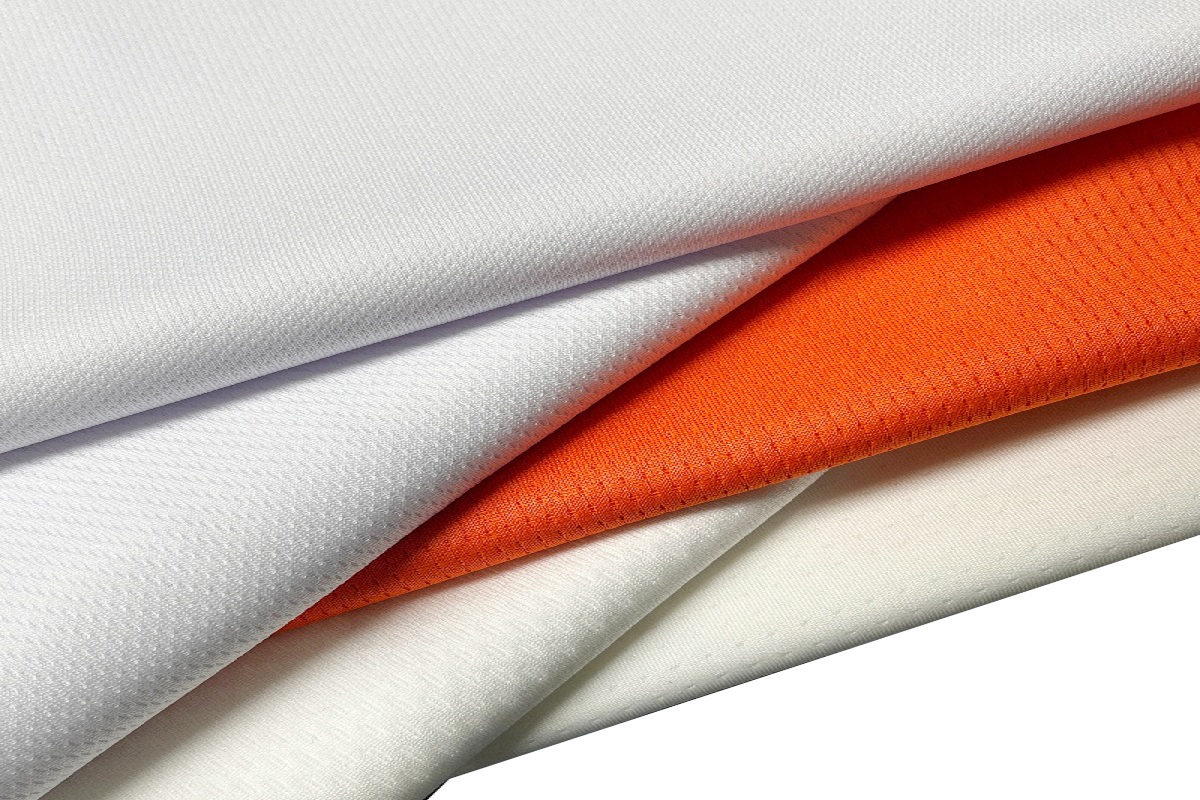
Transitioning from technical specifications to commercial procurement, sourcing poly-spandex blends requires a strategic approach. Buyers must navigate an international landscape of textile mills, balancing raw material costs against quality assurance and rigid production timelines. During international supplier validation and technical specification reviews, it is important to note that “spandex,” “elastane,” and “Lycra” (a branded version) are synonymous global terms, which helps prevent confusion when communicating across different regions.
Supplier Validation and Sample Review Steps
The validation process begins with rigorous supplier vetting and sample evaluation. Procurement teams should mandate a 3-to-5 yard sample to conduct initial prototyping and in-house wash testing, identifying issues like torqueing before bulk production. Assessing a mill’s vertical integration—whether they handle knitting, dyeing, and finishing in-house—can significantly impact quality consistency. Validating factory credentials through third-party audits, such as ISO 9001 for quality management systems, ensures the supplier possesses the operational maturity required to handle large-scale commercial orders.
Cost Drivers, MOQs, Lead Times, and Negotiation Points
Financial planning hinges on understanding cost drivers, minimum order quantities (MOQs), and realistic lead times. It is crucial to treat procurement figures as illustrative examples rather than global standards, as they vary significantly between domestic mills and overseas suppliers. For instance, standard overseas MOQs for custom-dyed PES/elastane knits often range from 1,000 to 3,000 meters per colorway, whereas utilizing a mill’s stock colors can sometimes reduce MOQs to 300 meters. Pricing typically fluctuates between $1.80 and $4.50 per linear yard depending on the region, influenced by GSM, premium elastane percentages, and proprietary finishes like anti-microbial treatments. Buyers must also monitor crude oil fluctuations, which directly impact polyester chip pricing. When negotiating contracts, factor in region-specific lead times: lab dips for color matching generally require 7 to 10 days, while overseas bulk production and finishing often demand a 30 to 45-day lead time prior to shipping.
Compliance and Final Fabric Selection
The final stage of the procurement cycle involves verifying that the selected stretch synthetic textile meets all regulatory safety standards and aligns with the intended end-use application. Overlooking compliance can result in costly shipment rejections or mandatory product recalls.
Testing, Certifications, and Quality Checks
Thorough testing and certification are non-negotiable for modern apparel markets. Fabric production lots must undergo third-party testing to ensure adherence to standards such as OEKO-TEX Standard 100, which guarantees the textile is free from harmful levels of restricted substances. If the fabric utilizes recycled polyester (rPET), a Global Recycled Standard (GRS) certification is required to substantiate sustainability claims. For quality inspection methodology, it is important not to conflate protocols: woven or knit fabric rolls are typically inspected using a 4-point or 10-point system to check for defects like dropped stitches or elastane breakage, whereas Acceptable Quality Limit (AQL) sampling (e.g., AQL 2.5) is generally applied later to finished garments. Additionally, dimensional stability tests must confirm that fabric shrinkage remains within application-dependent targets—often defined as below 3% to 5%—after repeated industrial laundering.
Choosing the Best Fabric for End Use
Choosing the best fabric requires aligning these technical and compliance metrics with the garment’s specific environmental exposure and manufacturing processes. For instance, poly-spandex blends intended for competitive swimwear must pass specialized laboratory tests for colorfastness to chlorinated water and UV exposure, frequently targeting UPF 50+ ratings. Furthermore, printed activewear is a major market segment, making dye-sublimation and heat-transfer compatibility a critical consideration. Because standard elastane degrades or loses its recovery properties when exposed to the extreme heat required for these printing methods, high-temperature applications demand specialized, heat-resistant elastane variants. Conversely, fabric designed for indoor athletic wear prioritizes rapid moisture-wicking capabilities and high colorfastness to wet and dry crocking (targeting Grade 4 or higher).
Key Takeaways
- Choose an 80% to 90% polyester and 10% to 20% spandex blend for most activewear applications that need durability, moisture-wicking, and stretch.
- Specify GSM by end use, with 130 to 180 GSM for lightweight tops and about 250 to 320 GSM for compression leggings.
- Define stretch recovery targets in the purchase order, such as returning within 3% to 5% of original dimensions after elongation.
- Select construction carefully, using circular weft knits for many activewear styles and warp-knit tricot for stable swimwear applications.
- Request 3-to-5 yard samples before bulk production to test wash performance, torqueing, opacity, hand feel, and recovery.
Frequently Asked Questions
What is polyester-spandex fabric used for?
Polyester-spandex fabric is commonly used for activewear, leggings, swimwear, compression garments, athleisure, and fitted tops because it combines durability, moisture management, and stretch recovery.
What is the best polyester and spandex ratio for activewear?
Most activewear uses 80% to 90% polyester with 10% to 20% spandex. Higher spandex content improves compression and stretch, while higher polyester content supports durability and moisture-wicking performance.
What GSM is suitable for polyester-spandex leggings?
Compression leggings usually require a heavier fabric, often around 250 to 320 GSM, to improve opacity, structure, support, and durability during movement.
What does 4-way stretch mean in polyester-spandex fabric?
4-way stretch means the fabric stretches in both length and width directions. This is important for athletic garments that need mobility, comfort, and shape retention.
Are spandex, elastane, and Lycra the same?
Spandex and elastane refer to the same elastic fiber. Lycra is a branded version of elastane, so clarifying terminology with suppliers helps avoid sourcing confusion.

Yunai Textile
Post time: Aug-12-2026