
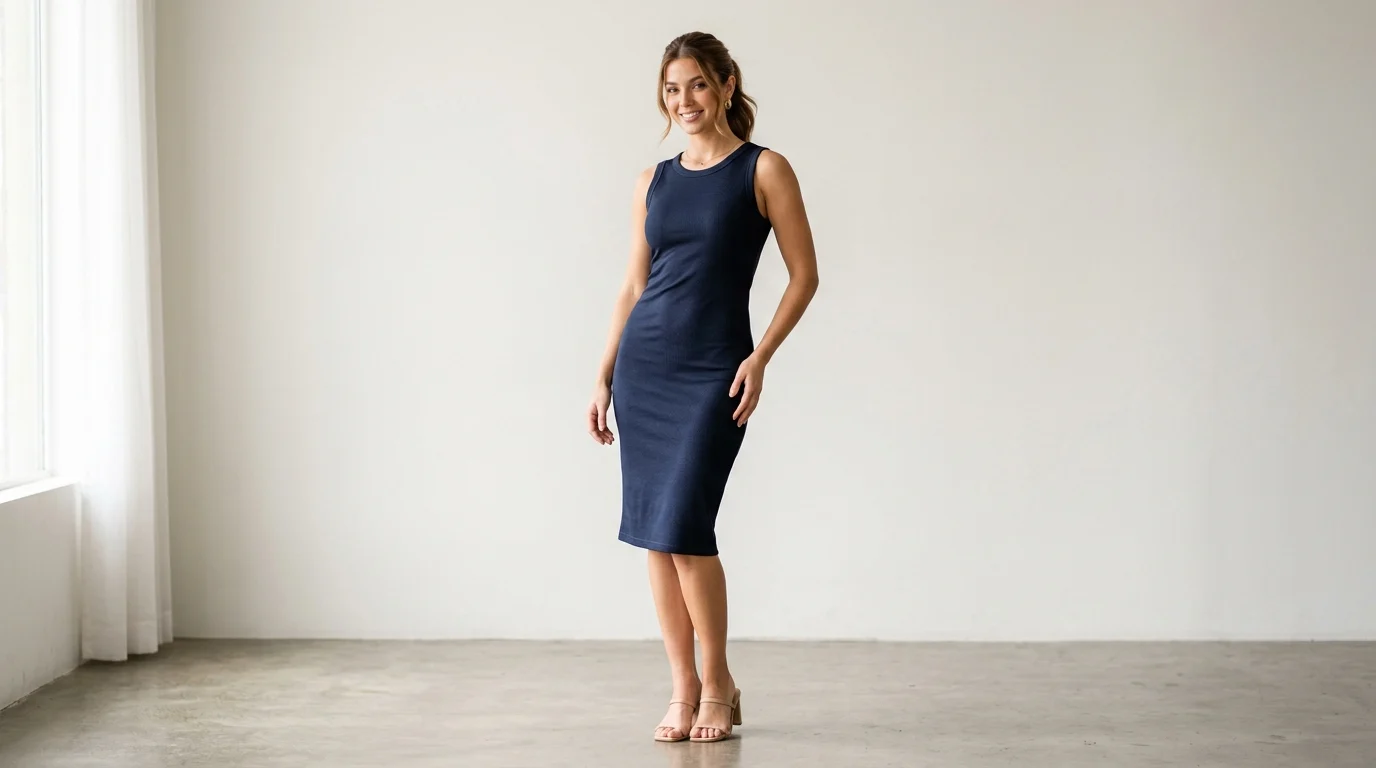
Polyester Elastane Dress Fabric Basics
For apparel buyers and product developers designing comfortable, durable, and stylish garments, blending polyester with a bit of stretch offers concrete performance benefits like wrinkle resistance, travel durability, and excellent shape retention. Dress manufacturers constantly rely on this specific combination to balance structural integrity with all-day comfort. It takes the stiff, sometimes unforgiving nature of traditional synthetics and transforms them into garments that actually move with the body. While knit jerseys are also common for dresses—typically chosen for softer, unstructured drape or highly fitted bodycon silhouettes—they involve entirely different sourcing, stretch mechanics, and fit logic. Therefore, this guide focuses exclusively on woven polyester elastane fabrics, which provide crisp tailoring and architectural structure.
What polyester elastane is
At its core, a polyester elastane blend combines the synthetic strength and longevity of polyester with the elastic recovery of spandex, which is technically known as elastane. Most standard dress fabrics in this category feature a mix of 90% to 98% polyester and 2% to 10% elastane. These percentages map directly to fabric weight, weave type, and stretch direction: lightweight plain weaves (100-140 GSM) typically use 2% to 3% elastane for two-way weft stretch, while heavier twills (210-280 GSM) might incorporate 6% to 10% elastane for structured, four-way stretch applications.
The polyester does the heavy lifting in the relationship by resisting wrinkles, holding dye brilliantly over time, and keeping overall material costs relatively low. However, buyers must also account for polyester’s inherent limitations: it is prone to static buildup, can exhibit pilling over time, and offers lower breathability compared to natural fibers, making appropriate lining and weight selection critical for wearer comfort. Meanwhile, adding just a small percentage of elastane can dramatically increase a fabric’s flexibility, often yielding a 15% to 20% overall stretch percentage depending on the specific yarn and mill construction. This addition ensures the dress accommodates sitting, reaching, and walking without bagging out at the knees, seat, or underarms by the end of the day.
How woven construction affects drape and stretch
The way the yarn is woven changes everything about how the final dress behaves and drapes on the body. Unlike knit fabrics, which naturally loop and stretch in multiple directions, woven materials require specific interventions to achieve flexibility. This comes in two distinct forms: mechanical stretch, which relies on the weave structure itself (like a loose twill) to provide a slight, natural give without elastic fibers; and elastane-driven stretch, which weaves spandex-wrapped yarns into the fabric for significant, resilient expansion.
For instance, a woven 4 way stretch fabric incorporates elastane-driven stretch in both the warp (lengthwise) and weft (crosswise) threads, offering maximum mobility for the wearer. While originally engineered for demanding applications like medical scrubs and uniforms, these robust fabrics are increasingly adapted for durable, structured dresses. Buyers should note that true woven four-way stretch is less common and typically commands higher minimums and costs than standard two-way weft stretch. Twill weaves, characterized by their distinct diagonal ribbing, naturally provide a bit more mechanical give and a heavier, more luxurious drape compared to a basic plain weave. This makes twill variations incredibly popular for structured dresses that need to look sharp for the office but feel soft enough for an evening out.
Key Specifications and Sourcing Checks
Picking the right material isn’t just about feeling a small swatch and hoping for the best outcome in mass production. Buyers need to dig deep into the technical specifications and vet their suppliers carefully to avoid costly production nightmares down the line. A proactive approach to sourcing saves time, money, and a lot of frustration.
Fabric specs buyers should compare
Fabric weight, measured in grams per square meter (GSM), is the absolute first specification to nail down when developing a dress. A lightweight 120 GSM blend might be perfect for a breathable spring shirt-dress, while a heavier 220 GSM woven 4 way stretch fabric is much better suited for a tailored blazer-dress that requires total opacity and a crisp silhouette.
Buyers should also rigorously compare stretch and recovery percentages. Depending on the applicable testing standards, such as ASTM D3107, a high-quality dress fabric is typically evaluated for recovery over a 30-minute period. While a general target might be 95% recovery of its original shape, these benchmarks are not absolute industry rules, and acceptable ranges can vary significantly by mill and specific garment requirements.
| Fabric Weight (GSM) | Typical Elastane % | Ideal Dress Application | Expected Stretch Type |
|---|---|---|---|
| 100 – 140 | 2% – 3% | Summer slips, flowy casual dresses | 2-way (weft only) |
| 150 – 200 | 4% – 6% | A-line dresses, casual mid-weights | 2-way or 4-way |
| 210 – 280 | 6% – 10% | Structured office wear, architectural fits | 4-way stretch |
Supplier and quality checks to verify
Once the technical specs are locked in, it’s time to evaluate the manufacturing mill. Minimum Order Quantities (MOQs) are often a major hurdle for smaller clothing brands; custom-dyed polyester elastane typically requires an MOQ of 1,000 to 3,000 meters per color, though stock colors might be available at lower thresholds.
Beyond MOQs, modern apparel buyers must prioritize fiber-content verification and GSM confirmation checks to prevent unauthorized mill substitutions. Additionally, inquiring about optional recycled or post-consumer recycled (PCR) polyester sourcing is a critical step for brands aiming to meet modern sustainability requirements. It’s also crucial to ask about the factory’s acceptable defect rate. Reputable suppliers use the internationally recognized four-point inspection system, and buyers generally target a score of under 20 points per 100 square yards to ensure high fabric yield during the cutting process. Finally, always verify colorfastness. Because dresses are washed frequently and exposed to sunlight, buyers should aim for a Grade 4 benchmark on standard ISO or AATCC colorfastness tests to prevent unacceptable bleeding and fading.
Fit, Care, Compliance, and Buying Decisions
Sampling and fit steps for dress development
Developing a high-quality polyester elastane fabric dress requires precise sampling, mostly because the spandex content changes how the garment drapes and hugs the body. Brands usually rely on specific prototyping phases to get the fit just right. Because elastane introduces stretch, designers use “negative ease,” meaning the physical pattern is actually cut slightly smaller than the wearer’s body measurements.
- Initial Patterning: Pattern makers calculate the fabric’s stretch ratio—typically containing 3% to 10% elastane—to adjust the base cut.
- First Fit Sample: Fit models test the prototype to evaluate seam tension and stretch recovery. This step ensures the dress will not sag or lose its shape after a few hours of wear.
- Wash and Wear Testing: The sample goes through standard washing cycles to check for potential shrinkage, pilling, and colorfastness before mass production begins.
Care, compliance, and final selection criteria
When finalizing a polyester elastane fabric dress for retail, buyers have to balance consumer care requirements with strict global trade regulations. Elastane fibers are highly sensitive to heat, which can snap the synthetic yarns and ruin the garment’s elasticity. Care labels should always advise consumers to wash in cold water and avoid high-heat tumble drying.
From a sourcing perspective, international compliance makes or breaks a buying decision. Textile imports entering the European Union, for example, must comply with European Chemicals Agency (ECHA) REACH regulations, which strictly limit harmful azo dyes and heavy metals in synthetic blends.
| Selection Criteria | Sourcing Requirement |
|---|---|
| Chemical Safety | OEKO-TEX Standard 100 or REACH compliance |
| Stretch Recovery | Minimum 95% recovery after physical stretching |
| Care Labeling | Clear instructions for cold wash and no-heat drying |
By verifying these compliance standards and care limitations upfront, importers can avoid costly customs holds and guarantee a safer, longer-lasting product for the end consumer.

Yunai Textile
Post time: Aug-10-2026