
What Is Polyester Stretch Woven Fabric for Athleisure
Engineering textiles for modern apparel requires bridging the gap between activewear and everyday wear through precise material science. Polyester stretch wovens are heavily relied upon because they offer a level of structural integrity and a tailored aesthetic that traditional knits simply cannot match, all while permitting the dynamic movement consumers demand.
Commercial Definition of Athleisure Fabric
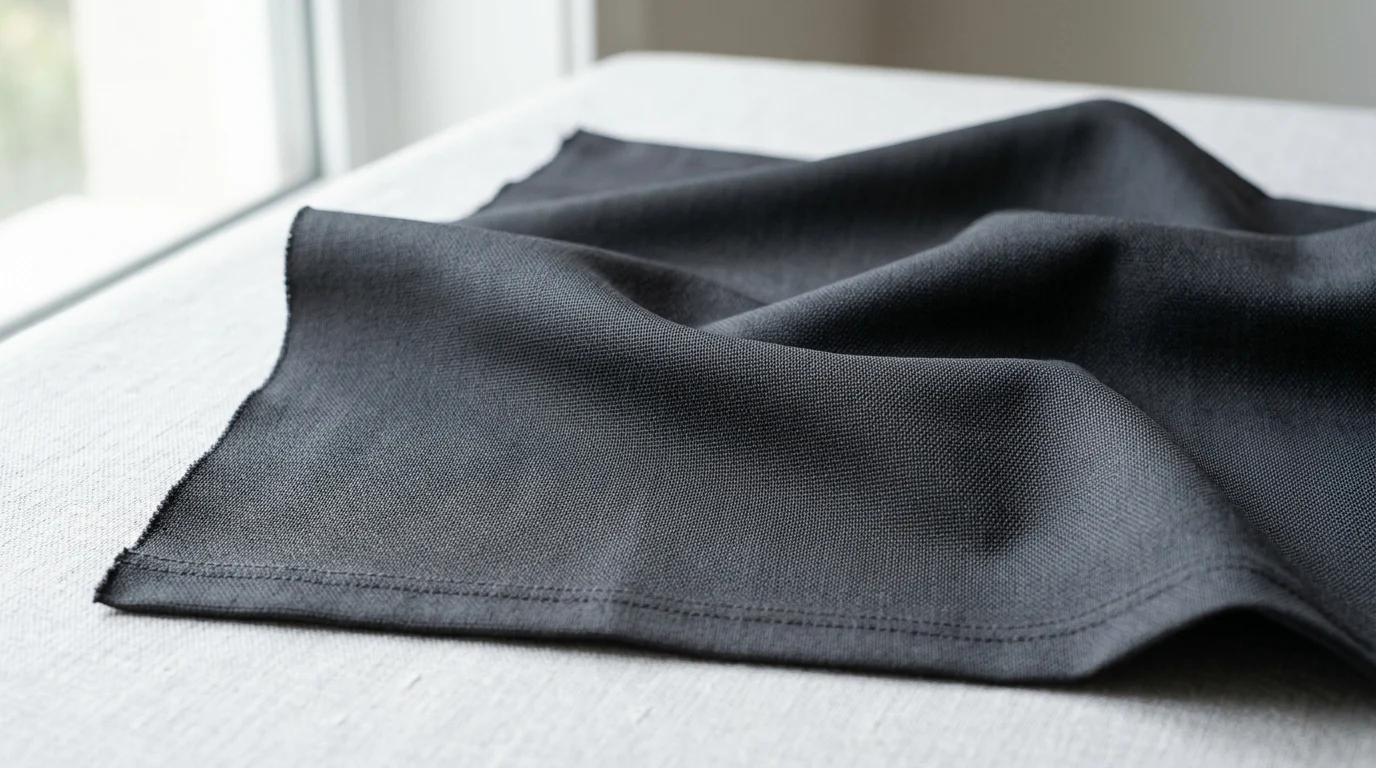
To define athleisure clothing material accurately in a commercial context, it is necessary to examine textiles that successfully combine the structured drape of traditional woven fabrics with elongation. It is critical to distinguish between mechanical stretch—achieved through weave architecture in 100% polyester yarns—and elastomeric stretch, which relies on spandex content. Mechanical stretch generally offers a more limited 2-way stretch and less recovery than spandex blends. Elastomeric wovens typically involve engineering a blend of 85% to 92% polyester with 8% to 15% spandex (elastane) integrated into the warp, the weft, or both to achieve true 4-way stretch. The commercial sweet spot for these fabrics usually lands at a weight between 130 GSM (grams per square meter) for lightweight shirting and 220 GSM for bottoms. This specific density range allows enough substance to mask body contours and maintain a clean silhouette while remaining highly breathable.
Why Stretch Woven Fabric Works for Athleisure
The primary reason polyester stretch athleisure fabric is often specified over standard interlocking knits is superior dimensional stability. Knits inherently tend to “bag out” at high-stress articulation points like the knees and elbows over time. In contrast, a well-constructed woven matrix holds its shape through repeated wear cycles. Furthermore, the tightly interlaced yarns provide superior abrasion resistance and inherently block wind much more effectively than porous knit structures. Integrating elastane into a woven structure requires precise, high-temperature heat-setting to lock the spandex core in place, ensuring the fabric will not shrink uncontrollably during consumer laundering. However, manufacturing with these textiles requires compatible sewing techniques, such as utilizing stretch stitches and appropriate ballpoint or stretch needles, to prevent seam popping. This structural exactness makes wovens indispensable for hybrid garments like commuter trousers and tailored zip-up jackets.
How to Evaluate Comfort, Mobility, and Appearance
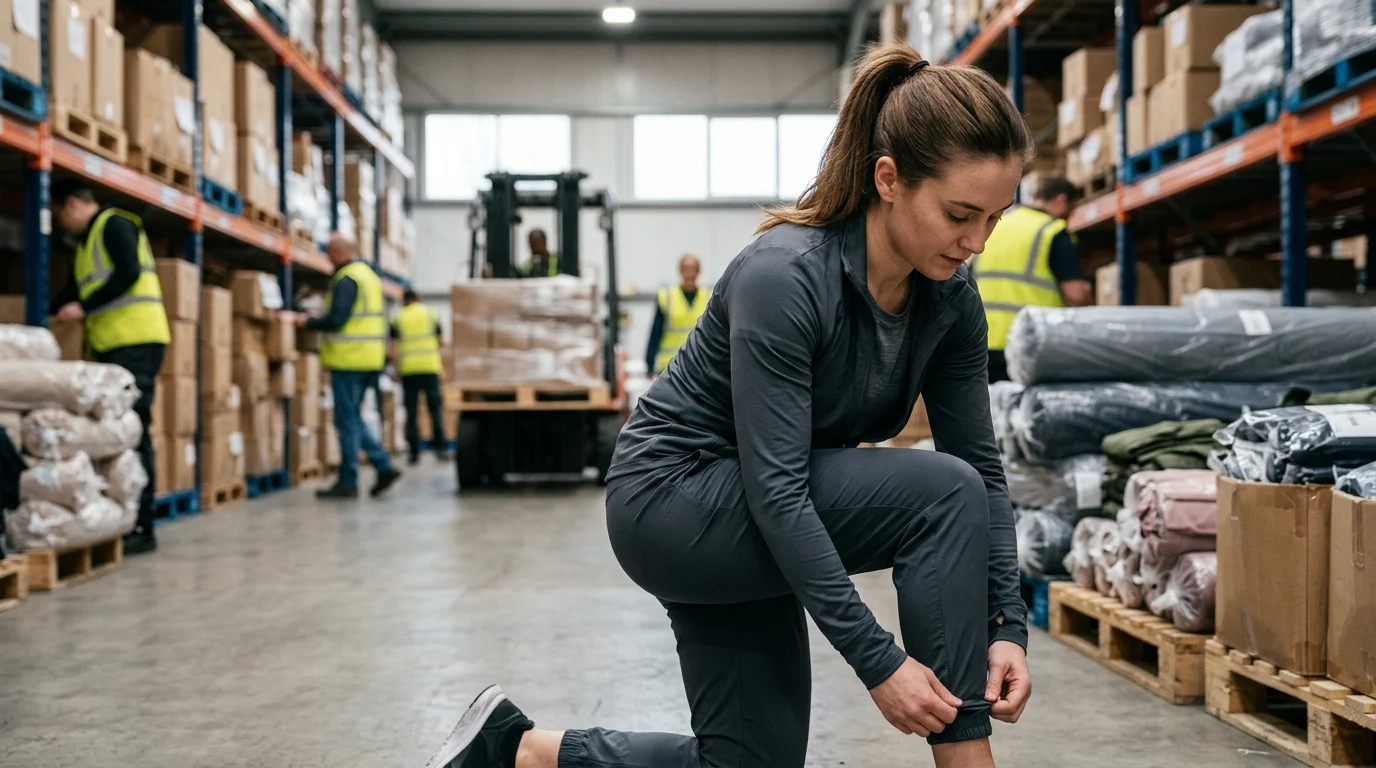
Evaluating fabrics for an athleisure collection goes far beyond a basic stretch percentage. True performance in this category requires a delicate, engineered balance between how far the material yields, how quickly it snaps back, and a tactile experience that mimics natural fibers without sacrificing synthetic durability.
Stretch Recovery, Hand Feel, and Structure
The most critical metric is stretch recovery, often measured using standard industry testing methods like ASTM D3107. A high recovery rate—typically targeted above 85% within one minute of tension release for elastomeric blends—is essential for trouser-weight fabrics; lower recovery results in unacceptable sagging after a few hours of wear. Hand feel is equally vital to consumer acceptance. A cotton-like or “peached” texture is often achieved through mechanical micro-brushing or chemical enzyme washes, effectively softening the slick, synthetic hand traditionally associated with polyester. Structure is maintained by the woven grid itself, giving the garment a tailored, premium drape rather than a clingy, ultra-casual silhouette.
However, these materials have specific limitations and care requirements. Elastane is prone to degradation from high heat, chlorine, and prolonged UV exposure, which can lead to a gradual loss of stretch recovery over time. Additionally, polyester’s oleophilic nature means it can retain odors if not washed properly, making appropriate care instructions critical for longevity.
Fiber Blend, Weave, Elastane, and Finish
The interplay between the fiber blend, the specific weave architecture, and topical treatments dictates the final appearance and mobility of the garment. A plain weave offers lightweight crispness, while a twill weave provides better diagonal bias stretch and a heavier, more luxurious drape. Integrating high-filament polyester yarns enhances capillary action for moisture wicking without relying entirely on temporary chemical finishes.
| Weave Architecture | Typical Weight (GSM) | Elongation Yield | Best Application |
|---|---|---|---|
| Plain Weave | 110 – 150 | 10% – 15% | Lightweight shorts, windbreakers |
| Twill Weave | 160 – 240 | 15% – 25% | Commuter pants, structured joggers |
| Dobby / Ripstop* | 130 – 180 | 12% – 18% | Technical jackets, outdoor hybrid wear |
*Note: While Dobby is a fundamental weave architecture, Ripstop is technically a reinforcement pattern woven into the fabric (often using a plain or dobby base) to prevent tearing.
The elongation yields above generally reflect elastomeric (polyester-spandex) blends; 100% polyester mechanical stretch variants will typically fall at the lower end of these ranges. For outerwear applications requiring weather resistance, utilizing a polyester spandex woven fabric treated with a C0 (fluorocarbon-free) Durable Water Repellent (DWR) finish ensures water beads off effectively. This allows the garment to maintain its inherent multi-directional stretch and breathability while providing critical protection against the elements.
How to Select and Source the Right Fabric
Sourcing the optimal textile is where theoretical design meets commercial production. Procurement teams are advised to align the fabric’s technical specifications strictly with the garment’s intended end-use, factoring in supplier lead times, defect allowances, and production minimums from the very start of the development cycle.
Fabric Choices for Trousers, Jackets, and Uniforms
For commuter trousers and elevated joggers, priority is generally given to elastomeric 4-way stretch twills weighing around 200 GSM to ensure complete opacity and the ability to hold a sharp crease if the design requires it. Jackets and lightweight corporate uniforms demand a vastly different approach; a 130 GSM plain weave with 2-way mechanical stretch (100% polyester) often suffices, significantly reducing bulk while allowing for necessary articulation in the shoulders. When designing top-tier, weather-resistant collections, sourcing a premium athleisure fabric with TPU membrane bonding can elevate a simple jacket into a high-performance softshell. This configuration can offer strong waterproof hydrostatic head ratings while still retaining the crucial elasticity required for active movement.
Balancing Performance, Price, and Supplier Requirements
Negotiating effectively with a reliable [sportswear textile supplier](https://www.iyunaitextile.
Key Takeaways
- Specify 85% to 92% polyester with 8% to 15% spandex when true 4-way stretch and reliable recovery are required.
- Choose fabrics between 130 GSM and 220 GSM to balance breathability, coverage, structure, and garment category.
- Target stretch recovery above 85% within one minute for trouser-weight athleisure fabrics to minimize sagging after wear.
- Use polyester stretch wovens for commuter pants and tailored jackets when shape retention, abrasion resistance, and wind blocking matter.
- Apply stretch-compatible sewing methods, including appropriate stitches and needles, to reduce seam failure in high-movement zones.
- Consider peached or brushed finishes when a softer, cotton-like hand feel is needed without sacrificing polyester durability.
Frequently Asked Questions
What makes polyester stretch woven fabric suitable for athleisure?
It combines the clean structure of woven fabric with mobility, abrasion resistance, wind blocking, and shape retention, making it ideal for commuter pants, tailored jackets, and hybrid active-casual garments.
What is the difference between mechanical stretch and spandex stretch?
Mechanical stretch comes from yarn and weave construction, usually offering limited 2-way stretch. Spandex stretch uses elastane, often 8% to 15%, to deliver stronger recovery and true 4-way movement.
What GSM range works best for athleisure garments?
A practical range is about 130 GSM to 220 GSM. Lighter weights suit shirts and layering pieces, while heavier weights provide better coverage, structure, and durability for trousers or jackets.
Why is stretch recovery important in athleisure fabric?
High stretch recovery helps the garment return to shape after movement. For elastomeric woven fabrics, recovery above 85% within one minute is often targeted to reduce sagging at knees, elbows, and seats.
Is polyester stretch woven fabric better than knit fabric?
It depends on the garment. Wovens offer better structure, dimensional stability, abrasion resistance, and wind blocking, while knits can feel softer and more flexible for close-to-body activewear.

Yunai Textile
Post time: Sep-15-2026