

Why Golf Wear Fabric Needs Stretch Woven Polyester
Over recent years, there has been a massive shift in how the activewear industry approaches on-course apparel. Modern golf demands a level of technical performance that traditional cotton simply cannot deliver over the duration of an 18-hole round. Because a standard golf swing requires upwards of 120 degrees of shoulder rotation and significant lower-body torque, the garments chosen must actively facilitate dynamic movement without losing their structural integrity.
Transitioning to high-performance synthetics like stretch woven polyester has become the industry standard for premium brands. However, navigating the specific properties of these textiles requires a deep understanding of polymer blends, structural weaves, and finishing treatments. By breaking down the exact requirements of the sport, buyers can make informed decisions that balance on-course utility with country club aesthetics.
What is golf wear fabric
At its core, golf wear fabric must bridge the gap between rigorous athletic functionality and strict traditional dress codes. This unique dual-purpose requirement explains why golf apparel requires specialized fabrics compared to standard gym wear or casual streetwear. The foundation of these modern garments relies heavily on advanced synthetic fibers, predominantly polyester blended with premium elastane or spandex.
A standard woven composition for golf trousers or structured shorts typically incorporates yarns with 5% to 10% spandex. While some lower-tier fabrics rely solely on mechanical stretch, mechanical stretch alone offers poor recovery. For garments requiring deep knee flexion and seated recovery, elastane is essential to prevent bagging. Unlike standard activewear knits, the woven construction creates a smooth, tailored face that mimics the look of classic worsted wool or cotton twill, satisfying the aesthetic demands of high-end golf clubs while providing performance properties within a traditional aesthetic.
What trade-offs define stretch woven polyester
When choosing a stretch woven over a traditional knit, buyers must navigate several distinct manufacturing trade-offs. Woven fabrics inherently offer superior wind resistance and a much crisper, more tailored drape. While 5% to 10% spandex suffices for standard 2-way stretch, achieving the true 4-way stretch necessary for a fluid, unrestricted golf swing requires a higher elastane content. Pushing spandex content to 12% or 15% in a woven is atypical for standard apparel and necessitates covered-spandex or core-spun yarns. On the sewing floor, these high-elastane wovens require practical adjustments, such as using ball-point needles, adjusting feed dogs, and modifying seam allowances to prevent needle cutting and seam puckering during garment assembly. This complexity can significantly increase the raw material cost per yard, directly impacting the final garment margin.
Additionally, the tight interlocking weave that provides the excellent wrinkle resistance of Golf wear fabric can slightly reduce natural airflow. To compensate for this structural trade-off, manufacturers must utilize advanced micro-denier yarns or integrate mechanical venting into the garment’s design. Buyers must weigh this increased cost and complexity against the superior durability and professional appearance that only a premium stretch woven polyester can provide.
Which Fabric Specifications Matter Most
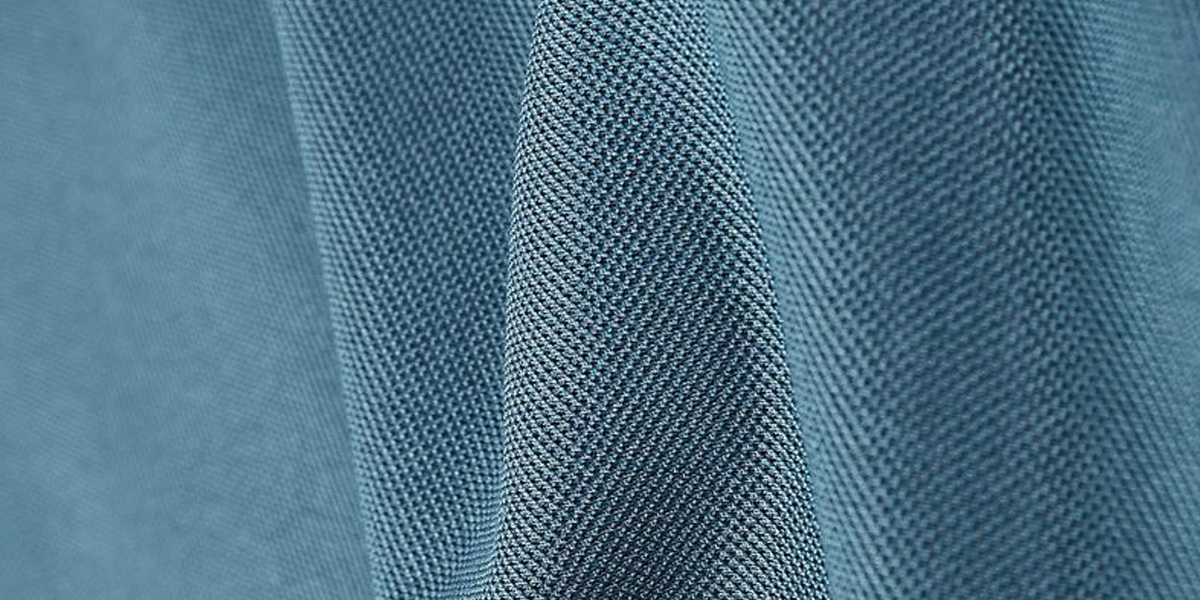
When evaluating textile samples for an upcoming golf collection, subjective hand feel is important, but objective specifications are the ultimate decider. Establishing strict numerical baselines for physical performance ensures the final garment will survive repeated wear, aggressive washing cycles, and intense UV exposure.
Without concrete specifications, brands risk sourcing fabrics that bag at the knees, trap heat, or restrict movement. Procurement teams are strongly advised to demand detailed specification sheets from their mills before approving any lab dips (initial color-matching swatches) or sample yardage.
How do stretch, recovery, weight, and hand feel compare
The relationship between stretch, recovery, weight, and hand feel dictates the garment’s overall silhouette and comfort. For premium golf wear, evaluated using standards like ASTM D3107, industry benchmarks recommend a minimum of 15% to 20% stretch along both the warp (lengthwise) and weft (crosswise) axes for true 4-way mobility. Just as critically, the fabric must exhibit a stretch recovery rate of at least 95% within 30 minutes of tension release to prevent permanent bagging. Weight varies significantly by garment type; woven shorts and skorts sit around 140 to 160 GSM, while woven trousers require 180 to 220 GSM for adequate opacity and structure.
| Garment Type | Ideal Weight (GSM) | Minimum Stretch (%) | Recovery Rate (%) |
|---|---|---|---|
| Woven Golf Shorts / Skorts | 140 – 160 | 15% – 20% | > 95% |
| Structured Overshirts | 160 – 180 | 12% – 15% | > 92% |
| Woven Golf Trousers | 180 – 220 | 15% – 20% | > 95% |
Hand feel—the tactile sensation and drape of the fabric—is another crucial metric, often achieved through secondary mechanical finishes. A “peach” finish provides a softer, cotton-like touch preferred for cooler climates, while a slick, calendered finish is often favored for summer collections because it feels cooler against the skin and resists static cling. Additionally, buyers should verify pilling resistance (e.g., ASTM D3512) to ensure the fabric maintains its smooth face after repeated friction from golf bags and carts.
How do breathability and moisture management affect performance
Thermal regulation is just as critical as mechanical stretch when evaluating performance textiles. Premium benchmarks prioritize high-quality moisture wicking golf fabric that utilizes engineered capillary action rather than temporary topical chemical coatings. A reliable standard for elite golf wear, measured via AATCC 195, is a rapid drying time that ensures sweat is quickly pulled away from the skin and dispersed across the fabric’s surface for evaporation.
Furthermore, because golfers typically spend four to five hours in extended sun exposure, the fabric must act as a protective barrier. Recommended textiles feature a UPF 50+ rating (verified via ASTM D6603 or AS/NZS 4399), which effectively blocks 98% of harmful UV radiation. It is vital to ensure this UPF rating is achieved through the density of the weave and the inherent properties of the polyester yarn, rather than chemical washes that degrade after routine laundering.
How Do Buyers Source Fabric From Manufacturers
Finding the perfect material on paper is only half the battle;
Key Takeaways
- Choose polyester stretch woven fabric when golf apparel needs both athletic mobility and a polished, tailored appearance.
- Specify 5% to 10% spandex for reliable 2-way stretch in golf trousers or shorts, and consider higher elastane content for true 4-way stretch.
- Avoid relying only on mechanical stretch when garments must recover after repeated swings, knee flexion, and seated wear.
- Evaluate breathability carefully because tight woven structures improve wind and wrinkle resistance but may reduce natural airflow.
- Plan for higher production complexity when using high-elastane wovens, including needle selection, feed adjustment, and seam control.
Frequently Asked Questions
Why is stretch woven polyester preferred for golf trousers and shorts?
It offers a tailored, club-appropriate appearance while supporting athletic movement. Compared with cotton, polyester stretch woven fabric provides better shape retention, wrinkle resistance, durability, and performance during a full 18-hole round.
How much spandex is suitable for golf wear fabric?
For structured golf bottoms, 5% to 10% spandex is common for reliable 2-way stretch. Buyers seeking true 4-way stretch may need higher elastane content, often with covered-spandex or core-spun yarns.
Is mechanical stretch enough for golf apparel?
Mechanical stretch can improve comfort, but it usually has weaker recovery than elastane blends. For deep knee flexion, seated comfort, and repeated movement, spandex helps prevent bagging and maintains garment shape.
What trade-off comes with tighter woven golf fabrics?
A tight weave improves wind resistance, wrinkle resistance, and a crisp drape, but it can reduce airflow. Buyers should look for micro-denier yarns, breathable finishes, or garment venting to improve comfort.
Why can high-stretch woven polyester cost more to manufacture?
Higher elastane levels require more complex yarn structures and careful sewing adjustments, such as ball-point needles and feed-dog control. These factors can raise raw material costs and garment production complexity.

Yunai Textile
Post time: Sep-02-2026