
Introduction
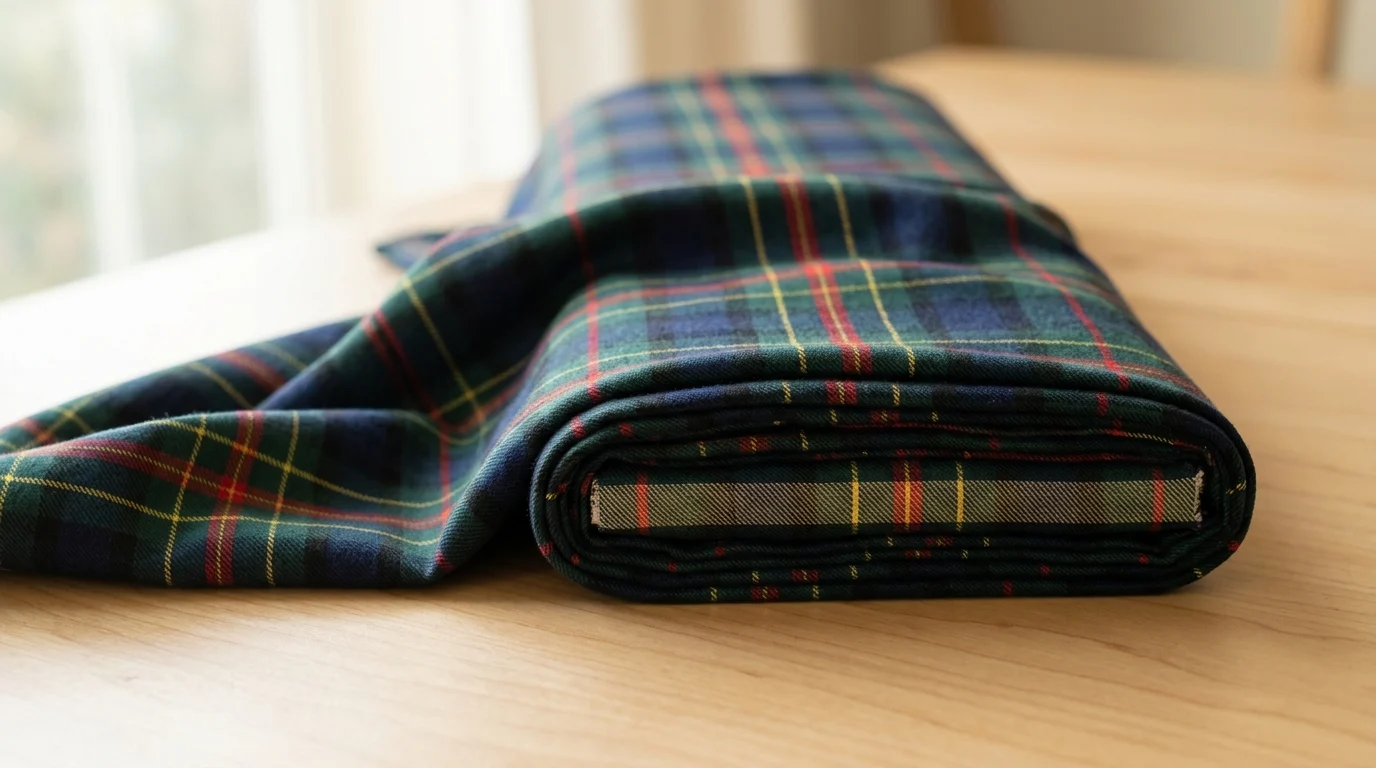
School uniform fabric must balance durability, comfort, and a neat appearance over long periods of daily use. Polyester/rayon yarn-dyed plaid fabric is widely chosen because it combines the strength and wrinkle resistance of polyester with the softer hand and better breathability of rayon, while yarn-dyed construction gives plaid patterns clearer definition and stronger colorfastness than printed alternatives. This article explains why this blend works well for school uniforms, what performance advantages buyers can expect, and which fabric details—such as blend ratio, weight, and pattern quality—matter most when selecting material for reliable, professional-looking garments.
Why Choose Polyester/Rayon Yarn-Dyed Plaid Fabric for School Uniforms
Polyester/rayon (T/R) blends have established a dominant position in the institutional apparel sector, specifically for school uniforms. The inherent demands of academic environments require materials that can withstand rigorous daily wear while maintaining a crisp, professional appearance. Among the various blend ratios available in the textile industry, the T/R 65/35 composition is widely recognized as the optimal standard. This specific ratio leverages the high tensile strength and wrinkle resistance of polyester alongside the breathability and soft hand-feel of rayon.
For uniform programs requiring classic tartan or check patterns, specifying a yarn-dyed construction rather than a piece-dyed or printed alternative is a critical procurement decision. Standard uniform weights typically range between 220 and 260 grams per square meter (gsm), providing sufficient opacity and structural integrity for year-round academic wear without causing thermal discomfort.
Benefits of yarn-dyed plaid fabric
The primary advantage of yarn-dyed plaid fabric lies in its superior colorfastness and visual depth. Because individual yarns are saturated with dye prior to the weaving process, the pattern is structurally integrated into the textile rather than applied to the surface. This methodology consistently yields a colorfastness to washing rating of Grade 4.0 or higher on the standard grayscale, ensuring that school colors remain vibrant across 50 to 75 industrial or domestic wash cycles.
Furthermore, yarn-dyed fabrics are reversible, presenting an identical pattern on both the face and the back of the material. This characteristic simplifies the cutting and sewing phases of garment manufacturing, reducing fabric waste and minimizing the risk of panel mismatch during assembly. The inherent stability of the woven pattern also prevents the visual distortion that frequently occurs when printed plaids are stretched or subjected to sustained tension.
Best uses for school uniforms
The structural properties of T/R 65/35 yarn-dyed plaids make them exceptionally versatile for various institutional garments. When specifying skirt fabric, pleat retention is a paramount concern. The thermoplastic nature of the 65% polyester content allows for permanent heat-setting of pleats, ensuring that skirts maintain their sharp, structured appearance directly out of the laundry without requiring daily ironing.
Similarly, for upper-body garments, durability against abrasion is essential. Utilizing this material as jumpers fabric provides excellent resistance to the friction caused by desk edges and backpack straps. The 35% rayon content ensures the jumpers remain breathable and comfortable against the skin, mitigating the moisture-trapping issues commonly associated with 100% synthetic alternatives.
Technical Specifications and Quality Benchmarks
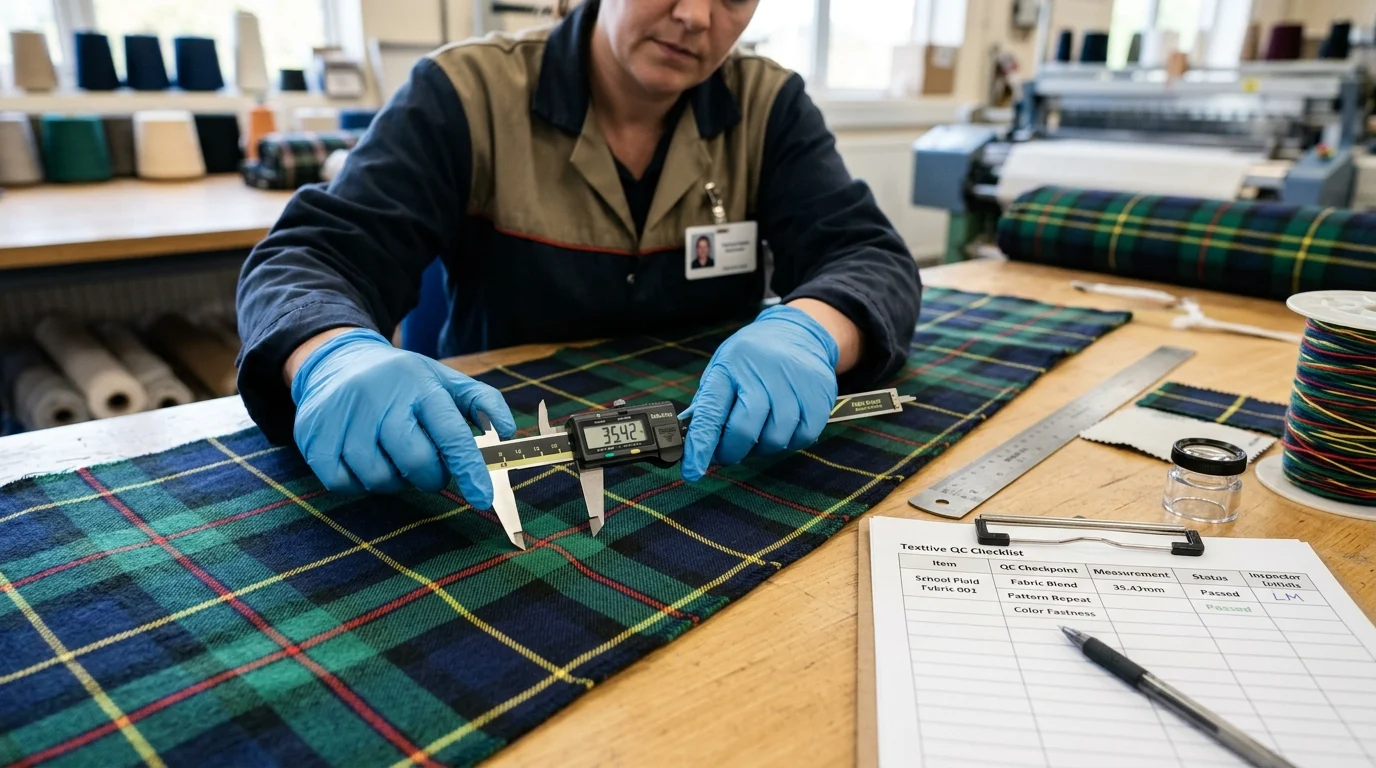
Evaluating the technical specifications of polyester/rayon blends is essential for aligning material performance with institutional expectations. Quality benchmarks for uniform fabrics are stringent, as the garments must survive an entire academic year of continuous use. Standardizing these specifications ensures consistency across different manufacturing batches and prevents premature garment failure.
Key construction and performance factors
Fabric construction directly dictates physical performance. A standard high-quality T/R 65/35 plaid typically utilizes a 32s/2 x 32s/2 yarn count, meaning two-ply 32-singles yarns are woven in both the warp and the weft. This two-ply construction significantly enhances tear strength and reduces the likelihood of catastrophic snags.
| Performance Metric | T/R 65/35 Blend | 100% Polyester | 100% Cotton |
|---|---|---|---|
| Dimensional Stability (Shrinkage) | < 3.0% | < 2.0% | 5.0% – 7.0% |
| Pilling Resistance (Scale 1-5) | Grade 3.5 – 4.0 | Grade 2.5 – 3.0 | Grade 4.0 |
| Moisture Regain | 4.0% – 5.0% | 0.4% | 8.5% |
| Crease Recovery Angle | > 250 degrees | > 280 degrees | < 180 degrees |
As demonstrated in the benchmarking data, the 65/35 blend strikes a vital balance. It maintains a dimensional stability (shrinkage rate) of under 3% after multiple washes, while offering a respectable pilling resistance that outperforms standard continuous-filament polyester.
How to compare fabric options
When procurement specialists compare fabric options, the density of the weave—measured in ends and picks per inch (EPI and PPI)—must be scrutinized. A denser weave yields a higher fabric weight and better opacity, which is a critical modesty requirement for institutional wear. However, excessive density can compromise the fabric’s drape.
For hybrid garments, sourcing the correct skort fabric requires evaluating both the warp tensile strength and the bias stretch. Because skorts combine the visual drape of a skirt with the structural stress points of shorts, the fabric must exhibit a minimum tear strength of 15-20 Newtons. Buyers should mandate independent laboratory testing reports for these metrics to objectively compare competing textile mills.
Sourcing, Approval, and Buying Decisions
Strategic sourcing of yarn-dyed plaids involves navigating specific production constraints that differ significantly from solid-color piece-dyed fabrics. Because the yarns must be custom-dyed before weaving to match specific institutional pantones, lead times and minimum order quantities (MOQs) are inherently higher. Understanding these variables is critical for maintaining robust supply chains ahead of the peak back-to-school manufacturing season.
Steps to reduce sourcing risk
Mitigating sourcing risk begins with a rigorous approval process. Buyers must allocate 15 to 20 days for the creation of handlooms or strike-offs—small woven swatches that verify the exact pattern scale and color accuracy of the plaid. Once the handloom is approved, bulk production typically requires an additional 30 to 45 days.
Due to the setup costs associated with yarn dyeing, textile mills generally enforce an MOQ of 1,500 to 3,000 meters per colorway. To reduce inventory risk, buyers can consolidate fabric usage across multiple garment styles within the same uniform program, ensuring the MOQ is met without overstocking material.
Criteria for selecting suppliers and fabrics
Selecting a reliable supplier requires evaluating their manufacturing consistency and environmental compliance. Mills should hold current certifications such as Oeko-Tex Standard 100, which guarantees the fabric is free from harmful heavy metals and azo dyes—a non-negotiable criterion for children’s apparel.
Additionally, buyers must establish strict defect rate thresholds in their purchasing agreements.
Key Takeaways
- The most important conclusions and rationale for Polyester/Rayon yarn dyed plaid fabric for school
- Specs, compliance, and risk checks worth validating before you commit
- Practical next steps and caveats readers can apply immediately
Frequently Asked Questions
Why is T/R 65/35 yarn-dyed plaid a good choice for school uniforms?
It balances durability, wrinkle resistance, and comfort. The 65/35 blend holds pleats well, stays breathable, and keeps a neat look for daily school wear.
What fabric weight is recommended for school plaid uniforms?
A standard 220–260 gsm is usually best. It gives good opacity and structure for skirts, jumpers, and skorts without feeling too heavy.
How does yarn-dyed plaid perform better than printed plaid?
Yarn-dyed plaid has color built into the yarns, so it looks richer, stays consistent on both sides, and resists fading better through repeated washing.
What quality specs should buyers check before ordering?
Focus on blend ratio, gsm, yarn count, shrinkage under 3%, and colorfastness around Grade 4 or above. These specs help ensure stable, long-lasting uniforms.
Can IYUNAI Textile customize school uniform plaid fabric?
Yes. IYUNAI Textile can supply customized polyester/rayon yarn-dyed plaid fabric for school uniforms, including patterns, weight, and garment-use requirements.
Post time: Jun-23-2026