
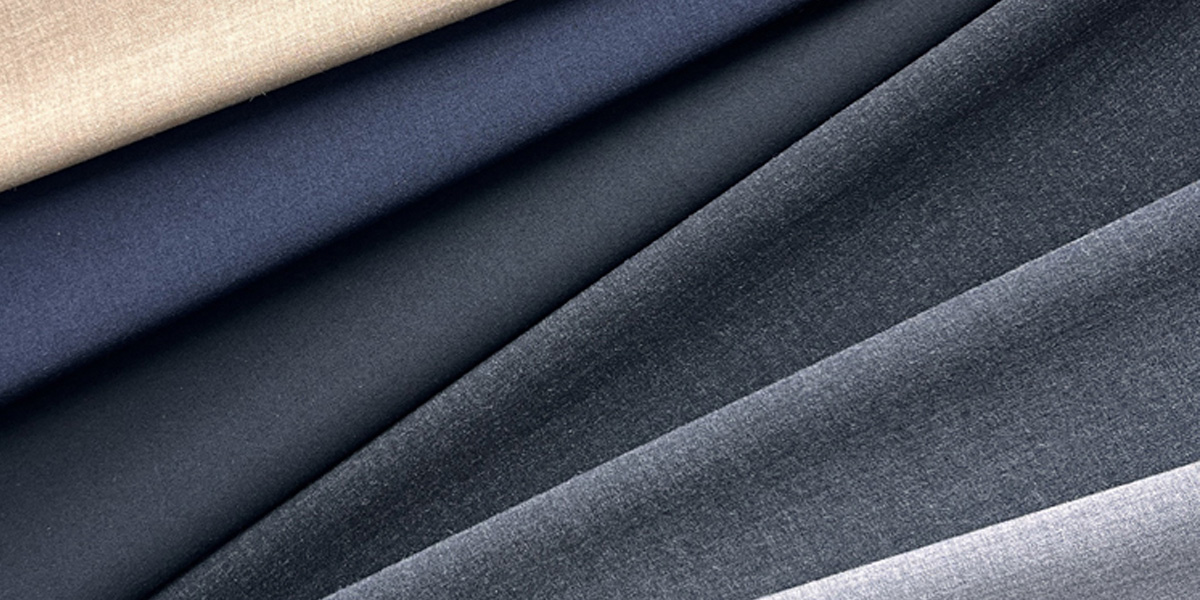
In the world of corporate branding, the employee uniform is a walking billboard. Whether it is for an airline, a luxury hotel, or a financial institution, the “Professional Silhouette” must convey trust, authority, and meticulous attention to detail. However, producing corporate uniforms is vastly different from producing a single boutique suit. When you are outfitting 5,000 employees across multiple regions, the margin for error disappears.
At Yunai Textile, we recognize that for our clients, the biggest risks aren’t just the price of the fabric—they are the hidden costs of “non-conformity.” If a blazer from Batch A doesn’t match the trousers from Batch B, or if a suit loses its shape after three months of office wear, the brand’s image suffers. Our “Altruistic Manufacturing” approach identifies these risks at the fiber level to protect your brand’s reputation.
1. The Shade-Lot Nightmare: Achieving 99.9% Color Unity
The most common disaster in uniform procurement is the “two-tone” suit. Because corporate uniforms are often ordered in phases, achieving exact color matching between different dyeing lots is notoriously difficult.
The Technical Reality: Traditional dyeing relies on human eyes and basic spectrophotometers. Factors like water pH, dye absorption rates of different fiber batches, and even the humidity in the warehouse can cause a “Delta-E” (color difference) that is visible to the naked eye. In a line of bank tellers, even a 1% shift in Navy Blue makes the team look uncoordinated.
Our Altruistic Solution:
-
The Pre-Warning: We provide a “Master Shade Library” for every corporate client. Before bulk production begins, we warn the client if a specific color (like deep charcoal or forest green) has a high sensitivity to light metamerism.
-
The Mitigation: We utilize Smart Spectral Matching and digital color libraries. We guarantee a Delta-E of less than 0.5 across all “Shade Lots.” We also implement a strict “Center-to-Selvedge” shading check to ensure there is no color fading from the middle of the fabric to the edges, which is critical for large-pattern cutting.
2. The Seating Wrinkle: High-Twist Yarn for Recovery
An office worker spends 8 hours a day sitting. Traditional TR (Polyester/Rayon) fabrics often suffer from “memory wrinkles”—deep creases at the lap, elbows, and back of the knees that do not disappear even after hanging the suit overnight.
The Technical Reality: Wrinkling occurs when the fibers are stretched and fail to “snap back” to their original position. Standard yarns are often loosely twisted to feel soft, but they lack structural resilience.
Our Altruistic Solution:
-
The Pre-Warning: We test the “Crease Recovery Angle” of our fabrics. If a client chooses a lightweight fabric for a high-intensity office role, we warn them that the garment will look “tired” by midday.
-
The Mitigation: We recommend High-Twist Yarns. By increasing the number of twists per inch in the spinning process, we create a fabric with natural “mechanical memory.” It resists wrinkling and bounces back to its original shape, ensuring the employee looks as sharp at 5:00 PM as they did at 9:00 AM.
3. Pilling and Abrasion: Trousers That Last
Trousers in a uniform set always wear out faster than the blazer. The constant friction of thighs rubbing or sitting on office chairs leads to pilling and thinning of the fabric.
The Technical Reality: Many uniform suppliers use short-staple fibers to cut costs. These short fibers eventually work their way to the surface, tangling into pills. In the corporate world, pilled trousers are the fastest way to make an expensive uniform look “cheap.”
Our Altruistic Solution:
-
The Pre-Warning: We conduct Martindale Abrasion Tests (ISO 12947). If a fabric doesn’t hit the 40,000-rub threshold, we warn the client that the trousers will likely fail within 6 months.
-
The Mitigation: We use Siro-Spun yarns and long-staple polyester. This creates a smoother, more compact yarn surface that is significantly more resistant to pilling. We offer “Trouser-Grade” TR fabrics specifically engineered for the high-wear demands of the hospitality and service industries.
4. The Interlining Conflict: Preventing Puckered Lapels
A beautiful fabric can still result in a bad suit if it doesn’t “bond” well with the internal structure (the interlining).
The Technical Reality: Seam puckering or “bubbling” on the lapel often happens because the shrinkage rate of the fabric and the interlining are different. When the garment factory applies heat to fuse them, the fabric ripples.
Our Altruistic Solution:
-
The Pre-Warning: We don’t just ship fabric; we ask for a sample of your factory’s interlining.
-
The Mitigation: We provide a Technical Fusing Report. We test our fabric with various interlining weights and provide the garment factory with the exact temperature, pressure, and time settings required to achieve a perfectly flat, crisp finish. This prevents the “bubbling” that usually leads to expensive bulk rejections.
Conclusion: Engineering Longevity into Every Thread
Corporate uniforms are a balance of aesthetics and industrial-grade endurance. By addressing shade consistency, wrinkle recovery, and pilling resistance before production, Yunai Textile removes the risk from the procurement process. We believe that a professional uniform should be a source of pride for the employee and a stress-free asset for the company. Our commitment is to ensure that your “Corporate Look” remains flawless, wash after wash, year after year.
Post time: Apr-07-2026