
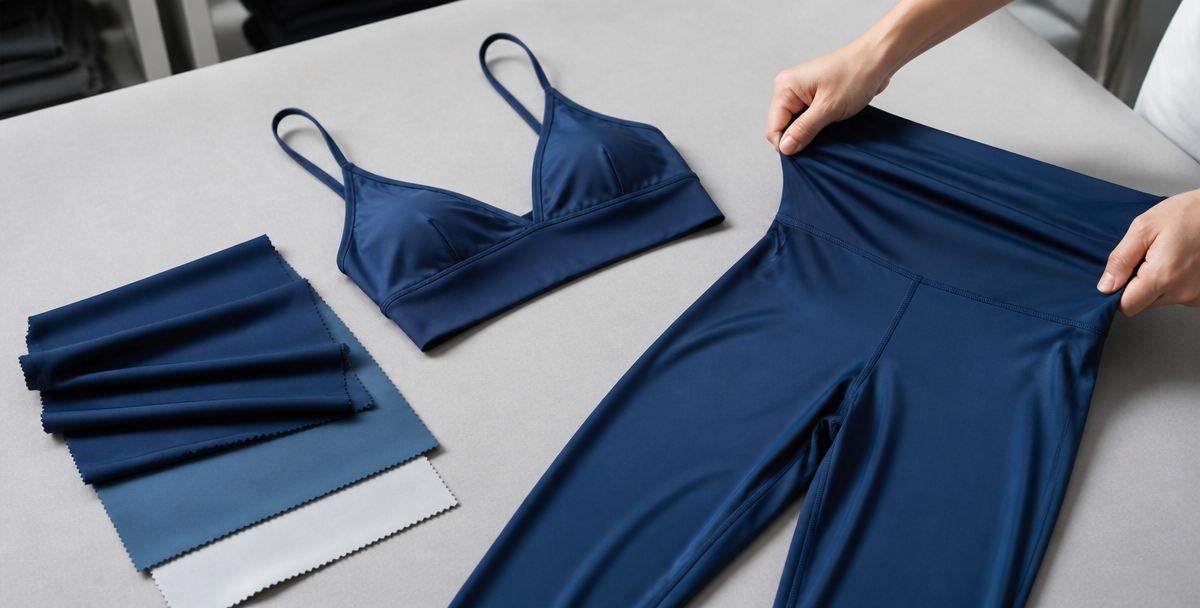
Define Fabric Requirements
Procuring recycled polyester spandex fabric requires exact technical specifications to ensure the material performs identically to its virgin synthetic counterparts. Procurement teams should establish clear parameters for yarn origin, knit structure, and physical capabilities before engaging suppliers for sampling or bulk production.
Fiber Composition and Recycled Content
The core of any recycled polyester spandex fabric is its fiber ratio. High-stretch applications like swimwear and compression gear typically rely on an 80% recycled polyester (rPET) and 20% spandex (elastane) blend to achieve optimal elasticity and moisture management. However, standard activewear often uses 10% to 15% spandex, so buyers should specify elastane content based on the garment’s specific end-use rather than defaulting to 20%. It is important to note that while the polyester is recycled, the spandex component is almost always virgin-derived. Therefore, the fabric is a recycled-polyester blend rather than a fully recycled textile, which is essential to clarify for accurate sustainability claims. This blended nature also presents a critical sustainability limitation: the presence of spandex currently prevents most post-consumer garment-to-garment mechanical recycling.
The rPET component is usually derived from post-consumer plastic bottles, though pre-consumer industrial waste is also utilized. Brands are advised to specify the exact percentage of recycled content required to substantiate their marketing claims. While some entry-level fabrics utilize 30% rPET blended with virgin polyester to keep costs down, premium performance grades demand that 100% of the polyester fraction is recycled. Specifying mechanical versus chemical recycling is also crucial. Large-scale chemical recycling of polyester remains limited, meaning most rPET is mechanically recycled from post-consumer bottles. While chemical recycling yields a fiber closer to virgin quality with fewer impurities and greater tensile strength, sourcing managers should verify actual mill capabilities before specifying it in a tech pack.
Construction and Performance Metrics
Fabric weight and knit construction dictate the end-use suitability and overall durability. For high-compression garments like athletic leggings, designers should target a weight range of 250 to 300 grams per square meter (GSM) to prevent sheer-through during high-stress stretching. Lighter applications, such as running tops or base layers, perform better between 140 and 180 GSM. The choice between warp and weft knitting significantly alters the fabric’s dimensional stability, edge curling, and stretch mechanics. It is essential to stipulate exact modulus and elongation parameters, ensuring the fabric stretches appropriately without sagging. Additionally, buyers should specify pilling resistance (e.g., ASTM D3512 or ISO 12945) to guarantee long-term surface durability.
| Knit Construction | Typical GSM Range | Stretch Characteristics | Best End-Use Application |
|---|---|---|---|
| Warp Knit (Tricot) | 180 – 250 GSM | Firm, highly stable 4-way stretch | Swimwear, compression gear |
| Weft Knit (Circular) | 140 – 300 GSM | Softer drape, higher elongation | Yoga apparel, casual activewear |
Verify Sourcing and Certifications

Securing verifiable proof of recycled origins and chemical safety is non-negotiable in modern textile procurement. Without rigid chain-of-custody documentation, brands risk severe regulatory penalties and consumer backlash related to deceptive greenwashing practices.
Supplier Documents and Chain of Custody
The Global Recycled Standard (GRS) is the premier industry benchmark for verifying rPET supply chains. To qualify for the official GRS logo on consumer packaging, a product must contain a minimum of 50% recycled content, though the standard tracks materials with as little as 20%. Alternatively, the Recycled Claim Standard (RCS) verifies the presence of recycled material but lacks the stringent environmental and social processing requirements of GRS. Alongside these certifications, buyers must ensure verified recycled content complies with regional marketing claim regulations, such as the FTC Green Guides in the US or the EU Green Claims Directive.
Sourcing managers should mandate Transaction Certificates (TCs) with every bulk shipment to prove the specific lot’s origin. Because certified production runs require strict physical segregation from virgin materials on the factory floor, suppliers often impose higher Minimum Order Quantities (MOQs). A typical MOQ for fully certified, custom-dyed recycled polyester spandex fabric is often 1,000 to 1,500 meters per colorway, though this range is subject to mill geography, order volume, and certification overhead.
Dyeing and Finishing Standards
Recycled polyester fibers absorb disperse dyes differently than virgin polyester, occasionally presenting challenges in batch-to-batch color consistency. Dyeing rPET requires high-temperature, high-pressure environments (generally peaking around 130°C) and often necessitates adjusted dyestuff levels or specific carriers beyond standard high-temperature processing. Brands should stipulate rigorous finishing standards, including an OEKO-TEX Standard 100 or bluesign® certification, to ensure materials meet strict restricted substance thresholds for harmful chemicals like azo dyes and heavy metals, rather than expecting an “absolute absence.”
Performance specifications should mandate a colorfastness to washing, light, and rubbing rating of Grade 4 or higher (on a standard 1-5 scale) using recognized test methods like ISO 105-C06. Additionally, if applying functional finishes like durable water repellency (DWR) or hydrophilic wicking agents, specifications should include a maximum shrinkage tolerance of under 5% after three standard home laundering cycles (tested via AATCC 135) to guarantee garment stability and consistent fit.
Make Final Buying Decisions
The final procurement phase shifts the focus from theoretical specifications to physical validation and commercial realities. Procurement teams should carefully balance prototyping timelines against overall production costs, yield metrics, and long-term material viability in the consumer market.
Lab Dips, Strike-Offs, and Bulk Approval
Before committing to bulk manufacturing, teams must meticulously review lab dips for solid colors or strike-offs for printed patterns under standard D65 daylight viewing conditions. Standard lead times for lab dips range from 7 to 10 days, while full bulk production usually requires 21 to 35 days post-approval, depending on mill capacity and rPET feedstock availability.
Upon delivery, the fabric should undergo strict quality control inspections, typically utilizing the universally recognized Four-Point System. Under this framework, penalty points are assigned for visual flaws like slubs, holes, or dye spots based on their size. For high-end recycled polyester spandex fabric, buyers should negotiate an acceptable defect rate threshold of less than 20 points per 100 square yards.
Key Takeaways
- Specify elastane content by garment use, with high-stretch swimwear or compression gear often requiring 20% spandex and standard activewear typically needing 10% to 15%.
- Clarify that the textile is a recycled-polyester blend because the spandex component is usually virgin-derived and can affect sustainability claims.
- Target 250 to 300 GSM for high-compression leggings to reduce sheer-through, and use 140 to 180 GSM for lighter tops or base layers.
- Choose warp knit for stable 4-way stretch in swimwear and compression gear, and choose weft knit for softer drape and higher elongation in yoga or casual apparel.
- Require documented recycled content and ask whether the rPET is mechanically or chemically recycled before approving samples or bulk production.
- Include pilling resistance standards such as ASTM D3512 or ISO 12945 in the specification to protect long-term surface durability.
Frequently Asked Questions
What is the typical blend for recycled polyester spandex fabric?
High-stretch items often use 80% recycled polyester and 20% spandex, while standard activewear may need only 10% to 15% spandex. Specify the blend by end use.
Is recycled polyester spandex fabric fully recycled?
Usually not. The polyester portion may be recycled, but the spandex is almost always virgin-derived, so buyers should describe it as a recycled-polyester blend.
What GSM should buyers specify for leggings?
For high-compression leggings, target 250 to 300 GSM to reduce sheer-through and support durability during high-stress stretching.
What GSM is suitable for running tops or base layers?
Lighter garments such as running tops and base layers typically perform best between 140 and 180 GSM.
Should buyers choose warp knit or weft knit construction?
Choose warp knit for firmer, stable 4-way stretch in swimwear or compression gear. Choose weft knit for softer drape and higher elongation in yoga or casual activewear.

Yunai Textile
Post time: Aug-13-2026