
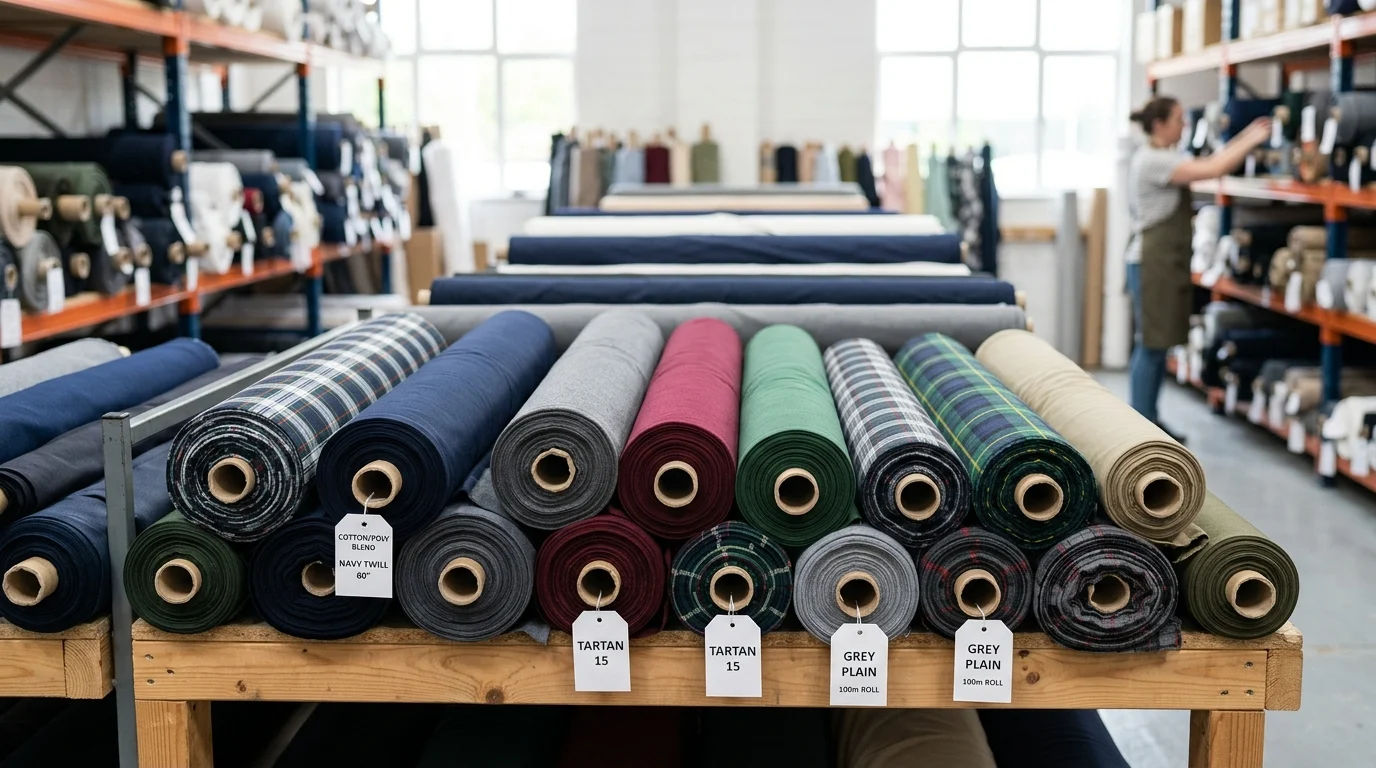
Define School Uniform Fabric Requirements
Administrators and garment manufacturers must finalize material standards before initiating large-scale production. Selecting the right fabric for school uniform applications means prioritizing materials that can withstand daily wear, industrial or frequent laundering, and varying climate conditions while maintaining a crisp, professional appearance throughout the academic year.
Fabric Specifications to Confirm
Establishing precise technical specifications prevents costly manufacturing errors and reduces garment return rates. Weight is a primary metric in textile sourcing; standard uniform bottoms typically require fabrics ranging from 220 to 280 GSM (grams per square meter) to ensure adequate opacity, drape, and structural integrity. For shirting, a lighter 110 to 150 GSM is preferred to maximize breathability.
Surface durability is equally critical. Pilling resistance typically targets a Grade 4 rating on the ISO 12945-2 scale as a common industry benchmark, ensuring garments remain smooth despite constant friction against desks and backpacks. Additionally, shrinkage rates must be strictly controlled. Wholesale buyers often aim for shrinkage tolerances of under 3% for both warp and weft directions to guarantee a consistent fit after washing. Tear strength is another vital specification; rather than relying on generic figures, buyers should evaluate fabrics using recognized protocols like the ISO 13937-1 Elmendorf test, as acceptable values vary dramatically based on weave structure and yarn type.
Best Plaid Fabrics for School Uniforms
Plaid patterns are a cornerstone of traditional educational attire, requiring specific material blends to hold pleats effectively and resist severe wrinkling. A standard T/R (Polyester/Rayon) blend, typically utilizing 65% polyester and 35% rayon, is heavily favored in the industry for its ideal balance of synthetic durability and breathable drape. This specific blend is highly effective for jumper applications where structural memory and wrinkle resistance are essential for daily wear.
| Fabric Blend | Weight Range (GSM) | Pilling Resistance (ISO Grade) | Primary Uniform Application |
|---|---|---|---|
| 65% Polyester / 35% Rayon | 220 – 260 | 4.0 – 4.5 | Pleated Skirts, Jumpers, Trousers |
| 100% Polyester | 200 – 240 | 3.5 – 4.0 | Budget-Tier Bottoms, Outerwear |
| 60% Cotton / 40% Polyester | 130 – 160 | 3.0 – 3.5 | Summer Shirting, Blouses |
| 70% Polyester / 30% Wool | 250 – 300 | 4.0 – 4.5 | Premium Winter Blazers |
Note: ISO pilling and colorfastness grades depend heavily on yarn quality, finishing treatments, and dye lots, not merely the blend composition. Buyers should request lot-specific test reports rather than treating these ranges as universal benchmarks.
When reviewing these blends, buyers must account for real-world usage constraints and regional climates. For instance, 100% polyester offers budget-friendly durability but can cause static and trap heat. For tropical or high-humidity school environments, buyers should explicitly recommend lighter weights and higher cotton or viscose blends to ensure breathability. Conversely, temperate or colder climates benefit from heavier 250+ GSM materials, though premium 70/30 polyester/wool blends require strict dry-cleaning protocols to prevent shrinkage and fabric degradation. Across all blends, procurement teams must plan for potential dye-lot consistency risks during seasonal reorders, ensuring acceptable variance margins are negotiated upfront.
Compare Custom Plaid Fabric Options
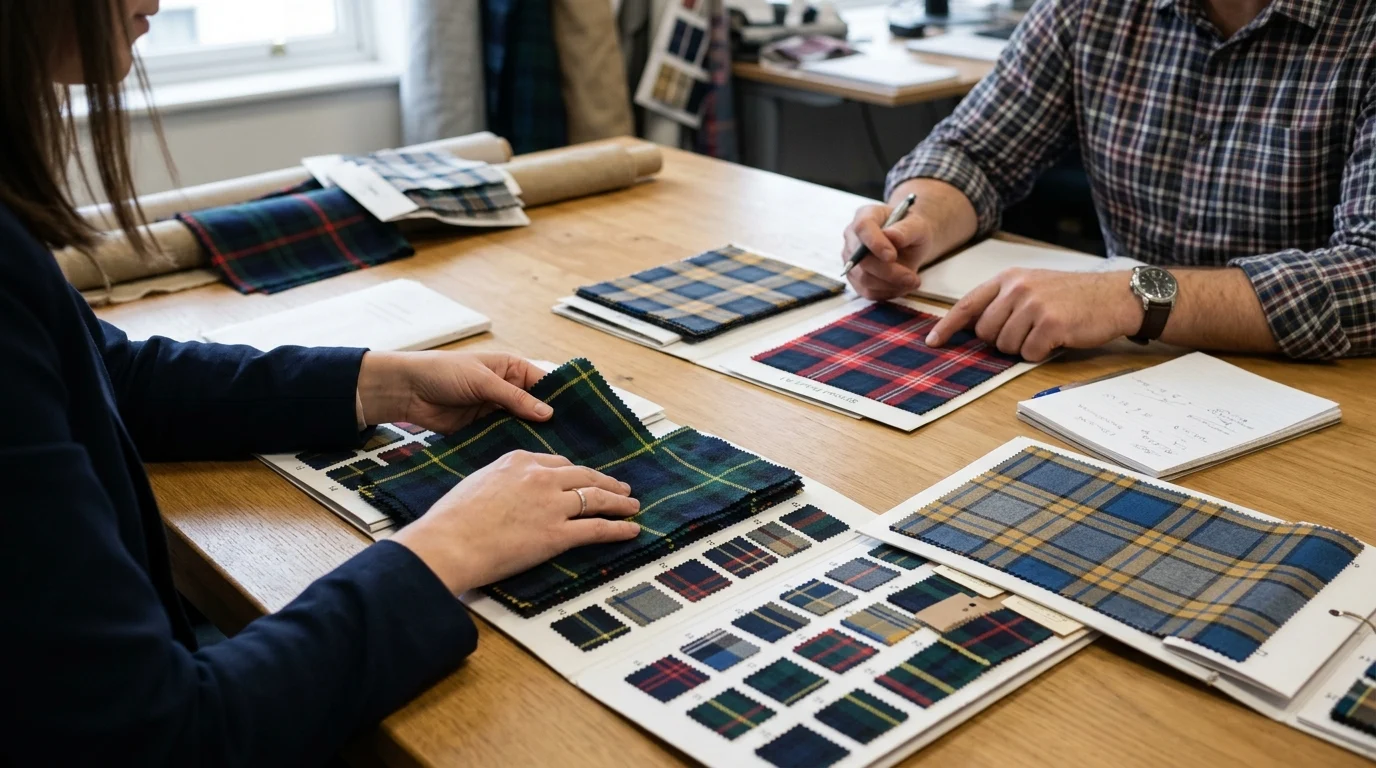
When educational institutions require bespoke tartans to represent specific district colors or historical crests, evaluating custom plaid options becomes a critical step in the procurement process. Wholesale buyers must carefully analyze how different textile manufacturing techniques impact the final visual clarity, longevity, and overall cost of the garments over their expected lifecycle.
Key Comparison Factors
The primary factors differentiating custom options include colorfastness, pattern precision, and upfront production costs. Colorfastness to washing, rubbing, and light is paramount; wholesale buyers should demand high colorfastness ratings—typically targeting industry benchmarks like ISO 105-C06 Grade 4—to ensure that vibrant reds, navy blues, and forest greens do not bleed into lighter adjacent fibers during hot washes.
Additionally, buyers must account for fabric yield and consumption rates. Custom plaids require precise pattern matching—such as chevroning at the seams—during garment construction. This necessity typically increases fabric consumption by 10% to 15% per garment, directly impacting wholesale ordering volumes and overall construction costs. Therefore, yield calculations must be finalized before placing bulk orders.
Before bulk production, a rigorous custom plaid sampling process is critical. This distinct phase includes reviewing lab dips for exact color matching, evaluating yarn-sub strike-offs for pattern scale, and securing final bulk approval to ensure the design translates accurately to the loom.
Cost bands also vary significantly based on the chosen manufacturing technique. Developing custom plaid fabric requires distinct setup fees, which vary widely based on mill capabilities and whether the yarns must be custom-dyed in specific Pantone shades or if custom print screens need to be engraved. Buyers should note that custom yarn-dyed woven plaids typically carry significantly higher setup costs and minimums than printed alternatives, making early evaluation of these options essential.
Woven, Yarn-Dyed, and Printed Plaids
When sourcing plaids, it is crucial to distinguish fabric construction (such as a woven base) from the pattern application method (yarn-dyed versus printed). To evaluate options at a glance, buyers can use the following comparison:
| Feature | Yarn-Dyed Plaid | Printed Plaid |
|---|---|---|
| Visual Depth & Longevity | Fully reversible, sharp lines, superior color retention | Surface-level only, prone to “frosting” and fading |
| Cost & Setup | Higher upfront setup costs | Lower bulk production costs |
| MOQ | High volume required | Lower to moderate |
| Lead Time | Longer production cycle | Faster turnaround |
| Best For | Premium skirts, jumpers (both sides visible) | Budget programs, complex multi-color designs |
Yarn-dyed plaids represent the gold standard for premium academic apparel.
Choose the Right Wholesale Fabric Supplier
Sourcing school uniform fabric wholesale requires evaluating manufacturing partners on metrics far beyond unit price. A reliable supplier ensures consistent dye lots, structural durability, and timely delivery, which is especially critical for high-wear garments requiring specialized skirt fabric or custom plaids.
MOQ, Lead Time, and Quality Control
When evaluating manufacturers producing fabric for school uniform programs, three operational metrics dictate supply chain stability:
- Minimum Order Quantity (MOQ): Custom yarn-dyed plaids typically require higher MOQs than solid colors due to the complex setup of weaving looms. Procurement teams must verify if the supplier allows order consolidation or phased deliveries.
- Lead Time: Standard production cycles for custom textiles generally range from 30 to 45 days. Buyers must account for additional transit times, utilizing global freight indices to forecast logistics schedules accurately.
- Quality Control (QC): Institutional apparel demands strict adherence to international testing standards. Suppliers should provide certifications such as ISO 9001 for quality management systems and OEKO-TEX Standard 100, ensuring the textiles are free from harmful substances and safe for student wear.
Final Supplier Selection Criteria
Before signing a long-term contract for school uniform fabric wholesale, buyers should utilize a structured evaluation matrix to mitigate procurement risks.
- Physical Sample Validation: Always require physical swatches before bulk production. Independent testing should confirm colorfastness to washing, pilling resistance, and dimensional stability (shrinkage).
- Scalable Production Capacity: Assess whether the manufacturing facility can scale its output to meet the aggressive deadlines of peak back-to-school manufacturing seasons without compromising quality.
- Ethical and Trade Compliance: Prioritize suppliers with transparent, verified labor practices and environmental audits. Aligning with global labor standards, such as those outlined by the International Labour Organization (ILO), protects brand reputation and ensures compliance with international import regulations.
- Communication and Responsiveness: Evaluate the supplier’s ability to provide transparent updates regarding raw material sourcing, production milestones, and potential supply chain disruptions.
Key Takeaways
- Confirm fabric weight before ordering: use 220–280 GSM for uniform bottoms and 110–150 GSM for breathable shirting.
- Request ISO 12945-2 pilling results, with Grade 4 often used as a practical benchmark for daily school uniform wear.
- Specify shrinkage tolerance below 3% in both warp and weft directions to reduce sizing issues after laundering.
- Choose 65% polyester and 35% rayon plaid fabric for pleated skirts, jumpers, and trousers that need wrinkle resistance and stable drape.
- Ask for lot-specific test reports because pilling, colorfastness, and performance depend on yarn quality, finishing, and dye lots.
- Match the fabric blend to climate and use case, since 100% polyester is durable and economical but may trap heat or create static.
Frequently Asked Questions
What GSM is best for school uniform bottoms?
Most uniform trousers, skirts, and jumpers use 220–280 GSM fabric for opacity, structure, and durability. Shirting is usually lighter, around 110–150 GSM, to improve breathability.
Why is 65% polyester and 35% rayon common for plaid uniforms?
A 65/35 polyester-rayon blend balances wrinkle resistance, durability, and drape, making it suitable for pleated skirts, jumpers, and trousers that need to hold shape through daily wear.
What shrinkage tolerance should wholesale buyers request?
For bulk school uniform orders, buyers should generally target shrinkage under 3% in both warp and weft directions to help garments maintain consistent sizing after washing.
How should buyers evaluate pilling resistance?
Ask suppliers for lot-specific ISO 12945-2 pilling test reports. A Grade 4 rating is commonly used as a benchmark for school uniforms exposed to friction from desks, backpacks, and frequent washing.
Is 100% polyester suitable for school uniforms?
Yes, 100% polyester can be a cost-effective option for budget-tier bottoms and outerwear, but buyers should consider climate, comfort, static, and heat retention before selecting it for daily wear.

Yunai Textile
Post time: Oct-24-2026