
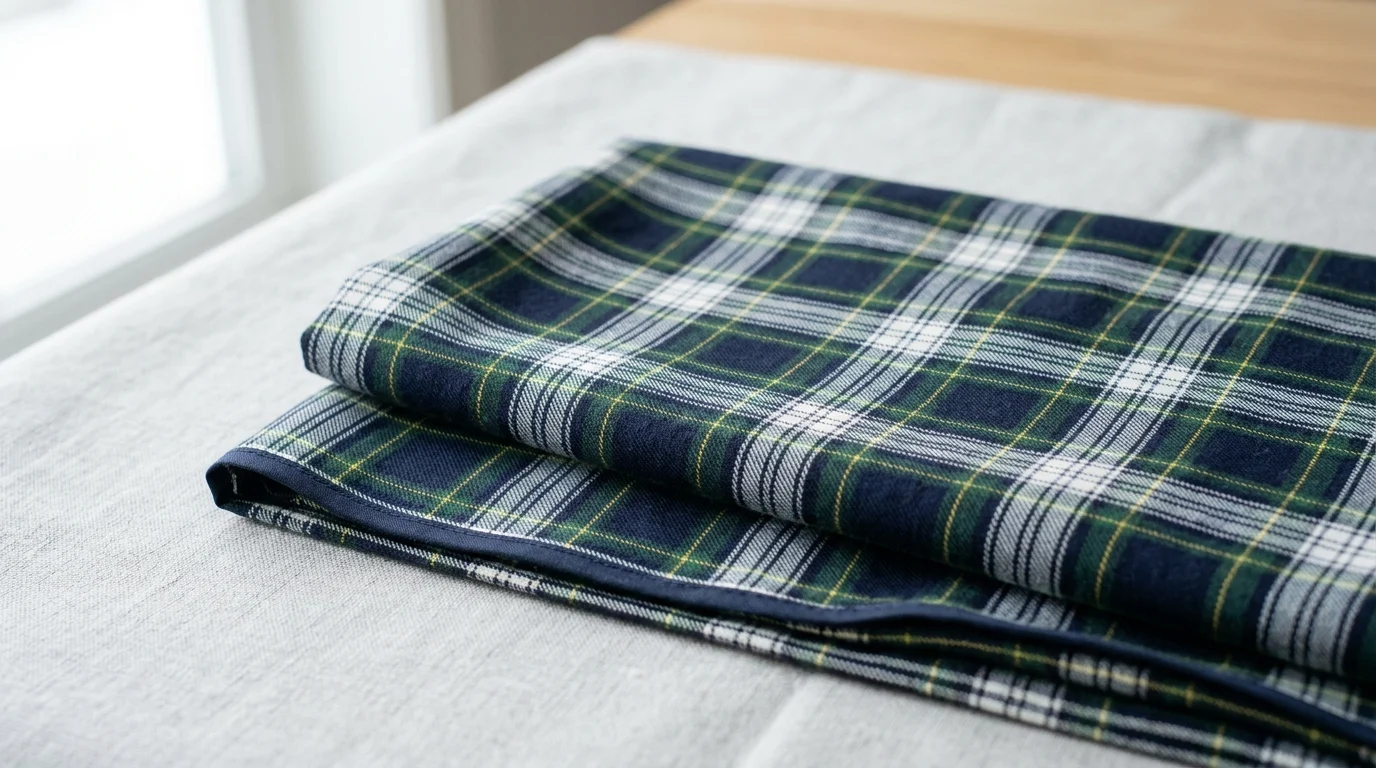
Defining School Uniform Plaid Fabric Before Sourcing
Sourcing textiles for institutional apparel requires balancing rigorous performance metrics with precise visual identity. A school’s tartan or check is not merely a design choice; it is often a registered trademark and a historic symbol that must remain perfectly consistent across decades of graduating classes. Procuring this material demands strict adherence to technical specifications before any purchase orders are issued.
What Makes School Plaid Fabric Commercially Different
This category differs from standard fashion textiles due to the demand for extreme lifecycle durability. Unlike seasonal garments, institutional skirts, jumpers, and trousers must withstand upwards of 150 aggressive industrial or home wash cycles without significant degradation. Pilling resistance is paramount; specifications typically mandate a Grade 4 or higher under the ISO 12945-2 Martindale testing method. Tear strength is equally scrutinized, with warp and weft tear resistance needing to exceed 20N on the Elmendorf scale. Furthermore, colorfastness to laundering (ISO 105-C06) and light exposure (ISO 105-B02) must achieve a rating of 4 to 5 to prevent bleeding or fading, ensuring that students wearing three-year-old garments match those in brand-new uniforms.
Key Specification Fields for Fiber Content and Construction
The dominant fiber composition in the global market is a blended polyester rayon plaid fabric, typically favoring a 65% polyester and 35% viscose (rayon) ratio. This specific blend, known in the trade as TR fabric, optimizes the high tensile strength and wrinkle recovery of synthetic polyester while retaining the breathable, soft drape of cellulosic rayon. Standard fabric weights range tightly between 220 GSM and 280 GSM, providing the necessary structural integrity for sharp, permanent pleats in skirts while remaining comfortable across diverse climates. Yarn counts are routinely specified at 32s/2 or 40s/2 (two-ply yarns), yielding a dense, tightly packed weave structure that resists snagging and abrasion in high-wear areas like knees and seats.
How School Uniform Plaid Fabric Is Made
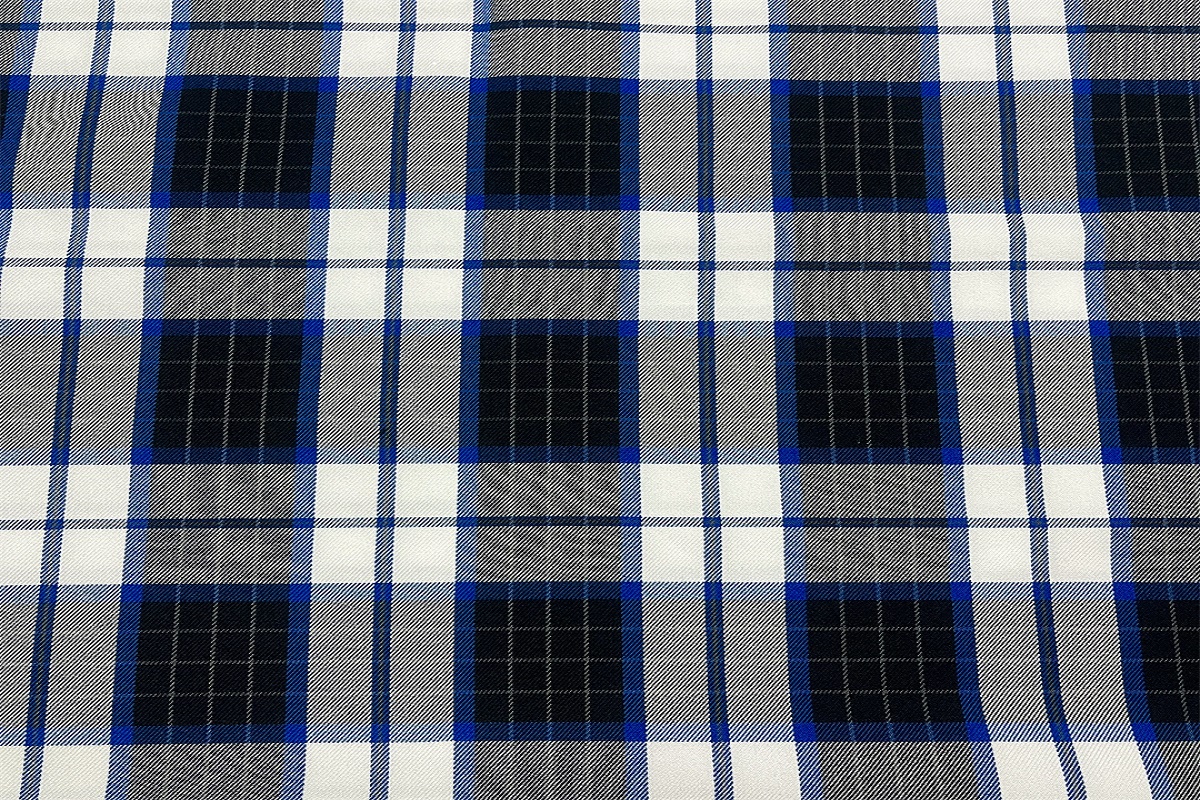
Understanding how plaid fabric is made is critical to evaluating mill capabilities and quality control protocols. The manufacturing architecture for woven checks is inherently more complex, capital-intensive, and time-consuming than standard solid-color piece dyeing.
Yarn Dyeing, Warping, Weaving, and Finishing Steps
The production lifecycle begins in the dye house. Raw polyester and rayon yarns undergo separate dyeing processes; polyester requires high-pressure vats using disperse dyes at 130°C, while rayon uses reactive dyes at lower temperatures. Once the yarns are dried, the critical warping phase begins. Technicians arrange thousands of individual colored yarns onto a massive beam in the exact sequence dictated by the school plaid pattern repeat (e.g., 40 red, 12 navy, 4 yellow), which establishes the vertical stripes. Weaving interlaces the horizontal weft yarns, usually employing a 2/2 twill weave on high-speed air-jet or rapier looms operating at illustrative speeds of 500 to 800 picks per minute, depending on the equipment. Precise tension control during weaving is critical to ensure the geometric squares of the plaid do not distort into rectangles. Finally, the finishing sequence involves singeing to burn off protruding fibers, heat-setting on a stenter frame to lock in dimensional stability (limiting shrinkage to under 3%), and applying chemical decatizing to enhance the fabric’s luster and hand-feel.
Key Comparison Points for Yarn-Dyed Plaid Fabric
When vetting specialized yarn dyed fabric manufacturers, the premium cost of yarn-dyed structures must be weighed against printed alternatives. While printed plaid serves legitimate use cases—such as cost-sensitive programs, temporary uniforms, or non-wash-intensive applications—yarn-dyed fabrics offer intrinsic advantages in structural integrity and visual depth for rigorous institutional use.
| Performance Metric | Yarn-Dyed Woven Plaid | Rotary Printed Plaid |
|---|---|---|
| Color Penetration | 100% (Identical on face and reverse) | Surface only (White/blank reverse) |
| Wash Colorfastness | Excellent (ISO Rating 4-5) | Moderate (ISO Rating 3-4) |
| Pattern Precision | Structurally integrated into the weave | Vulnerable to print registration drift |
| Production Setup Cost | High (Requires custom warping per color) | Low (Uses standard greige base cloth) |
Specifying, Testing, and Approving School Plaid Fabric
Transitioning from prototype to mass production in institutional textiles requires a stringent, multi-stage approval sequence. Variables must be strictly controlled to mitigate the risk of rejecting thousands of meters of bespoke fabric once it arrives at the garment factory.
Lab Dips, Strike-Offs, Testing, and Bulk Approval
The QA workflow for authentic plaid school uniform fabric begins with lab dips. Mills dye small yarn skeins to match the school’s Pantone specifications, which are then evaluated under standardized D65 daylight or TL84 store lighting in a lightbox. Acceptable commercial tolerances typically demand a spectrophotometer reading of Delta E (ΔE) ≤ 1.0, though brand-specific standards may vary. Following yarn approval, the mill weaves a handloom—a physical 20cm x 20cm swatch demonstrating the exact stripe sequence and repeat size of the school plaid pattern. Bulk production cannot commence until this handloom is signed off. During bulk weaving, third-party testing verifies mechanical parameters, ensuring tensile strength exceeds 250N and seam slippage remains under 6mm at an 80N load.
Balancing Cost, Compliance, Lead Time, and Minimum Orders
Unit economics must constantly be balanced with logistical realities. Custom yarn dyed plaid fabric inherently demands high Minimum Order Quantities (MOQs)—typically ranging from 1,500 to 3,000 meters per colorway—because setting up the warping beam for a unique check pattern is highly labor-intensive. Lead times are correspondingly longer, averaging 45 to 60 days from final handloom approval to ex-factory shipment. Due to these extended timelines, school wear brands must finalize their fabric forecasting and place purchase orders a minimum of six months ahead of the back-to-school retail season.
Additionally, compliance testing for restricted substances adds both cost and time. Ensuring that total lead content in substrate materials remains below the 100 ppm limit mandated by the CPSIA—alongside separate testing frameworks for extractable heavy metals or securing OEKO-TEX Standard 100 certification—adds approximately 5 to 7 days to the production timeline but remains an absolute legal requirement for youth apparel.
Key Takeaways
- Specify performance requirements before ordering, including pilling resistance of Grade 4 or higher under ISO 12945-2 and tear resistance above 20N in both warp and weft.
- Choose a 65/35 polyester-rayon TR blend when you need a practical balance of durability, wrinkle recovery, softness, and breathability for daily uniforms.
- Keep fabric weight within the 220 GSM to 280 GSM range to support pleated skirts and structured garments without making uniforms too heavy.
- Use yarn-dyed construction for school plaid because the colored yarn sequence controls the repeat, stripe placement, and long-term visual consistency.
- Require colorfastness ratings of 4 to 5 for laundering and light exposure so older uniforms continue to match newly issued garments.
- Check warping and weaving precision carefully, as uneven yarn tension can distort plaid squares and compromise the school’s approved pattern.
Frequently Asked Questions
What fiber blend is commonly used for school plaid uniform fabric?
A 65% polyester and 35% viscose, or TR, blend is common because it combines polyester strength and wrinkle recovery with rayon softness and breathability.
Why is yarn-dyed plaid preferred for school uniforms?
Yarn dyeing builds the plaid from colored yarns before weaving, helping the pattern stay sharp, consistent, and durable through repeated washing and wear.
What fabric weight is typical for school uniform plaid?
Most specifications fall between 220 GSM and 280 GSM, giving skirts, jumpers, and trousers enough structure for pleats while remaining comfortable.
Which performance tests matter most for school plaid fabric?
Key tests include pilling resistance under ISO 12945-2, colorfastness to laundering under ISO 105-C06, lightfastness under ISO 105-B02, and Elmendorf tear strength.
How durable should school uniform plaid fabric be?
Institutional uniform fabric is often expected to withstand more than 150 wash cycles while maintaining color, surface appearance, tear strength, and pattern consistency.

Yunai Textile
Post time: Jul-17-2026