
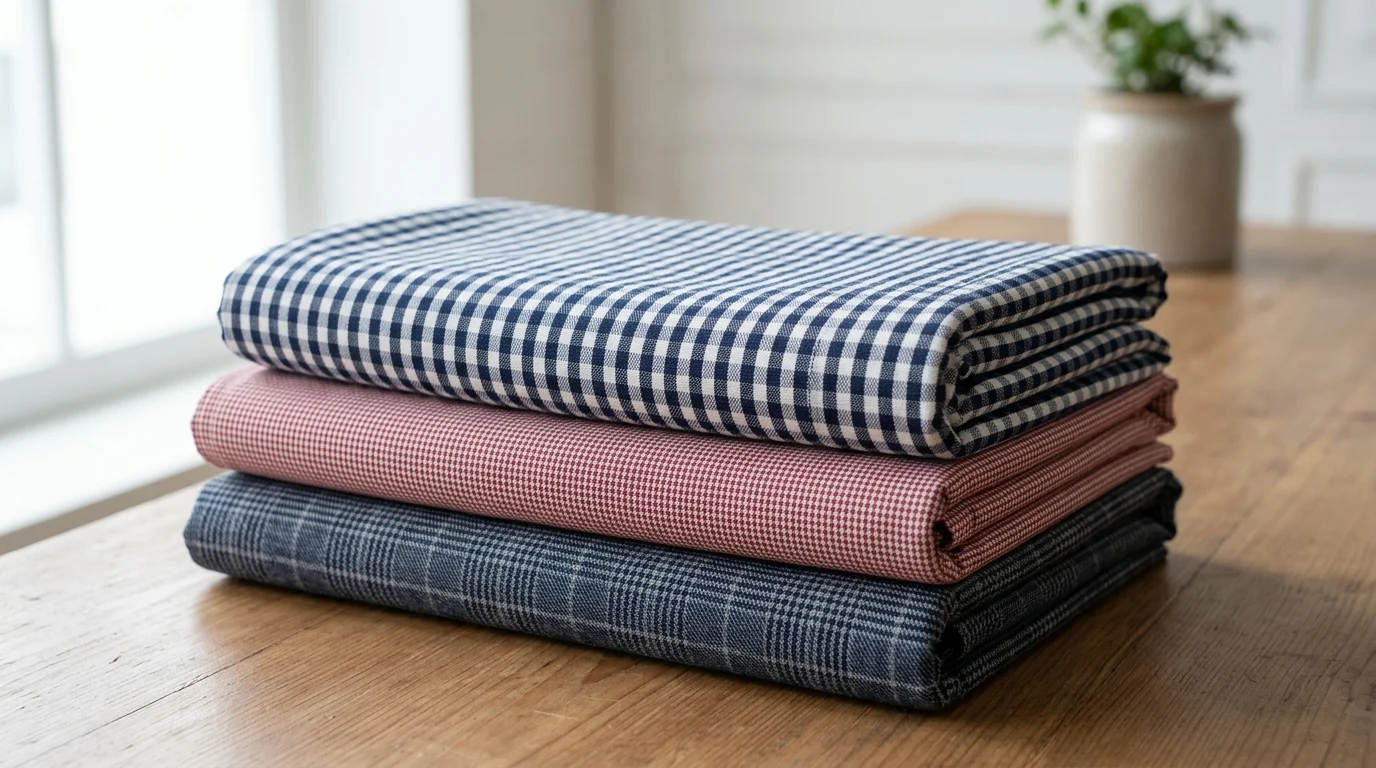
Defining TC Yarn Dyed Fabric for Durable Uniforms
TC (Tetoron Cotton)—where “Tetoron” is a proprietary brand name for polyester originally developed by Toray—is universally understood as a polyester-dominant cotton blend. This yarn-dyed fabric represents a foundational material in the institutional apparel sector, engineered specifically to withstand the daily rigors of student wear. By dyeing individual yarns prior to the weaving process, manufacturers achieve deep color saturation that printed alternatives simply cannot replicate. However, buyers must note an upfront trade-off: yarn-dyed TC plaid is significantly more expensive and carries higher Minimum Order Quantities (MOQs) and longer lead times than piece-dyed solids.
This meticulous manufacturing method is essential for constructing intricate, double-sided plaid fabric designs that maintain their structural and visual integrity across multiple academic years. The combination of synthetic durability and natural comfort makes this textile an industry standard for school districts globally.
Key Differences from Polyester Cotton Fabric
Although often compared to other materials, in textile terminology, TC is itself a specific polyester-cotton fabric, denoting a blend where polyester is the dominant fiber—typically standardized at a ratio of 65% polyester and 35% cotton. This distinguishes it from CVC (Chief Value Cotton), which features a higher cotton ratio, and from piece-dyed alternatives. While piece-dyed fabrics achieve full color penetration in solid hues, yarn-dyed TC weaves pre-colored yarns directly into the substrate, creating structural plaid patterns that ensure reverse-side clarity and maximum visual longevity.
Additionally, institutional buyers often evaluate 100% synthetic options and Polyester Rayon (TR) blends during the sourcing phase. TR fabrics typically offer a softer hand-feel, superior drape, and a more formal appearance compared to TC, though they often come at a higher cost and lower tensile strength. While standard TC fabrics provide excellent warp and weft tear strength to survive playground abrasion, buyers should be aware of specific limitations when sourcing this blend:
- Reduced Breathability: A 65% polyester blend retains more heat in hot, tropical climates compared to natural fibers.
- Static Cling: The high synthetic content makes the fabric prone to static buildup, especially in dry environments.
- Surface Pilling: Over time, TC can be more susceptible to friction-induced pilling than pure cotton.
Specifications Buyers Should Confirm
Procurement specialists should verify strict technical specifications before finalizing bulk orders to prevent downstream manufacturing failures. As a typical industry benchmark, standard school uniform applications require a finished fabric weight between 150 and 220 GSM (grams per square meter) to ensure adequate opacity without causing excessive heat retention for the wearer. Yarn counts typically range from 32s/2 to 45s/2, utilizing tightly twisted plied yarns to enhance surface smoothness and resist friction-induced pilling.
Furthermore, colorfastness to washing, perspiration, and dry rubbing typically targets a minimum of Grade 4 on the AATCC scale. This rigorous colorfastness specification ensures the rich, dark dyes used in the plaid patterns do not bleed into the white collars, blouses, or adjacent lighter panels of the uniform ensemble during high-temperature domestic laundering. Beyond physical specifications, institutional buyers should ensure compliance with critical childrenswear safety standards. Depending on the region, this includes certifications like Oeko-Tex Standard 100 for harmful substances, CPSIA lead and phthalate limits, EN 14682 for garment safety, and applicable flammability rules, which are essential for a complete procurement checklist.
Comparing TC Yarn Dyed Fabric with 100% Cotton
Evaluating TC yarn dyed fabric against natural alternatives like 100% cotton reveals distinct operational trade-offs for both garment manufacturers and the students wearing them. While pure cotton offers maximum initial breathability, the rigorous daily demands of institutional wear often expose its structural vulnerabilities over a nine-month academic year.
This reality shifts the procurement preference toward scientifically engineered synthetic blends that offer predictable lifecycle performance and significantly lower replacement costs, even if it means accepting the slightly reduced breathability inherent to polyester blends.
Durability and Care Performance
Durability metrics strongly favor the synthetic-natural blend over pure natural fibers. A properly finished TC Skirt fabric will typically withstand extensive abrasion cycles on the Martindale tester (ISO 12947) before showing yarn breakage, routinely outperforming standard woven cotton in longevity tests.
Dimensional stability is another critical factor for tailored uniforms. Based on typical industry benchmarks, TC blends exhibit a controlled shrinkage rate of just 1.5% to 3.0% after multiple industrial wash cycles. In contrast, untreated 100% cotton can shrink by 5.0% to 8.0%, which can drastically alter the fit of the uniform and lead to premature disposal.
| Feature | TC Yarn Dyed (65/35) | 100% Cotton | Polyester Rayon (TR) |
|---|---|---|---|
| Shrinkage Rate | 1.5% – 3.0% | 5.0% – 8.0% | 2.0% – 4.0% |
| Abrasion Resistance | High | Moderate | Moderate-High |
| Pleat Retention | Excellent | Poor | Good |
| Pilling Grade (ISO 12945-2: 5=Best, 1=Worst) | 3.5 – 4.0 | 4.0 – 4.5 | 3.0 – 3.5 |
Climate, Laundering, and Student Age Factors
The decision between these materials also heavily depends on the regional climate and the specific garment construction required. For high-humidity tropical environments, pure cotton remains highly sought after for its superior moisture-wicking properties, despite its tendency to wrinkle.
However, for structured garments requiring sharp, permanent creases—such as a pleated Jumper fabric—the thermoplastic nature of the polyester in a TC blend is indispensable. This thermoplastic shape retention allows the fabric to hold sharp pleats through high-temperature laundering and aggressive tumble drying. Consequently, it significantly reduces the daily ironing burden on parents and caregivers, making the TC blend a highly pragmatic choice for active student demographics.
Sourcing and Quality Control Steps
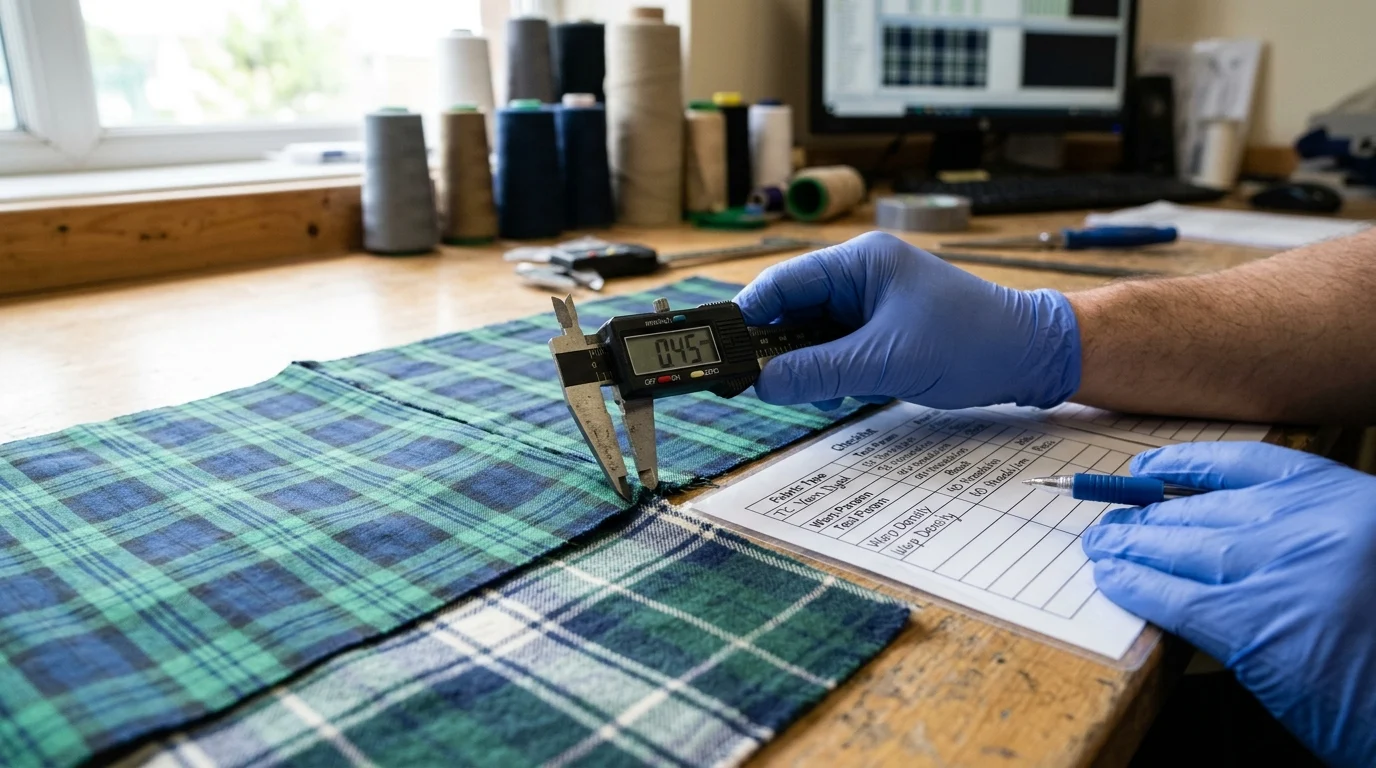
Establishing a reliable, long-term supply chain for school uniform textiles necessitates rigorous quality control protocols starting from the raw fiber stage. Because yarn dyeing is a capital-intensive front-end process, correcting color inconsistencies or weaving tension errors post-production is virtually impossible.
This makes in-process lab verification and strict vendor compliance absolutely critical for successful bulk manufacturing, ensuring that every roll meets exact institutional standards.
From Color Standards to Bulk Production
The transition from
Key Takeaways
- Choose TC yarn dyed fabric when school plaid uniforms require long-lasting woven patterns instead of surface-printed designs.
- Specify a common 65% polyester and 35% cotton TC blend when durability, wrinkle resistance, and daily wear performance are priorities.
- Target 150 to 220 GSM for school uniform fabrics to balance opacity, strength, and wearer comfort.
- Confirm yarn counts such as 32s/2 to 45s/2 when smoother surfaces and better pilling resistance are required.
- Require at least Grade 4 colorfastness for washing, perspiration, and dry rubbing to reduce bleeding during repeated laundering.
- Plan for higher MOQs and longer lead times because yarn-dyed plaid fabric is more complex than piece-dyed solid fabric.
Frequently Asked Questions
What is TC yarn dyed fabric?
TC yarn dyed fabric is a polyester-dominant cotton blend, commonly 65% polyester and 35% cotton, made by dyeing yarns before weaving. This process creates durable plaid patterns with strong color clarity on both sides.
Why is yarn dyed TC fabric used for school plaid uniforms?
It offers a practical balance of durability, color retention, and comfort. The yarn-dyed construction helps plaid patterns stay sharp after repeated washing and daily student wear.
How is TC fabric different from CVC fabric?
TC has more polyester than cotton, often 65/35, while CVC has more cotton than polyester. TC is usually stronger and more wrinkle resistant, while CVC tends to feel softer and more breathable.
What GSM is suitable for school uniform fabric?
For school uniforms, buyers commonly choose 150 to 220 GSM. This range provides enough opacity and durability while helping avoid excessive heat retention.
Does TC yarn dyed plaid fabric fade easily?
Quality TC yarn dyed plaid should not fade easily if colorfastness reaches Grade 4 or above for washing, perspiration, and dry rubbing. Buyers should confirm test results before bulk production.

Yunai Textile
Post time: Oct-26-2026