
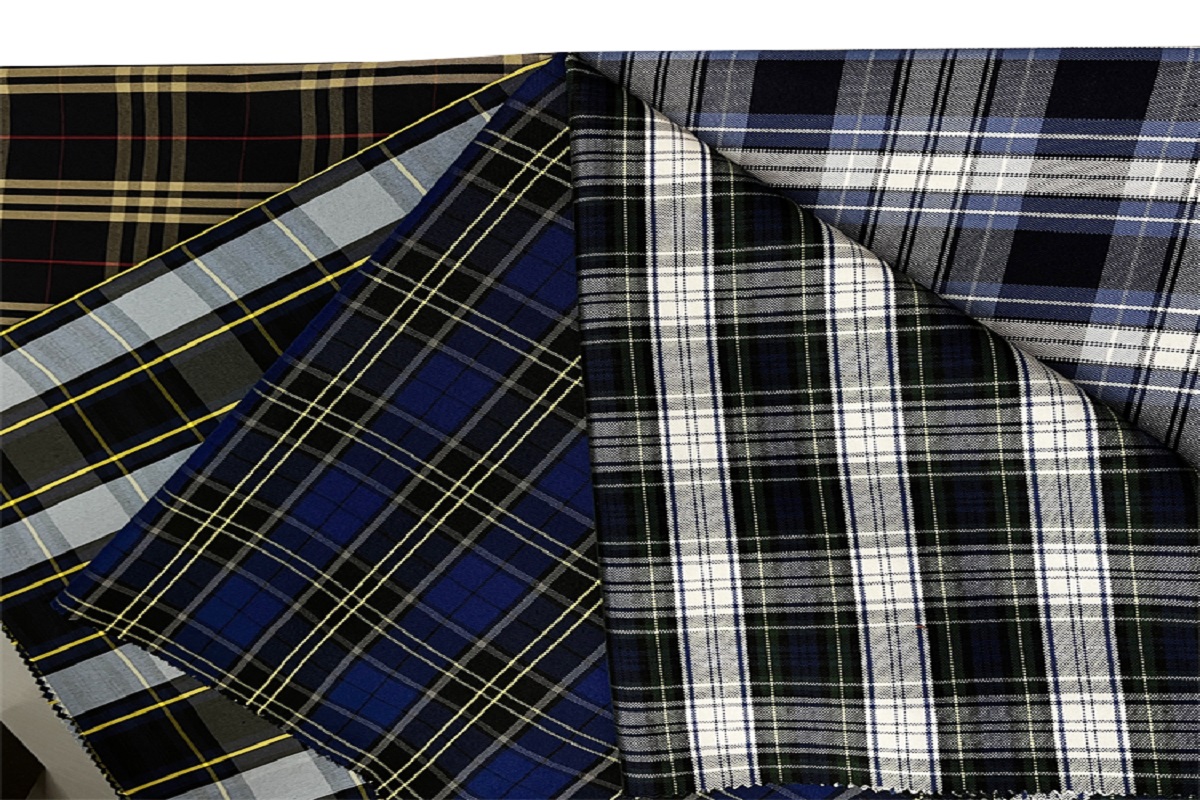
Our 100% Polyester yarn dyed plaid design for school fabric offers unparalleled durability and colorfastness for school uniforms. This 100% polyester USA plaid fabric provides ease of care, making it ideal for the rigorous demands of school life in 2025. Investing in this USA plaid fabric ensures long-lasting, high-quality uniform programs. This American school plaid fabric represents a smart decision for durable school fabric, making the 100% Polyester yarn dyed plaid design for school fabric a superior choice.
Key Takeaways
- 100% polyester yarn-dyed plaid is a top choice for school uniforms. It lasts a long time and keeps its color well.
- This fabric is easy to care for. It resists wrinkles and dries fast, saving time for families.
- Yarn-dyed plaid is better than printed plaid. Its colors are deep and do not fade easily, making uniforms look good longer.
Why 100% Polyester Yarn-Dyed Plaid is the Superior Choice for School Uniforms in 2025
Unmatched Durability and Longevity
100% polyester yarn-dyed plaid fabric offers exceptional durability, making it ideal for school uniforms. This material withstands the daily wear and tear students experience. For example, abrasion tests show it endures over 100,000 double rubs (ASTM D4157), demonstrating its robust nature. It also passes flammability standards like CAL 117-2013 and NFPA 260, ensuring safety. Lightfastness tests (AATCC 16.3) confirm its resistance to fading from light exposure for over 40 hours.
| Test Type | Standard | Result |
|---|---|---|
| Abrasion | ASTM D4157 | 100,000 double rubs Wyzenbeek |
| Flammability | CAL 117-2013 | Pass |
| Flammability | NFPA 260 | Pass |
| Lightfastness | AATCC 16.3 | 40+ hours |
Sustainable school uniforms, crafted from high-quality materials like 100% polyester, last longer. This extended lifespan means garments remain in good condition for years, allowing them to be passed down. This durability reduces the need for frequent replacements.
Exceptional Colorfastness
The yarn-dyed process ensures superior color retention for polyester plaid uniforms. This method embeds color deep within the fibers.
With yarn-dyed polyester construction, ensure vibrant, fade-resistant plaids that retain color integrity even after repeated washing.
This guarantees uniforms maintain their original vibrant appearance throughout the school year.
Wrinkle Resistance and Easy Care
Polyester’s inherent properties make uniforms highly wrinkle-resistant. This resilience helps garments maintain a neat appearance even after folding or extended wear. The easy-care nature of polyester significantly reduces the need for daily ironing. Uniforms often come directly from the dryer ready to wear. This saves time for families and ensures students always look sharp. Polyester also dries faster than fabrics with higher cotton content, which benefits quick laundry needs.
Cost-Effectiveness Over Time
Investing in 100% polyester uniforms provides significant long-term cost savings. Their durability and ease of maintenance reduce overall expenses for families and schools. Polyester resists shrinking, wrinkling, and fading. This ensures uniforms retain their appearance and integrity even after frequent washing. This resilience minimizes the need for frequent replacements.
- Durability: Polyester resists shrinking, wrinkling, and fading, ensuring uniforms look new for longer.
- Affordability: It is a cost-effective option compared to other sustainable alternatives.
- Ease of Maintenance: Polyester simplifies care by retaining its shape and color over time.
- Long-Term Savings: Durable materials like polyester reduce the need for frequent replacements, minimizing overall expenses.
Sustainability Considerations
The extended lifespan of 100% Polyester yarn dyed plaid design for school fabric contributes to sustainability efforts. Durable uniforms reduce waste by decreasing the frequency of garment disposal. High-quality materials and reinforced construction ensure garments remain in good condition for years. This approach supports environmental responsibility by lowering consumption and production demands.
Understanding Yarn-Dyed vs. Printed Plaid for School Uniform Quality
What is Yarn-Dyed Plaid?
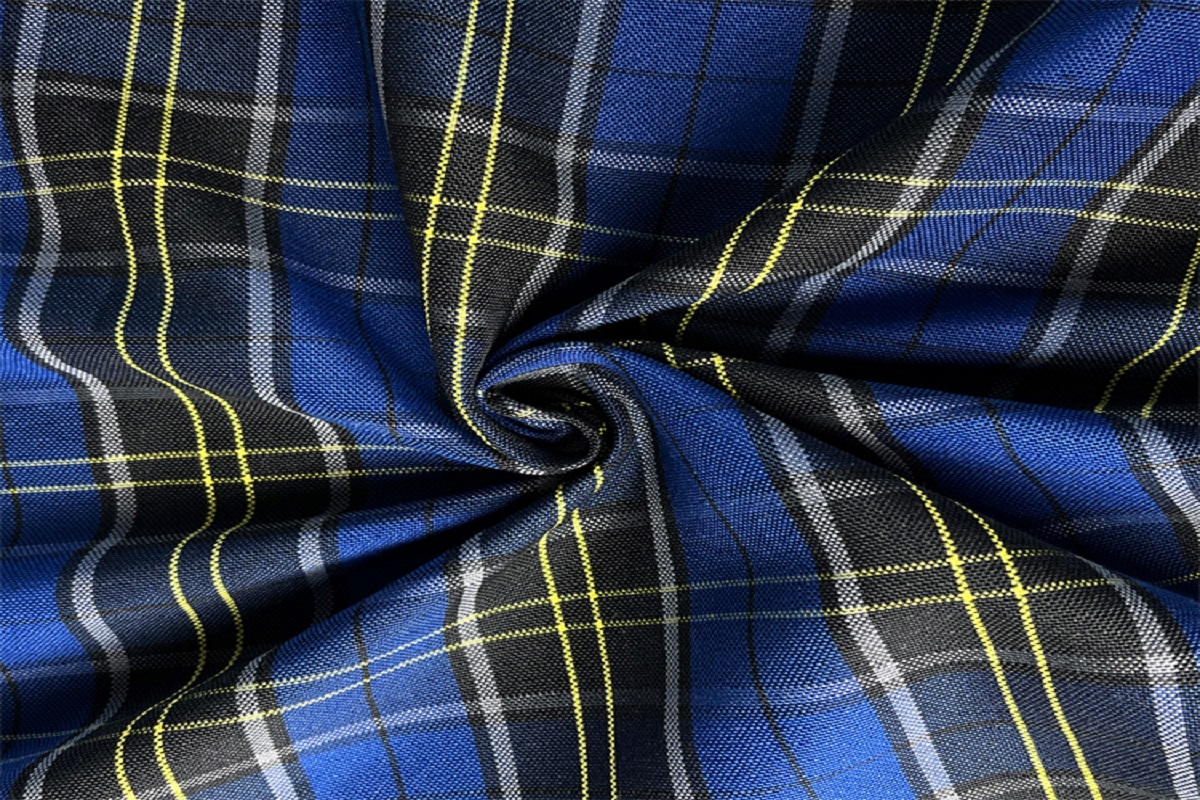
Yarn-dyed plaid fabric involves dyeing individual yarns before weaving them into a pattern. This process embeds color deeply within each fiber. The dye fully penetrates the yarns, making the color less susceptible to fading. This method creates sharp, well-defined patterns integral to the fabric’s structure. Such precision results in crisp color boundaries and often reversible patterns. This level of clarity surpasses what piece-dyeing or printing can achieve.
Why Yarn-Dyed is Crucial for Uniforms
Yarn-dyed fabric offers exceptional color fastness and vibrancy, which is crucial for school uniforms. The deep color penetration ensures uniforms maintain their original appearance through repeated washing and daily wear. This method guarantees vibrant, long-lasting colors that resist fading from friction or light exposure. For school uniforms, especially those made from 100% Polyester yarn dyed plaid design for school fabric, this means students consistently present a neat and uniform look. The distinct color distribution also allows for intricate plaid designs, reinforcing school identity.
Distinguishing Yarn-Dyed from Printed
Understanding the manufacturing differences between yarn-dyed and printed plaid is essential for assessing uniform quality. Yarn-dyed fabrics create patterns during the weaving process, making the design integral to the fabric itself. Printed fabrics, conversely, apply the design to the surface of an already woven fabric.
| Feature | Yarn-Dyed Plaid Fabrics | Printed Plaid Fabrics |
|---|---|---|
| Dyeing Stage | Yarns are dyed individually before weaving. | Design is applied to the surface of an already woven fabric. |
| Pattern Creation | Pattern is created during the weaving process. | Pattern is printed onto the fabric after weaving. |
| Design Integrity | Design is integral to the fabric, visible on both sides. | Design is typically only on the surface. |
| Color Durability | Color is less prone to fading. | Color may be more prone to fading over time. |
| Complexity/Cost | More complex manufacturing, often higher price. | Generally less complex and can be more cost-effective. |
Key Factors for Selecting 100% Polyester Yarn Dyed Plaid Design for School Fabric
Selecting the right fabric for school uniforms involves careful consideration of several key factors. These elements ensure the uniforms meet the demands of daily wear, maintain their appearance, and provide comfort for students.
Fabric Weight and GSM
Fabric weight significantly influences a uniform’s durability, texture, and overall performance. Manufacturers measure fabric weight in Grams per Square Meter (GSM) or ounces per square yard (oz/yd²). Higher GSM or oz values indicate a thicker, denser, and stronger fabric. Heavier fabrics generally offer greater longevity and resist wear more effectively, providing structure and strength to the garment. Conversely, lightweight fabrics feel softer, offer more breathability, and drape well, making them suitable for items requiring comfort and flexibility.
| Weight Category | GSM (oz/yd²) | Durability Impact | Drape Impact | Common Uses (Uniforms) |
|---|---|---|---|---|
| Lightweight | 100–180 (3–5) | Less durable | Soft, easy to drape | Shirts, linings |
| Medium weight | 180–270 (6–8) | Balanced strength | Balanced firmness, combines movement with body | Uniforms, pants |
| Heavyweight | 270+ (9+) | Tough and long-lasting | Provides strength and structure | Jackets, upholstery |
| Midweight | 170–340 (5–10) | Good for wear and tear | Balanced firmness | Pants, jackets, uniforms |
For school uniforms, a mid-weight fabric often provides the best balance. A mid-weight polyester/cotton blend, for example, offers the comfort and breathability of cotton with polyester’s added benefits, such as stain and wrinkle resistance and better shape retention. This makes it a popular choice for uniforms suitable for all seasons.
Weave Type
The weave type profoundly impacts a fabric’s strength, durability, and aesthetic appeal. Different weave structures create distinct patterns and properties. For instance, a checked weave creates the characteristic check patterns seen in tartans and plaids. Other specific plaid weaves include:
- Checquered weave: Creates distinct check patterns, common in tartans and plaids.
- Block check weave: Features blocks of check patterns using light and dark yarns.
- Diamond weave: A twill weave where right and left twills form a diamond pattern.
- Shepherds check: A twill weave with five or more light and dark warp and weft threads.
- Glenurquhart check: A twill weave using dark and light colored warp and weft yarns to achieve a checked effect.
- Dog’s tooth: A twill weave with four or more light and dark warp and weft threads.
Each weave type offers unique characteristics:
| Property | Weave Type Impact |
|---|---|
| Strength | Plain weave is generally strong and durable due to tight interlacing. Twill weaves are also strong and durable, often more so than plain weaves, with good drape. Satin weaves are less durable due to fewer interlacing points. |
| Durability | Plain weaves are highly durable and resistant to wear. Twill weaves are very durable and resist wrinkles and soiling well. Satin weaves are less durable and can be delicate. |
| Appearance | Plain weaves have a simple, uniform appearance. Twill weaves have a distinct diagonal rib pattern, offering visual texture. Satin weaves have a smooth, lustrous surface with a beautiful drape. |
| Drape | Plain weaves tend to be crisp and have less drape. Twill weaves have good drape and are more flexible than plain weaves. Satin weaves have excellent drape, flowing smoothly and elegantly. |
| Wrinkle Resistance | Plain weaves can wrinkle easily. Twill weaves are more wrinkle-resistant due to their diagonal structure. Satin weaves are prone to wrinkling. |
For school uniforms, twill weaves often prove advantageous due to their durability, wrinkle resistance, and good drape, making them a practical choice for active students.
Hand Feel and Comfort
The hand feel and comfort of a fabric are crucial for student acceptance and daily wear. Objective measures for assessing fabric hand feel and comfort derive from the physicomechanical properties of textiles. These properties align with the physical sensations a person experiences, as somatic senses are governed by receptors and the nervous system. The skin contains various receptors: mechanoreceptors detect pressure, thermoreceptors sense temperature, and nociceptors perceive pain. Mechanoreceptors activate upon touch, while nociceptors signal excessive irritation from textiles, and thermoreceptors respond to temperature changes. The quality and performance of fabrics directly link to their low-stress mechanical, surface, and dimensional properties. Measuring these properties instrumentally results in significantly smaller experimental errors compared to subjective assessments. Therefore, manufacturers can scientifically ensure the 100% Polyester yarn dyed plaid design for school fabric feels pleasant against the skin, preventing irritation and promoting comfort throughout the school day.
Pill Resistance
Pilling refers to the formation of small balls of fiber on the surface of a fabric, which can make uniforms look worn and old prematurely. High pill resistance is essential for maintaining a uniform’s neat appearance over time. Several standard tests evaluate a fabric’s propensity to pill:
- ASTM D3511/D3511M: This standard test method uses a Brush Pilling Tester to assess pilling resistance and other related surface changes. It is generally intended for heavy-duty fabrics like upholstery, automotive, luggage, and uniform materials due to its abrasive nature.
- Other related ASTM test methods for pilling resistance include D3512/D3512M, D3514/D3514M, and D4970/D4970M.
- ISO 12945.1: This international standard determines fabric propensity to surface pilling, fuzzing, or matting using the pilling box method. This method involves mounting a specimen on a polyurethane tube, placing it in a cork-lined wooden box, and tumbling it at a constant speed. Evaluators then visually assess pilling performance after a specified number of tumbles.
Choosing fabrics that pass these rigorous tests ensures uniforms retain a smooth, professional look for longer.
Shrinkage and Stretch
Shrinkage and stretch properties directly impact a uniform’s fit and longevity. Fabrics with excessive shrinkage can lead to ill-fitting garments after washing, requiring frequent replacements. For uniforms, including school uniforms, the accepted tolerance for shrinkage is 2% according to the ISO 5077:2012 standard. This low tolerance ensures uniforms maintain their intended size and shape.
Consider the significant improvement seen with different fabric compositions:
- Old Specification (100% Cotton): Averaged 5% shrinkage after 20 wash cycles, leading to fit issues and increased returns.
- New Specification (65/35 Poly-Cotton Twill): Showed a significant improvement with shrinkage dropping to 1.8% over the same test period, resulting in fewer complaints and longer garment lifespan.
This demonstrates the importance of selecting fabrics with minimal shrinkage.
| Market Segment | Fiber Type | Shrinkage Tolerance (%) |
|---|---|---|
| Uniform / Workwear | Poly-Cotton | ≤1.5–2% |
Polyester fabrics inherently offer excellent dimensional stability, meaning they resist shrinking and stretching, which contributes significantly to the uniform’s long-term wearability and consistent fit.
Compliance and Certifications
Compliance with industry standards and certifications ensures the safety, quality, and environmental responsibility of school uniform fabrics. Certifications like OEKO-TEX Standard 100 provide assurance that textiles are free from harmful substances.
OEKO-TEX Standard 100 has specific requirements:
- It forbids most biologically active/biocides and flame retardant substances, with exceptions for those on the OEKO-TEX® Active Chemical Products list.
- The criteria catalog considers all ways a substance can be absorbed (skin, mouth, breathing).
- Test criteria and limit values often exceed international standards and regulations.
- It ensures compliance with EU Reach Regulation (EC) No 1907/2006, EU regulation (EU) 2019/1021 on persistent organic pollutants (POP), CPSIA total lead requirements, and NFPA 1970 standard.
- It aligns with the Apparel and Footwear International RSL Management (AFIRM) Group restricted substance list, Zero Discharge of Hazardous Chemicals (ZDHC) MRSL, and other relevant legal regulations and stakeholder MRSL/RSLs.
This certification tests for over 1,000 harmful substances, ensuring the certified article is harmless to human health. Every thread, button, and accessory undergoes testing. Stricter human ecology requirements and laboratory tests apply to products with more intensive skin contact. The certification uses globally standardized test criteria and complies with international requirements and regulations. Limit values for harmful substances are reviewed at least once a year.
| Requirement Category | Details |
|---|---|
| Product Classes | |
| Product Class I (Baby and toddler items up to 36 months) | Most stringent requirements; pH range: 4.0 – 7.5; Examples: Baby clothing, rompers, bedding, toys. |
| Product Class II (Direct skin contact) | Strict requirements for prolonged skin contact; pH range: 4.0 – 7.5; Examples: Underwear, shirts, bed linen, workwear. |
| Product Class III (Limited/no skin contact) | Moderate requirements; pH range: 4.0 – 9.0; Examples: Jackets, coats, outerwear. |
| Product Class IV (Furnishing/decoration materials) | Basic requirements; pH range: 4.0 – 9.0; Examples: Curtains, tablecloths, upholstery. |
| Substances Tested (over 1,000) | |
| Legally regulated substances | Banned azo dyes, formaldehyde, heavy metals (lead, cadmium, mercury, chromium VI, nickel, etc.), pentachlorophenol, per- and polyfluorinated chemicals (PFAS). |
| Harmful but not yet regulated | Allergenic dyes, chlorinated benzenes and toluenes, phthalates, organotin compounds. |
| Precautionary measures | Pesticides, extractable heavy metals, colorfast requirements, volatile organic compounds (VOCs), odor assessment. |
Choosing fabrics with such certifications provides peace of mind, knowing the uniforms meet high safety and environmental standards.
Navigating Plaid Patterns and Color Schemes for School Uniforms
Traditional vs. Modern Plaid Designs
Schools choose plaid designs based on tradition or modern aesthetics. Classic combinations like navy and green or red and black remain popular. Modern trends include softer shades such as gray with blue or burgundy with white. These choices often align with school logos or mascots, building a strong identity. Pattern scale also plays a role. Large plaids create a bold, modern look. Small plaids offer a more traditional, neat, and formal appearance, especially in private schools. Regional preferences also influence plaid choices. Schools in the Northeast might prefer deep greens and blues, while Southern schools sometimes use lighter colors.
Color Matching and Consistency
Ensuring color consistency across uniform batches is paramount. Manufacturers must use consistent dye and application processes for every batch. Measuring dyes accurately guarantees batch-to-batch color uniformity. Maintaining consistency in textile types is also crucial. Different textiles require different dyeing processes. Therefore, consistent application across varied materials becomes challenging. Duplicating color application and measurement processes precisely across all manufacturing locations is essential. Techniques for color measurement and sample preparation must be repeatable, supported by consistent training procedures. Schools should specify colors using reference libraries like Pantone or RAL. This provides reproducible colors and spectral data. Measuring prototype materials helps identify and correct color variations early. Calibrating measurement instruments, such as spectrophotometers, daily ensures accurate results. For 100% Polyester yarn dyed plaid design for school fabric, this meticulous process ensures vibrant, consistent colors. Finally, assessing the final product’s color under standardized viewing conditions using light booths confirms consistency. This includes evaluating colors under different light sources to detect metamerism.
Customization Options
Schools have various options for customizing plaid fabrics. They can design a custom plaid uniform pattern exclusively for their institution. This involves selecting specific colors, patterns, and styles during the design process. Custom plaid can then apply to various uniform pieces, including skirts, vests, jumpers, ties, and bows. Schools can also choose from over 50 existing plaid uniform patterns. Matching school colors with these existing patterns is another common approach. Considering traditional versus modern styles helps schools select patterns versatile across multiple uniform pieces.
Maintenance and Care for 100% Polyester Plaid Uniforms
Washing and Drying Best Practices
Proper care significantly extends the life of 100% polyester plaid school uniform fabric. Use warm water (30°C-40°C) for washing. This temperature effectively removes dirt and oils without causing shrinkage or warping. Cold water also works well, especially for dark or brightly colored items, preventing dye bleeding and fading. Avoid hot water; it can weaken polyester fibers, cause wrinkles, and potentially lead to melting. Opt for a gentle, liquid laundry soap. This type of detergent dissolves easily and is less harsh on synthetic fibers. Avoid powdered detergents and bleach unless the care label specifies otherwise. For drying, tumble dry at a lower temperature. Air drying is the preferred method to prevent damage from high heat, maintaining the integrity of polyester fibers.
Stain Removal Tips
Address stains promptly on 100% polyester plaid school uniform fabric. Some stains respond well to soaking the uniform in fabric softener with warm water for about 10 minutes. Then, hang the uniform to dry without rinsing. Another effective method involves pre-soaking the uniform. This removes as much of the staining material as possible before a full wash. Remember, fusible tape repairs are not suitable for synthetic fabrics like polyester. Excessive heat from such repairs can cause these fabrics to melt, shine, or pucker.
Extending Uniform Lifespan
Maximize the longevity of 100% polyester plaid school uniform fabric with consistent care. For small rips and tears, use a similarly colored thread and needle. Turn the uniform inside out to sew up the damage. This technique helps hide the stitching, maintaining a neat appearance. Following recommended washing and drying practices also contributes significantly to the uniform’s lifespan. These simple steps ensure uniforms remain presentable and durable throughout the school year.
100% polyester plaid school uniform fabric offers a strategic advantage for institutions in 2025. This material provides unmatched durability, aesthetic appeal, and ease of maintenance. Schools considering these factors ensure high-quality, long-lasting, and comfortable uniforms for their students. This choice supports a successful uniform program.
FAQ
Why does 100% polyester yarn-dyed plaid excel for school uniforms?
This fabric offers unmatched durability, exceptional colorfastness, and wrinkle resistance. It provides long-lasting, high-quality uniforms, making it a smart investment for schools.
How does yarn-dyed plaid differ from printed plaid?
Yarn-dyed plaid weaves pre-dyed threads, embedding color deeply. Printed plaid applies color to the fabric surface. Yarn-dyed offers superior color durability and pattern integrity.
What are the best practices for caring for 100% polyester plaid school uniform fabric?
Wash uniforms in warm water with gentle detergent. Tumble dry on low or air dry. Address stains promptly. These steps extend the uniform’s lifespan and appearance.
Post time: Dec-06-2025