
Over the past decade, the line between performance gear and everyday apparel has almost disappeared. What used to be reserved for hiking trails and mountain summits is now seen on city streets, in cafés, and even in creative office spaces. This cultural and commercial shift—often referred to as Gorpcore or “Urban Outdoor”—has redefined how brands approach fabric development.
Consumers no longer want clothing that looks technical but feels stiff and noisy. They want garments that perform quietly. They want wind resistance without bulk, water protection without plastic shine, and stretch without obvious “sportswear” aesthetics. This shift has given rise to the “Light Outdoor” category—a high-growth, high-margin segment that bridges functionality and fashion seamlessly.
For wholesalers and apparel brands, this category presents an enormous opportunity. But unlike traditional fashion fabrics, light outdoor textiles require a deeper understanding of performance science, finishing technologies, and fiber engineering. Selling them effectively means educating buyers—not just about style, but about function.
Why “Light Outdoor” Is More Than a Trend
The growth of remote work, cycling commutes, short weekend getaways, and athleisure lifestyles has changed wardrobe priorities. Today’s consumer might:
-
Bike to work in the morning
-
Attend meetings during the day
-
Meet friends outdoors in the evening
They want one jacket to do all of it.
This demand has created a fabric standard that balances:
-
Lightweight comfort
-
Weather adaptability
-
Minimalist aesthetics
-
Durability for urban environments
Unlike heavy mountaineering fabrics, light outdoor materials are designed for movement, versatility, and daily wearability. They must feel refined enough for city life while still offering protection from wind and light rain.
Water Repellency vs. Waterproofing: Understanding the Difference
One of the most common misunderstandings in the market is confusing DWR (Durable Water Repellent) with full waterproof construction.
Waterproof Fabrics
Waterproof fabrics typically use a laminate or membrane layer (such as PU or PTFE films) bonded to the textile. These are ideal for heavy rain or extreme weather conditions. However, they come with trade-offs:
-
Reduced breathability
-
Increased stiffness
-
Higher weight
-
Potential noise during movement
For urban commuters, these features can feel excessive and uncomfortable.
DWR: The Ideal Solution for Light Outdoor
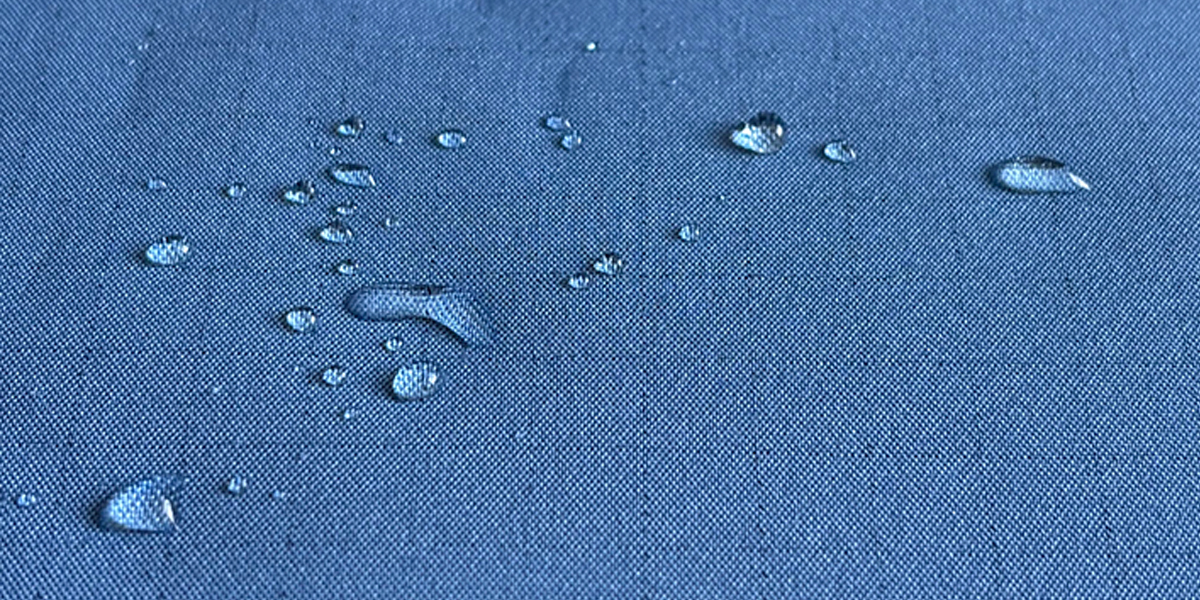
Light outdoor fabrics often rely on eco-friendly DWR coatings instead of full waterproof laminates. DWR works by lowering the surface energy of the fabric, causing water droplets to bead up and roll off rather than soak in.
The benefits include:
-
Maintained softness
-
Better breathability
-
Lightweight hand feel
-
Silent movement
-
More natural drape
For spring windbreakers, commuter jackets, and lightweight parkas, DWR offers exactly the right level of protection—shielding the wearer from sudden showers without turning the garment into a rain shell.
For brands, the explanation becomes simple and effective:
“It protects you from light rain without trapping heat inside.”
That clarity sells.
The Science of Moisture Permeability
In the light outdoor category, breathability is king.
True comfort isn’t just about blocking rain—it’s about managing internal moisture. When a wearer moves, body heat generates sweat vapor. If that vapor cannot escape, the inside of the jacket becomes humid and uncomfortable.
Our light outdoor fabrics use specialized weaving structures with:
-
High-density Nylon
-
Performance Polyester
-
Controlled Spandex blends
These constructions create microscopic pathways that allow water vapor molecules to pass through while still preventing wind penetration.
In practical terms:
-
Wind stays out.
-
Heat escapes.
-
The wearer stays dry and comfortable.
This balance is critical for transitional weather and active commuting. A commuter jacket must perform during a bike ride, yet remain polished enough for a coffee meeting afterward.
The technical explanation may involve terms like MVTR (Moisture Vapor Transmission Rate), but for retail communication, the messaging should remain simple:
“Blocks the wind. Releases the heat.”
That statement captures the performance story without overwhelming the customer.
Wind Resistance Without Bulk
Wind can be just as uncomfortable as rain. Even a mild breeze can quickly lower perceived body temperature.
Light outdoor fabrics achieve wind resistance through:
-
Tight weaving structures
-
High filament yarn counts
-
Compact finishing processes
Unlike traditional outdoor shells, this wind resistance does not rely on thick coatings or laminates. Instead, it is engineered directly into the fabric structure.
The result?
-
Lightweight garments
-
Improved packability
-
Smooth surface aesthetics
-
Urban-friendly silhouettes
For brands targeting minimalist fashion consumers, this is a major advantage. The garment performs technically but looks clean and modern.
Mechanical Stretch vs. Spandex Stretch
Movement is essential in daily life. Whether reaching for a subway handle or cycling uphill, garments must move naturally with the body.
There are two primary stretch solutions in light outdoor fabrics:
1. Mechanical Stretch
Mechanical stretch is created through fabric construction rather than elastic fibers. Special weaving techniques allow the fabric to expand slightly and recover naturally.
Advantages:
-
Better shape retention over time
-
Improved durability
-
Reduced fiber fatigue
-
Often better recyclability
2. Low-Percentage Spandex Blends
Blending 2–8% Spandex into Nylon or Polyester enhances comfort and flexibility.
Advantages:
-
Greater elasticity
-
Softer wearing experience
-
Enhanced shoulder mobility
-
Improved fit adaptability
For commuter jackets and lightweight trousers, this controlled stretch prevents restriction across the shoulders, elbows, and back—areas where tension naturally builds.
Durability in Urban Environments
Lightweight does not mean fragile.
Urban life presents constant abrasion challenges:
-
Backpack straps
-
Subway seats
-
Bicycle friction
-
Concrete surfaces
Our fabrics are engineered with high tear strength and abrasion resistance, ensuring longevity even under daily wear conditions.
High tenacity yarns and optimized weaving density contribute to:
-
Reduced snagging
-
Increased resistance to tearing
-
Longer garment lifespan
From a brand perspective, durability enhances customer satisfaction and reduces return rates—making this a smart commercial choice.
The Aesthetic Factor: Performance Without the “Outdoor Look”
One key reason light outdoor fabrics command higher margins is aesthetic versatility.
Unlike traditional technical gear, modern consumers demand:
-
Matte surfaces
-
Subtle texture
-
Soft hand feel
-
Tailored silhouettes
Our fabrics avoid the “crinkly tent” sound and glossy finish associated with older outdoor materials. Instead, they deliver a refined surface suitable for:
-
Cropped urban jackets
-
Minimalist trench coats
-
Lightweight utility shirts
-
Fashion-forward windbreakers
This fusion of form and function is what defines the category.
Sustainability Considerations
Today’s brands cannot ignore environmental responsibility.
Eco-friendly DWR solutions avoid harmful PFC chemicals while still delivering effective water repellency. Additionally, mechanical stretch constructions may reduce reliance on high-percentage elastane, improving recyclability.
Polyester and Nylon options can also be produced using recycled yarn sources, further aligning with sustainability goals.
For wholesalers supplying European and North American markets, this positioning significantly strengthens product competitiveness.
Merchandising and Sales Strategy
Light outdoor fabrics require strategic storytelling.
Instead of selling fabric by composition alone, focus on:
-
Use scenario storytelling (commuting, travel, urban weekends)
-
Performance simplification (“windproof but breathable”)
-
Comfort positioning (“soft, silent, flexible”)
-
Seasonal adaptability (spring/autumn transitional wear)
Retail buyers respond strongly to cross-functional products that reduce SKU complexity. One jacket that performs across multiple environments is easier to stock—and easier to sell.
Key Applications
Light outdoor fabrics are ideal for:
-
Commuter jackets
-
Lightweight windbreakers
-
Urban trench coats
-
Utility overshirts
-
Travel trousers
-
Lightweight athleisure blazers
This versatility allows brands to extend the same fabric story across multiple silhouettes.
Why This Category Commands Higher Margins
Light outdoor fabrics sit between fashion and technical apparel. That intersection creates premium value.
Consumers are willing to pay more for:
-
Subtle performance
-
Everyday versatility
-
Comfort-driven engineering
-
Clean design
For wholesalers, the category offers:
-
Strong differentiation
-
Repeat seasonal demand
-
Broad demographic appeal
-
Cross-market adaptability
It is not just a trend—it reflects a long-term lifestyle shift.
Conclusion: The Future Is Functional Minimalism
The “Light Outdoor” revolution represents a permanent shift in consumer behavior. Function is no longer optional—but neither is style.
By combining:
-
Eco-friendly water repellency
-
Moisture permeability
-
Wind resistance
-
Mechanical or Spandex stretch
-
Urban durability
-
Refined aesthetics
Brands can create garments that seamlessly transition from street to commute to weekend escape.
For wholesalers and manufacturers, mastering the science behind these fabrics—and communicating it simply—is the key to capturing this fast-growing market.
Light outdoor isn’t about extreme adventure.
It’s about everyday performance—engineered quietly, worn confidently, and styled effortlessly.
Post time: Feb-25-2026