
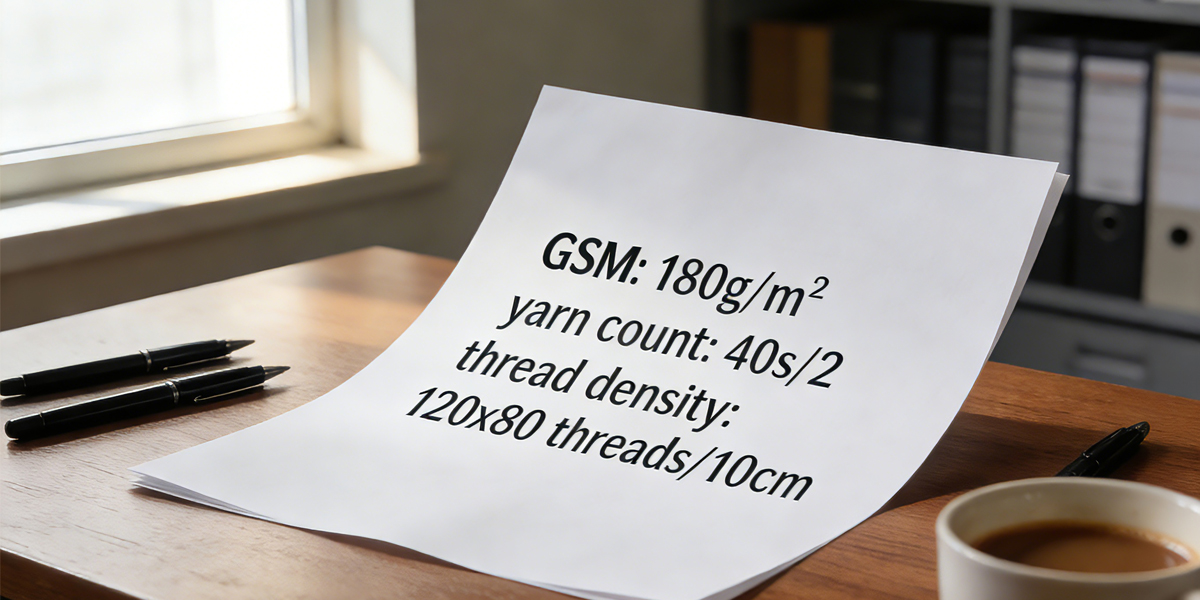
For a mid-sized fabric wholesaler or a growing apparel brand, the difference between a profitable season and a warehouse full of deadstock often comes down to one critical skill: understanding the fabric specification sheet.
Many buyers still rely heavily on hand-feel. They rub the fabric, stretch it slightly, hold it against the light, and make a decision. While experience matters, hand-feel is subjective. Technical data is objective. In global B2B sourcing—especially for uniforms, medical garments, workwear, and structured apparel—data-driven buying separates professionals from gamblers.
In this guide, we’ll break down how to read a fabric specification sheet like an expert, covering GSM, yarn count, thread density, construction, colorfastness, Delta E (ΔE), shrinkage, and tensile strength—so you can make smarter sourcing decisions, reduce risk, and protect your brand reputation.
Why Fabric Specification Sheets Matter in B2B Sourcing
A fabric spec sheet is more than a technical form. It is:
-
A quality contract between buyer and supplier
-
A cost-control blueprint
-
A risk management tool
-
A foundation for consistent repeat orders
Without properly reviewing specifications, wholesalers risk:
-
Inconsistent garment weights
-
Color mismatch across production batches
-
Shrinkage claims
-
Seam slippage issues
-
Excessive return rates
In competitive markets such as medical wear, hospitality uniforms, and corporate apparel, small technical inconsistencies can destroy customer trust.
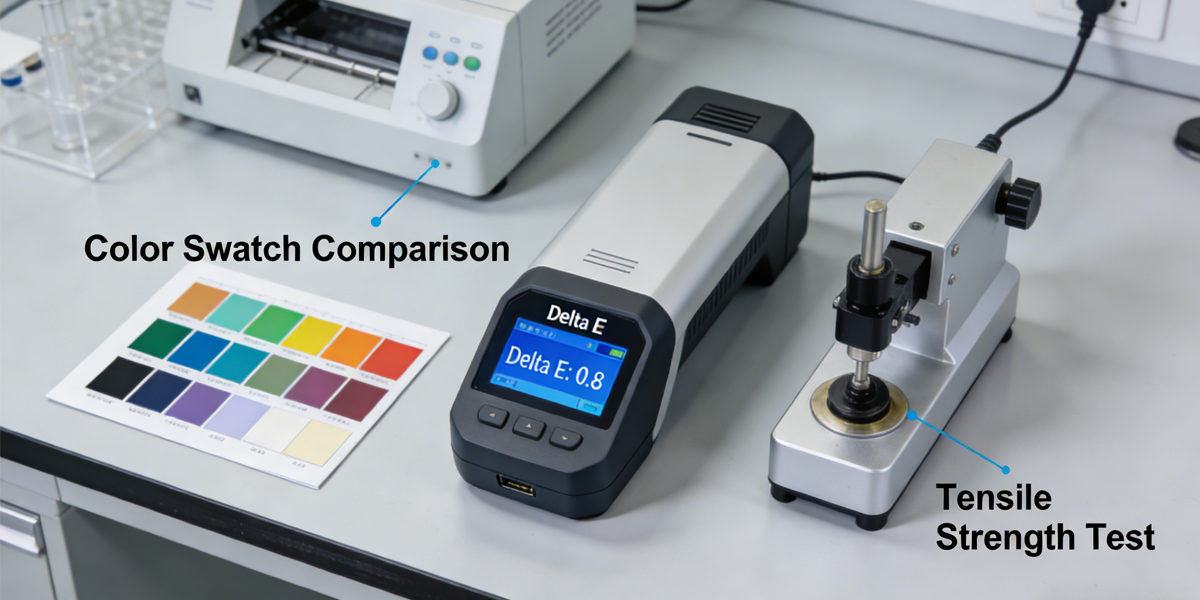
1. GSM (Grams per Square Meter): The Weight That Drives Everything
GSM is one of the most important metrics on any fabric specification sheet. It measures the weight of fabric per square meter and directly affects:
-
Garment structure
-
Breathability
-
Durability
-
Drape
-
Cost per meter
-
Shipping cost
Common Misunderstanding: Higher GSM = Better Quality
This is incorrect.
Higher GSM does not automatically mean better fabric. It means heavier fabric. The right GSM depends entirely on the end use.
Example: Medical Scrub Fabrics
For professional medical garments:
-
170–180 GSM is often the sweet spot
-
Below 150 GSM: risk of transparency and poor durability
-
Above 200 GSM: heavy, hot, and uncomfortable for long shifts
In clinical environments, breathability and comfort are just as important as durability. A fabric that is too heavy may pass quality tests but fail in real-world performance.
Cost Impact of GSM
GSM directly determines raw fiber consumption. Whether the fabric is polyester, cotton, rayon, or a blend, higher GSM means:
-
More yarn used
-
Higher raw material cost
-
Increased shipping weight
-
Higher garment production cost
Wholesalers should always calculate yield per roll:
How many garments can be produced from one roll based on GSM and usable width?
Even a 5–8 GSM deviation across a 1,000-meter order can result in:
-
Weight inconsistencies
-
Packaging changes
-
Shipping cost fluctuations
-
Customer complaints about garment feel
Professional buyers always request GSM tolerance ranges on bulk orders.
2. Usable Width: The Hidden Profit Factor
On spec sheets, you’ll often see:
-
Fabric Width: 57″/58″
-
Usable Width: 56″
The difference accounts for selvage and potential distortion.
A small reduction in usable width can significantly reduce garment yield. For high-volume orders, this directly affects profit margins.
When calculating sourcing costs, always use usable width, not nominal width.
3. Yarn Count vs. Thread Count: Understanding Construction
These two terms are often confused, but they describe different things.
Yarn Count (e.g., 45s, 60s, 80/2)
Yarn count refers to the fineness of the yarn.
-
Higher number = finer yarn
-
Lower number = thicker yarn
Applications by Yarn Count
Premium Shirting
-
60s or 80s yarn count
-
Smooth surface
-
Softer hand feel
-
Higher perceived value
Industrial Workwear
-
21s or 32s yarn count
-
Stronger tensile strength
-
Better abrasion resistance
-
Suitable for construction or factory environments
If your brand positions itself in the premium market, yarn count matters for customer perception. If you’re supplying uniforms for heavy-duty industries, strength matters more than softness.
Thread Count / Fabric Construction (e.g., 133×72)
This number refers to how many warp and weft yarns are woven into one square inch.
-
First number = warp density
-
Second number = weft density
Higher construction often means:
-
Tighter weave
-
Better durability
-
Reduced seam slippage
-
Less shrinkage
However, excessively high density may reduce breathability.
For uniform and workwear fabrics, balanced construction is critical. A poorly constructed fabric may pass lab tests but fail under real tension at seam lines.
4. Seam Slippage and Tensile Strength
Seam slippage occurs when fabric pulls apart along stitch lines under stress.
This is common in:
-
Fitted uniforms
-
Stretch workwear
-
Medical scrubs
-
Hospitality garments
Spec sheets may include:
-
Tensile Strength (Warp/Weft)
-
Tear Strength
-
Seam Slippage Test Results
If this data is missing, request it.
For professional uniforms, tensile strength and seam performance are non-negotiable.
5. Lab Dip Approvals and Delta E (ΔE): Mastering Color Consistency
Color inconsistency is one of the biggest risks in textile sourcing.
Imagine ordering:
-
5,000 meters of Navy Blue
-
Reordering 5,000 meters three months later
If the shades differ, your brand credibility suffers.
What Is Delta E (ΔE)?
Delta E (ΔE) is a mathematical measurement of color difference.
-
ΔE < 1.0 → Invisible to the human eye
-
ΔE 1.0–2.0 → Slight difference
-
ΔE > 3.0 → Clearly visible
Professional dye houses aim for ΔE under 1.0–1.5 for uniform fabrics.
Always clarify acceptable ΔE tolerance before production.
Lab Dip Process
Before bulk dyeing:
-
Supplier creates lab dip samples
-
Buyer approves color
-
Production follows approved standard
Never skip lab dip approval.
It is your protection against large-scale color disputes.
6. Colorfastness Ratings: Protecting Your Brand Reputation
Spec sheets typically list colorfastness grades from 1 to 5:
-
1 = Poor
-
5 = Excellent
For professional garments, you should require:
-
Colorfastness to Washing: 4–5
-
Colorfastness to Rubbing (Crocking): 4–5
-
Colorfastness to Perspiration: 4–5
-
Colorfastness to Light: 4 minimum
Low colorfastness leads to:
-
Fading after few washes
-
Dye bleeding
-
Customer complaints
-
Retail returns
If colorfastness data is missing, that’s a red flag.
7. Shrinkage Control: The Silent Cost Risk
Shrinkage is often overlooked in sourcing.
Spec sheets usually include:
-
Warp shrinkage %
-
Weft shrinkage %
For woven uniform fabrics, acceptable shrinkage is typically:
-
Within 3%
Excessive shrinkage leads to:
-
Size inconsistency
-
Fit complaints
-
Increased alteration cost
Pre-shrunk or heat-set fabrics reduce this risk.
Always confirm whether the fabric has undergone stabilization treatment.
8. Fiber Composition: Performance Beyond Labels
Spec sheets list fiber composition, such as:
-
100% Polyester
-
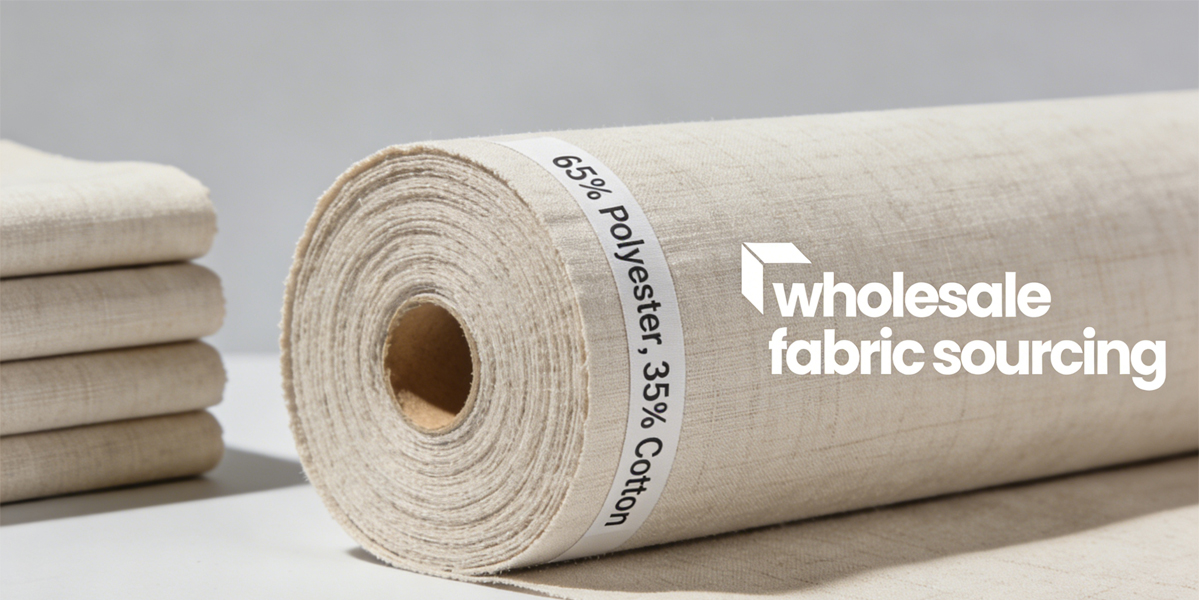
65% Polyester / 35% Cotton
-
T/R/SP 78/16/6
Fiber content determines:
-
Breathability
-
Wrinkle resistance
-
Stretch recovery
-
Durability
-
Moisture management
For example:
-
Polyester improves durability and color retention
-
Cotton improves comfort
-
Spandex provides stretch
-
Rayon improves softness and drape
Understanding composition helps you align product performance with market positioning.
9. Finishing Treatments: Value-Added Performance
Modern spec sheets often include finishing treatments such as:
-
Anti-pilling
-
Anti-static
-
Water-repellent
-
Wrinkle-resistant
-
Antimicrobial
-
Soil-release
These treatments can significantly increase product value and justify premium pricing.
However, always confirm:
-
Test reports
-
Wash durability of treatment
-
Certification (if applicable)
10. Tolerance Levels: The Professional Buyer’s Checklist
Every professional wholesaler should confirm tolerances for:
-
GSM (±5%)
-
Width
-
Color ΔE
-
Shrinkage
-
Composition
Clear tolerances prevent disputes and protect both parties.
Data-Driven Sourcing Wins in the Long Term
Relying on hand-feel may work for small orders.
Scaling a brand requires:
-
Technical literacy
-
Data analysis
-
Risk management
-
Structured supplier communication
A fabric specification sheet is not just paperwork. It is your strategic tool for:
-
Reducing deadstock
-
Preventing quality claims
-
Maintaining brand consistency
-
Improving profit margins
In global textile sourcing, professionalism is measured by how well you understand the data behind the fabric.
The buyers who master specification sheets are the ones who build long-term, profitable supply chains.
And in today’s competitive apparel market, that knowledge is no longer optional—it’s essential.
Post time: Feb-28-2026