
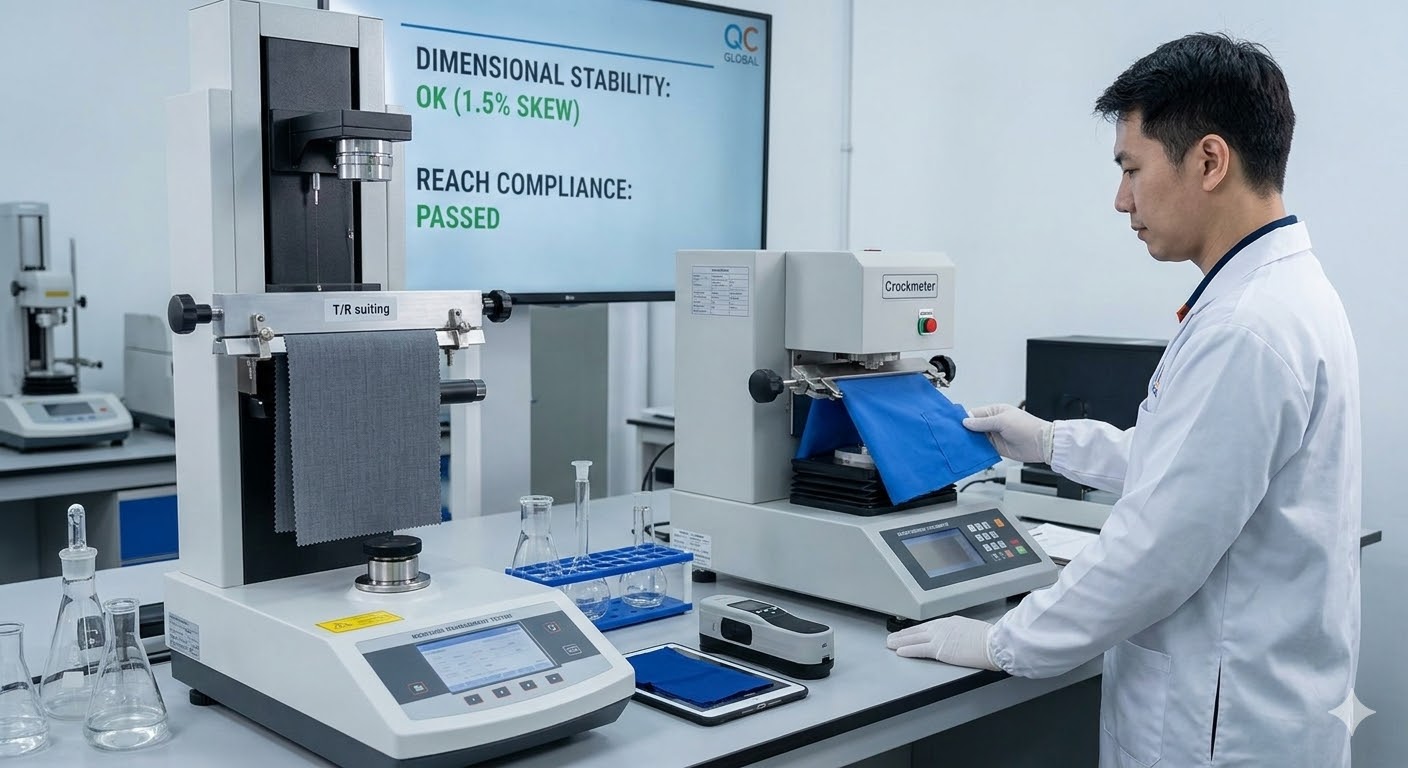
For medium-sized fabric wholesalers and global garment brands, Textile Quality Control is the thin line between a successful shipment and a devastating financial loss. In the volatile global supply chain of 2026, a single batch of sub-standard material can trigger a domino effect: production delays, rejected retail shipments, and ultimately, a tarnished brand reputation that takes years to rebuild.
While most buyers passively rely on the factory’s internal report, true market leaders understand that the nuances of technical testing are where the real profit margins are protected. This comprehensive guide breaks down the critical steps every wholesaler must demand before the fabric leaves the mill, ensuring your B2B Fabric Sourcing strategy remains foolproof.
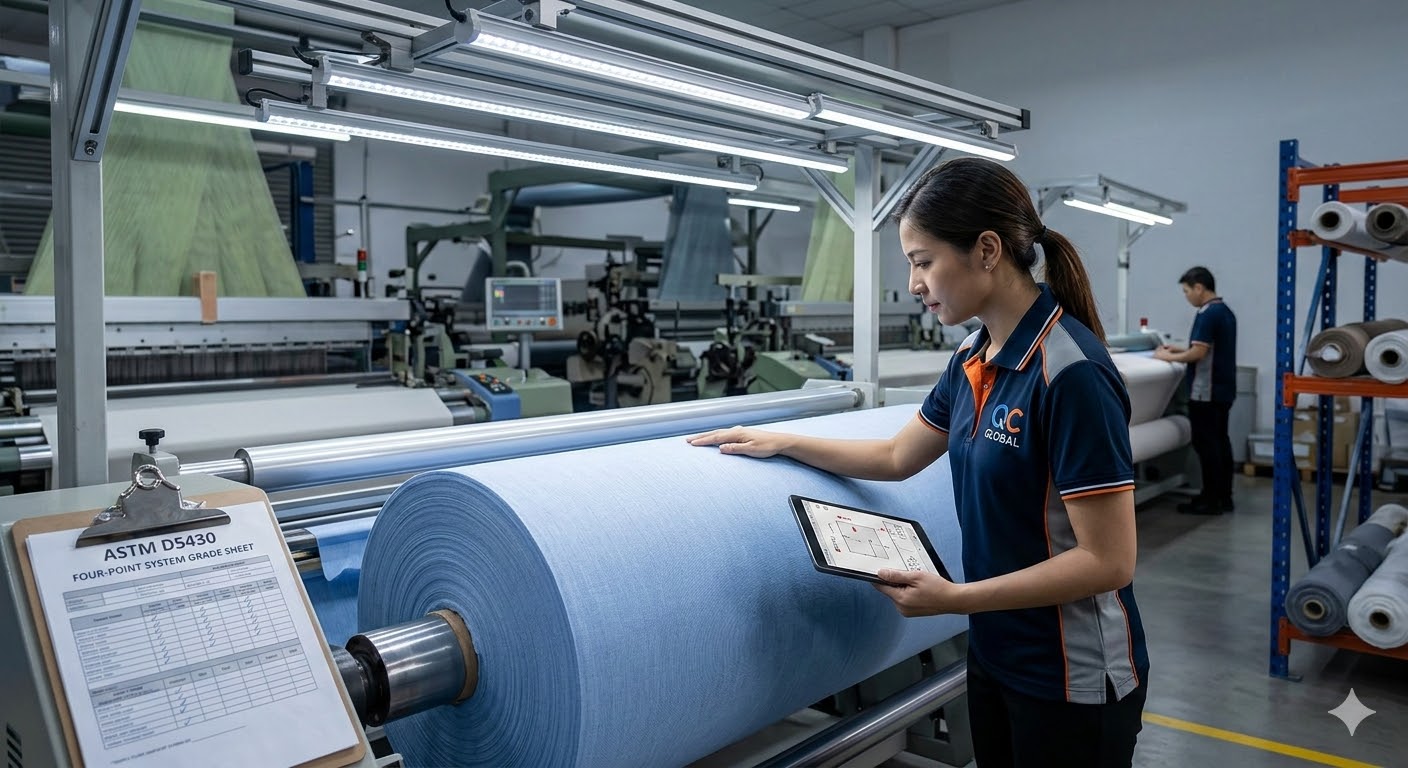
1. Why “The Four-Point System” is the Industry Gold Standard
In the world of high-volume wholesale, you need a language that both the mill and the garment factory understand. Most professional fabric manufacturers use the ASTM D5430 Four-Point System Guide to grade fabric rolls objectively. But as a wholesaler, simply knowing the name isn’t enough; you must be able to audit the results.
How the System Protects Your Margin
The Four-Point System assigns penalty points to defects based on their length and severity. The logic is simple: the more points per 100 square yards, the lower the quality.
-
1 Point: Defects up to 3 inches.
-
2 Points: Defects between 3 and 6 inches.
-
3 Points: Defects between 6 and 9 inches.
-
4 Points: Defects over 9 inches or any hole.
A “Grade A” fabric roll typically shouldn’t exceed a specific point threshold—usually 40 points per 100 square yards. By educating your clients on this Fabric Inspection Standard, you position yourself as a transparent, data-driven partner rather than just a middleman.
Identifying Common “Profit Killers”
During a physical inspection, your team or third-party inspectors should look for these common defects:
-
Slubs and Knots: Often caused by poor yarn quality.
-
Oil Stains: Usually a sign of poorly maintained machinery at the weaving stage.
-
Shading: This is perhaps the most dangerous defect. Color variation from one side of the roll to the other (side-to-side) or from the beginning to the end (end-to-end) can render an entire shipment useless for large-scale garment cutting.
2. Dimensional Stability: The Critical “Pre-Shrinkage” and “Skew” Tests
One of the most frequent complaints in the uniform and suiting industry is shaping instability. If a fabric has high “skew” (where the weft threads are not perfectly perpendicular to the warp), the finished garments—such as professional trousers or structured jackets—will twist or “torque” after the very first wash.
The Science of Skew and Heat-Setting
This is especially critical for TR suiting (Tetron Rayon) and CVC shirt fabrics. When fabric is processed under high tension without proper “Heat-Setting,” the fibers remain stressed. Once the end consumer washes the garment, the tension is released, leading to the dreaded “twisting effect.”
We recommend that wholesalers request a formal Dimensional Stability Report. This test simulates real-world usage by measuring how much the fabric shrinks or expands after three cycles of industrial-grade washing.
Acceptable Thresholds for Professional Gear
For professional uniforms and corporate wear, a shrinkage rate exceeding 2% is a major red flag. High-quality mills use Sanforization and specialized stenter frames to ensure the fabric is dimensionally stable. By verifying these technical specs during Textile Quality Control, you ensure that the garment factory can maximize their cutting efficiency with minimal waste, directly impacting the final Cost of Goods Sold (COGS).
3. Chemical Safety and Compliance: Beyond the Surface
In 2026, surface beauty and hand-feel are no longer sufficient to close a deal with a global retailer. Modern B2B Fabric Sourcing is now inextricably linked to chemical transparency and environmental ethics. Global brands are under the microscope of strict regulations like REACH (Europe), Prop 65 (USA), and the increasingly stringent UKCA standards.
The Hidden Risks in Textile Dyeing
Your QC checklist must include laboratory testing for:
-
pH Levels: Fabric that is too acidic or alkaline can cause skin irritation, a liability nightmare for workwear brands.
-
Formaldehyde: Often used for crease-resistance, but a known carcinogen that must be strictly limited.
-
Banned Azo Dyes: These can release harmful aromatic amines. While cheaper, they are illegal in most major markets.
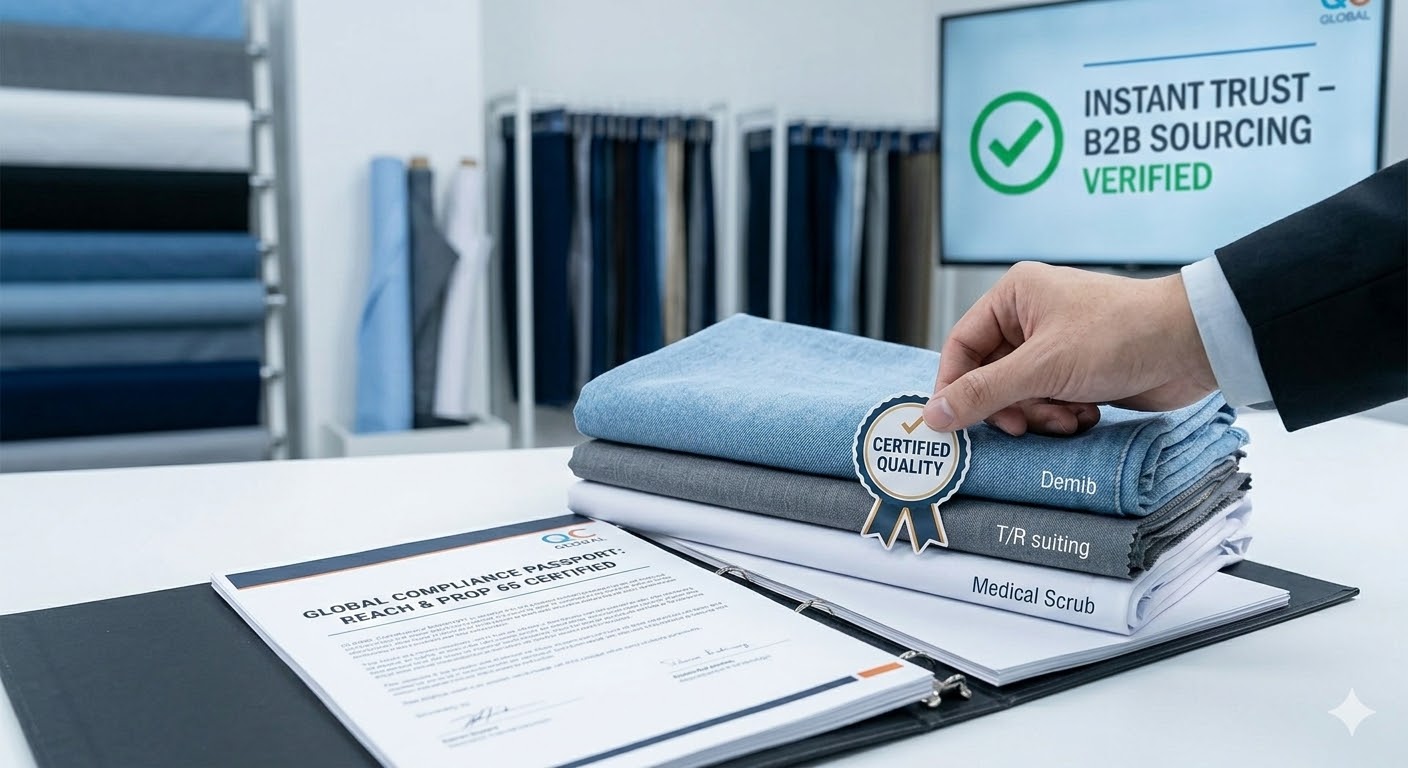
For specialized sectors like medical scrubs and nurse uniforms, these tests are not optional—they are vital. Because the fabric is in direct contact with the skin for 12-hour shifts, providing these certificates upfront builds “Instant Trust” with corporate procurement officers.
The Rise of Sustainable Fabric Testing for Global Brands
As we move further into 2026, “sustainability” has shifted from a marketing buzzword to a legal requirement. Sustainable Fabric Testing for Global Brands now includes GRS (Global Recycled Standard) verification and testing for “Forever Chemicals” (PFAS). Being able to provide a digital “Product Passport” that proves the chemical safety of your textiles will set your wholesale business apart from competitors who only compete on price.
4. Colorfastness: Ensuring Longevity in High-Stress Environments
A fabric that looks vibrant in the showroom but fades after two washes is a failure of Fabric Inspection Standard protocols. For B2B wholesalers catering to the hospitality or medical sectors, colorfastness is king.
Testing for Real-World Scenarios
A robust QC process includes:
-
Colorfastness to Washing: Ensuring dyes don’t bleed into other garments.
-
Colorfastness to Light: Essential for outdoor uniforms or curtains.
-
Colorfastness to Crocking: Testing how much color transfers when the fabric is rubbed against another surface (dry and wet).
Using a Greyscale Rating (1-5), wholesalers should demand a minimum rating of 4. Anything lower suggests that the dye-fixing process was rushed, a common shortcut in high-pressure manufacturing environments.
5. Conclusion: Building a “Quality-First” Legacy
Mastering Textile Quality Control is an investment, not an expense. By implementing the ASTM D5430 Four-Point System Guide, enforcing strict dimensional stability tests, and ensuring full chemical compliance, you transform your business from a mere supplier into a strategic consultant.
In the competitive landscape of B2B Fabric Sourcing, the wholesalers who survive and thrive are those who can provide documented proof of quality. This creates a “Moat” around your business, protecting you from price wars and ensuring long-term loyalty from global garment brands.
As you look toward future-proofing your supply chain, remember that Sustainable Fabric Testing for Global Brands is the next frontier. Start integrating these standards today to ensure your shipments are always “Grade A,” every time.
Post time: Mar-06-2026