
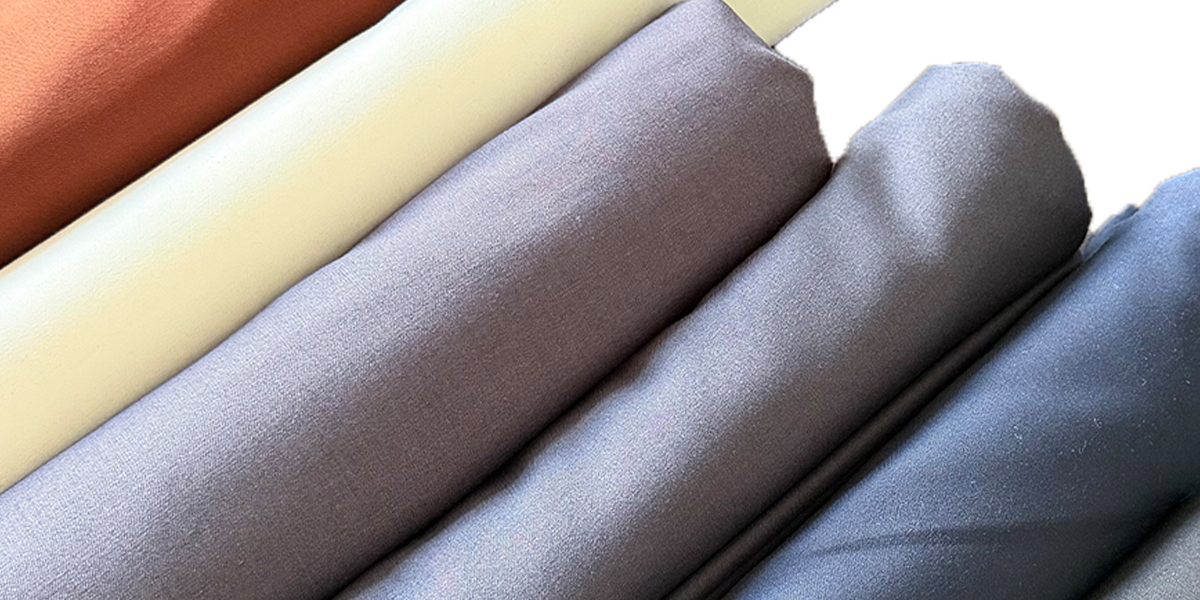
When sourcing premium worsted wool for tailored menswear, corporate uniforms, and professional apparel, fashion designers and procurement teams frequently encounter classifications like Super 100s, Super 120s, Super 150s, or even Super 180s.
In the international textile industry, these “Super” designations serve as a standardized grading system for fine wool fibers. However, one of the most common misconceptions among retail consumers—and even entry-level procurement specialists—is that a higher “Super” number automatically guarantees a “better” or more superior fabric for every scenario.
For garment manufacturers, private-label brands, and bespoke tailoring houses, choosing the correct Super count requires a precise balance between tactile luxury, structural performance, garment longevity, and cost efficiency.
In this comprehensive technical guide, YunAi Textiles demystifies what Super counts actually measure, analyzes the physical trade-offs of fiber fineness, and provides an actionable selection framework to help you choose the perfect worsted wool grade for your next collection.
Demystified: What Does the “Super” Rating Actually Mean?
The “Super” labeling system is strictly regulated by the International Wool Textile Organisation (IWTO). Contrary to popular belief, the Super designation does not measure yarn count, thread count, or weave density. Instead, it measures one specific physical attribute: the maximum average fiber diameter (micron) of the raw wool used in the yarn.
A micron ($\mu m$) is one-millionth of a meter. To put this in perspective, a human hair typically ranges between 50 to 100 microns. The finer the wool fiber, the lower its micron measurement, and the higher its designated “Super” count.
Here is the official IWTO breakdown for common worsted wool grades:
-
Super 100s: Fiber diameter $\le$ 18.75 microns
-
Super 110s: Fiber diameter $\le$ 18.25 microns
-
Super 120s: Fiber diameter $\le$ 17.75 microns
-
Super 130s: Fiber diameter $\le$ 17.25 microns
-
Super 150s: Fiber diameter $\le$ 16.25 microns
-
Super 180s: Fiber diameter $\le$ 14.75 microns
-
Super 200s: Fiber diameter $\le$ 13.75 microns
As micron counts drop, wool fibers become exceptionally soft, flexible, and smooth. When these ultra-fine Merino fibers are combed, aligned, and spun into worsted yarns, they produce suiting fabrics with an extraordinarily silky hand-feel, natural luster, and fluid drape.
The Physical Trade-Off: Luxury vs. Durability
While ultra-high Super counts (Super 150s to Super 180s+) offer unmatched luxury and tactile opulence, fiber fineness introduces distinct physical trade-offs. As a textile buyer or product manager, understanding these mechanical properties is essential to avoiding costly garment failures and high customer return rates.
+-----------------------------------------------------------------------+
|  Super 100s - 120s                                 Super 150s - 180s+ |
|  <------------------------------------------------------------------> |
|  High Durability & Tensile Strength             Ultra-Soft Hand-Feel  |
|  Excellent Wrinkle Recovery                     Silky Fluid Drape     |
|  Low Maintenance & Daily Wear                   Delicate & Exclusive  |
+-----------------------------------------------------------------------+
1. Tensile Strength and Abrasion Resistance
Finer fibers naturally possess less cross-sectional area, resulting in lower individual tensile strength. A suit tailored from Super 180s fabric feels weightless and silky, but it is inherently sensitive to friction, seam slippage, and surface abrasion.
On the other hand, Super 100s and Super 120s worsted fabrics feature sturdier fiber walls. They easily withstand high-friction areas—such as trouser seats, crotch seams, and elbow points—making them ideal for daily commercial wear.
2. Wrinkle Recovery and Shape Retention
Worsted wool boasts natural elasticity thanks to the three-dimensional helical crimp of the natural fiber. However, spinning extremely fine fibers into ultra-high count yarns requires lower twist tension to preserve softness.
Consequently, high-count fabrics (Super 150s and above) crease more easily during long sitting periods or air travel. They require resting periods and light steaming to bounce back. Mid-range counts like Super 120s and 130s maintain optimal spring tension, shedding wrinkles rapidly overnight.
3. Dimensional Stability and Maintenance
Ultra-fine worsted wools are sensitive to heat, moisture, and aggressive mechanical action. Frequent dry cleaning or improper pressing can strip the wool of its natural lanolin coating, causing high-count fabrics to become brittle over time. Robust Super 100s–120s fabrics offer superior dimensional stability, making them far easier to manage in mass-market manufacturing and commercial laundering environments.
Technical Comparison Matrix
To streamline your material sourcing process, use this matrix to match worsted wool grades with target applications and price points:
| Super Rating | Fiber Micron (≤) | Physical Characteristics | Maintenance Level | Recommended End-Use Application |
| Super 100s – 110s | 18.75 – 18.25 $\mu m$ | Durable, crisp body, excellent structure, cost-effective | Low / Easy Care | Daily corporate uniforms, workwear, high-wear trousers, entry-level commercial suiting lines |
| Super 120s – 130s | 17.75 – 17.25 $\mu m$ | The “Sweet Spot”: Optimal balance of softness, subtle sheen, and longevity | Moderate | Everyday executive suits, premium retail collections, MTM (Made-to-Measure) core lines |
| Super 150s | 16.25 $\mu m$ | Silky, lightweight, refined drape, requires gentle handling | High / Specialized Care | Luxury business suiting, tuxedos/eveningwear, high-end seasonal capsules |
| Super 180s+ | 14.75 $\mu m$ & lower | Cashmere-like handle, exquisite sheen, delicate structural strength | Very High / Bespoke Only | Ultra-luxury bespoke tailoring, red-carpet attire, limited-edition collector collections |
Beyond the Micron: Why Weaving Engineering Matters
A high Super count raw fiber alone does not guarantee a superior finished fabric. Fiber fineness is merely the starting point. The ultimate performance and aesthetics of a worsted suiting fabric depend heavily on downstream mill processing:
-
Yarn Twist Construction: Dual-ply (2-ply) yarns in both warp and weft directions significantly improve fabric stability, tear strength, and wrinkle recovery compared to single-ply constructions.
-
Weave Structure: A classic 2/2 twill weave offers enhanced durability and body for year-round suits, whereas a plain weave (tropical worsted) delivers maximum breathability for summer wear.
-
Fabric Weight (Grams per Linear Meter / GSM): A lightweight 210g Super 150s fabric will behave very differently from a heavier 300g Super 150s flannelfinish suiting. Weight provides necessary drape and body.
-
Finishing Techniques: Advanced mill finishing processes—such as controlled decatizing, singeing, and eco-friendly soft-touch treatments—lock in natural luster and dimensional stability without sacrificing hand-feel.
Procurement Guide: How to Select the Right Grade for Your Collection
When placing fabric orders with textile mills, consider these three core procurement questions:
-
What is the wearer’s wear frequency? If your garments are designed for daily 9-to-5 work routines or travel, prioritize Super 120s or Super 130s. If the target piece is for special occasions or tuxedos, opt for Super 150s+.
-
What is your target retail price point? Ultra-fine wool fibers command higher raw material costs and lower spinning yields. Ensure your retail margins accommodate the exponential price curve of Super 150s and higher.
-
What are your climate requirements? Combine Super counts with appropriate weave weights. A Super 120s worsted at 240 GSM offers an ideal four-season baseline for international retail markets.
Partner with YunAi Textiles for Premium Worsted Wool Sourcing
At YunAi Textiles, we combine state-of-the-art European spinning technology with rigorous quality control to manufacture worsted wool fabrics that perform as flawlessly as they feel.
By precisely controlling yarn twist metrics and weaving tension, our engineering team ensures that our Super 110s to Super 150s worsted collections achieve maximum tensile resistance while maintaining an exceptionally soft hand-feel.
Whether you are designing a high-volume corporate uniform program or developing an exclusive bespoke suiting line, YunAi Textiles delivers batch-to-batch color consistency, strict physical testing compliance, and flexible MOQs.
Post time: Nov-03-2026