

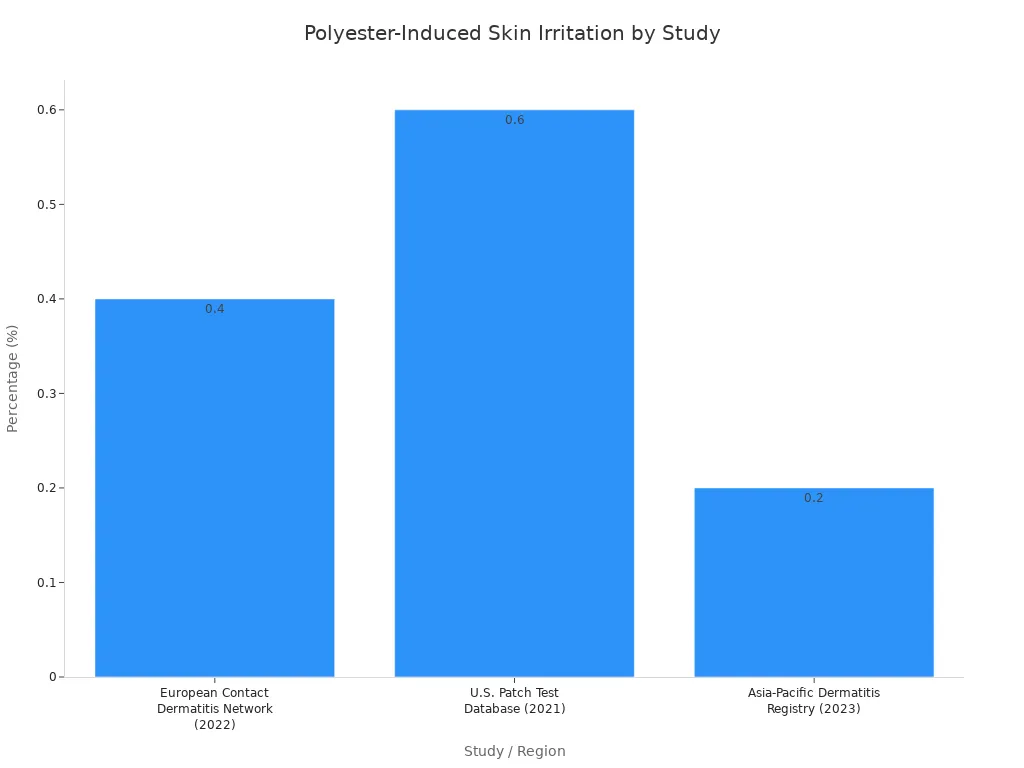
I believe natural, breathable, and hypoallergenic fabrics are healthiest for your skin. While studies show less than 1% react to clean polyester, as the chart illustrates, choosing an organic fabric is crucial for comfort. I prioritize sustainable fabric and oeko Certified fabric, making conscious choices for eco friendly fabric for casual wear and skin friendly fabric for formal wear.
Key Takeaways
- Choose natural, breathable, and hypoallergenic fabrics for healthy skin. These fabrics prevent irritation and support your body’s natural cooling.
- Organic cotton, linen, hemp, bamboo, silk, and merino wool are top choices. They offer softness, moisture control, and are gentle on sensitive skin.
- Avoid synthetic materials like polyester and conventional cotton. They can trap heat, contain harmful chemicals, and cause skin irritation.
Characteristics of Skin-Friendly Fabrics
Breathability and Airflow for Skin Health
I always prioritize fabrics that allow my skin to breathe. Breathable fabrics are essential because they prevent overheating and irritation. They let moisture escape, which keeps my skin dry and comfortable. This airflow also reduces friction, helping to prevent rashes and bacterial growth that dampness can cause. I find that breathable materials support my body’s natural cooling systems, like convection and evaporation, by allowing air to circulate and moisture to transfer. This is crucial for maintaining my body’s temperature regulation.
Moisture-Wicking Properties for Comfort
For active days, I look for fabrics with excellent moisture-wicking properties. These materials move sweat away from my skin, which is vital for comfort and hygiene. This action prevents the growth of odor-causing bacteria. Sweat itself is odorless, but it creates a breeding ground for bacteria when it stays on my skin and clothes. Moisture-wicking fabrics disrupt this environment, preventing bacteria from multiplying. Some of these fabrics even incorporate antimicrobial agents or silver ion technology, which actively inhibit microbial growth.
Hypoallergenic Qualities for Sensitive Skin
My sensitive skin demands hypoallergenic fabrics. I know that many non-hypoallergenic fabrics contain common allergens. These can include pet dander, dust mites, and even chemicals used during processing. Color dyes, wool, and polyester can also cause irritation for some people. Choosing hypoallergenic options helps me avoid these irritants, ensuring my skin stays calm and reaction-free.
Natural Fiber Composition Benefits
I believe natural fibers offer inherent benefits for skin health. They are often softer and less irritating than synthetic alternatives. Fabrics made from natural fibers, especially an organic fabric, tend to be more gentle against my skin. They also possess natural properties that contribute to overall comfort and well-being, such as biodegradability and a pleasant feel.
Chemical-Free Processing and Certifications
I am very conscious about the processing of my fabrics. Chemical processing in fabric production can lead to significant environmental issues, like water pollution from toxic dyes and heavy metals. It also generates toxic waste, contributing to landfill overflow. Therefore, I seek out fabrics with chemical-free processing. Certifications like GOTS (Global Organic Textile Standard), OEKO-TEX® STANDARD 100 (especially Product Class I for babies), and the bluesign® SYSTEM assure me that products are manufactured with minimal environmental impact and without harmful substances. These certifications are strong indicators of a truly chemical-free product, ensuring I choose an organic fabric that is safe for both me and the planet.
Top Healthy Fabrics for Optimal Skin Health
I have explored many options, and I find certain fabrics consistently stand out for their skin-friendly properties. These materials offer comfort, breathability, and often come with impressive environmental credentials.
Organic Cotton: Softness, Purity, and Breathability
I often recommend organic cotton as a top choice for healthy skin. It offers exceptional softness, purity, and breathability. This fabric is grown without harmful pesticides, insecticides, or synthetic fertilizers. This means less chemical residue remains in the fabric, making it a gentler option for sensitive skin. I know the National Eczema Association states that irritants in fabric, detergents, and dyes can exacerbate skin irritation and cause flare-ups, even for people without underlying skin conditions.
According to the National Eczema Association, irritants in fabric, detergents, and dyes can exacerbate skin irritation and cause flare-ups even in people without underlying skin conditions.
The combing process used for organic combed cotton removes shorter fibers. This creates a smoother, softer texture. This texture benefits sensitive skin because it prevents irritation from rough fibers. Organic cotton’s natural breathability helps regulate body temperature. It also wicks away moisture, preventing dampness that can lead to discomfort or rashes. I find its hypoallergenic nature particularly appealing. This organic fabric lacks residual chemicals like pesticides and formaldehyde found in conventional cotton. This significantly reduces the risk of skin irritation and allergic reactions. Its natural fibers allow air circulation, regulating body temperature and preventing moisture accumulation. This is crucial for preventing overheating and night sweats, especially during sleep. The soft, non-irritating fibers minimize friction and irritation. This makes it ideal for individuals with eczema, psoriasis, or contact dermatitis. Dermatologists often recommend it for problematic skin. By reducing exposure to potentially harmful chemicals, organic cotton products contribute to overall skin health. They may also help prevent the development of sensitivities over time.
Linen: Durability, Cooling, and Hypoallergenic
Linen is another favorite of mine, especially for warmer climates. I appreciate its remarkable durability and natural cooling properties. Linen fibers come from the flax plant. They are inherently strong and become even softer with each wash. This fabric excels at temperature regulation. It allows air to circulate freely, keeping my skin cool and dry. I find its slightly coarser texture provides a gentle massaging effect. This can stimulate blood flow. Linen is also naturally hypoallergenic and resistant to dust mites. This makes it an excellent choice for individuals with allergies or sensitive skin.
Hemp: Strength, Sustainability, and Skin Benefits
I consider hemp an incredibly versatile and sustainable fabric. It offers impressive strength and numerous benefits for both the environment and my skin. Hemp cultivation has significant environmental advantages. It has the ability to remove heavy metals from the ground, making it an optimal pioneer crop for land reclamation. It also stabilizes erosion, adds nutrients to the soil, and increases the yield of subsequent crops. Hemp produces pollen for bees and other pollinators during periods of floral scarcity. I find its low input requirements remarkable. Hemp farming needs very little or no chemical treatments. All parts of hemp, from roots to flowers, can be used or transformed, leading to zero waste generation. Hemp cultivation results in significant water savings compared to other fibers. For example, it uses 75% less water than cotton. Hemp is a sustainable source of cellulose for papermaking. It yields up to four times more pulp per hectare than a mature tree plantation.
Hemp’s deep taproot system allows it to access water and nutrients from deeper soil profiles. This reduces irrigation needs. These deep roots also improve soil conditions for water infiltration, aeration, and soil biota. Hemp is more effective at extracting carbon dioxide from the atmosphere than many other crops. Estimates suggest it removes 1.63 tons of CO2 for every ton of hemp grown. Hemp plants can even grow in contaminated soil, absorbing heavy metals and toxins. This capability has been tested in areas like Chernobyl. As an organic fabric, hemp is biodegradable. It returns organic material to the soil. Its minimal pesticide use and soil improvement capabilities make it an excellent choice. For my skin, hemp fabric is naturally breathable and durable. It softens over time without losing its integrity.
Bamboo: Silky Feel, Moisture Control, and Gentle
Bamboo fabric offers a luxurious, silky feel against my skin. I find its moisture-controlling properties and gentle nature particularly beneficial. Bamboo fibers are incredibly soft. They drape beautifully and feel smooth, reducing friction on the skin. This fabric naturally wicks away moisture. It keeps my skin dry and comfortable, preventing the clammy feeling that some synthetic fabrics can cause. Bamboo also possesses natural antibacterial properties. These properties help inhibit odor-causing bacteria. This makes it a great choice for active wear or everyday clothing. I appreciate its thermoregulating abilities. It keeps me cool in summer and warm in winter. This makes it a versatile option for year-round comfort.
Silk: Smoothness, Temperature Regulation, and Non-Irritating
Silk is a fabric I often turn to for its unparalleled smoothness and gentle touch. It offers excellent temperature regulation and is remarkably non-irritating. Silk’s non-irritating qualities stem from its primary proteins, sericin and fibroin. These proteins consist of 18 amino acids, including glycine, alanine, and serine. These amino acids are similar to those in the human body. This explains silk’s exceptional compatibility with skin. This ‘biochemical kinship’ allows silk to facilitate skin regeneration. It also makes it valuable in medical applications.
Silk proteins form a natural moisture barrier while remaining breathable. This helps keep my skin dry and comfortable. It also reduces fungal infections and irritations. The inherent smoothness of silk fibers minimizes friction against the skin. This prevents abrasions and maintains skin integrity. This is particularly beneficial for sensitive skin or conditions like eczema. Amino acids like serine also support skin elasticity and resilience by aiding collagen formation. Silk’s natural protein structure, specifically silk fibroin, makes it highly biocompatible with human skin. This inherent property means silk is less likely to cause skin problems or allergies compared to other materials. Its biocompatibility is so significant that it has historically been used for wound sutures. The unique combination of amino acids found in silk is soothing to the skin. It helps it retain natural moisture. This is crucial for minimizing skin irritation and inflammation. Dermatologists often recommend silk for individuals with sensitive skin conditions like acne, eczema, and psoriasis. It is gentle enough for babies to prevent common skin issues. Silkworm silk is composed of natural proteins, primarily 25–30% sericin and 70–75% fibroin. This unique chemical structure and composition contribute to its high compatibility with human skin. The US Food and Drug Administration (FDA) has approved silk as a biomaterial. Silk fibroin, in particular, is noted for its minimal adverse effects on the immune system. This makes it suitable for biomedical products.
Merino Wool: Breathability, Odor Resistance, and Softness
Merino wool is a fabric I highly value for its exceptional breathability, odor resistance, and surprising softness. Unlike traditional wool, merino fibers are much finer. They feel incredibly soft against my skin, without the itchiness often associated with wool. I find its natural temperature-regulating properties impressive. It keeps me warm in cold weather and cool in warm weather. This makes it a versatile choice for various climates.
Merino wool’s odor resistance is a significant benefit. The matrix, a non-crystalline region within the fiber, contains high-sulfur proteins. These proteins absorb moisture and odor-causing molecules. Odor molecules attach to polar amino acids within the matrix. They are held there until washing. Lanolin in wool fibers creates an environment that inhibits bacterial growth. This prevents odor development. The protein structure of Merino wool contains sulfur compounds. These compounds neutralize odor molecules and prevent them from binding to the fiber surface. This natural ability to resist odors means I can wear merino wool garments for longer periods between washes. This is both convenient and environmentally friendly.
Fabrics to Avoid for Better Skin Health
While I advocate for natural and minimally processed fabrics, I also recognize the importance of understanding which materials can negatively impact skin health. Certain fabrics, due to their composition or manufacturing processes, can trap heat, irritate skin, or expose me to harmful chemicals. I make a conscious effort to avoid these for my well-being.
Synthetic Materials: Trapping Heat, Moisture, and Chemicals
I find synthetic materials, such as polyester, nylon, and acrylic, problematic for skin health. These fabrics are often derived from petroleum and can create an unfavorable microclimate against my skin. They trap heat and moisture, which fosters an environment conducive to bacterial growth. This can worsen existing skin conditions like dermatitis, eczema, and various allergies.
I am also concerned about the chemical load these materials carry. Plastic microfibers, which synthetic clothing sheds, are ubiquitous in our environment. They appear in drinking water and food products. These fibers can absorb toxic substances like oil residue and polychlorinated biphenyls. Manufacturers often treat microfibers with additives such as flame retardants. Some experts believe these microfibers and their chemical cocktails, including neurotoxins from pesticides, could cause neurological disorders. They might even cross the blood-brain barrier. There is also a hypothesis that plastic fibers could contribute to the risk of lung cancer, as textile fibers were noted in human lungs as early as 1998.
Furthermore, some chemicals in synthetic fabrics are endocrine disruptors. They interfere with the body’s hormonal systems. These chemicals can penetrate the body through skin contact or ingestion. This potentially leads to serious health effects like reproductive issues, metabolic disorders, and developmental problems. Industry experts warn that synthetic clothing poses serious health risks. These include potential harm to the lungs from materials like nylon and their associated chemicals. These chemicals can also clog human veins. Synthetic fibers and plastics can accumulate in the body, potentially leading to self-poisoning. I prioritize avoiding these materials to minimize such risks.
Conventional Cotton: Pesticide Residues and Irritants
While cotton is a natural fiber, I distinguish between conventional and organic cotton. Conventional cotton production relies heavily on pesticides and other harsh chemicals. These substances can remain as residues in the finished fabric. I know the National Eczema Association states that irritants in fabric, detergents, and dyes can exacerbate skin irritation and cause flare-ups, even for people without underlying skin conditions.
The chemicals used in conventional cotton farming and processing are concerning. They include:
- Herbicides: Used to strip plants of leaves for easier harvesting.
- Ammonium Sulfate: A colorless to white powdered solid used in manufacturing processes like bleaching, straightening, dyeing, and sizing.
- Hydrochloric Acid: Used in manufacturing processes like bleaching, straightening, dyeing, and sizing.
- Benzidine: Often used in processing and dyeing cotton.
- Oxalic Acid: Used in manufacturing processes like bleaching, straightening, dyeing, and sizing.
- Aldicarb: A dangerous insecticide that can leave residue in fibers.
- Parathion: An extremely toxic insecticide and pesticide.
- Malathion: Can cause skin and scalp irritation, pinkeye, and chemical burns.
- Pendimethalin: A chemical that can cause eye, throat, nose, and skin irritation, and is considered a possible carcinogen.
These pesticide residues can have significant health implications. They can cause acute poisoning, leading to skin irritation, eye irritation, headache, dizziness, nausea, vomiting, and shortness of breath. Neurological effects like tremors, muscle weakness, abnormal facial sensations, visual disturbances, extreme agitation, loss of consciousness, and seizures are also possible. Respiratory problems such as persistent cough, strained breathing, asthma, and chronic obstructive pulmonary disease can arise. Reproductive issues like infertility, birth defects, and spontaneous abortion are also linked to pesticide exposure. Furthermore, these chemicals increase the risk of various cancers, including leukemia, lymphoma, and cancers of the brain, breast, prostate, testes, and ovaries.
I have seen a significant relationship between neurological signs (severe headaches, dizziness, slowness/weakness in tasks, difficulty maintaining balance) and the frequency of synthetic insecticide use among conventional cotton farmers. Respiratory signs such as rhinitis, cough, tightness in the chest, and throat irritation also show a significant relationship with synthetic insecticide use. Skin and eye irritations are strongly linked to the frequency of synthetic insecticide use, often exacerbated by non-compliance with recommended application frequencies. Digestive issues like vomiting and diarrhea are significantly associated with experience in synthetic pesticide use among conventional farmers. These effects are often linked to highly toxic synthetic pesticides, including those from the carbamate family and herbicides containing glyphosate or paraquat chloride. This is why I always opt for an organic fabric when choosing cotton.
Rayon and Viscose: Chemical Processing Concerns
I approach rayon and viscose with caution due to their intensive chemical processing. Although they originate from natural sources like wood pulp, their transformation into fabric involves a complex and often environmentally damaging chemical process.
The production of viscose is energy, water, and chemically intensive, with devastating impacts. The process releases many toxic chemicals into the air and waterways. Carbon disulfide, a chemical used, is linked to coronary heart disease, birth defects, skin conditions, and cancer in workers and nearby residents.
Concerns exist regarding the devastating impact of wood pulp production on forests, people, and vulnerable animal populations. Viscose production contributes to the rapid depletion of global forests, leading to habitat destruction and threatening endangered species. This often involves human rights abuses and land grabbing from Indigenous communities.
The manufacturing process relies on hazardous chemicals such as carbon disulfide, sodium hydroxide, and sulfuric acid. Carbon disulfide is a major pollutant linked to health issues like nerve damage and psychiatric disorders. Producing one ton of viscose uses approximately 30 tons of water and releases about 15 tons of harmful emissions. Demand for wood pulp drives deforestation, leading to biodiversity loss, ecosystem imbalance, and accelerated climate change. Clearing forests for viscose production depletes natural resources and destroys wildlife habitats.
The manufacturing process involves chemicals like ammonia, acetone, caustic soda, and sulfuric acid. Air emissions include carbon disulfide, hydrogen sulfide, sulfur, and nitrous oxides. Water emissions can contaminate groundwater and harm aquatic life. High water usage and energy consumption are also concerns. The environmental impact is heavily influenced by the source material, with unsustainable deforestation practices having a larger footprint. Less than 30% of viscose production is sustainably sourced. Negative environmental impacts extend beyond production, as viscose has slow biodegradability, taking 20-200 years to degrade. Rayon production involves a process with many chemicals, energy, and water. Solvents used can be highly toxic to humans and the environment. Viscose production uses many chemicals that are harmful to the environment when released in effluents. Massive deforestation is a significant environmental concern, with thousands of hectares of rainforest cut down annually for rayon production. Only a very small percentage of wood is obtained through sustainable forestry practices. These environmental concerns translate into potential skin exposure to residual chemicals, which I prefer to avoid.
Fabrics with Harsh Dyes and Chemical Finishes
I am particularly wary of fabrics treated with harsh dyes and chemical finishes. These treatments can cause significant skin irritation and allergic reactions. Allergic reactions to textiles can manifest as small red pimples, either isolated or in clusters, known as papules or pustules (if they contain purulent fluid due to secondary infection), sometimes resembling acne or heat rash. A burning sensation on the skin, where the area in contact with the allergenic fabric ‘heats up’ and tingles, is also common.
Affected areas often include the crook of the elbows, the back of the knees, armpits, groin, buttocks, neck (from labels or collars), and waist (from elastic or belts). Symptoms worsen with constant rubbing, heat, and humidity, especially during summer or physical activity. Severe and prolonged irritation can lead to scratching, causing lesions, and in rare cases, bacterial or fungal infections.
Other common reactions include:
- Redness and inflammation on the skin, often limited to the area of contact with the dyed fabric.
- Itching, which can be severe and persistent.
- Blisters or bumps on the skin, which may ooze fluid in severe cases.
- Dry, cracked, or scaly skin over time.
- Swelling.
- Hives at the contact site.
- Difficulty breathing or anaphylaxis (in severe reactions).
Reactions can be delayed, appearing days after exposure, making identification challenging. Textile dye allergy can also worsen existing skin conditions like allergic eczema. I always wash new clothes before wearing them to minimize exposure to these finishes, but avoiding them altogether is my preferred approach.
I prioritize natural, breathable, and minimally processed fabrics for superior skin health. My conscious fabric choices significantly contribute to my overall well-being. I invest in clothing that nurtures my skin. This supports a healthier lifestyle.
FAQ
What is the single best fabric for sensitive skin?
I find organic cotton, silk, and bamboo are excellent choices. They are soft, breathable, and hypoallergenic, minimizing irritation for sensitive skin.
How do I know if a fabric is truly chemical-free?
I look for certifications like GOTS, OEKO-TEX® STANDARD 100 (Class I), or bluesign® SYSTEM. These assure me of minimal harmful chemicals in production.
Can synthetic fabrics ever be healthy for my skin?
I generally avoid synthetics due to heat trapping and chemical concerns. While some claim hypoallergenic properties, I prioritize natural fibers for optimal skin health.
Post time: Dec-20-2025