
I always choose modal shirts fabric when I want softness and breathability in my daily wardrobe. This modal shirting fabric feels gentle on my skin and offers a silky shiring fabric touch. I find its stretch shirting fabric quality ideal for mens wear shirting fabric or any fabric for shirts.
Modal shirts fabric keeps me comfortable and stylish all day.
Key Takeaways
- Modal shirts fabric feels soft and smooth like silk, stays comfortable all day, and suits people with sensitive skin.
- This fabric breathes well, wicks moisture quickly, and keeps you cool and dry, making it great for warm weather and active use.
- Modal is eco-friendly, durable, resists shrinking and pilling, and is easy to care for with simple washing and drying steps.
What Is Modal Shirts Fabric?
Origin and Composition
I first learned about modal shirts fabric when I explored new options for comfortable clothing. This fabric began in Japan during the 1950s. Lenzing AG, a well-known textile company, developed it as a semi-synthetic material. They wanted to create something softer and more sustainable than traditional rayon. Modal shirts fabric uses cellulose from beech trees. These trees grow in managed forests, which helps protect the environment. The cellulose gives the fabric its smooth texture and strength. I noticed that modal stands out because it comes from beech wood pulp, not cotton or polyester. This unique origin makes modal both eco-friendly and gentle on the skin.
How Modal Shirts Fabric Is Made
When I looked into how modal shirts fabric is made, I found the process both fascinating and complex. Here are the main steps:
- Workers harvest beech trees from sustainable forests.
- They chip the wood and extract the cellulose pulp.
- The cellulose is dissolved in a special solvent to form a thick liquid.
- This liquid passes through spinnerets, creating long fibers.
- The fibers are stretched to make them stronger.
- They wash and dry the fibers to remove any chemicals.
- The fibers are spun into yarn and woven into fabric.
I appreciate that the process uses fewer harsh chemicals than other fabrics. Many factories recycle water and chemicals, which helps reduce pollution. This careful method gives modal shirts fabric its signature softness and durability.
Comfort and Performance Features of Modal Shirts Fabric
Softness and Smooth Feel
When I touch modal shirts fabric, I notice its silk-like softness right away. The fibers feel smooth and gentle against my skin. This comfort lasts all day, even after many washes. I often choose modal shirts for days when I want to avoid any scratchy or rough feeling. The fabric’s fine structure gives it a luxurious touch that reminds me of high-end materials. I find that this softness makes modal shirts perfect for people with sensitive skin or anyone who values comfort in their clothing.
Tip: If you want shirts that feel soft from the first wear and stay that way, modal shirts fabric is a great choice.
Breathability and Moisture-Wicking
Breathability matters to me, especially when I wear shirts for long hours or in warm weather. Modal shirts fabric lets air flow naturally, which helps regulate my body temperature. I compared modal to cotton and polyester using the table below:
| Fabric | Breathability Rating | Key Notes on Breathability and Comfort |
|---|---|---|
| Cotton | Excellent | Natural fiber with excellent air circulation and moisture absorption, providing superior breathability and comfort for everyday wear. |
| Modal | Very Good | Natural breathability with temperature-regulating properties; offers comfort across varying climates and better breathability than polyester but slightly below cotton. |
| Polyester | Poor to Fair | Synthetic fiber with lower breathability; tends to trap odors and feels less comfortable against skin compared to natural fibers. |
I notice that modal shirts fabric keeps me cooler than polyester and almost as comfortable as cotton. What stands out is how well modal wicks moisture away from my skin. When I sweat, the fabric absorbs it quickly and does not feel damp. This feature makes modal shirts ideal for hot days or active moments. I stay dry and fresh, even when I move a lot. Modal also resists odor better than cotton, which helps me feel confident throughout the day.
Lightweight and Draping Qualities
I like how modal shirts fabric feels light but not flimsy. The fabric usually weighs between 170 to 227 GSM. This weight makes it heavier than thin cotton shirts but lighter than denim or thick knits. Here is a chart that shows how modal compares to other common shirt fabrics:
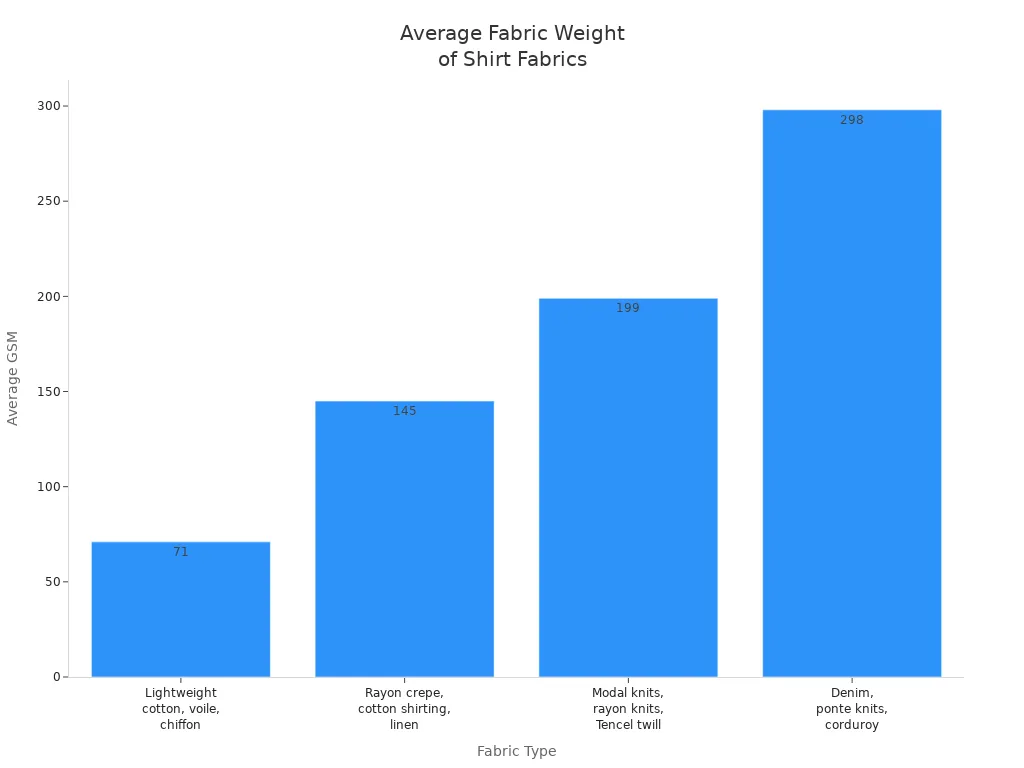
The draping quality of modal stands out to me. The fabric hangs naturally and follows the shape of my body. I do not need extra tailoring for a good fit. Modal stretches well, so my shirts move with me and keep their shape. I enjoy the way modal shirts look and feel—fluid, elegant, and never stiff. The fabric’s drape gives my shirts a modern, relaxed style that works for both casual and dressy occasions.
- Modal shirts fabric conforms closely to my body, giving a custom fit.
- The high elasticity lets my shirts stretch and adapt to my movements.
- The excellent drape creates a smooth, graceful look that feels luxurious.
Durability, Care, and Sustainability of Modal Shirts Fabric
Resistance to Pilling, Shrinking, and Wrinkling
When I wear modal shirts fabric, I notice how well it holds up over time. The fabric resists pilling, shrinking, and wrinkling better than many other shirt materials. I often compare it to cotton and polyester using this table:
| Property | Modal Fabric | Cotton Fabric | Polyester Fabric |
|---|---|---|---|
| Pilling | Superior resistance; resistant to pilling | More prone to pilling | Generally resistant |
| Shrinking | Better resistance; requires gentle care to avoid shrinkage | More prone to shrinking; tolerates higher washing temperatures | Minimal shrinkage |
| Wrinkling | Resists wrinkles better than cotton | More prone to wrinkles | Highly wrinkle-resistant |
| Durability | Outlasts cotton, maintains shape and color longer | Less durable, dyes tend to fade | Very durable |
| Softness | Luxurious, silk-like texture, softer than cotton | Coarser than modal | Typically less soft |
| Breathability | More breathable than polyester but less than cotton | Superior breathability | Less breathable |
Laboratory tests show that modal fabric actually becomes more durable after several washes. I have seen that abrasion resistance improves, and the fabric stays smooth without pilling. This means my shirts look new for longer.
Easy Care and Maintenance
I find modal shirts fabric easy to care for if I follow a few simple steps. I always wash my shirts in cold water on a gentle cycle and turn them inside out. I avoid bleach and fabric softeners. Air drying works best, but if I use a dryer, I choose low heat. Here is a quick guide:
| Care Aspect | Recommendations |
|---|---|
| Washing | Gentle machine or hand wash, inside out |
| Water Temperature | Cold water |
| Detergent | Mild detergent, no bleach |
| Drying | Air dry flat or hang, low heat if needed |
| Storage | Fold neatly, keep away from sunlight |
Tip: I always store my modal shirts in a cool, dry place to prevent wrinkles and fading.
Environmental Impact and Sustainability
I care about the environment, so I appreciate that modal shirts fabric uses much less water and energy than cotton. Beech trees, the source of modal, grow without artificial irrigation. The production process uses fewer chemicals and creates a smaller carbon footprint. Modal is biodegradable and supports sustainable fashion. I feel good knowing my shirts come from renewable resources and help reduce environmental impact.
Modal Shirts Fabric vs. Other Common Shirt Fabrics
Modal vs. Cotton
When I compare modal shirts fabric to cotton, I notice several differences in comfort and performance. Modal feels buttery soft and silky smooth against my skin. Cotton can feel soft, but the texture depends on the type and processing. I find modal more consistent in softness, even after many washes. Modal absorbs moisture quickly and wicks it away, so I stay dry during warm days or physical activity. Cotton absorbs moisture well but tends to hold onto it, which sometimes leaves me feeling damp.
Here is a table that helps me see the main differences:
| Attribute | Modal Fabric | Cotton Fabric |
|---|---|---|
| Softness | Luxuriously soft, stays soft after washing | Varies; premium cotton can be very soft |
| Moisture-Wicking | Absorbs and wicks moisture quickly | Absorbs moisture but dries slowly |
| Breathability | Good, better than synthetics | Excellent, best for air circulation |
| Durability | Retains shape and color, resists pilling | Durable but may pill or lose shape |
| Eco-Friendliness | Uses less water and energy, biodegradable | High water use, especially conventional |
I also care about the environment. Modal shirts fabric uses up to 20 times less water than cotton and avoids harmful pesticides. Beech trees for modal grow naturally, which helps reduce the impact on nature.
Modal vs. Polyester
When I wear modal shirts fabric, I notice it feels much softer and more breathable than polyester. Polyester shirts often feel less comfortable, especially in warm weather. Modal absorbs moisture and keeps me cool, while polyester pushes sweat to the surface for quick drying. This makes polyester great for sports, but it can trap heat and sometimes irritate my skin.
Here is a quick comparison:
| Aspect | Modal Fabric | Polyester Fabric |
|---|---|---|
| Durability | Durable, but needs gentle care | Highly durable, resists wear and tear |
| Wrinkle Resistance | May wrinkle, needs gentle ironing | Very wrinkle-resistant, little ironing needed |
| Moisture Handling | Absorbs and wicks moisture, keeps cool | Wicks moisture, dries fast, can feel hot |
| Skin Sensitivity | Hypoallergenic, gentle on skin | May irritate sensitive skin |
I prefer modal for daily wear because it feels cooler and more natural. Polyester works well for athletic wear, but I find modal more comfortable for long hours.
Modal vs. Rayon
I often compare modal shirts fabric to rayon because both come from plant cellulose. Both fabrics feel soft and drape beautifully. Modal feels smoother and lighter, and it holds its shape better after washing. Rayon can wrinkle and shrink more easily, so I need to handle it with extra care.
| Feature | Modal Fabric | Rayon Fabric |
|---|---|---|
| Softness & Drape | Ultra-soft, smooth, drapes like silk | Soft, fluid, but less resilient |
| Durability | Stronger, keeps shape when wet | Weaker, loses shape and strength when wet |
| Care | Resists shrinking and creasing | Prone to shrinking and wrinkling |
| Sustainability | Made with closed-loop, eco-friendly process | Higher water and energy use, more chemicals |
I choose modal when I want a shirt that lasts longer and needs less ironing. Modal’s eco-friendly production also makes it a better choice for the planet.
I choose modal for shirts because it feels soft, lasts longer, and supports a greener future. Many people prefer it for its moisture control, shape retention, and eco-friendly qualities.
I see more brands using modal as demand for sustainable, comfortable clothing grows worldwide.
FAQ
What makes modal shirts fabric different from regular cotton?
I notice modal feels softer and smoother than cotton. Modal resists shrinking and pilling. My modal shirts keep their shape and color longer than my cotton shirts.
Can I machine wash my modal shirts?
I always machine wash my modal shirts on a gentle cycle with cold water. I avoid bleach. Air drying helps keep the fabric soft and prevents shrinking.
Tip: Turn shirts inside out before washing to protect the fibers.
Is modal shirts fabric suitable for sensitive skin?
I have sensitive skin and modal shirts never irritate me. The fabric feels gentle and smooth. I recommend modal for anyone who wants comfort and softness.
Post time: Aug-02-2025