

I’m consistently impressed by the durability of School Uniform Fabrics. With over 75% of schools globally requiring uniforms, the demand for robust materials is clear. This longevity stems from inherent material properties, sturdy construction, and appropriate care. As a bulk school fabric supplier, I understand the critical importance of selecting a long lasting uniform fabric. We provide uniform fabric wholesale solutions, including custom woven polyester school uniform fabric, guaranteeing an easy care uniform fabric for educational institutions everywhere.
Key Takeaways
- School uniforms last long due to strong materials like polyester and cotton blends. These fabrics resist wear and tear.
- Good uniforms have strong stitching and heavier fabric. This helps them stay together and not rip easily.
- Proper washing and drying make uniforms last longer. Air drying is best to keep uniforms from shrinking or fading.
Inherent Durability of School Uniform Fabrics
When I consider why school uniforms last so long, I always start with the materials themselves. The inherent durability of the fabrics plays a huge role. Manufacturers carefully select fibers and employ specific weaving techniques to create textiles that withstand the daily rigors of school life.
Fiber Choices for Strength and Resilience
I find that the choice of fiber is fundamental to a uniform’s longevity. Different fibers offer unique properties that contribute to strength and resilience. For instance, I see polyester as a cornerstone in many uniform blends. It is a synthetic fabric, and I know it possesses high tensile strength. This means it resists stretching, tearing, or deforming under tension. Polyester fibers are strong, durable, and stretchable, making them a primary synthetic fiber in the textile industry. I have observed that this characteristic, combined with its ability to maintain integrity after numerous washes, makes it a preferred material.
I also frequently encounter other common fiber types in school uniform fabrics:
- Cotton: I know cotton is soft, breathable, and hypoallergenic. Manufacturers often use it for shirts and summer uniforms. They frequently blend it with synthetic fibers to improve durability and reduce wrinkling.
- Poly-Cotton Blends (Polycotton): I see these blends everywhere. They combine the comfort of cotton with the durability and wrinkle resistance of polyester. This makes them a popular choice for various uniform items like shirts, dresses, and tunics.
- Twill: This is a hard-wearing, wrinkle-resistant weave pattern. It adds texture and durability, and I often see it in pants and skirts where strength is crucial.
- Wool and Wool Blends: I find these primarily in winter uniforms, such as blazers and sweaters. They provide warmth and a polished look. Blends are common to reduce cost and enhance durability.
- Gabardine: This is a tough, tightly-woven fabric. It resists wrinkles and maintains its shape. I frequently see it in blazers, skirts, and trousers for a structured appearance.
- Knit Fabrics (for Sportswear and PE Kits): These are stretchy, breathable, and moisture-wicking. I consider them ideal for sports uniforms and casual wear due to their comfort during physical activity.
I also recognize that rayon, a cellulose-based semi-synthetic fabric, often appears in shirts, blouses, and dresses. It can mimic more expensive textiles at a more affordable price.
Weave Density and Abrasion Resistance
I have learned that weave density significantly impacts the abrasion resistance of school uniform fabrics. Tighter and denser weaves, characterized by high yarn counts, offer greater protection against friction, rubbing, and chafing. I find that this is crucial for areas like knees and elbows. In contrast, loose weaves and knits allow more yarn-on-yarn movement, which reduces their durability. I observe that smooth, flat woven fabrics generally resist abrasion better than textured knits. Woven, twill, and plain weave fabrics outperform satin or other weaves with wider yarn spacing.
For example, I often see:
- Denim: I know denim for its tightly woven construction. It is often a cotton twill weave with durable polyester threading. This makes it highly resistant to wear and tear.
- Canvas: This is a rugged cotton fabric. It has a woven construction typically using thicker warp yarns interlaced with thinner weft yarns. This enhances its durability and abrasion resistance.
Color Stability and Fade Resistance in School Uniform Fabrics
I understand that color stability is another vital aspect of uniform longevity. No one wants a faded uniform after a few washes. Manufacturers and suppliers adhere to strict industry standards to ensure colors remain vibrant. I rely on specific tests to measure how well a fabric retains its color.
For colorfastness to washing, I look to standards like ISO 105-C06:2010. This test evaluates how well fabric retains its color after domestic or commercial washing. It uses a reference detergent and includes tests for single wash cycles and multiple cycles. I also see other widely accepted methods, such as AATCC 61.
For colorfastness to light, I refer to standards like ISO 105-B01:2014 and ISO 105-B02:2014. ISO 105-B01:2014 assesses resistance to daylight using blue wool references. ISO 105-B02:2014 evaluates the effect of artificial light sources, like xenon arc lamps, which represent natural daylight. A similar test method is AATCC 16.3. These tests help ensure that the colors of school uniform fabrics do not fade significantly when exposed to sunlight or artificial light over time.
Construction Techniques for Long-Lasting School Uniform Fabrics
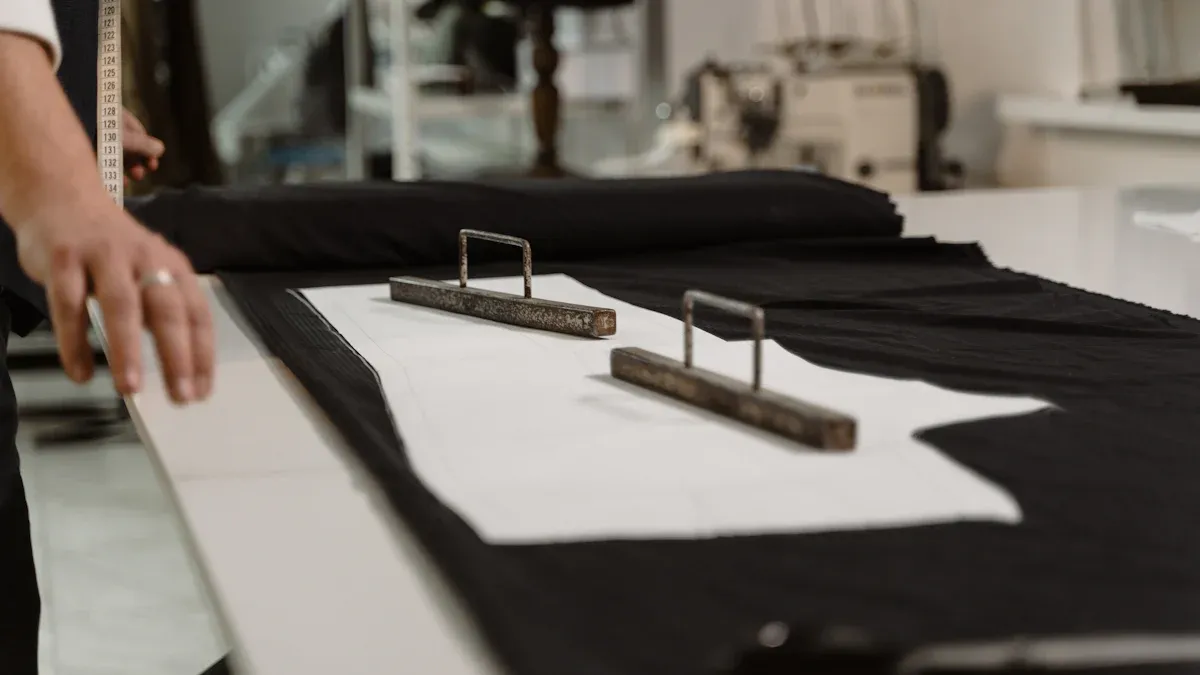
I know that beyond the fibers themselves, how manufacturers construct a uniform greatly impacts its lifespan. I see specific techniques that add significant durability. These methods ensure the garments withstand the daily wear and tear of school life.
Reinforced Stitching in High-Stress Areas
I always look for strong stitching in quality uniforms. Manufacturers use reinforced stitching in areas that experience a lot of stress. These areas include seams, pockets, and buttonholes. Higher stitches per inch (SPI) create tighter, sturdier seams. These seams can better withstand the demands of wear and frequent washing. This is crucial for the durability of school uniforms. Consistency in stitch density also ensures long-lasting seams. I have seen that a uniform with a higher SPI will generally have more durable seams. These seams can endure intense activities and regular cleaning without failing.
For example, a study on Ghanaian public basic school uniforms looked at stitch density. These uniforms used a 79% polyester and 21% cotton blend. Researchers found that a stitch density of 14 performed best. It showed optimal seam strength, elongation, and efficiency. This tells me that higher stitch density makes school uniform fabrics much more durable.
Fabric Weight and Structural Integrity
I understand that fabric weight directly relates to a uniform’s structural integrity. Fabric weight is often measured in GSM (grams per square meter). Heavier fabrics generally offer more durability. They resist tearing and abrasion better than lighter ones.
For school uniform trousers, I recommend a medium-weight fabric. This ensures longevity. This category typically ranges from 170 to 340 GSM. It offers a good balance of durability and comfort. Heavier fabrics within this range, such as those around 200 GSM, are much more robust. They resist wear and tear better than lighter options. This makes them ideal for items like uniforms that get frequent use.
| Weight Category | GSM Range | Common Uses |
|---|---|---|
| Medium-weight | 180–270 | Uniforms, Trousers |
| Midweight | 170–340 | Pants, Jackets, Uniforms |
Chemical Treatments for Enhanced Performance
I also see chemical treatments playing a role in enhancing uniform performance. These treatments add specific properties to the fabric. They make uniforms more functional and long-lasting.
For example, some treatments make fabrics water and stain repellent. Per- and Polyfluoroalkyl Substances (PFAS), also known as ‘forever chemicals,’ and fluorocarbons are often applied. They provide water repellency, as well as soil and stain resistance. A 2022 report by Toxic-Free Future showed that nearly three-quarters of products labeled water- or stain-resistant tested positive for these chemicals. A study by the American Chemical Society also found high concentrations of PFAS in children’s uniforms marketed as stain-resistant. However, due to environmental and health concerns, the industry is moving towards PFAS-Free alternatives. These new alternatives still offer similar functionalities.
I also find wrinkle-resistant finishes very important. These finishes save time for busy families. Polyester and poly-cotton blends naturally resist wrinkles well. Many modern uniforms also feature ‘durable-press’ finishes. These allow them to come out of the washing machine looking neat. This eliminates the need for ironing. This easy-care nature of polyester fabric makes it highly wrinkle-resistant. It ensures garments stay neat and polished with minimal ironing. This is very helpful for busy school environments. This fabric can be machine washed and dried without shrinking or losing its shape. This saves parents and caregivers time and effort. Its quick-drying property also means uniforms are ready for wear sooner. This reduces the need for multiple spare sets. It also contributes to their overall longevity.
Extending the Life of School Uniform Fabrics Through Care
I know that even the most durable School Uniform Fabrics need proper care to last. How we wash, dry, and store uniforms significantly impacts their lifespan. I always advise institutions and parents on best practices to ensure these garments endure.
Optimal Washing Frequency and Techniques
I often get questions about how frequently to wash uniforms. The answer depends on several factors. I recommend daily washing if a child only has two or three uniform sets and wears the same pieces multiple times a week. This is also true if the child participates in activities like sports or recess, which result in dirty or sweaty uniforms. Washing daily helps prevent stains from setting, and I find older stains much harder to remove. If you have a high-efficiency washing machine, you can easily handle quick, small loads. For daily washing, I suggest using mild detergent and avoiding fabric softener for synthetic blends. Air drying is always preferable to prevent shrinkage, and I always pretreat stains immediately.
However, if a child has four or more uniform sets, I find weekly washing often works well. This ensures a clean uniform is always available. Weekly washing is also suitable if uniforms do not get heavily soiled, with minimal stains or odors. Some people prefer consolidating laundry into one efficient load, or they rely on a laundromat to reduce trips and costs. For weekly washing, I recommend sorting uniforms separately. Use a high-quality detergent for any set-in stains. I always use cold water and a gentle cycle to maintain fabric integrity. You can steam or lightly iron uniforms midweek for crispness.
When it comes to washing machine settings, I always prioritize fabric protection. I use the gentle cycle to reduce agitation, which protects fabrics and preserves uniform life. For water temperature, I stick to cold to warm water. Hot water can cause fading and shrinking, which I want to avoid. I have seen that cold-water cleaning innovations, including new detergents and machine technologies, enable effective stain removal without high temperatures. This preserves uniform fabrics much better.
Drying Methods to Preserve Fabric Integrity
I cannot stress enough the importance of proper drying methods. Tumble drying at high heat is a major culprit for uniform damage. High heat is the primary cause of shrinkage, and I have seen it damage prints and elastic bands in waistbands or cuffs. It can also crack screen prints and cause significant shrinkage in cotton and some blends.
“Tumble Drying is a NO: Only use a tumble dryer if the care label on your garment says it is recommended. If in doubt, don’t use the dryer but if you do, make sure it is on the lowest heat setting possible. High heat settings can melt or damage synthetic fibers and are a guaranteed way to reduce the lifespan of your uniform.”
I know that high heat and friction from machine dryers can cause lettering and numbers to peel or crack. High temperatures weaken synthetic fibers, reducing fabric stretch and moisture-wicking abilities. I have observed that high heat makes fibers brittle, less stretchy, and prone to fading. It quickly breaks down the fibers in fabrics.
I always recommend air drying whenever possible. Air drying is gentle on fabrics, preventing shrinkage, fading, and wear caused by high heat. This method preserves garments, enhancing their longevity and maintaining their original shape, texture, and color. Proper drying techniques prevent shrinking and damage to uniform fabric. I suggest air drying in a shaded area to protect fabric and prevent color fading, as direct sunlight can dull colors. When machine drying, using a low heat setting is crucial to avoid damage. Tumble drying school uniforms on the lowest heat setting protects delicate fabrics from shrinking and discoloration. I often remove uniforms while slightly damp to minimize wrinkles and simplify ironing. I also avoid outdoor drying in direct sunlight, as UV rays can dull fabric colors.
| Drying Method | Pros | Cons | When to Use |
|---|---|---|---|
| Tumble Dry (Low Heat) | Fast, convenient, works in any weather | Risk of heat damage, may cause shrinkage, shortens lifespan | Only when necessary, emergencies |
Strategic Storage and Rotation of School Uniform Fabrics
I find that strategic storage and rotation also play a significant role in extending uniform life. Rotating school uniform garments extends their lifespan by reducing constant wear on individual pieces. This practice also allows each garment sufficient recovery time between washes, which helps preserve the fabric. Regularly rotating clothing items, including school uniforms, prevents excessive wear and tear on specific garments. This ‘rest’ period allows fabrics to regain their original shape and helps prevent issues like overstretching or pilling. Additionally, rotating reduces the frequency of washing for each item, which is beneficial as frequent washing can degrade fabric over time.
For storage, I look to expert recommendations. The Smithsonian Institution museums aim to maintain their collections at 45% RH ± 8% RH and 70°F ± 4°F. These conditions are considered optimal for preserving textiles and can serve as a guide for storing school uniform fabrics to prevent degradation.
| Storage Factor | Ideal Range |
|---|---|
| Temperature | 65-70°F (or 59-77°F for climate-controlled) |
| Humidity | Below 50% |
I have shown that the longevity of School Uniform Fabrics comes from several key factors. Robust material selection, meticulous construction, and consistent, proper care all contribute. I believe these elements ensure uniforms withstand daily wear and frequent washing. This combination provides durable, long-lasting garments for students.
FAQ
What fabric types offer the most durability for school uniforms?
I find polyester and poly-cotton blends are excellent choices. They provide strength, resilience, and wrinkle resistance. Twill and gabardine also offer great durability.
How does stitch density impact uniform longevity?
I know higher stitch density creates stronger seams. This prevents tearing in high-stress areas. It makes uniforms much more durable for daily wear.
Post time: Jan-07-2026