

I believe fabric quality dictates product longevity and perceived value, directly reflecting on brand integrity. Fabric impact on brand extends long after the sale. For instance, poor polyester rayon blended suit fabric performance leads to pilling or fading, which customers attribute to my brand, not just the material. This is why my brand TR spandex fabric decision is crucial. A professional men’s suit fabric manufacturer understands this.
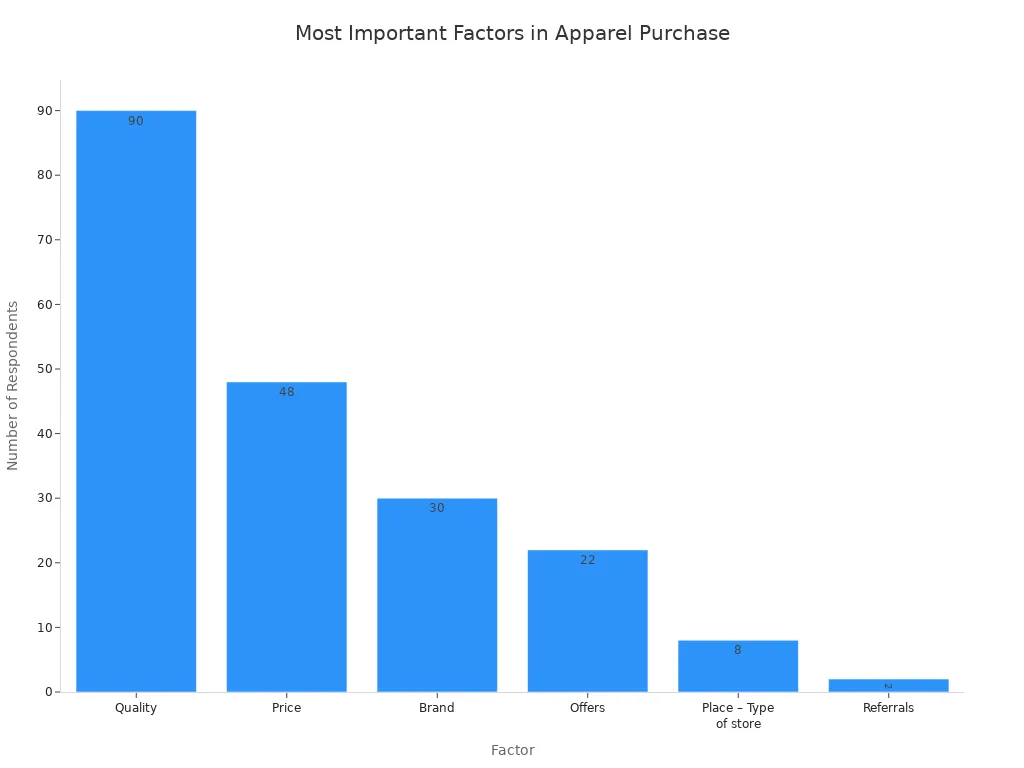
Customers prioritize quality. My premium polyester viscose blended fabric sourcing directly influences their satisfaction. This makes fabric selection a critical strategic choice.
Key Takeaways
- Fabric quality directly affects how long a product lasts. It shows customers the brand’s commitment to good products.
- Choosing fabrics that are good for the environment helps a brand’s image. Customers are willing to pay more for products made in a responsible way.
- Using special or custom fabrics helps a brand stand out. It makes products unique and builds a strong connection with customers.
Fabric Selection: The Foundation of Consumer Trust
Quality and Durability Define Brand Experience
I know consumers often connect a product’s price with its quality. An American survey showed 58% of consumers believed a higher-priced garment meant better quality. 78% across different age groups thought, “you get what you pay for” when buying clothes. 59% of younger consumers believed more expensive clothing lasted longer. This shows consumers use price as a sign of quality and durability.
However, I also understand this belief is not always accurate. Studies have shown that higher-priced jeans did not consistently offer better durability or color retention. Similarly, different priced cotton T-shirts showed varied durability after 20 washes. Price alone is not a reliable indicator of actual durability.
Durability measures how long a product functions as intended before it breaks down. This differs from longevity, which includes other factors. Durability is an “experience quality attribute.” It is hard to evaluate when you first buy something. My brand focuses on true durability. My careful fabric selection ensures my products meet these high standards.
Fabric density, like weight or thread count, directly affects how long a product lasts. Higher density means a tighter weave or knit. This leads to better durability and resistance to wear. Denser fabrics are less likely to pill or snag. Low-density fabrics often have shorter lifespans because they are flimsier.
Resistance to pilling is a crucial quality metric for longevity. Pilling is when small balls of fibers form on the fabric surface. This happens from use, washing, and exposure. Fabrics with high pilling resistance keep their look and structure longer. Tests like the Martindale and Pilling Box simulate wear. They assess a fabric’s ability to prevent pills. This directly shows its durability over time.
Weave and construction also play a big role. Tighter weaves, such as twill or canvas, are generally more durable than loose weaves. Construction techniques like double-stitched seams enhance strength. Special finishes and treatments, like stain resistance or UV protection, can significantly extend a fabric’s life. This is especially true for items used often. Abrasion testing measures a fabric’s ability to withstand rubbing. This is important for upholstery. Tear strength tests the force needed to rip fabric. This matters for heavy-duty uses. Tensile strength measures a fabric’s resistance to being pulled apart. This shows its capacity to handle weight and pressure.
Performance Issues Erode Brand Confidence
Fabric defects, even minor ones, lead to significant problems for my brand. These include financial losses from wasted materials, rework, or rejected orders. Production costs increase, and timelines get delayed. Defects also result in complaints from retailers and buyers. This damages important relationships. Most critically, inconsistent fabric appearance or performance directly causes consumer returns. It leads to negative reviews. My brand reputation weakens, and customer loyalty suffers.
Common fabric-related complaints include shading. This means variations in fabric tone. It is more noticeable in solid and light colors. It can happen between rolls or within one piece. Crease marks are permanent fold lines that resist ironing. Improper handling or storage of damp fabric often causes them. Pilling is the formation of small balls of loose fibers. This happens after wear or washing. It indicates potential fiber weakness or poor finishing.
Other issues include misdraw or incorrect lifting. These are errors in the weaving pattern. Reed marks are vertical lines caused by spacing errors. Broken yarns snap during the weaving process. Unexpected shrinkage means fabric reduces in size more than anticipated after washing. Poor colorfastness means colors bleed or fade after washing or exposure.
My brand also faces issues like knots and slubs. These are irregularities in yarn that create a lumpy look. Stains and discoloration come from uneven dye distribution or contamination. Snags and runs occur when a yarn loop pulls out. Misprints and pattern misalignments happen when patterns are distorted. These defects compromise my brand’s reputation. They lead to costly returns, rework, or product recalls. Customers expect durable, well-finished clothing without visible or functional flaws. When my products do not meet these expectations, returns spike. Customer loyalty suffers.
Consistency Ensures Brand Reliability
Maintaining consistent fabric quality is crucial for my brand. I ensure this across all product lines and manufacturing batches. My team conducts thorough fabric quality inspection and testing. We evaluate raw or processed fabrics to meet industry standards and buyer expectations.
We perform shrinkage testing to predict fabric changes after washing. Colorfastness tests measure resistance to washing, rubbing, and light. We use GSM and thickness measurements to ensure fabric weight matches specifications. Tear and tensile strength tests verify fabric durability under stress. Fiber content and blend analysis confirm the correct fiber composition and quality.
Effective quality assurance requires attention across the full manufacturing process. We inspect raw materials for defects. We test for colorfastness, shrinkage, and dye consistency. We validate sustainability claims. We confirm measurements against tech packs. We verify sizing tolerances. We use random sampling for consistency. My team checks stitching and seams for loose threads or uneven width. We test seam strength. We test zippers and buttons for functionality. We inspect labels for accuracy. We review garment finishing quality. We verify packaging, tags, and barcodes. We ensure products are ready for export.
I conduct regular quality control inspections. These include pre-production, in-process, and final inspections. This helps identify defects early. It ensures consistency. It meets customer expectations. I implement Standard Operating Procedures (SOPs). These are clear, step-by-step instructions for critical processes like fabric inspection, cutting, and sewing. They ensure consistency and reduce errors. My employees receive regular training on SOPs.
I leverage quality assurance tools. I use AI, machine learning, and big data analytics to detect flaws early. This reduces waste and allows real-time adjustments. Statistical Quality Control (SQC) methods monitor and improve production processes. I establish clear quality benchmarks and document requirements. This involves developing a comprehensive quality assurance framework. I conduct rigorous inspections and tests. I partner with specialized quality assurance companies. I train my employees on quality control practices. This covers industry standards and inspection techniques. I foster a quality-first culture. Every employee prioritizes excellence. This reduces errors and enhances production accuracy.
Inconsistent fabric quality significantly impacts customer loyalty. Garment defects like stains, holes, or shrinkage are problematic for customers. These defects lead to increased product returns. They diminish brand loyalty. Customers expect reliable and safe clothing. Receiving defective items erodes trust. Negative experiences often result in bad reviews and social media complaints. These spread quickly. Loss of trust directly leads to decreased repeat purchases, lower customer loyalty, and increased return rates. Rebuilding a damaged reputation requires significant investment. In a competitive market, maintaining product consistency, including fabric quality, is crucial for long-term success. My brand balances innovation with unwavering quality and identity. This fosters customer trust, satisfaction, and repeat business.
Fabric Selection: Reflecting Brand Values and Identity

Sustainability and Ethics Enhance Brand Image
I know consumers increasingly care about where their products come from. A study by Simon-Kucher & Partners shows that 54% of consumers now pay more for sustainable products. This is a big jump from 35% just two years ago. Other surveys, like those by IBM and the Baker Retailing Center, confirm this trend. They show that 50% to 66% of consumers are willing to pay more for sustainable items. For younger consumers, aged 18 to 34, this number goes even higher, reaching 80%. The PwC 2024 Voice of Consumer Survey also found that 80% of consumers will pay more for sustainably produced goods. On average, they are ready to pay a 9.7% premium for products that are locally sourced, made from recycled materials, or have a lower carbon footprint. This tells me my brand must prioritize ethical sourcing.
I ensure my brand uses fabrics that meet high ethical and environmental standards. I look for certifications that guarantee responsible production. These include the Global Organic Textile Standard (GOTS), which ensures organic materials and ethical worker treatment. The Responsible Wool Standard (RWS) guarantees animal welfare and good land management for wool. The Better Cotton Initiative (BCI) promotes sustainable cotton practices. For fabrics from wood or cellulose, I look for the Forest Stewardship Council (FSC) certification. European Flax certifies linen grown sustainably in Europe. The Global Recycled Standard (GRS) verifies recycled materials. ECOVERO is a label for eco-friendly rayon. OEKO-TEX Standard 100 assures textiles are free from harmful substances. These certifications help me build trust with my customers.
I also understand the importance of clear communication. I make sure my brand is transparent about its supply chain. I educate myself on every step, from raw material to finished product. I provide clear, specific, and factual claims about my sustainable practices. I avoid jargon and make information easy to understand. I know that consumers prefer transparency, even if the news is not perfect. This allows them to make informed choices. I avoid “greenwashing,” which means making things sound better than they are. I believe honesty builds credibility. My brand constantly works to improve its sustainability efforts. I communicate these improvements to my customers.
Unique Textures Differentiate Brand Identity
I believe fabric selection is a powerful tool for my brand. It helps me create unique products that stand out. I can offer distinctive textures and materials. This sets my brand apart from competitors. I innovate with fabric treatments. This includes signature distressing, dyeing, or paint techniques. I also incorporate technical innovations. These might be water-resistant fabrics, hidden pockets, or breathable blends. These unique features give my products a special appeal.
Consumers often judge quality through touch. I know this from my experience. For woven fabrics like bedsheets, a higher thread count often means a finer, smoother fabric. Consumers link this to superior quality. Softness and comfort are very important, especially for clothing. Fabrics that feel luxurious, silky, or velvety are often seen as high-end. However, the ideal feel can change. A crisp, stiff fabric might be best for formal wear. A drapey, flowy fabric works well for dresses and scarves. These characteristics directly influence how consumers perceive my products’ suitability and quality. Smooth, “wet-hand” textures, like charmeuse silk, suggest luxury. Rougher, crisp weaves, like taffeta, convey formality. My careful fabric selection ensures I match the texture to the product’s purpose and desired perception.
Custom Textiles Foster Consumer Connection
I have seen how custom textiles can build a strong brand identity. Brands like Missoni are famous for their zigzag knits. Burberry is known for its signature plaid. These unique fabrics become part of the brand’s identity. They help customers recognize and connect with the brand. I also use custom elements, like woven labels, to reinforce my brand’s luxury status. A sportswear brand might use reflective heat transfer labels. This enhances both brand visibility and product function.
I know investing in custom fabric development offers many benefits. It helps my brand achieve differentiation and exclusivity. It also increases perceived value. I can tailor performance features, like moisture-wicking or UV resistance. This makes my products more relevant to my target audience. I can also customize aesthetics. This includes colors, weaves, or prints. They align with my brand’s seasonal palette or identity. Custom fabrics also offer great storytelling potential. I can use proprietary names like “Z-Tech Cotton Blend” in my marketing. This adds emotional and perceived value.
Exclusive fabrics can become intellectual property. Nike’s Dri-FIT and Lululemon’s Luon are good examples. They build long-term loyalty and make products harder to copy. Luxury brands often use unique fabrics as signatures. Chanel and Hermès create their own weaves. Dior collaborates with historic French jacquard ateliers. Gucci has launched collections with unique textile prints. Prada’s Re-Nylon collection uses recycled ocean plastic. Bottega Veneta is known for its intrecciato woven leather. Brunello Cucinelli invests in slow-made cashmere. These examples show how custom textiles create scarcity, recognition, and emotional loyalty. They connect with consumers through tactile storytelling.
Fabric Selection: A Strategic Reputation Decision
Prioritizing Stability and Supplier Reliability
I prioritize stable and reliable fabric suppliers. This ensures consistent quality for my brand. I evaluate suppliers based on several key criteria:
- Quality Standards: I look for certifications like OEKO-TEX and GOTS. I also request test batches to verify consistent quality.
- Financial Stability and Transparent Terms: I assess their financial health. I need transparent contracts and stable prices.
- Logistics and Delivery Times: Efficient logistics are crucial. I check for established transportation channels and clear shipping timelines.
- Support and Communication: Responsive communication is vital. I seek a dedicated account manager and adaptability to my needs.
Relying on a single supplier carries risks. I diversify my supplier base to avoid these issues:
- Limited Agility: A single vendor makes it hard to pivot during disruptions.
- Cost Volatility: Sole-source vendors can impose surge pricing.
- Geopolitical Exposure: Concentration in unstable regions creates unpredictable disruptions.
- Quality Risks: One quality failure can impact my entire system.
Mitigating Post-Purchase Problems
I actively mitigate post-purchase fabric-related problems. This protects my brand’s reputation. I implement several strategies:
- I work with patternmakers to adjust dimensions for shrinkage. This is especially important for tailored garments.
- I recommend fabric-specific finishing and garment washing protocols. This preserves design intent.
- I choose stable or blended fabrics for long-term dimensional control.
- I conduct lab testing early to identify shrinkage risks.
- I educate consumers on care labeling and laundering instructions. This ensures garments perform well.
Post-purchase issues have financial costs. Processing a single returned order can add ten dollars or more in handling and transport. This does not include markdowns or repackaging. Returns impact my bottom line through shipping, reverse logistics, restocking, and lost sales.
Fabric Innovation Shapes Brand Perception
Fabric innovation significantly shapes my brand’s perception. I integrate new technologies to enhance my product lines. For example, odor-control textile technology helps create products that stay fresher longer. This appeals to consumers seeking convenience and sustainability. This technology reduces the need for frequent washing. It saves energy and water. It also extends textile lifespan. Polygiene StayFresh™ uses silver chloride to prevent odor-causing bacteria. Polygiene OdorCrunch™ uses silica particles to break down odors.
I integrate new fabric innovations effectively. I choose fabrics based on my brand positioning. I factor in sustainability, aesthetics, and performance. I report on life-cycle assessments. I partner with reputable suppliers. I view advertising opportunities through responsible production. I balance sustainability with performance. Robust innovations allow for environmentally friendly and high-performing products. These include waste-reducing technologies and recycled fabrics. They meet demanding end-user expectations for lightweight and tear-resistant materials.
I believe fabric acts as my brand’s silent ambassador. It communicates my promise of quality and value to every customer. Strategic fabric selection is a critical investment for my long-term brand reputation. My careful fabric choice ultimately differentiates me in a competitive market. It sets my products apart and builds lasting trust.
FAQ
How does fabric quality directly impact my brand’s reputation?
I know fabric quality dictates product longevity. It directly reflects my brand’s integrity. Poor fabric leads to customer dissatisfaction and negative reviews.
Why is sustainable fabric sourcing important for my brand image?
I find consumers increasingly value sustainability. Ethical sourcing and certifications enhance my brand’s image. It builds trust and attracts conscious buyers.
How can custom textiles help differentiate my brand?
I use custom textiles to create unique products. They establish a distinct brand identity. This helps my brand stand out from competitors.
Post time: Jan-23-2026