

I know medical scrub fabrics require stringent color control. This directly impacts patient safety and infection prevention. As a polyester rayon blended scrub fabric supplier, I value medical fabric color consistency. It aids professional identification. It shapes the psychological environment in healthcare. High textile quality control medical standards are essential. White medical scrub wear fabric dyeing and woven dyeing polyester spandex scrubs fabric processes are vital.
Key Takeaways
- Medical scrub colors help keep patients safe. Light colors show dirt. Consistent colors help with cleaning and stop germs from spreading.
- Scrub colors make healthcare workers look professional. Blue and green colors help patients feel calm and trust their doctors and nurses.
- Good scrub fabrics keep their color. They do not fade easily after many washes. This helps scrubs look new and clean for a long time.
Enhancing Safety and Infection Control with Medical Scrub Fabrics
Visual Detection of Contaminants
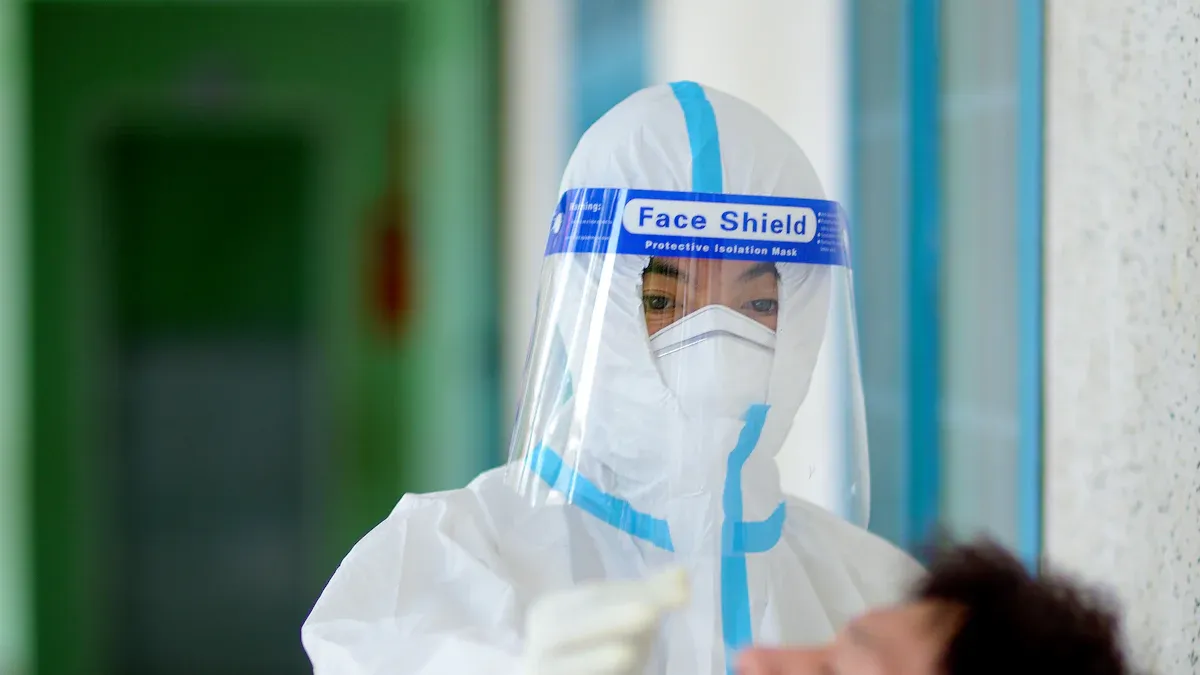
I understand the critical role color plays in detecting contaminants. On lighter medical scrub fabrics, I can immediately spot any stain or hair. This immediate visibility is crucial for maintaining hygiene.
In contrast, darker colors, such as navy blue or black, tend to mask dirt and stains better. However, this can also mean that contaminants might not be noticed until they accumulate. This potentially compromises cleanliness if not regularly checked.
I find this masking effect concerning. It means a healthcare professional might unknowingly carry contaminants.
The choice of cleanroom clothing color can affect the performance of the fabric. For instance, darker colors might be more prone to showing wear and tear. Lighter colors can reveal contaminants more readily.
I see a clear trade-off. While dark colors hide minor imperfections, they also hide biohazards. I know dark-colored scrubs are effective at hiding small stains, splashes, or minor wrinkles. This concealment helps maintain a more polished appearance throughout the workday. This is particularly valued in busy work environments. However, my priority is patient safety.
| Scrub Color | Impact on Stain Visibility |
|---|---|
| White | Any stain or hair is immediately noticeable. |
| Very Light | Fade and get dirty quickly, requiring more maintenance. |
| Pure Black | Hair appears to stick, and wrinkles are more noticeable. |
| Darker Colors | Better at concealing small stains and splashes. |
I believe the ability to quickly identify contaminants outweighs the aesthetic benefit of hidden stains.
Sterilization Process Monitoring
I recognize consistent color in medical scrub fabrics supports sterilization monitoring. Many sterilization processes use color-changing indicators. These indicators show if an item has undergone proper sterilization. If the fabric color itself is inconsistent, it can interfere with reading these indicators. I need a uniform background. This ensures I can accurately interpret the indicator’s color change. A slight variation in fabric dye could mimic a partial color change. This leads to false readings. My consistent color control prevents this. It ensures the indicator’s true color change is always visible. This reliability is vital for confirming sterility.
Preventing Cross-Contamination
I know consistent color helps prevent cross-contamination. Healthcare facilities often use color-coded scrubs. Different colors identify specific departments or roles. For example, surgeons wear one color, nurses another, and support staff a third. This visual cue is immediate. I can quickly identify who belongs where. This reduces the risk of staff entering restricted areas. It also helps prevent the transfer of pathogens between zones. If the colors are inconsistent, this system breaks down. A faded blue might look like a dark green. This creates confusion. It increases the chance of cross-contamination. My precise color control ensures each color remains distinct. This supports clear visual identification. It reinforces infection control protocols.
Projecting Professionalism and Trust Through Medical Scrub Fabrics

Maintaining a Professional Image and Patient Perception
I know the color of medical scrub fabrics significantly impacts how patients perceive healthcare providers. My goal is to ensure our fabrics help project professionalism and build trust. I find that certain colors convey specific traits. For example, navy blue scrubs are often linked with higher levels of competence and trustworthiness. From a psychological view, navy blue brings calmness and confidence. This makes patients feel safer and more at ease. Patients tend to connect blue colors with dependability and care. These are crucial in medical settings. This perception aligns with patient-centered care. It prioritizes empathy and confidence. The right color helps communicate professionalism. It influences patient trust in doctors and nurses.
I have seen how different colors affect perception:
| Scrub Color | Perceived Trait (Male Image) | Perceived Trait (Female Image) |
|---|---|---|
| Green | Surgeon (45.1%) | Surgeon (41.6%) |
| Blue | Most Caring (56.6%) | Most Caring (48.7%), Most Trustworthy |
| Black | Negative traits (knowledge, skill, trust, caring) | Negative traits (knowledge, skill, trust, caring) |
| Green (youngest participants) | Least Trustworthy | Least Trustworthy |
| Green (some participants) | Resembles janitor’s clothing | Resembles janitor’s clothing |
| Black (some participants) | Deathlike, mortician’s uniform | Deathlike, mortician’s uniform |
I believe color choices should be purposeful and based on data.
“Given the increasing use of scrubs and the magnitude of expenditures dedicated to them, color choices should be purposeful and data-based,” the investigators conclude. “Although rapport depends on both tangible and intangible factors, scrub color is an easily modifiable feature that may be a factor in the clinician-patient relationship, and thus, clinical outcomes.”
I understand that scrub color is an easily changeable feature. It can affect the relationship between clinicians and patients. This can impact clinical outcomes.
Departmental and Role Identification
I recognize that consistent color in medical scrub fabrics helps identify roles and departments. Healthcare facilities often use color-coded scrubs. This system helps patients and staff quickly recognize healthcare providers and their functions. Many facilities use color-coded scrubs to tell roles apart. Departments choose scrub colors for teamwork, hospital branding, and easy staff spotting.
Here are some common examples I have observed:
- Royal blue scrubs are often worn by nurses.
- Pediatric nurses frequently choose teal scrubs. This creates a calming effect for children.
- Doctors typically wear green or blue scrubs.
I find color-coded medical scrub fabrics effective. They improve communication and efficiency. This is especially true in emergency situations. This system provides visual identification for different roles. It helps with quick role recognition. It reduces response times. It lessens interruptions and confusion. This is crucial in high-stress places like emergency departments and operating rooms. Rapid identification of personnel greatly impacts patient safety and coordination. The concept also makes patients more comfortable and confident. They can easily identify healthcare professionals. The use of color coding in scrubs acts as a non-verbal “object communication.” It contains a coded message. It serves as a visual cue for immediate personnel identification. This is very important in the perioperative environment. It optimizes communication between staff and with patients.
I see several benefits from this system:
- Role Recognition: Color-coded scrubs allow immediate identification of different medical personnel. This helps colleagues quickly find the right person for tasks. It reduces interruptions and increases productivity. This is vital in emergencies.
- Patient Comfort and Confidence: Patients can easily identify healthcare professionals by their scrub colors. This makes them more comfortable and confident. They know who provides their care and who to ask for help.
- Reduced Response Times: A streamlined uniform system, like color-coded scrubs, is crucial for quick action. For example, if an emergency department team wears a specific color, they can rapidly identify each other. They respond faster to critical situations like a ‘code blue’ event.
- Lessening Interruption and Confusion: Clear role definition through color-coding minimizes unnecessary disruptions. When roles are visually distinct, team members do not need to stop to identify each other. This leads to more efficient cooperation and smoother patient handoffs.
- Improved Patient Safety: Color-coded scrubs help patient safety by reducing miscommunication. Quick identification of roles ensures the correct team members are involved at each stage of patient care. This lowers the risk of errors. It promotes more coordinated treatment. This is vital in emergencies.
Psychological Impact of Color on Patients and Staff
I understand that the color of medical scrub fabrics has a significant psychological impact. It affects both patients and staff. For patients, certain colors can reduce anxiety.
- Blue: I associate blue with calmness, trust, and reliability. Blue scrubs can help reduce patient anxiety. They foster a sense of trust. Blue is known for its calming effect. It promotes tranquility and trust. It can lower blood pressure and heart rate. This creates a soothing environment for patients in high-stress settings.
- Green: I link green to nature, healing, and recovery. Green promotes feelings of safety and healing. It creates a serene environment for patients. Green is associated with harmony, balance, nature, and healing. It has a soothing effect. It reduces anxiety and promotes well-being for both patients and medical professionals. This is especially true in surgical settings.
- Purple: I connect purple to creativity, compassion, and calmness. Purple can make patients feel more comfortable and understood. It conveys compassion and care. It can help create a sense of tranquility. It promotes a healing atmosphere.
- Black: I find black exudes professionalism, sophistication, and authority. While not directly calming, black scrubs can reassure patients. They convey competence and strength from an experienced professional. Black symbolizes sophistication, strength, and authority. It conveys decisiveness and resilience. It inspires confidence in patients. It contributes to an atmosphere of efficiency and reassurance.
- Pink: I associate pink with compassion and approachability. Pink can help create a warm and comforting environment for patients. It has a calming effect.
I also consider the impact on staff morale and the work environment.
- Wearing colors that promote a positive mood and sense of identity can boost morale. It creates a cohesive team environment.
- Allowing healthcare professionals to choose uniform colors or styles they feel comfortable and confident in can enhance job satisfaction and self-expression. This fosters pride and belonging.
- Colors like soft blues or greens promote relaxation and well-being. They contribute to a healthier work environment. This can reduce stress and increase productivity among staff.
- Uniform color significantly impacts healthcare workers’ morale, motivation, and overall job satisfaction.
- Wearing uniforms that make staff feel at ease directly influences their energy and productivity levels. This leads to better performance and higher patient engagement.
- Choosing colors like blue and green shades can help reduce stress levels in healthcare providers. It makes them feel more grounded and capable in high-pressure environments.
- Soft shades such as light blue, grey, or green convey professionalism. They simultaneously foster a comfortable working environment. This allows staff to feel competent and relaxed.
I believe soft colors like blue and green create a peaceful environment. They help alleviate patient anxiety. Bright colors, like pink or pastel shades, make the environment feel more approachable. This is especially true for children or elderly patients. Darker colors, such as navy or black, provide a sense of authority and professionalism. Some patients may find this reassuring during serious medical procedures.
Durability and Consistency of Medical Scrub Fabrics
Resistance to Fading from Frequent Washing and Disinfection
I know medical scrub fabrics face constant washing and disinfection. This process can cause significant fading. Maintaining color consistency is crucial for a professional appearance. I have seen how different brands perform after many wash cycles. For example, some fabrics retain their color very well.
| Scrub Brand | Color | Wash Cycles | Fading Rate |
|---|---|---|---|
| FIGS | Caribbean blue | 52 | Virtually identical to unwashed sample |
| Cherokee Revolution | Ceil blue | 48 | Approximately 10% color loss |
| Jaanuu | Charcoal gray | 45 | Less than 8% fade |
| Barco | Navy | 47 | Approximately 10% color loss (90% retention) |
| Adar | Hunter green | 38 | Approximately 30% fade |
| Landau | Ceil blue (poly-cotton) | 35 | Approximately 35% fade (uneven) |
This data shows me the importance of fabric quality. I prioritize materials that resist fading. This ensures scrubs look new longer.
Colorfastness Against Bleach and Chemicals
I understand healthcare environments use strong chemicals. Bleach and disinfectants are common. Medical scrub fabrics must resist these agents. Poor colorfastness leads to uneven color. It also creates a worn look. I ensure our fabrics maintain their color integrity. This is vital for safety and professionalism.
Preventing Color Migration and Staining
I focus on preventing color migration and staining. Color migration happens when dye transfers between garments. This is common during washing. I use specific textile technologies to prevent this.
- Color Fixatives: I use products like Retayne™ and Rit®ColorStay Dye Fixative. These fix loose dyes in cotton fabrics. They prevent bleeding. I apply them as a pretreatment. They need hot water and specific washing machines. These fixatives do not work for polyester or acrylic fabrics.
- Color Catcher Sheets: I also recommend color catcher sheets. These absorb loose dye molecules. They prevent transfer to other garments. They are effective but not foolproof. Washing similar colors together is still best.
I also apply stain-resistant finishes to fabric surfaces. These repel liquids. They prevent stains from setting. This makes scrubs easier to clean. It keeps them fresh. These finishes help scrubs resist fluid absorption. They aid in easy cleanup. They maintain a professional appearance. I also use colorfast treatments. This prevents dye from bleeding or fading. It extends the professional look of brightly colored or dark medical scrubs.
I emphasize meticulous color control in medical scrub fabrics. This is fundamental for patient safety. It ensures effective infection control. I also find it fosters clear professional identification. This contributes significantly to operational excellence and the reputation of healthcare facilities.
FAQ
Why do I emphasize strict color control for medical scrubs?
I emphasize strict color control. It helps detect contaminants. It ensures proper sterilization monitoring. It also prevents cross-contamination. This protects patients.
How do scrub colors affect patients?
I find scrub colors impact patient perception. Blue and green promote calmness. They build trust. Darker colors convey professionalism. This helps reduce anxiety.
How do I ensure scrubs resist fading?
I select fabrics with high resistance to fading. I test them against frequent washing. I also test them against disinfectants. This maintains their professional appearance.
Post time: Dec-26-2025