
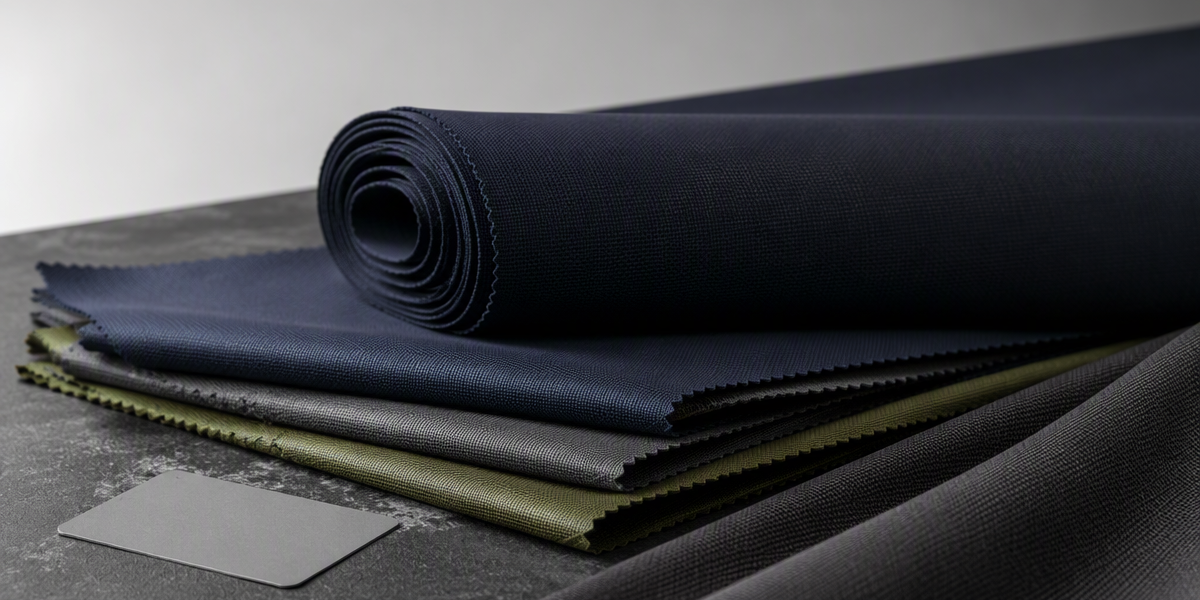
Why Polyester Stretch Fabric Matters in Sportswear
The athletic apparel industry has seen a significant shift toward advanced materials that can survive high-abrasion environments without sacrificing mobility. Driven by consumer demand for tailored, aerodynamic fits and recent advances in yarn extrusion technology, polyester stretch woven fabrics have become a cornerstone for outerwear and rugged bottoms. Unlike traditional knits that rely on looping for elasticity, stretch wovens achieve their dynamic properties through precise yarn blending and advanced loom weaving, offering a structural integrity and durability ideal for specific high-stress applications.
What Polyester Stretch Woven Fabric Is
At its core, a stretch woven combines the structural stability of a woven grid with the elasticity of elastane (spandex). Typical blends range from 88% to 95% polyester and 5% to 12% spandex depending on the end-use. For example, a polyester stretch woven fabric utilizing a 92% polyester and 8% spandex composition provides exceptional shape retention while allowing multidirectional movement. These fabrics are usually constructed using a plain weave or twill structure, incorporating spandex into either the weft (2-way stretch) or both the warp and weft (4-way stretch). The resulting textile is inherently wind-resistant, highly durable, and capable of maintaining a crisp, tailored aesthetic even after extreme physical exertion.
How It Compares with Traditional Polyester
When comparing standard polyester wovens to their stretch counterparts, there is a substantial performance difference. Traditional polyester wovens offer exceptional tenacity and low moisture absorption, but they are rigid, offering a mere 0% to 2% mechanical stretch. This rigidity requires designers to use baggy silhouettes, complex gussets, or articulation darts just to permit a full range of motion. By introducing 6% to 10% elastane, stretch wovens can achieve 15% to 30% elongation before reaching their elastic limit, allowing for slimmer, more aerodynamic garment profiles. It is important to note that metrics like GSM, elongation, and moisture regain vary significantly based on yarn count, weave structure, and finishing processes; the figures below represent common industry ranges rather than absolute standards.
| Metric | Traditional Poly Woven | Poly Stretch Woven (8-10% Spandex) |
|---|---|---|
| Elongation | 0-2% | 15-30% |
| Recovery Rate | N/A | >95% after 30 sec |
| Moisture Regain | ~0.4% | ~0.6% – 1.2% |
| Abrasion Resistance | High | High |
| Weight (Typical) | 70 – 150 GSM | 120 – 280 GSM |
Key Performance Benefits and Use Cases

Selecting the right polyester stretch woven requires matching its structural stability and wind protection to specific range-of-motion requirements. Designers must ensure the optimal fabric weight, weave structure, and stretch profile for the intended activity before approving a lab dip.
Where It Performs Best in Sportswear
These fabrics excel in environments demanding both abrasion resistance and dynamic articulation. Premium golf trousers, climbing pants, and high-end stretch woven fabric for sportswear often rely on heavier weights (around 280 GSM) to provide necessary structure, wrinkle resistance, and squat-proof opacity. Conversely, for alpine and outdoor outerwear, brands frequently integrate a composite performance fabric in the 190 to 250 GSM range. These composite wovens serve as excellent face fabrics for hardshell jackets, offering the windproof durability necessary to protect underlying waterproof-breathable membranes while yielding just enough stretch across the shoulders and elbows to prevent restriction during climbing or skiing.
Trade-Offs in Weight, Stretch, and Durability
However, engineering with spandex introduces unavoidable trade-offs. The primary compromises involve weight, dry time, and cost. While a pure polyester running short fabric might weigh a feather-light 70 GSM, adding enough elastane for a robust 4-way stretch can easily push the weight past 130 GSM. Additionally, stretch wovens are generally more expensive per meter than standard polyester wovens or knits, which directly impacts sourcing decisions alongside technical factors.
Furthermore, while a 5% to 12% elastane blend does not inherently trap enough moisture to cause rapid heat loss on its own, the heavier overall GSM and denser weave required for stretch wovens can increase the garment’s total drying time and reduce laminate breathability. In cold climates, this slower drying time can become a liability. To counteract this in cold-weather gear, designers often specify a bonded polyester-spandex softshell fabric that utilizes a TPU membrane and polar fleece backing. In these applications, the weather resistance and thermal retention come from the bonded layers blocking the wind, compensating for any breathability trade-offs. Another critical durability factor is elastane degradation: prolonged exposure to UV light, high heat (laundering above 40°C), and chlorine will eventually break down the spandex filaments. This causes the garment to lose its elastic recovery earlier than a 100% polyester equivalent, ultimately shortening its peak performance lifespan.
How to Choose the Right Fabric Supplier
Sourcing these technical fabrics is technically demanding. Because the process involves elastane blends interwoven with rigid polyester, poor manufacturing controls at the mill level can result in significant fit inconsistencies once the garment is cut, sewn, and stressed in the field.
Quality Control Criteria to Check
When vetting a new mill, it is essential to enforce strict quantitative quality control parameters. First, request stretch recovery testing data under standard ASTM D3107 protocols; an acceptable stretch woven must exhibit at least 95% recovery within 30 seconds of tension release. Dimensional stability is equally critical. Because spandex shrinks under heat, any batch showing more than a 3% shrinkage rate in either warp or weft after standardized washing cycles should be rejected. Colorfastness to washing must also hit a Grade 4 minimum on the AATCC grayscale to prevent dye migration. If developing rugged outerwear, such as a waterproof-breathable stretch fabric, ensure the supplier can verify the lamination peel strength if the fabric relies on a bonded membrane. Finally, be prepared for Minimum Order Quantities (MOQs); standard custom dye lots for these technical wovens typically range from 1,000 to 3,000 meters per colorway depending on the supplier’s loom setup.
Key Takeaways
- Choose polyester stretch woven fabric when sportswear needs abrasion resistance, wind protection, and a tailored fit without limiting movement.
- Use blends with about 6–10% elastane when designs require 15–30% elongation and better mobility than standard polyester wovens.
- Specify 2-way stretch for moderate flexibility and 4-way stretch when garments must support multidirectional athletic movement.
- Evaluate GSM, weave structure, elongation, and recovery rate before approving fabric for production, because performance varies by construction and finishing.
- Consider heavier stretch wovens around 280 GSM for golf trousers, climbing pants, and opaque structured bottoms that require durability and wrinkle resistance.
Frequently Asked Questions
What is polyester stretch woven fabric?
It is a woven fabric that blends polyester with elastane or spandex, often around 88–95% polyester and 5–12% spandex, to combine durability, structure, and controlled stretch for activewear.
How much stretch does polyester stretch woven fabric provide?
Common polyester stretch wovens with 8–10% spandex can provide about 15–30% elongation, compared with only 0–2% mechanical stretch in standard polyester woven fabric.
Why do sportswear brands use stretch woven fabric instead of regular polyester?
Stretch woven fabric allows slimmer, more ergonomic designs while maintaining abrasion resistance, wind resistance, shape retention, and a crisp appearance during movement.
What is the difference between 2-way and 4-way stretch woven fabric?
A 2-way stretch fabric usually stretches in one direction, often the weft, while a 4-way stretch fabric stretches in both warp and weft directions for greater mobility.
Which sportswear products commonly use polyester stretch woven fabric?
It is widely used in golf trousers, climbing pants, rugged bottoms, outerwear, fitness garments, and structured activewear that needs durability plus freedom of movement.

Yunai Textile
Post time: Aug-24-2026