
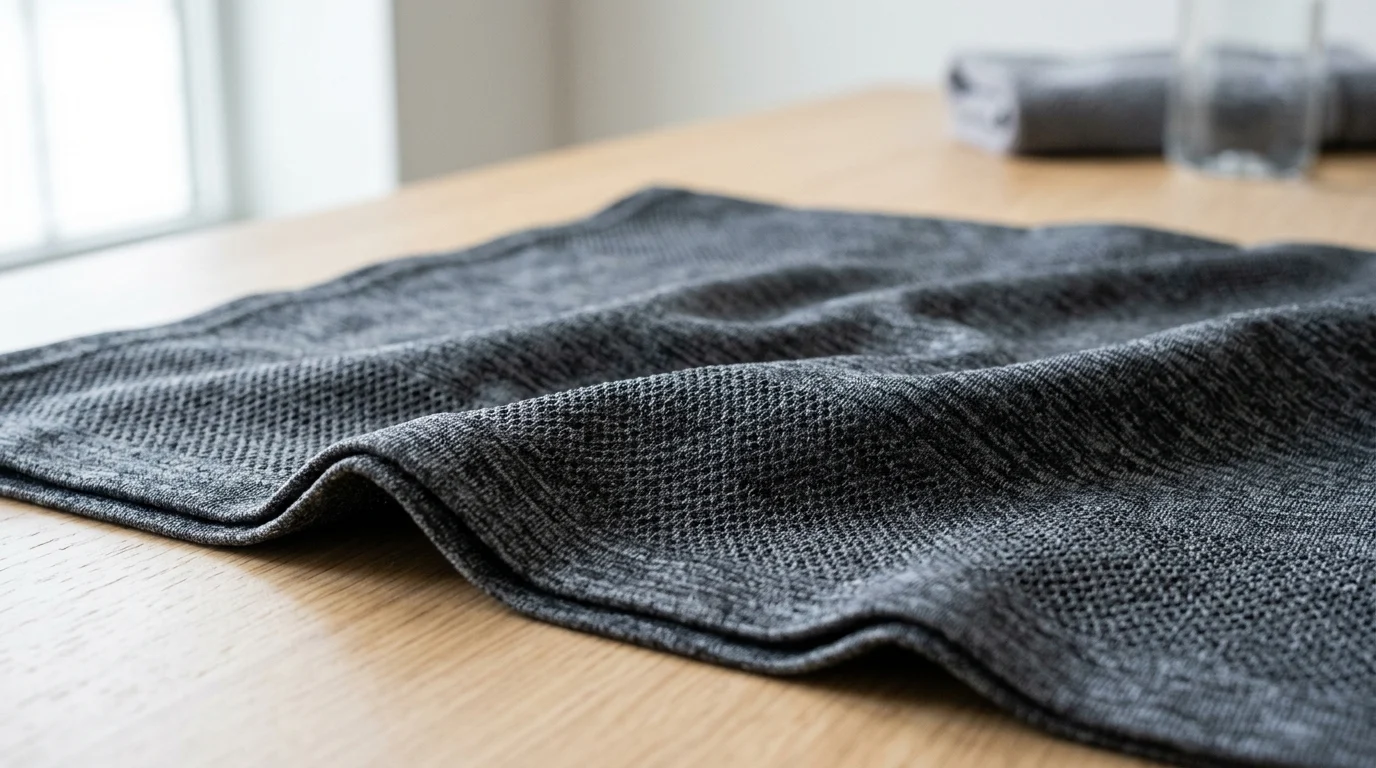
Why Polyester Stretch Woven Fabric Fits Training Sportswear
The evolution of athletic apparel has driven advancements in textile engineering. While knitted fabrics still dominate much of the general training-pants market due to their soft hand-feel and low cost, polyester stretch woven blends have emerged as a premier choice for specialized sports trousers. These engineered fabrics typically fall within a weight range of 150 to 250 grams per square meter (GSM)—though lighter 120 GSM exceptions exist for summer wear. This standard weight band provides an optimal balance of structural integrity, opacity, and lightweight comfort necessary for high-intensity workouts.
Key Performance Requirements for Training Apparel
Modern athletic bottoms must endure physical stress while maintaining wearer comfort across varying climates. Primary functional demands include rapid moisture wicking, thermal regulation, and high tear strength. Unlike basic cotton blends that retain sweat, engineered sports trousers fabric—whether utilizing hydrophobic polyester or similar nylon-spandex blends—relies on specialized filament yarns and chemical finishes to pull moisture away from the skin. This engineered capillary action disperses moisture across a wider surface area for accelerated evaporation. To achieve thermal regulation, these fabrics often incorporate micro-perforations or specific weave structures that allow excess body heat to escape during exertion. Furthermore, high tear strength—often validated through Elmendorf tear testing—ensures the fabric resists ripping when snagged or stretched to its limit. Finally, premium training apparel requires a structured fit that prevents the garment from clinging uncomfortably during dynamic exercises. However, buyers must note that woven polyester is generally less inherently breathable than knit constructions and can retain body odor, making anti-odor finishes a critical consideration for high-intensity training apparel.
How Stretch Woven Polyester Supports Fit and Movement
The core mechanical advantage of this material lies in its hybrid yarn composition. By integrating 8% to 15% elastane or spandex yarns into a durable polyester grid, manufacturers create a specialized stretch woven fabric for pants that moves fluidly with the human body. While traditional woven fabrics are rigid, the addition of stretch fibers allows the fabric matrix to expand safely during deep squats or explosive sprints, then immediately snap back to its baseline shape. This high recovery rate actively prevents the “baggy knee” effect. However, buyers must account for elastane limitations; spandex is susceptible to degradation from prolonged exposure to chlorine, UV rays, and high heat, requiring careful care instructions to maintain longevity.
Technical Properties Buyers Should Check
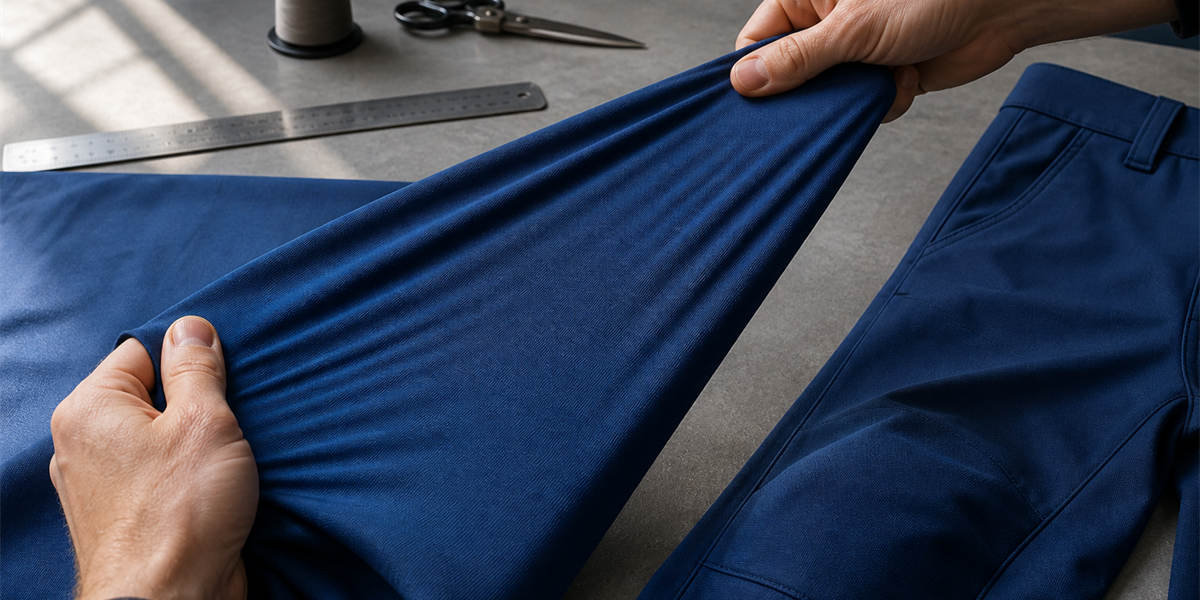
Sourcing the ideal textile for athletic bottoms requires developers to evaluate specific mechanical properties in a laboratory setting. Buyers must verify that chosen materials meet quantifiable industry standards for longevity and performance, ensuring the final garment withstands the intense friction, tension, and laundering associated with athletic use.
Stretch, Mobility, and Woven Construction
The precise construction of the weave dictates how the final garment performs under athletic stress. High-quality polyester spandex woven fabric is engineered with a 4-way stretch architecture, typically targeting a benchmark of 30% to 50% elongation on both warp and weft axes (often evaluated via ASTM D3107 test methods). This multi-directional mobility is necessary for dynamic sports such as rock climbing and mixed martial arts. Furthermore, the high thread density inherent in woven construction provides superior wind resistance compared to open-loop knits, blocking harsh gusts while offering sufficient air permeability for outdoor training.
Abrasion Resistance, Wrinkle Resistance, and Easy Care
Long-term durability and low-maintenance care are equally important technical benchmarks. A reliable wrinkle resistant sportswear fabric typically achieves around 20,000 rubs on the standardized Martindale abrasion test (ISO 12947). Reaching this benchmark ensures the fabric resists unsightly pilling along high-friction areas like the inner thighs. Furthermore, the inherent molecular memory of polyester fibers yields excellent crease recovery, allowing trousers to emerge from a gym bag looking crisp.
| Performance Feature | Standard Cotton Knit | Standard Rigid Woven | Stretch Woven Polyester |
|---|---|---|---|
| Stretch Capacity | High (poor recovery) | Low to none (<5%) | Moderate to high (30-50%) |
| Abrasion Resistance | Low (<10,000 rubs) | High (>20,000 rubs) | High (>20,000 rubs) |
| Shape Retention | Poor (knees bag out) | Excellent (retains shape) | Excellent (snaps back) |
| Wind Resistance | Poor (highly permeable) | Good (blocks wind) | Excellent (dense weave) |
How to Evaluate and Select the Right Fabric
Moving from material selection to procurement involves a strategic evaluation of supplier capabilities, raw material costs, and quality control protocols. Minimum Order Quantities (MOQs) for specialized, custom-dyed athletic wovens typically range from 1,000 to 3,000 meters per colorway, necessitating careful inventory forecasting before committing to bulk production.
Comparison Criteria for Fabric Selection
When comparing fabric options, buyers must weigh the fabric’s GSM weight against the intended climate and activity level. As noted earlier, a lightweight 120 GSM breathable activewear trousers fabric is an excellent exception for summer running pants and indoor gym wear, whereas a heavier 250 GSM double-weave is better suited for rugged outdoor hiking or winter athletic training. Major cost drivers include the exact percentage of premium spandex used, the mechanical complexity of the weave, and the application of secondary chemical finishes. Features like Durable Water Repellent (DWR) coatings or anti-microbial treatments increase per-meter cost but add significant retail value.
Sample Testing Steps and Common Applications
Before finalizing a bulk purchase order, conducting thorough sample tests is a non-negotiable step. Buyers must first request lab dips for initial color approval. Separately, the fabric should undergo standardized testing for lightfastness (e.g., AATCC 16) and wash-fastness (e.g., AATCC 61), ensuring it achieves a rating of at least 4.0 on the standard AATCC grayscale. Next, perform physical shrinkage tests; acceptable dimensional stability limits for premium training trousers should remain below 3% after five commercial wash cycles. Finally, assemble prototype garments for extensive field testing to assess seam slippage and real-world mobility. Once validated, the chosen stretch woven polyester can confidently be used in high-end joggers and performance golf trousers.
Key Takeaways
- Choose 150–250 GSM polyester stretch woven fabric for most training pants to balance durability, opacity, structure, and lightweight comfort.
- Specify 8%–15% elastane or spandex when the garment needs reliable mobility, strong recovery, and reduced knee bagging.
- Request 4-way stretch performance with roughly 30%–50% elongation in both warp and weft directions for dynamic training movements.
- Verify tear strength, stretch recovery, wicking, abrasion resistance, and wash durability through lab testing before bulk fabric sourcing.
- Use breathable weave structures, micro-perforations, or moisture-management finishes to offset polyester woven fabric’s lower natural breathability.
- Add anti-odor finishing for high-intensity sports trousers because polyester can retain body odor after repeated training sessions.
Frequently Asked Questions
What GSM is best for training pants fabric?
Most polyester stretch woven fabrics for training pants work well in the 150–250 GSM range, balancing opacity, durability, and comfort. Lighter options around 120 GSM can suit summer or lightweight performance styles.
Why use polyester stretch woven fabric instead of knit fabric?
Polyester stretch woven fabric offers a more structured fit, better tear resistance, and cleaner shape retention than many knits, making it suitable for sports trousers that need durability and controlled movement.
How much spandex is typical in stretch woven sportswear fabric?
Many performance woven blends use about 8%–15% elastane or spandex. This gives the fabric enough stretch for squats, sprints, and dynamic movement while helping it recover without bagging at the knees.
Is polyester stretch woven fabric breathable?
It can be breathable when designed with suitable weave structures, micro-perforations, or moisture-management finishes. However, woven polyester is generally less breathable than some knits, so fabric testing and finish selection are important.
What tests should buyers check before sourcing training sportswear fabric?
Buyers should review stretch and recovery, tear strength, moisture-wicking performance, abrasion resistance, and laundering durability. ASTM D3107 and Elmendorf tear testing are useful references for evaluating performance.
Post time: Sep-08-2026