
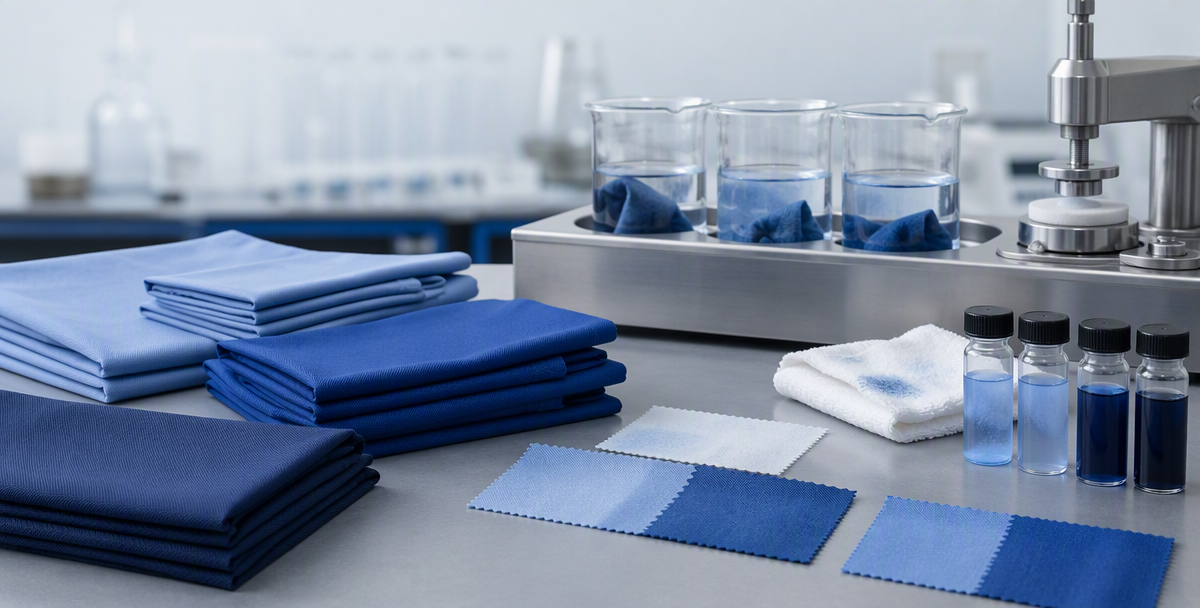
For procurement managers, brand owners, and medical apparel manufacturers, sourcing the right nurse scrub fabric is an intricate balancing act. You are tasked with providing garments that endure rigorous medical shifts while strictly containing production costs. In the highly competitive healthcare apparel landscape, two quality indicators immediately impact brand reputation: color fastness and Pantone accuracy.
When a hospital network orders a specific shade of “Ceil Blue” or “Royal Blue,” a deviation of even half a shade can result in rejected shipments and lost revenue. However, maintaining strict quality control does not have to drain your bottom line. By understanding the underlying textile engineering and partnering with the right mill, cost control becomes an achievable science.
The True Cost of Poor Color Management
In procurement, the visible cost of a textile—the price per meter—is only one part of the equation. Hidden costs from fabric defects, inconsistent dye lots, and premature garment degradation often present much larger financial risks.
-
Dye Lot Inconsistency: Incompatible chemical applications during the dyeing process force manufacturers to discard entire fabric runs, delaying production timelines.
-
Premature Fading: Medical apparel undergoes industrial laundering, often exposed to high temperatures and harsh chemical detergents. A low-grade fabric will bleed or fade rapidly, leading to client dissatisfaction and high return rates.
-
The Solution: Shifting from low-tier, unverified textiles to a premium, engineered polyester rayon blended spandex fabric for scrub minimizes production waste and establishes a reliable baseline for cost projection.
Decoding Material Science: The Gold Standard Blend
To optimize both performance and cost, global trendsetters have standardized a specific material matrix. For instance, Figs Medical Wear Fabric famously relies on a precision blend of polyester, rayon, and spandex. This combination is not arbitrary; it represents an ideal intersection of industrial durability and human comfort.
       [ Polyester (72% - 78%) ]  ---> Provides high tensile strength & industrial wash durability
                  +
       [ Rayon (19% - 25%) ]      ---> Delivers silky, breathable comfort against the skin
                  +
       [ Spandex (2% - 7%) ]      ---> Enables 360-degree, multi-directional stretch
By sourcing a polyester rayon blended spandex fabric for scrub, procurement teams achieve structural resilience from the polyester, which absorbs disperse dyes with extreme permanence. The rayon component provides an ultra-soft, skin friendly scrub fabric feel that medical professionals demand during 12-hour shifts. Finally, the integrated spandex provides the flexibility required for rapid movement.
Achieving Precision Pantone Accuracy and Color Fastness
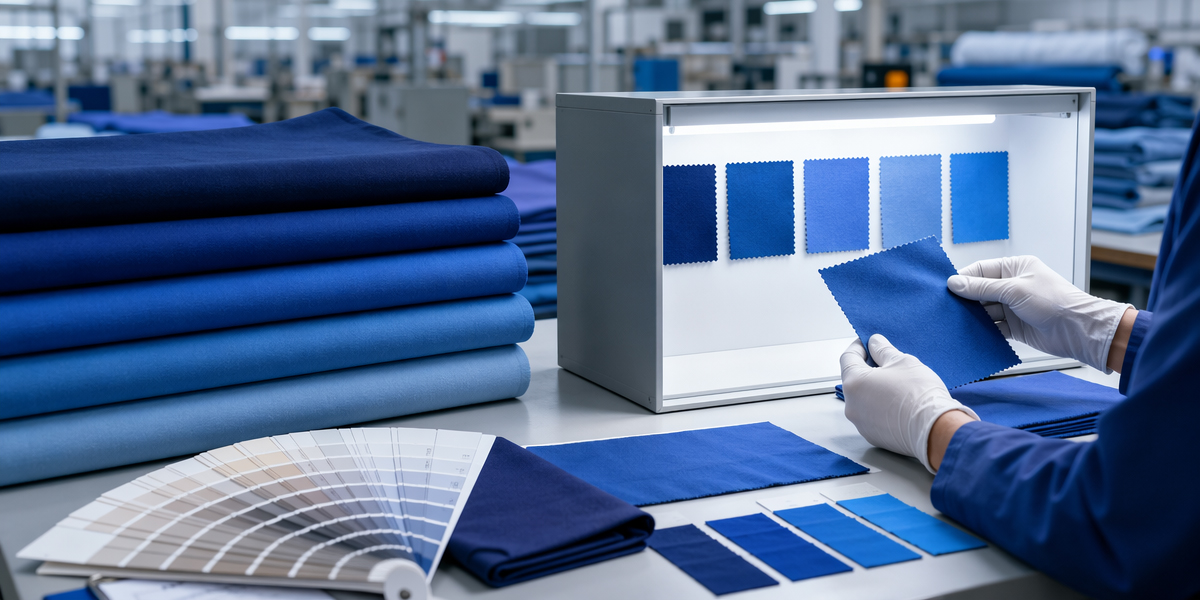
How can a mill guarantee that thousands of yards of fabric perfectly match a digital Pantone swatch without driving up manufacturing costs? The answer lies in specialized dye chemistry and standardized factory operations.
1. High-Grade Reactive and Disperse Dyes
Polyester and rayon require distinct dye classes. At Yunai Textile, our manufacturing lines utilize imported, high-grade reactive dyes for the cellulosic rayon fibers and advanced disperse dyes for the synthetic polyester elements. This dual-bonding approach ensures the color anchors deep within the fiber core, comfortably achieving a Grade 4 color fastness rating against heavy laundering and friction.
2. The Power of Four-Way Stretch Construction
Modern medical professionals refuse to wear stiff, boxy uniforms. Sourcing a dedicated four way stretch scrub fabric ensures the garment yields under stress rather than tearing. This multi-directional flexibility protects the integrity of the dye structure. When a fabric stretches evenly, the color density remains visually uniform, preventing the “whitening” effect often seen in low-grade knits when pulled taut.
3. Balanced Fabric Density: The 200GSM Benchmark
Weight selection directly dictates both the garment’s longevity and its raw material cost. In institutional healthcare environments, a 200gsm fabric for scrub serves as the industry standard benchmark.
-
Under 180 GSM: The material risks being translucent and prone to structural failure under tension.
-
Over 250 GSM: The fabric turns overly heavy, trapping heat and increasing shipping and material costs unnecessarily.
-
Selecting a balanced 200gsm fabric for scrub delivers optimal opaque coverage, high tear resistance, and comfortable thermal regulation without overpaying for excess yarn weight.
Strategic Cost Control in Healthcare Fabric Procurement
Achieving cost control in your supply chain does not mean compromising on textile features. True cost savings are realized by eliminating downstream supply chain friction.
Factor in Specialized Finishes Early
Rather than applying aftermarket topical sprays, look for mills that integrate functionality into the yarn or during the primary dye cycle. Investing in an engineered Antibacterial Scrub fabric shields the end product from microbial odors and fabric rot, greatly extending the operational lifespan of the uniform. Combining this protection with a brushed medical wear fabric technique produces a luxurious, peach-skin texture that commands a retail premium while using economical base fibers.
Leverage Factory-Direct Technical Expertise
The most efficient path to cost reduction is bypassing multi-tiered trading agents. When purchasing TR stretch healthcare fabric, working directly with a vertically integrated manufacturer allows you to control the exact specifications of the cylinder-dyeing process.
| Selection Parameter | Procurement Target | Strategic Advantage |
| Material Base | TR stretch healthcare fabric | Combines synthetic durability with natural-feeling drape |
| Weave Type | 2/2 Twill or Tight Plain Weave | Ensures even dye distribution and high abrasion resistance |
| Tactile Finish | Brushed medical wear fabric | Maximizes softness without adding expensive chemical softening agents |
The Yunai Textile Advantage: Global Standards, Optimized Costs
For global brands aiming to match the exacting quality of top-tier brands like Figs Medical Wear Fabric, partnering with an experienced textile mill is essential. Yunai Textile specializes in manufacturing high-performance medical textiles designed specifically to address procurement pain points.
Through systematic cylinder dyeing, our production lines achieve uniform color distribution and deep dye penetration across large batches. Whether you require a high-flexibility four way stretch scrub fabric or a highly durable Antibacterial Scrub fabric, our facilities maintain a vast library of ready-made Pantone-matched formulations to dramatically accelerate your time-to-market.
By consolidating color consistency, optimizing fabric weight at the ideal 200gsm fabric for scrub baseline, and engineering a truly skin friendly scrub fabric, we empower uniform brands to satisfy their end users while protecting their margins. Secure your supply chain and elevate your brand’s professional reputation by making data-driven textile choices.

Yunai Textile
Post time: Jul-31-2026